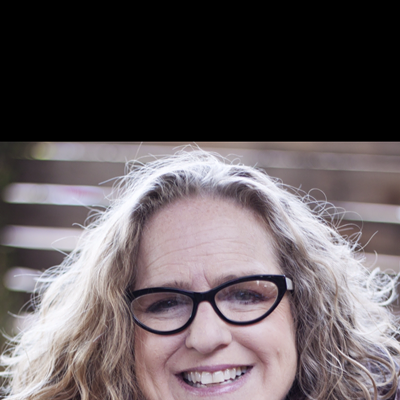

Niki Varlotta loves her son Alex so much, she called the cops on him.
On a Wednesday evening not long ago, Niki sits in a booth in the back of a chain restaurant at a big mall in north Phoenix, telling her family's story from the beginning. A plate of penne with walnut pesto sauce cools in front of her, untouched for two hours, as she describes her older son's behavior — angry since birth, aggressive almost that long — and lists his hospitalizations, his diagnoses, and the medications (all in the double digits) he's been given.
But Niki's eyes don't well up 'til she gets to the part where she sent her blond, sweet-faced 12-year-old to jail.
For Niki and Greg Varlotta and their sons, Alex and Andy, the real trouble began in 2006, when they moved to Arizona from Southern California to be closer to family — and realized there were few resources and little empathy for a violent, seriously mentally ill kid whose parents aren't independently wealthy.
When Alex barricaded himself in his room, the school resource officer (the policewoman assigned to work at the school Alex refused to attend) came to the house. She had some unpalatable advice.
By that point, Niki had quit her job as a pediatric oncology nurse — both because she couldn't leave Alex alone and because she hoped the family would qualify for AHCCCS (Arizona's version of Medicaid), since her insurance wouldn't cover the residential treatment many felt he needed. That didn't happen; the family still earned too much from Greg's work as a musician. The school system could have placed Alex in residential treatment but declined. Alex has been diagnosed with a mild form of autism, but that wasn't enough to qualify him for services for the developmentally disabled.
By May 2007, Alex was growing increasingly violent. Mostly, he hit his mom. His medications weren't right; he was having small, epileptic-like fits and walking and talking strangely. He had a well-documented history of suicidal and homicidal thoughts and hallucinations, and he was getting bigger and stronger. His little brother had already learned a neat trick: If you keep Alex laughing, he won't get angry and hit.
But Niki feared that would work for only so long. So she listened carefully to the school resource officer.
"She said, 'Niki, here's what you're going to have to do to get help. Next time he hits you, you're going to have to press charges. You're going to have to call the police.'"
The police will come and get Alex, the officer explained, and a few hours later, they will call to tell you to pick him up. When they call, she told Niki, tell them, "It's not safe to get my son."
The juvenile court will schedule an emergency hearing for the next day, she added.
"Get yourself before the judge and beg for help."
It happened a couple of days later. Greg was out of town, on tour. Alex missed the school bus. Niki coaxed him into the car. On the drive to school, Alex began hitting her — just as he had done, she adds, when she asked him to eat dinner or brush his teeth. Closed fists flying. "Like a little kid hitting, but bigger," is how she describes it.
She grabbed her cell phone, called the school, and asked for the resource officer. The police were waiting when she got there.
Through tears, Niki recalls, "I had to tell Alex, 'Honey, you can't hit Mom. And we need to get you help. And the only way we can get help is to send you to jail.'"
A few hours later, as promised, the call came.
"They said, 'You can come and get him.' And I had to say no."
The next day, Niki drove across town to Maricopa County Superior Court's juvenile division in Mesa. There was her son, in handcuffs and leg irons. They let Alex sit by her; she put her arm around him. What she really wanted to do, she says now through tears, was fall to the floor and wail. But when the judge started asking questions, she had answers — about Alex's problems, about the solutions she'd been unable to find.
"Right then and there he says, 'Make an order for custody.'"
And here comes the dirty little secret of the so-called juvenile justice system. If you have a seriously mentally ill kid, and you can't afford treatment, you can have your kid hauled before a judge. And if the judge is particularly empathetic, he or she has the power to get services for your kid.
As long as you're willing to give up custody of your child to the state of Arizona.
It's no exaggeration to say that Alex Varlotta's case is not a matter of public record. As a child in the justice system and, now, as a ward of Child Protective Services, his privacy is protected — which also means that very few people know what really happens to kids like Alex.
As a result, you aren't likely to hear about the kids who never get treatment or those who end up in the correctional system, where it's estimated that at least half the population is seriously mentally ill. In particular, the juvenile corrections system — intended by law as rehabilitation, not prison — is packed with sick kids.
And you don't hear the success stories, either. You are not supposed to know that for the past 21/2 years, the state of Arizona has paid close to (if not more than) a quarter-million dollars a year for Alex Varlotta's treatment in two different residential facilities in Texas. And that doesn't count the plane tickets the judge ordered CPS to pay for, so Alex and his family can be reunited on occasion, or the four lawyers hired to represent Alex, Niki, Greg, and the county.
So far, that money is doing its job. Alex may never live independently, but he's not headed for a correctional facility. Not now, anyway. For now, Alex's medications keep his behavior stable, and he and his family are safe. He's even made a few short trips home.
It sounds odd to say it, but in many ways, the Varlottas lucked out. They landed a sympathetic judge and a kind CPS caseworker. Niki and Greg can't technically make decisions regarding Alex's care and treatment, but they've been invited into the process because the court has deemed that's in the best interest of the child. (With a few exceptions, it's worked out well.)
For their part, the Varlottas have invited New Times to observe their progress — or, at times, the lack thereof. Niki Varlotta first contacted me in spring 2007, a couple of months before she finally gave up and had Alex arrested. She and Greg agreed to let the paper follow their family as they searched for help for their son. I was not able to visit Alex in detention, and the judge wouldn't grant permission to cover court hearings. But I did see Alex during one of his hospital stays; traveled with Niki, Alex, and Alex's CPS caseworker to Texas for his initial placement; spent time at the Varlottas' home; and spent hours with Niki, as she told and retold the story of Alex. She shared thousands of pages of documents, including medical, school, police, and court records — as well as family photographs and Alex's artwork.
It's a grim picture, and an incomplete one when you consider it's impossible to get at just how many kids are in a similar (and possibly much worse) situation. Greg Taylor, spokesman for Magellan, the for-profit agency that contracts with the state of Arizona to provide mental-health care in Maricopa County, volunteers that Magellan currently serves about 22,000 kids, including seven who are treated out of state. (That's just 0.0003 percent, he adds quickly — clearly worried about public reaction.) But his agency won't provide figures — or even an estimate — of how many of those kids had to be relinquished by their parents to qualify for care.
Even the federal Government Accounting Office hasn't been able to quantify it. In 2003, the GAO published a study identifying the voluntary-custody issue as a national problem, and calling on agencies, including the departments of Health and Human Services, Justice, and Education, to work together to provide "wrap-around services" to mentally ill kids. But the report didn't have much oomph because the numbers were so unreliable; the GAO estimated more than 12,000 children were in the child welfare system in 2001, solely to get mental-health services, but many states — including Arizona — claimed they couldn't provide data.
In 2005, the federal government passed legislation designed to give parents of seriously mentally ill kids access to state Medicaid programs, but it was left up to the states to implement it. Laurel Stine, director of federal relations for the Bazelon Center for Mental Health Law in Washington, D.C., says just a few states have taken action; Arizona isn't one of them.
Chick Arnold is the godfather of Arizona's mental-health system — his ongoing lawsuit, Arnold vs. Sarn, has been a largely failed but well-meaning attempt to get adults adequate mental-health services. For decades, he's represented adults and children in Maricopa County's justice system, trying to get them help.
For 15 years, he says, he's persuaded judges to put seriously mentally ill kids in CPS custody. Arnold finds it effective, he says, to call CPS directly (the Varlottas tried that — twice — with no success) and avoid having to have the kid arrested. In any case, Arnold says, "the fact is, you've got to use the court as an advocate to help negotiate these systems."
And of Niki Varlotta, Arnold sighs, "Think of the kids who don't have parents as great as she is."
The truth is, there are a lot of great parents out there having trouble getting care for their seriously mentally ill kids — particularly in Arizona.
"The models are already out there. It's not like we need to reinvent the wheel," says Sherri Walton, a local mental-health advocate and board member of the Arizona affiliate of Mental Health America. She's right; Vermont, Rhode Island, and New Jersey have streamlined services in the wake of the GAO report on custody issues. It wasn't a problem for the Varlottas when they lived in California — there, they were able to get state assistance even though they weren't destitute.
What happened to the Varlottas when they moved here should never happen to any family, Walton says.
"They should never get to the point where they have to call the police, because they should be able to access treatment, diagnosis, support — whatever they need," she says, admitting that "unfortunately, that is the way a lot of parents get their kids into the system. And once you get into the system that way, the parents pretty much lose all control."
Walton, who has three daughters who have suffered from mental illness, says her family was lucky enough to have the resources to pay for help. She says Alex never should have had to be arrested; his family never should have had to give up custody.
"At least," she adds, "he ought to be in the same city as the family."
Niki Varlotta is just happy her son is safe. She says, "I look at Alex and think, 'How much more can my heart break?'"
For as long as she can remember, Niki wanted to be a mom. She and Greg met through a neighbor when she was 24 and he was 29. For 21 years, Greg played in the Disneyland band Sidestreet Strutters, after a jazz band he was in at Arizona State won a contest that catapulted them to relative fame. Greg plays the trumpet and tap-dances. After they married, Niki went to school and became a nurse. They were thrilled when she got pregnant.
Alexander Gregory Varlotta was born on March 27, 1995, three weeks late and with a broken arm. (His arm was wrapped around his head, pointing up.)
He arrived screaming and pretty much didn't stop, Niki recalls. He nursed every 90 minutes for 15 months. She tried different diets; he was diagnosed with colic and digestive issues. For a while, Niki drove the baby 80 miles round-trip for treatment by famous pediatric guru Dr. William Sears.
Nothing helped. When Andy arrived just about two years after Alex, Niki was surprised by the difference in her boys' dispositions. Andy was so mellow. Alex kept getting worse.
The first time Niki nursed Andy in front of Alex, the older boy slapped the baby's head and bit his toe.
By 31/2, Alex was so aggressive the Varlottas had him see a psychiatrist. When he was 4, he threw a fork across an IHOP. He bit, hit, pushed, and spit at Niki. It was no longer a phase.
The psychiatrist diagnosed Alex with attention deficit hyperactivity disorder and prescribed Ritalin. That worked for a couple of hours at a time. Then the psychiatrist added an antipsychotic medication, and for the first time in his life, Alex showed some empathy.
Still, they'd show up at family functions, say hello, and leave. One day, Niki kissed Alex gently on the back of his head, and he threw his head backward with such force it fractured her eye socket.
"This eye?" she asks, pointing to the right side of her face. "See, it kind of droops."
At 6, Alex was diagnosed with a mild form of autism, pervasive developmental disorder. He was getting more aggressive and reported hearing voices. When he was 8, Alex tried to jump out of a moving car. He thought he could fly.
He was hospitalized at UCLA — for three weeks at a time, because insurance wouldn't cover a longer stay — then he was sent home. Then back to the hospital. UCLA's diagnosis: bipolar disorder.
When he was 9, the psychologist at Alex's school pushed for — and got — a placement for him in a residential-treatment facility about 60 miles from the Varlottas' home. The school district paid $6,900 a month for the treatment; there, Alex was diagnosed with paranoid schizophrenia. He lived at the facility for two years; his family was able to visit once a week.
The notes from that school are heartbreaking. Alex was put on large doses of antipsychotics. He wet himself frequently and drooled, Niki recalls. The school notes show that Alex slept most of the time.
And even at that, he was getting more aggressive. That school threatened that Alex's days there were numbered. It was around that time that the Varlottas decided to move to Phoenix, to be closer to Greg's family.
Even before they left California, Niki found a facility in Arizona that she thought would work for Alex — Devereux. When they arrived, she put Alex in the school's day program with the hope of getting him into the residential-treatment facility and quickly realized it wasn't the place for him. He was miserable and clearly not getting help; a teacher even pointed that out and advised the Varlottas to enroll him elsewhere, Niki says.
She then enrolled him in public school, but as had happened in California, it was obvious that he needed a more structured setting. The school district wasn't willing to pay. During one hospital visit, Alex drew a picture of the fireball in his head. "Sick cookie," a caseworker told Niki.
And then came the visit from the school resource officer.
Alex had no criminal record before Niki called the police, but he racked up more charges once he was in detention. True, the judge immediately ordered that Alex receive services — but with services inevitably comes a wait, and for several weeks, Alex was shuttled back and forth among the county's detention facilities, the behavioral health program at St. Luke's Hospital, and various group homes.
At one group facility, he scratched a staff member and threw a river rock through a window. (No one ever explained how a seriously mentally ill kid got hold of a large rock. In any case, all charges were eventually dropped, after a psychiatric evaluation.) Back to detention. Then to another group home, where Niki's worst fear was realized: Her kid needed her and she couldn't help him.
One night, Alex called Niki in a panic. He claimed a staff member had hit him with a ruler. No evidence of the attack was found, but the staff member did admit in a police report that she got physical with Alex. When Niki called CPS to report this, she recalls, the operator told her, "Look, ma'am, you gave up your kid. What do you care?"
Then came the news that a bed had opened up. Alex was going to Austin, Texas, to a hospital-level facility called Texas Neuro Rehab. Niki and Alex's new guardian made arrangements to fly round-trip in a day to get him settled.
As Niki, Alex, and the caseworker (I agreed not to use her name or quote her directly) emerge from security, you can practically feel the stress coming off Niki. Not Alex. She's given him extra medication to keep him calm for the flight. He's got a new haircut, and he's wearing sweat pants, T-shirt, and black slip-on sneakers. His eyes are droopy behind wire frames.
It's barely breakfast time, and Sky Harbor Airport is buzzing with families going on vacation, kids leaving for college. Alex is anxious to sit next to his mom on the plane; the caseworker sits across the aisle. "It will look a lot different when we get to Texas," Niki tells Alex, as the plane taxis.
A few minutes later, he's passed out on her shoulder. Niki has some rare time to reflect.
Kids with cancer, they get to "make a wish," she says. Kids like Alex? "They warehouse them."
"The funding isn't there, and also, these kids aren't cute," Niki continues. "Reporters love the little bald kids with the circles under their eyes. A crazy kid? Unh-uh."
She takes a sip of Alex's hot chocolate and sighs.
"When I get the chance to stop and think about how I had my son arrested and put in shackles," she says, rather calmly, "I'm going to fall the hell apart."
The caseworker is asleep across the aisle — head tipped to one side, hands folded. Niki's eyes are wide open. In a couple of weeks, she starts a new job as a school nurse. It's not the high-powered career she left a few months ago, but it's something. And flexible. She needs to be flexible.
The plane touches down hard. Niki's upbeat. "Look at the trees!" she tells Alex, then tries telling him about the video she watched about the place where he'll soon be living.
"These people specialize in brains," she says.
Alex is not impressed. In the cab, the driver is listening to Rush Limbaugh, and Alex says in a monotone voice, "I wish I were back in Arizona."
Niki swoops in. "Are you feeling nervous? Do you want to hold my hand?"
He pushes her hand away.
"Please?" No reaction.
"We can't give up, sweetheart. I won't give up."
His head lists, and Niki hands him his video game.
The facility is nice, not as sterile as you might expect, with some Texas touches, like horns on the chandelier, which catch Alex's attention. There's a cowhide bench. Niki's packed a small maroon bag for Alex with just enough clothes for seven days, per instructions.
Niki, the caseworker, and Alex disappear to fill out paperwork and hear the orientation spiel; then we all tour the facility (Niki gets teary when she sees the state-of-the-art sensory room, designed for autistic kids), ending up at the nurse's office, where Niki hands over a big plastic bag filled with pill bottles and answers dozens of questions.
Does Alex have delusions?
Yes. He imagines an ATM machine with infinite money.
Homicidal ideation?
Not now. "He has voices in his head that tell him to hurt people, but he tells the voices no," Niki tells the nurse.
Is he suicidal?
Not at the moment, but he's had suicidal tendencies since age 9. The man in his heard tells Alex to kill himself, Niki explains, but "he tells the man no!"
Alex has never been stable, Niki adds. "We could handle just about everything, except that with the aggression it's just not safe."
During one of the periods when they're waiting to see the next staff member, Alex climbs on Niki's lap and asks her to scratch his back.
"Mom, maybe on weekends can you come visit me on the airplane?"
Yes, she tells him; she'll come visit when she can. She'll come for her birthday, next month. She tells Alex that this is like when rich kids go to boarding school in Switzerland.
She asks him, "What do you think you might dream tonight?"
"Going home."
Last year, she spent her 40th birthday getting Alex admitted to the hospital, Niki recalls, after another violent exchange. Alex takes off his glasses and puts his head on her shoulder, and they both close their eyes.
Later, on the plane, Niki strikes up a conversation with the truck driver sitting next to her. He shows her pictures of his girlfriend; she pulls out snapshots of her boys. He complains about his ex-wife.
Finally, she closes her eyes, then opens them and pulls out a tissue, looking apologetic.
"I'm just feeling far away from him." The plane is high in the air now.
"I hate — hate — that she had more papers to fill out than I did," she says, pointing across the aisle to the again-slumbering caseworker.
And, she says, she hated to leave the smell of his hair.
The Varlottas rent a tiny yellow house in a new development in Surprise, on the west edge of metropolitan Phoenix. There's not much north of here 'til you get to Lake Pleasant, and Niki dreams that someday, someone will buy a few acres of land and build her dream residential-treatment facility.
In the Varlotta house, no one fantasizes much about Alex coming home to stay. But they do wish for a place nearby. Late last year, Niki began e-mailing family and friends about her dream; she's named it "Remarkable Ranch." She and Alex have made a hobby of the fantasy, during phone calls and visits.
Alex was home for a few days at Christmas last year, and this summer he was allowed three days for the Fourth of July. Someone has to fly with him to and from Texas, which gets expensive. The Varlottas pick up the tab. But it's worth it to see the family gathered in the kitchen, the boys playing (what else?) video games. Alex is eager to show off an app on Niki's iPhone that lets you swish in a koi pond.
And speaking of koi, he'd like a real pond at Remarkable Ranch. Other requirements: doors that lock; sand instead of wood chips in the play area; a "line in" to plug in your iPod, MP3, and CD player; a go-kart track; one room of cats and another of dogs. And "free lemonade every time you go outside."
"Right, Mom?" he asks. She smiles.
"Well, Alex, there are some things that are just wonderful dreams. And there are other things that are more possible."
Niki's priority: residents of all ages, and a single-wide mobile home for families to stay in when they visit.
Alex wants to start another ranch, too. He saw a show on the Discovery Channel about how someone found live tissue in dinosaur bones. He'd like to put the DNA in ostrich eggs, and start a velociraptor ranch. A moment later, he's off to find the recipe for the white cake and cream cheese frosting they're planning to make this weekend.
Niki comments dryly, "Remarkable Ranch will not be by the velociraptor ranch."
The boys race up and down the stairs, playing, with Greg at their heels. There's a constant concern that things will get out of hand. Eventually, Alex returns to the kitchen table, focused on the guest. Would I like spaghetti? A brownie? Watermelon? He settles down after a piece of gum is accepted.
Alex looks a little puffier than he did the last time. The lithium makes him hungry, Niki says. She pulls out the enormous pile of medications Alex takes: two different blood-pressure medications for aggression; the anti-depressant Zoloft; lithium; an anti-seizure/mood stabilizer; an antipsychotic; Claritin; Nasonex; and Gummy Vites. The gummies look sad next to all that grownup-looking medicine.
It's a tough cocktail to regulate, obviously. Last year, Alex ended up in the emergency room — manic and twitching — after his doctor in Texas changed some of his dosages. The school called the CPS caseworker, who'd signed off on the changes, not realizing that no one had first asked Niki — who says she never would have approved.
Of course, there's no requirement for anyone to call Niki or Greg.
After four months at Texas Neuro Rehab, Alex was transferred to another facility called Texas Country Hill. He still has issues with aggression, but he hasn't hit anyone while he's been there, Niki reports with pride. Soon he'll start high school — well, one computer class — with the one-on-one aide she's begged for.
Niki has had to ask for more than that. Technically, Alex's new school does not qualify as a residential-treatment facility. CPS wanted him moved to Devereux — a school the Varlottas had already tried. The judge sided with Niki, who is allowed to speak out in court even though she's not Alex's guardian. Alex stayed in Texas. (His placement is reviewed every six months.)
A while back, the judge asked Alex during a teleconference whether there was anything he'd like. Can my brother visit? he asked. The judge thought that was a good idea and told CPS to pay for six additional plane tickets a year.
The last time we met, Niki and Andy had just returned from a visit to Texas. The three ate chocolate chip pancakes at IHOP and saw the movie Cloudy with a Chance of Meatballs, which Niki highly recommends.
Over the now-cold pesto penne, she describes what the feeling of coming back from seeing Alex is like: a bad hangover. On top of that, she feels guilty because she's got a new job she loves, as a radiology oncology nurse. Andy is doing really well — he's gone from Cs to the principal's list. Greg's work is picking up. He visits Alex when he can; they talk on the phone. But like Niki, Greg is sad.
"Greg grieves," says Niki. "Alex looks so much like his daddy."
And yet, they all cope. Last week, Alex called at dinnertime, so they put him on speakerphone and had dinner together.
Life is pretty good, and that makes Niki feel bad. There's one last question for her. What does the future hold? It's the only question she's refused to answer in 21/2 years.
"Don't ask me about the future," she says, eyes flashing. "I don't go there."