
The drive to Aravaipa Canyon isn't long, as far as road trips go. Ninety minutes, and you're in another world.
From Phoenix, head east on the 60. Take a right at the old ice cream stand in Superior onto Highway 177, pass the giant open pit of the Ray Mine, then hang another right at the Shell station in Winkelman. One more left, and you're on a dirt road.
This is sacred land, near the site of one of the worst Native American massacres in Arizona history — in the mid-1800s, a group of soldiers attacked a camp of Apaches (mostly women and children), scalping and killing almost all of them. There are no markers of the incident, and today it's peaceful, expansive, beautiful land with spectacular hiking at the federally protected Aravaipa Canyon and much nicer homes than what you typically see in rural Arizona.
It helps to have four-wheel drive for this trip, if only for the giant dip you'll hit at the entrance to your destination, Aravaipa Farms, a flat hunk near the creek, beneath a mountain, marked only by a small, hand-painted sign. This is fertile land; you'll pass an orchard packed with Meyer lemon, pecan, peach, apricot, and Asian pear trees. This is where you'll find Carol Steele.
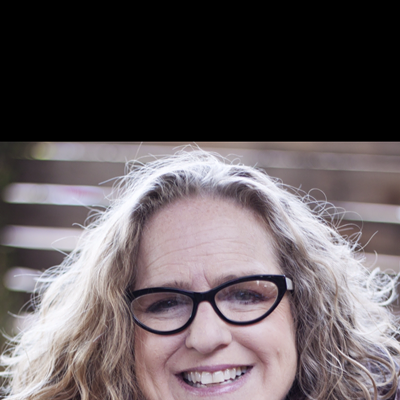
If you lived in metro Phoenix between the mid-'70s and early '90s — particularly if you ever lunched in Scottsdale — the name should sound familiar, though you might know her best as C. Steele, proprietor of C. Steele & Co. and a number of other ventures, all related to gourmet food in one way or another. Steele left almost two decades ago, but her influence still is felt in the Valley — whether it's through food cooked by the chefs who trained with Steele or via the produce and jams her disciples drive three hours round-trip to fetch for their restaurants.
Steele is widely considered the godmother of the local food scene in Phoenix — part mafiosa, part fairy. Long before we were inundated with terms like "organic," "locavore," and "slow food," she was refusing to compromise on quality, celebrating farm-grown produce and artisanal foods.
For nearly 20 years she's put her considerable talents to work here at Aravaipa Farms, an orchard and bed and breakfast. For anyone who remembers Steele's stores and restaurants, a trip to Aravaipa is a trip down memory lane — the place is tightly packed with collections (everything from rocks to drawings, including several portraits of Carol by various artist friends), cookbooks, photographs, terra cotta pots of red geraniums, and most of all, Steele's own brightly colored, quirky folk art — paintings on tiles and plates, handmade bird houses, jewelry (all for sale). With every bit of it, you get a sense of the Southwest — but without the howling coyotes.
At 75, Steele runs the place with minimal assistance, providing not only breakfast (rooms are stocked with fresh fruit, granola, yogurt, and more) but also lunch (a picnic packed in a basket) and a sit-down dinner as well. Depending on the season, you can take a canning class (Steele puts up her own preserves), check out the greenhouse and the chicken coop, or take a swim in the sparkly blue pool.
Best of all, you get Carol herself — teaching classes, holding court on the porch at cocktail hour, presiding at the dinner table in her signature peacock blue eyeliner, bright red lipstick, jeans, and Crocs.
Nothing is fancy or ordered at Aravaipa Farms. The place lacks the pretense that's crept into even the Phoenix/Scottsdale food scene. Steele proudly pours "two-buck Chuck," and the trail mix in your picnic basket isn't homemade. But her carrot cake is; the lettuce in her salad came from her garden; and months later, you'll still find yourself wondering what she put in that spicy Thai sauce on the fish at dinner.
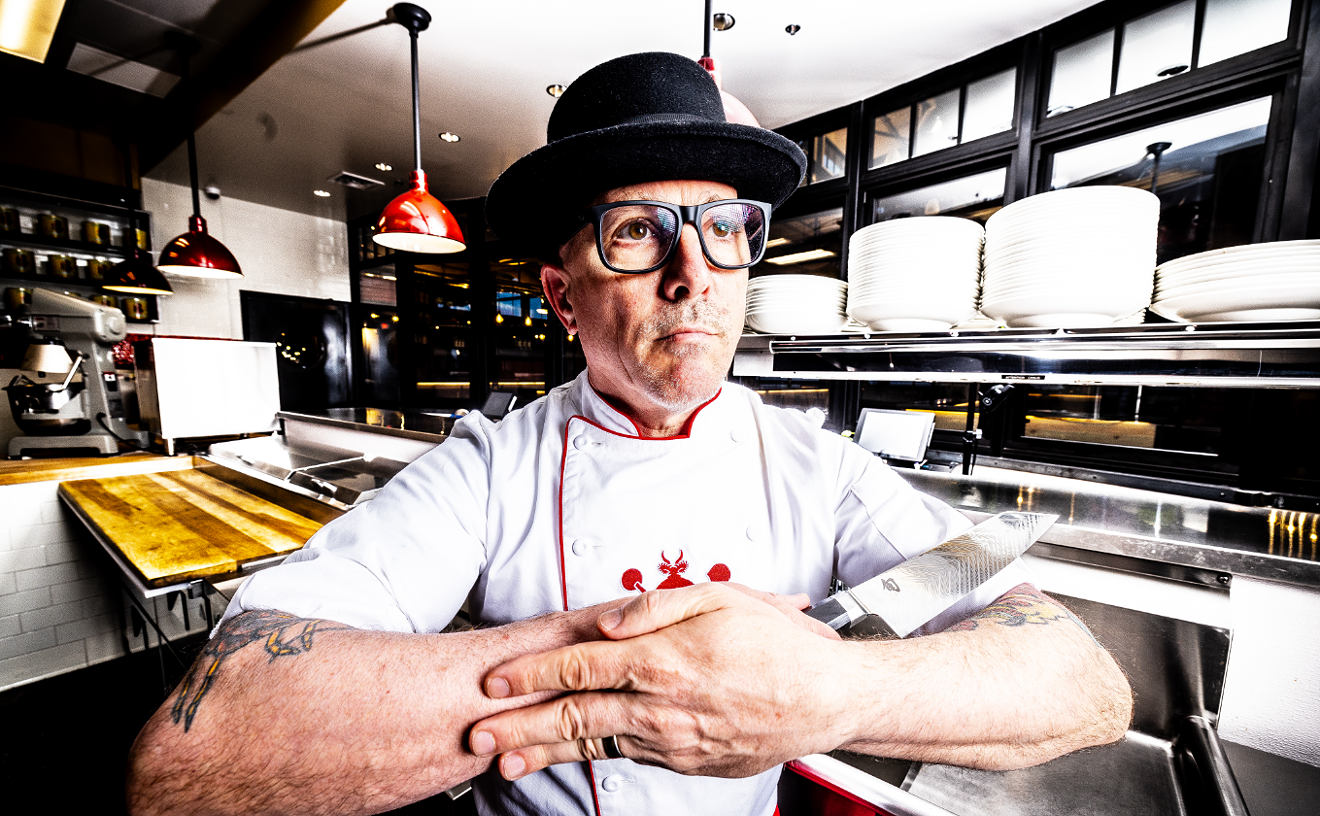
As her former employee Chrysa Robertson puts it, Steele arrived "post-Julia Child, pre-Martha Stewart." She came of age, culinarily speaking, in a time of gourmet cheese and caviar. A time of excess, Robertson observes, that's given way to the local- and slow-food movements under way at restaurants like Robertson's own Rancho Pinot in Scottsdale. Another Steele fan, Chris Bianco, is perhaps the best-known chef in Phoenix these days. He calls Steele "an incredibly wise woman" and "a fucking great pioneer."
Bianco's constantly one-upping himself in the "local" department — one of his latest obsessions is flour ground from wheat grown in Arizona and processed behind his sandwich shop, Pane Bianco. For her part, Steele raises chickens, maintains a greenhouse, and preserves fruit grown in her orchard. If you hurry, you can pick up a few of her Asian pears at Bodega, the gourmet market in Scottsdale run by chef Charleen Badman.
Like Carol Steele herself, Aravaipa Farms is a true Arizona treasure, her longest-running venture. She bought smart — 300 acres, including water rights.
And now the whole thing's for sale.
Lizards scurry across the flagstone by the pool at Aravaipa Farms on a breezy April day, looking for a drink. The only noise is the wind getting caught in the branches of giant eucalyptus trees and the chimes on the porch. It's sunburn weather by the pool, though the temperature's so perfect you won't realize it for hours, 'til your skin starts to sting. It's easy to get distracted, listening to Carol Steele talk about her life.
She was born in Washington, D.C., the eldest of five. Her parents worked hard — Dad lost it all in the Depression, then slowly earned it back by volunteering at a truck stop 'til he was hired and later working for the federal prison system. Her mother was most definitely not a gourmet cook; she had a week's worth of meals that she repeated on a cycle, including tuna noodle casserole on Fridays. Carol volunteered to help in the kitchen, but her mother said no. "She didn't want me screwing around." Carol recalls fighting with her to not overcook the peas — her mother insisted she'd give them all botulism.
It was her future mother-in-law who served as culinary inspiration. Carol met Larry when she was 13; he was 15. "He knocked me down in the rollerskating rink, accidentally. He picked me up, and the romance began."
His mom was from Ireland and a fabulous cook. She cooked with the music turned up high, wine in hand. Carol recalls apple pie fresh from the oven and two kinds of eggs for breakfast. Her own mother called that kind of thing "snooty," but Carol knows she loved her, recalling that her mom always kept real butter in the refrigerator for her, knowing she preferred it.
Carol and Larry married when she was 17. He was a bookkeeper, and they saved for a house. She subscribed to House Beautiful, pored over every page. "I would dream on that lamp, that whatever . . . I fell in love with antiques."
Her dream was to live in the country. Eventually, her husband put $1,000 down on a $10,000 three-bedroom house on eight acres with 30 peach trees in rural Maryland. They bought a car for $95 so Larry could drive to work. Carol had a baby and stayed home. And she really stayed home. It wasn't 'til they'd moved in that she realized the neighborhood was all African-American.
Steele looks off in the distance, remembering, balancing her hand-painted coffee cup on one blue-jeaned knee. There was a lot of segregation then, she says. It wasn't that she didn't like black people; she simply hadn't known any. One day, not long after they'd moved in, there was a knock at the door. It was an old black man holding a cherry pie. She told him, "No, thank you," through the window, and called her husband, who told her to keep the door locked. Two days later, the man came again. Again, she refused.
"After 10 days of this, I decided I'd never been in a black man's house," she recalls. It was time to change that. Turns out, the man was a retired postmaster. His wife, a doctor, had died. They had three kids who'd been to college. The man was lonely. So was Carol.
"It was the best cherry pie I ever ate," she says. She had him over for her peach pie, and when they sold the house three years later and moved across the country, it was Mr. Jones she missed the most.
Carol and Larry were on their way to Alaska to homestead. It was his dream; she was game. First, they stopped in Arizona to see her parents, who had moved to Florence for her father's job. They never left the state — Larry was killed in a car crash, and Carol decided to stay.
Her son was 3. "There wasn't any reason to go back to D.C., and I certainly wasn't going to homestead in Alaska."
She met a cotton farmer; they married and moved the town of Randolph. He had three kids from another marriage, and Carol is still very close to one of her stepdaughters, Sheryl.
One day, her new husband went to an auction and walked away with a hotel in Nogales and 100 rooms of furniture. So he farmed, and she ran the hotel.
Eventually they sold the hotel and moved to Sedona, where they bought property on Oak Creek, and Carol met Joanne Goldwater, one of Barry's daughters. Carol had an antique store by this point, and Joanne was looking for something to do, she recalls — so they came up with a plan to open a plaza with all kinds of small shops with Mexican crafts, clothing, silver, Native American art. They found the perfect plot of land and tried to buy it — told an architect all about their plans — but the deal fell through. When they finally did lease space and opened a couple of shops, they heard about the now-famous Tlaquepaque — an arts-and-crafts village opening soon in their coveted spot.
"With my big mouth, I had created the worst competition I could dream of," Carol recalls. It's funny now, although it wasn't at the time.
But they still had fun with a toy store called The Jabberwocky — featuring porcelain dolls, trains that ran the perimeter of the shop, and "every conceivable windup toy." They hired a girl who looked like Alice in Wonderland to wind up the toys.
And they had Maude and Potsie's Cafe, a restaurant where the day began with Bloody Marys and ended by an outdoor fireplace. Carol recalls that one Sunday — just for the heck of it — they baked Joanne's "Million Dollar Chocolate Cake" and gave out free slices.
Carol and her second husband divorced and she moved to Scottsdale (after a stint in Mexico). In 1976, she leased space in a small shop on Indian School Road and Brown Avenue. She and Joanne had been to London, and the food halls at Harrod's stuck with Carol; she wanted to open her own gourmet market. C. Steele & Co. was born.
She never did go to college, but what she lacked in formal education she made up with hard work. When she was 9 or 10, she recalls, her father sat her down and told her she could be whatever she wanted.
"Every night I'd go to bed, and I'd have a different agenda," she says — the list was long, including president of the United States. When she couldn't make up her mind, her father told her to make a list, A to Z, of all the things she could be. Her mother admonished him for encouraging nonsense, but Carol took it seriously.
At 13, she dressed "like a 16-year-old" and persuaded a bakery owner to hire her. She showed up at 4 a.m. to wash windows and clear trays before school. When she asked her dad for a ride, he told her to bundle up and take a flashlight.
The baker became a mentor.
"Try a piece of blueberry pie," she told Carol one day.
She did. "Now, you see that lady coming through the door? Tell her about it."
She did — she told the woman just what the pie tasted like and how good it was and, sure enough, the lady bought a blueberry pie.
"You can never sell something you don't believe in," the baker told her. Carol's peacock-blue eyes get shiny. "It was like the beginning of my career."
"Did she tell you the blueberry pie story?" Chrysa Robertson asks, rolling her eyes and cracking up, not entirely unkindly. These women know each other well.
Robertson was Steele's fourth hire at C. Steele — she'd been waitressing at a hotel restaurant nearby when a friend brought her over to meet Carol. Like Steele, Robertson never went to culinary school; she left Arizona State University after a semester studying art. But today she runs one of the most highly regarded restaurants in town, Rancho Pinot, which has served as a training ground for many local chefs, including Peter DeRuvo, Charleen Badman, and Chris Bianco. Robertson says she owes a lot to Carol Steele.
"I think it pretty much started with her," Robertson says of Steele and the gourmet-food scene in the Valley. She says Steele was the first to sell rotisserie chickens, her own dried-spice mixes, and the Goldwater family's salsas. Cheese was imported, as was the caviar. "Back then, you could get the great stuff," Robertson recalls.
Steele and Robertson have a rocky history, Robertson admits. The younger woman, now 52, came and went for many years, eventually leaving for good and, after a few more local restaurant jobs and a stint in Los Angeles, opening her own restaurant in 1993.
Steele came in for dinner. They hadn't spoken in years. "It was like nothing had happened, and we just hugged," Robertson says. They're still close today.
The best compliment Robertson can get as a boss, she says, is when an employee leaves and starts her own restaurant, realizes how hard it is, and says, "Now I know what Chrysa was talking about."
She said the same thing to Steele. Robertson remembers her former boss always wore creased jeans, silk charmeuse shirts, gold chains, and "cha-cha heels" — and you'd better watch out when she directed her "laser-beam eyes" your way.
"Those eyes that she has . . . When she would come in, and she knew something was wrong, I just thought, 'Christ Almighty, what have I done now?'"
The learning curve was steep.
The store began with cheese and coffee. Robertson recalls dusting wine shelves on her first day; soon, she was sitting in a corner making sandwiches from croissants, turkey, and Dofino cheese, a C. Steele signature. The store doubled in size and Steele added cooking classes, a deli, and eventually sit-down meals. One of her employees, a divorcee from Carefree, made the best apple pie; Steele opened a bakery outlet. Another employee, an Argentine man, baked the best bread. Robertson ran a catering arm of the business. C. Steele's gift baskets were famous around town.
Old-timers recall that Steele had Japanese serving pieces for sale before anyone else in town; when Southwestern style got big, she was into that.
Though the Scottsdale store survived, other projects came and went. One local favorite was the over-the-top Entz-White on Camelback Road — a huge warehouse with everything from fresh flowers to gourmet meats. Steele handled the food. After that project went belly-up, she agreed to do a project with a developer named Fife Symington. Steele says she knew the Mercado — an open-air mall in downtown Phoenix — was doomed from the start.
"The problem was getting people down there at night," she says. "You needed a real mercado." She recalls telling Symington he needed to hire artists to make piñatas and cooks to roast pigs in the ground.
"He didn't listen to me."
That one failed spectacularly. And by 1990, the economic downtown had hit Scottsdale. Steele's landlord raised her rent, and she was out. She quickly found a backer and turned an old church on Indian School Road into Mission Bazaar, another fabulous space with plants, housewares, hand-painted furniture, and gourmet food for sale. After six months, her backer showed her the door, saying they could do it themselves; they lasted another three weeks.
Her last project in the Valley was developing a restaurant at The Farm at South Mountain. "He didn't want a sign," she says of her boss. "I thought, 'That's going to be an interesting proposition.'" But Steele hired her favorite apple-pie baker, designed salads, had 30-pound organic turkeys brought in from Dewey.
And people came to sit under the big trees in a rural setting a few miles from downtown. Steele poured iced tea and listened to doctors and lawyers talk about how much they enjoyed it, and when things fell apart at this gig, she got an idea.
Steele called a real estate agent and said, "I'd like to buy a hunk of country . . . as far away from civilization as possible."
She heard about a fruit farm for sale, including two casitas — one with no roof and another with no floor. The only decent structure on the property was a barn.
She credits Lazaro Cervantes — a local man she met when she first arrived at the farm — with getting her up and running and keeping her going all these years. Every bit of flagstone and every fireplace and rock wall are his doing. And he keeps the tractors running. But the vision is pure Carol Steele. She's totally self-taught, she says, thanks to a giant collection of cookbooks. "When I read a cookbook, I can taste it as I read it."
Carol was 59 when she bought Aravaipa Farms; her father had passed away and her mother was 88. She told her about her idea.
"She says, 'Without a doubt you are certifiably insane,'" Carol recalls. Her mother asked if she ever had run a farm? No. had she ever remodeled anything? No. "'How are you going to get anybody to come there?'"
"I'll figure it out," she told her.
"Mom said, 'I knew your father never should have encouraged you along the way.'"
Carol's mother lived long enough to see Aravaipa Farms become a success.
The picnic basket is empty, iced teas are drained. Steele has been talking for hours. And she's done — literally.
"The end of the story," she says, "is that it is time for me to retire. I'm going to sell it."
In fact, Steele's been talking for months (at least) about selling Aravaipa Farms. And now it's officially on the market. There are a number of options — you could buy the mountain behind the farm or the house Carol's son once lived in or the orchards or the casitas or pretty much the entire property. Steele says she'll keep a spot for herself. But the bed and breakfast, the canning, the dinners — she'll likely be done soon. Times are tight. She can't afford to keep going. And she's getting tired.
No time to dwell on that now; the guests are starting to gather on the porch, looking for wine.
"Do you have a computer?" an older man from Iowa asks Steele.
"I don't touch it," she replies. (She means it; her stepdaughter Sheryl, who lives in Maricopa, fields all e-mails sent to Steele and the farm and reads them aloud to Carol on the phone.)
"Can I touch it?" the man asks. He needs to print a boarding pass. Steele shrugs and motions toward the living room. He disappears, grumbling something about no cell phone service.
Steele wouldn't have it any other way. She does watch television and has a phone, but otherwise keeps it simple. The prominently placed Obama bumper sticker on her pickup truck sends a big hint, she says, but doesn't necessarily prevent dissent around the dinner table.
Tonight, there's a couple celebrating a wedding anniversary, so Steele's prepared their favorite, carrot cake. The meal is simple, as is the wine, but everything flows, including the conversation, and everyone raves over the sauce on the fish.
Carol Steele has been gone from the Valley for years, but in a lot of ways, her influence still is felt. And now that she needs help, her old friends are there.
Steele left Phoenix in the early '90s, just as the local food movement really started to take off. Chrysa Robertson started Rancho Pinot, and a year later, her employee, Chris Bianco, took over his lease, starting his first pizza restaurant. Bianco moved to Phoenix in 1986 and remembers C. Steele & Co., particularly the baskets hanging from the ceiling.
"Someone like Carol was important and continues to be important," he says, adding that both Steele and Robertson have "buttery hearts. In a beautiful way, I'm afraid of her, a little bit," he says of Carol, whom he's gotten to know during vacations at Aravaipa Farms.
He's always nervous when she comes to one of his restaurants, he admits, even though she's always kind.
Bianco knows Steele is strapped — and says he's prepared to help out (though clearly not to purchase her property). Ditto for Robertson, who is planning a benefit dinner for Steele on Sunday, September 23, at her restaurant. Robertson plans to call in others who've worked for Steele, and prepare classics from her menu.
She giggles, picturing passed plates of teeny tiny turkey and Dofino croissant sandwiches, for appetizers.