Mike Coppola/Getty Images

Audio By Carbonatix
I am made from the dust of the stars
I’ve always been jealous of peers’ stories of the “Aw, Fuck, Dude” Kid.
This figure, perhaps an apocryphal composite, typically blew their minds in middle or high school, coaxing them deeper into some afternoon bus with an “Aw, fuck, dude” to change their lives through noise. Cocooned in headphones, yearlings met Joni Mitchell’s “Court and Spark,” Lou Reed’s “New York” or — what the hell — W.A.S.P.’s “The Last Command.” (Despite impeccable taste, these cats didn’t always have the best of intentions.)
Raised in Oregon’s Willamette Valley, I lacked an “Aw, Fuck, Dude” Kid. Mine were just kids, plural. Julie liked 10,000 Maniacs; since she was cute, I bought “In My Tribe” to memorize “Hey Jack Kerouac” and “City of Angels.” Dan scratched D.R.I. lyrics onto his denim-bound notebook, so: D.R.I., here I am. Max was a mall Camelot clerk, moved purely by commercial considerations, so I left our hangs with the BulletBoys and Andrew Dice Clay. I was into the Flamin’ Groovies, so, to their peril, no one paid attention to me.
My main sound source, however, was my dad. This late-’60s SoCal transplant ruled our house stereo, dropping Sabbath, Bowie, The Beach Boys, and Neil Young & Crazy Horse by the hour. Way cooler than I ever hoped to be.
Now and again, he’d chase these obsessive kicks — prompted by what, I’m not sure. One day, he inexplicably came home with The Moody Blues’ ’80s output through “The Other Side of Life.” And in the fall of 1988, commanded perchance by some rock-radio spirit, he resolved to own EVERYTHING Rush, starting with “Moving Pictures” on cassette and vinyl and stopping at a videocassette copy of the live “A Show of Hands.”
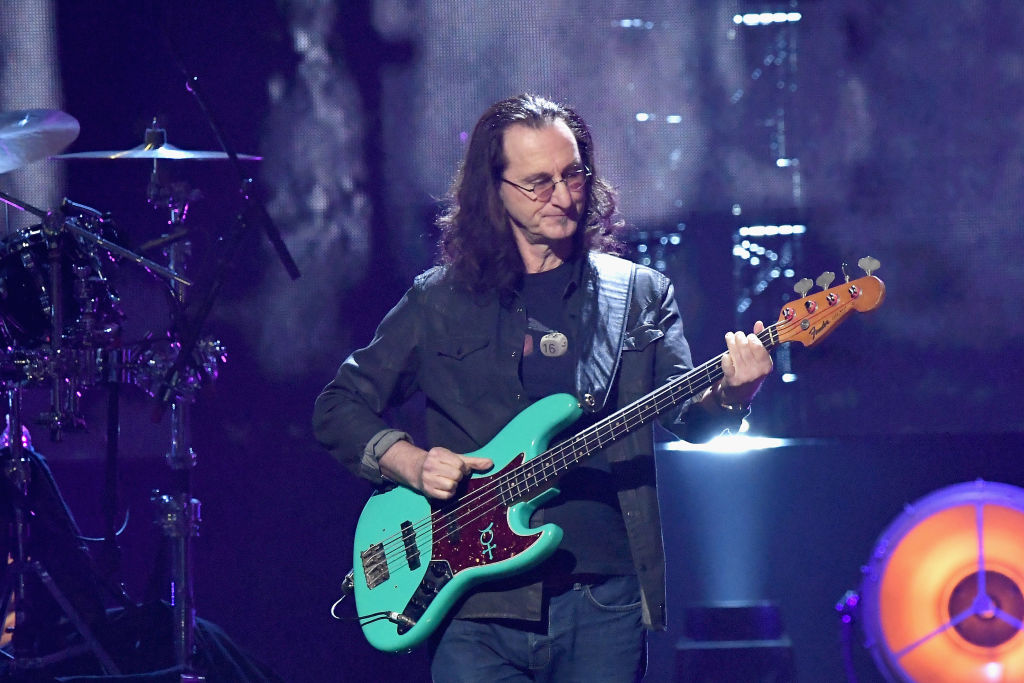
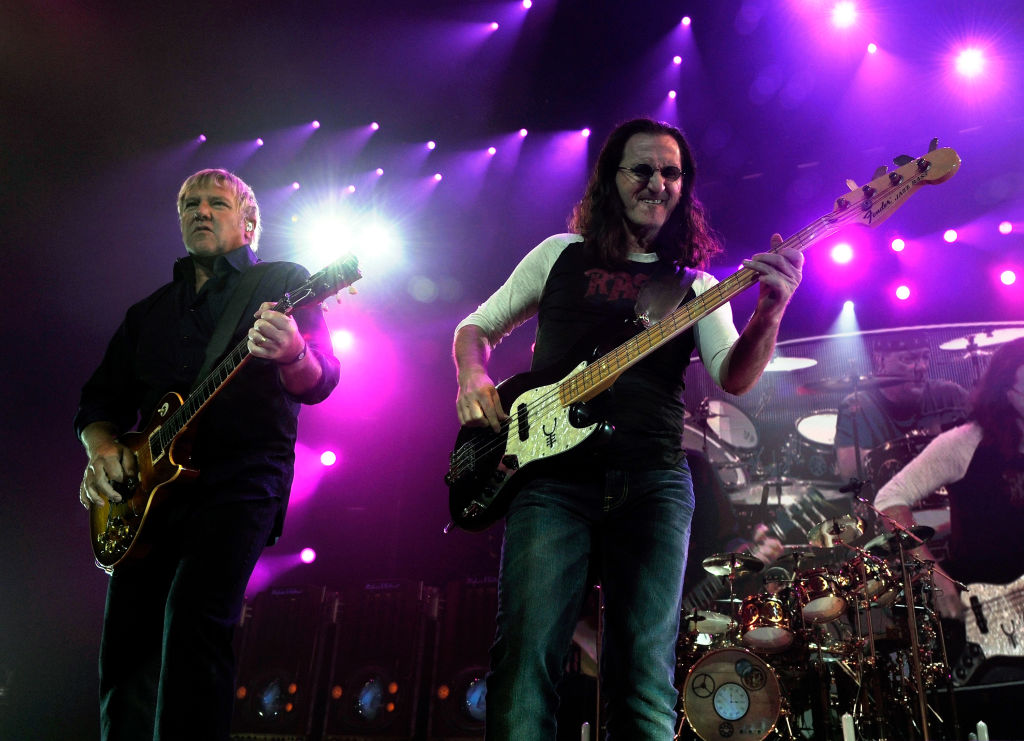
As father and son, we watched Alex Lifeson and Geddy Lee — resembling a software developer and his main programmer — skip across a stage in guitar/bass accord before the latter stopped to declare, “Big money goes around the world!” Lasers raced across agog Birmingham, U.K., faces to “Marathon.” “Imagine the time when it all began,” Lee sighed as “Manhattan Project’s” animation regaled Phoenix. Tank-topped stalwart and resident genius drummer/lyricist Neil Peart crashed past “The Rhythm Method” a champion.
Peart also scribed the video’s poetic copy. “Hands perform, and hands respond,” he wrote in that now-familiar assemblage. “A show of ears and eyes, a show of hearts and minds.”
Now it reeks of blasphemy, but aw, fuck, dude: I entered the waning synthesizer years thrilled.
Ethan Miller/Getty Images
Respond, vibrate, feedback, resonate
Dad claimed Rush for himself. Well, he could have “The Spirit of Radio,” “Freewill,” “Limelight,” “Tom Sawyer,” “Red Barchetta,” “Subdivisions” and “New World Man,” plus the whispery Aimee Mann on “Time Stand Still.”
I stole them from the opposite direction.
Naturally, I grabbed the eponymous pre-Peart 1974 debut, when drummer John Rutsey drove his Canadian brothers down Zeppelin Mountain. Lee summoned his inner Plant on “Finding My Way” and “Here Again.” Lifeson’s hypnotic pirouettes through “Before” and “After” settled my sleepless nature, whereas his “Working Man” grumbles prepped me for shifts at my teenage job, which didn’t pay me enough to complete this essential period. So, I split that difference with 1981’s “Exit … Stage Left,” a concert that led me painlessly through “Fly by Night” (1975), “2112” (1976), “A Farewell to Kings” (1977) and “Hemispheres” (1978). (“Caress of Steel” would have to wait.)
And then came “Presto,” beautiful “Presto,” on Friday, November 17, 1989. Oh, Christ, everything about it was new.
The band’s first disc was issued through its Anthem Entertainment in a deal with Atlantic. “Hold Your Fire” (1985) and “Power Windows” (1987) producer Peter Collins was jettisoned in favor of Howard Jones/The Fixx/Chris de Burgh helmsman Rupert Hine, no synthesizer slouch himself. Promotional shots — Lifeson in black sportscoat and tee; short-sleeved Peart, arms folded; Lee’s perfect ponytail tugging ruler-straight strands into “Die Hard” villain cool — announced revitalized purpose. A fresh decade was coming, too, and I’d just begun my senior year of high school.
Somehow, I remember the weekend I bought “Presto,” seated post-purchase in Target’s concession cave, peeling back cassette folds, studying lyrics (how does this “magic” theme relate to the work? To existence itself?), perusing credits. I made a mental list of future favorites, all largely unheard by the world.
Aw, fuck, dude. Flipping that tape between my thumb and index finger, I couldn’t wait to get it home.
Witness, take the stand
Recalling “Presto” from a distance, I think of being 17, pinned under earphones, volume unbearable as I pace my bedroom in thought. The soundtrack saturates memories of girls, suburban dreariness, Saturday night drives to nowhere and dreams of eventual dead-town escape. “If I could wave my magic wand,” indeed.
Mostly, I stewed in Neil Peart envy over all those lyrics. “Wounded pride, distorted eyes / paint the night with battle cries.” “Scissors cut the paper / and the rock must stand alone.” “I look down into a million houses / and wonder what you’re doing tonight.” “All of us get lost in the darkness / Dreamers learn to steer by the stars.” Are you kidding me? Aw, fuck, dude. Fuck.
Even now, this cynical spud loves the record; Peart’s words gripped in tight perfection. Synths recede to support, allowing main instruments to reassert themselves. Lifeson’s guitars declare rhythmic dominance on “Show Don’t Tell,” that shudder chased by a heavy Peart retort and Lee’s foundational bass. Exhilarating choral layers whisk “War Paint” toward its fade. The wordplay in “Anagram (for Mongo)” deserves deep study, and “Hand Over Fist” gives adult import to a child’s game. “The Pass,” in the wake of its devastation, is, quite frankly, the best, most meaningful song Rush ever recorded. After listening to both full sides, I’d race to the nearest notebook and write.
As a high school senior, I at last used my income to declare independence, whether it was by blowing paychecks on a leather jacket (which I still own, so ha!) or hitting metropolitan Portland for concerts. That academic year, I watched Aerosmith’s Brad Whitford boot some stage diver in the glutes on the “Pump” tour. Skid Row, banished from Bon Jovi’s national jaunt, opened. For this sordid pleasure, I paid, like, 20 bucks.
But when Rush came, that was huge. An event. Dad insisted on coming. We even took my 10-year-old brother, who couldn’t care less (and in fact fell asleep). A junior spendthrift, I bought the cheapest tickets available. We sat way in the back, our heads ducked to avoid hitting the coliseum ceiling.
I could barely detect tiny Neil lost in his drums, but couldn’t avoid the massive top hats on either side of the stage. “Cute,” I snickered. ’Til midway through the show, when both produced rabbits the size of modest skyscrapers. Alex and Geddy handled multiple duties, the former stepping on a pedal at his mic to bark the word “superconductor” in said number’s chorus. Geddy wore his bass largely behind a keyboard, where he activated samples, like a stuttered “pain” through “Scars.”
That night was a rare experience. I saw Rush four times over the next decade and seldom heard much from “Presto” live again. As I said, I loved the record. Most, apparently, did not. (When the guys barely spoke of it in 2010’s “Rush: Beyond the Lighted Stage,” I wondered where I went wrong.)
Boys and girls together, paint the mirror black
In 2002, I was older but still so very young. By then, I’d abandoned small-pond Oregon churnalism for a strange but unbelievably fulfilling moment in the L.A. music industry. For seven years, I worked as a liner-note editor at Rhino Entertainment, a storied reissue label affiliated with Warner Bros., Elektra and Atlantic.
In those days, any employee could pitch ideas to the A&R Department. Over time, I think I made nine suggestions. Two of four approvals were eventually released.
Among those misses was a retrospective devoted to Rush’s Anthem/Atlantic output, which at that point stopped at 1996’s “Test for Echo” and 1998’s live “Different Stages.” The band was then in uncertain limbo following unspeakable tragedy in Neil Peart’s life, which he later documented in a heartbreakingly beautiful memoir, “Ghost Rider: Travels on the Healing Road.”
As I pitched the project, Rush announced “Vapor Trails,” its first studio album in nearly six years. Stripped of keyboards, it very much captures Peart’s process as an explosive confessional. After listening, I felt like shit. Was this the right time to revisit those earlier records?
Luckily, the set never happened, and the trio apparently didn’t work with Rhino until the 2013 release of a boxed set containing every Anthem/Atlantic album through 2007’s “Snakes & Arrows.” From my current vantage point, that’s the best way to experience and discover this period: in full, not as truncated into a single document. After all, I’d fallen for “Presto” as a whole. Two or three songs just wouldn’t cut it.
I stuck with Rush to the very end, always discovering some truth about myself. Neil Peart understood me better than I did. “Faithless” and “Workin’ Them Angels,” from “Snakes & Arrows,” seem to speak for the man I became. “A man can lose himself in a country like this,” Lee mused in “Clockwork Angels’” “Seven Cities of Gold.” Yup, know that feeling, too.
When Peart died in 2020, I thought I’d lost a vital part of my own voice. Even after 45 years, the journey stopped too early. What’s the line from “Red Tide”? “Let us not go gently / To the endless winter night.” (I realize it’s a Dylan Thomas lift, but we’re talking about Neil.) So I’m happy to see the band rejuvenated with drummer Anika Nilles.
And I’m thrilled for those two nights in Glendale in December. If they play anything from “Presto,” aw, fuck, dude: My life is complete.
Rush performs at Desert Diamond Arena on Dec. 1 and 3, 2026. Tickets are already on sale.