
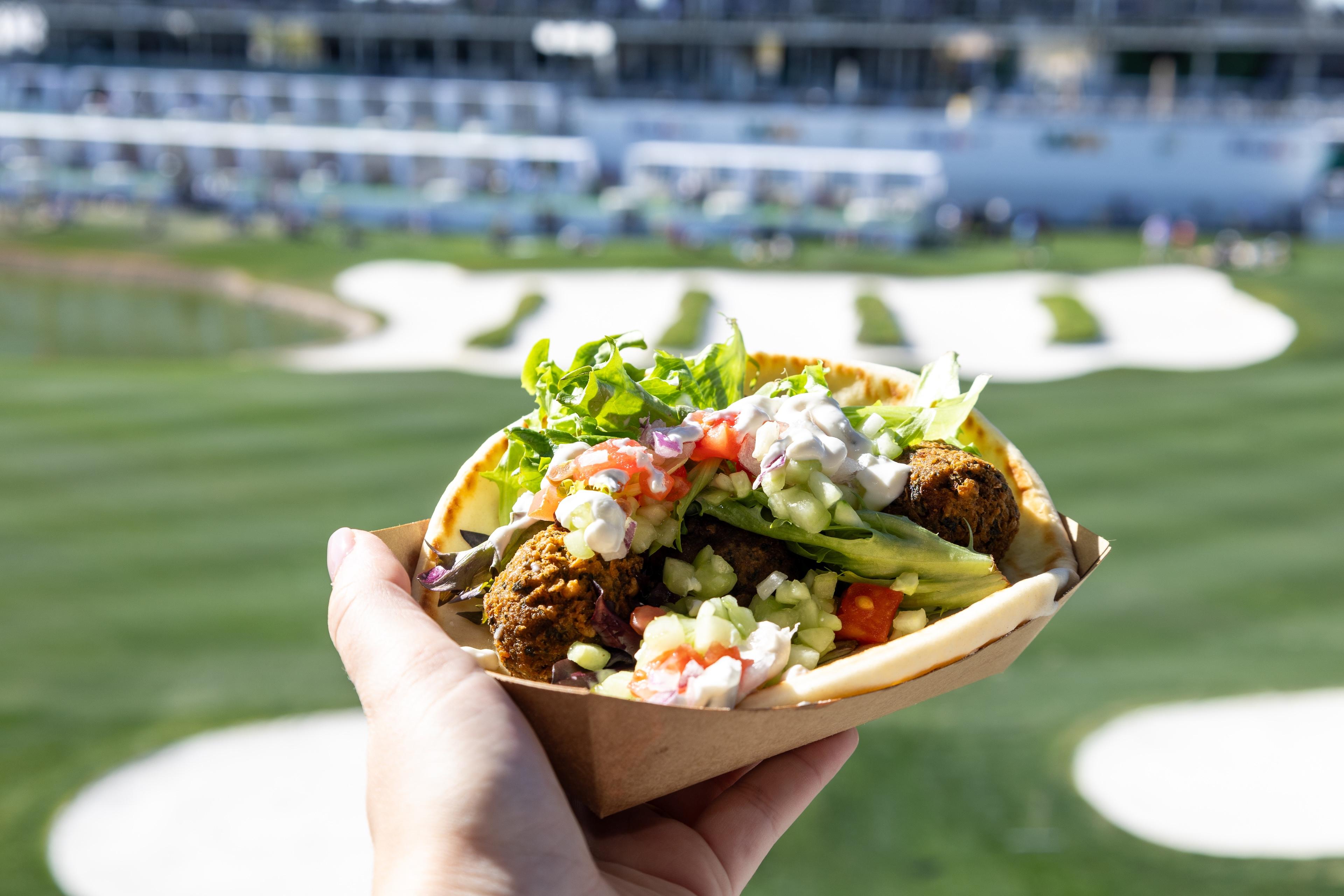
M Culinary Concepts

Audio By Carbonatix
If you’ve ever stood on the 16th hole at the Waste Management Phoenix Open holding a cold beer, surrounded by thousands of strangers cheering for a golfer lining up their shot, it’s easy to forget that somewhere behind the scenes, someone is solving a much quieter, and arguably harder, problem: how to feed everyone.
Unlike most PGA Tour stops, the WM Phoenix Open is half sporting event, half party. It draws hundreds of thousands of fans over six days, with massive grandstands, concerts, corporate suites, and one of the loudest holes in professional golf.
More than 500,000 people will pass through TPC Scottsdale during tournament week, which runs this year from February 2 to 8. Many of them will eat at least one meal on-site; some will eat several. Multiply those meals by six days, dozens of venues, and wildly different expectations, from grab-and-go nachos to seafood towers, and you start to understand why the tournament’s food operation has become an event of its own.
For 2026, that operation is getting a noticeable refresh.
M Culinary Concepts, the longtime hospitality partner behind food service in most of the tournament’s premium venues, is rolling out several new dining concepts, particularly around the newly reimagined 16th hole. The changes aren’t just about what’s on the plate, but how food is cooked, moved, held and served at scale.
“It’s looking at it through an operational lens,” says Lauren Bircher, the associate director of special events at M Culinary Concepts. “How many steps is it going to take to assemble? How is it going to hold during service? How quickly can it be produced and served?”
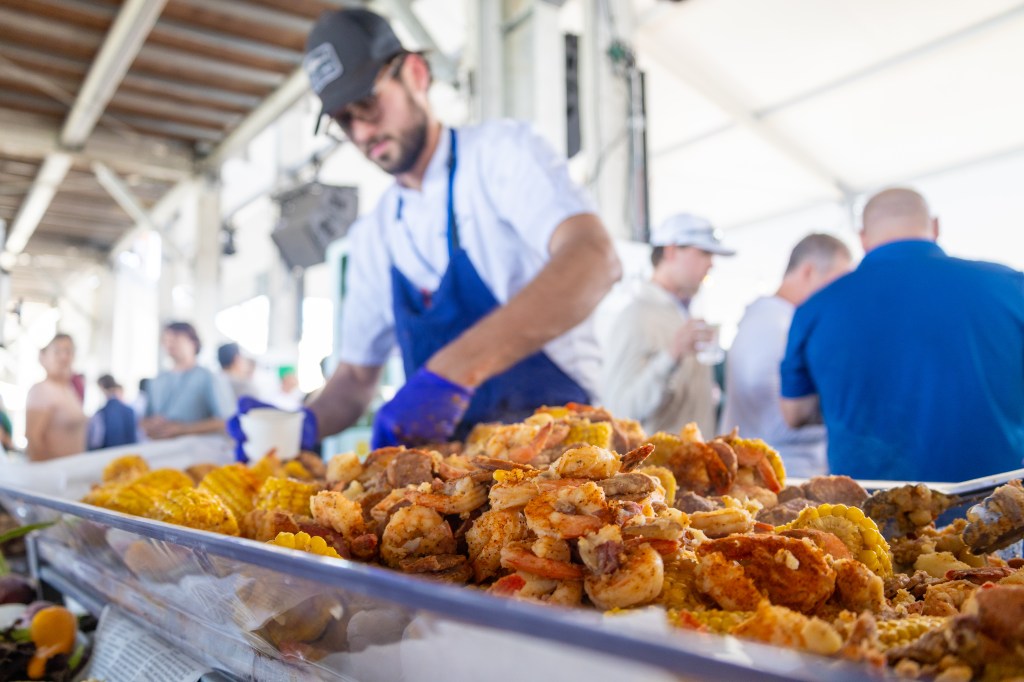
M Culinary Concepts
When food becomes a destination
The most dramatic transformation is happening at Skybox 16, a venue longtime Open attendees know well. Skybox 16 wraps around the famous 16th hole — a fully enclosed stadium built just for this tournament, where fans scream, boo and celebrate every shot like it’s a playoff game.
This year, the food experience is shifting from convenience-based catering to something closer to restaurant-style service. It’s a subtle but meaningful change.
“We’re looking at food as more of a destination,” Bircher says. “(Focusing on) higher quality, consistency, presentation and (being) more intentional with our delivery.”
To pull that off, Skybox 16 is expanding from a single kitchen to five; a detail most fans will never see, but one that fundamentally changes what can be served and how fast it arrives.
“Going from one kitchen to five operating kitchens, it really takes a village to get there,” Bircher says. “There’s propane and there’s water and power… all the things that people probably don’t think of when you think about building a kitchen.”
The result is food that’s cooked closer to the moment it’s served, which is a rarity at an event where speed usually wins over nuance.
Lobster rolls at the loudest hole in golf
One of the more unexpected additions for 2026 is the Pin Hi Club, a new ground-level food and beverage hub near the 16th green. The menu leans unapologetically upscale, especially by golf-tournament standards.
“Freshly grilled paninis, trays passed with sushi, lobster rolls, seafood towers that are being delivered to the suites,” Bircher says. “It just is something you wouldn’t expect to get on a golf course.”
That sense of surprise when being handed something you didn’t know you wanted while watching one of the loudest sporting spectacles in the country is very intentional.
“The goal for us is that we’re hoping that fans walk away and hopefully it inspires them to try something new, and discover something that they wouldn’t expect to normally try in the setting,” Bircher says.
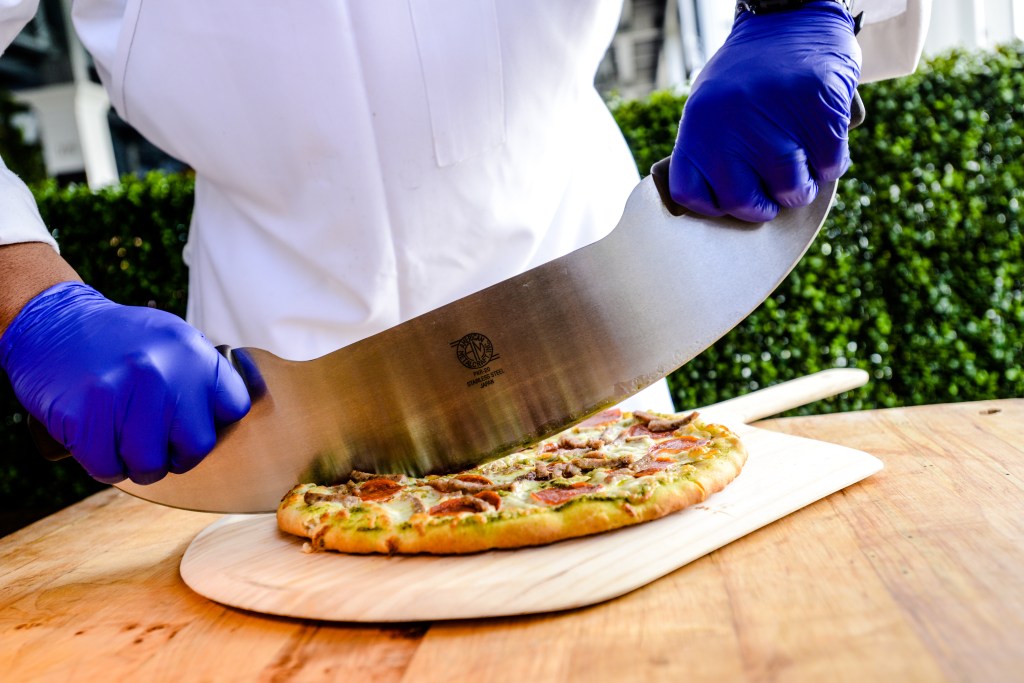
M Culinary Concepts
Feeding the masses
Not everyone has a wristband for a hospitality suite, as these are higher-ticket areas with premium seating, menu selections and elevated inclusions. However, the Open remains, at its core, a massive public event — ”The People’s Open” as the organization calls it.
General-admission fans still have plenty of options scattered across the course, from the Talking Stick Resort Fan Zone to the always-packed Desert Oasis BBQ & Beer Garden near holes 5, 6 and 7.
Classic crowd-pleasers like burgers, tortas, barbecue and cold beer anchor the public concessions, but even there, the menus reflect the same behind-the-scenes thinking happening in premium spaces. There’s an emphasis on food that moves fast, holds well in the Arizona sun and on-the-go, and tastes good enough to justify standing in line.
Across venues, M Culinary is threading in broader flavor influences, including dishes like char siu glazed pork belly with lo mein noodles and butter chicken with turmeric lentils. These choices hint at global inspiration without slowing down service.
“There’s so much more that goes into it in the thought process than just the flavor,” Bircher says. “But obviously, that’s the first thing we talk about.”
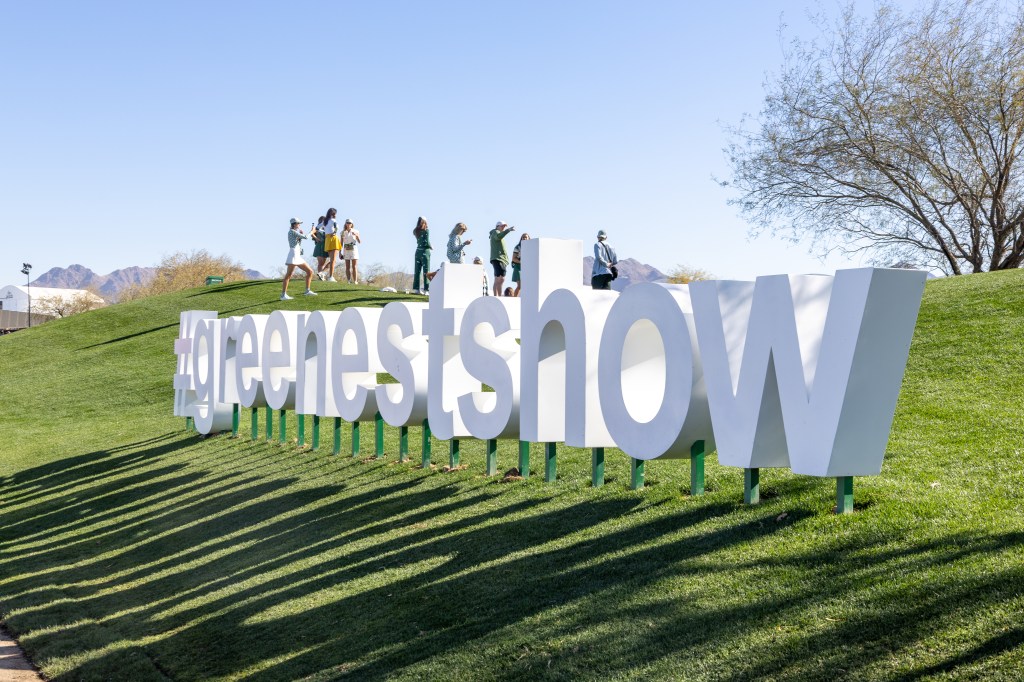
M Culinary Concepts
After the last putt drops
Once the final round wraps and fans head home, the food operation doesn’t simply stop.
At the end of the tournament, usable leftover food is donated to Waste Not, a Phoenix-based nonprofit focused on food rescue and redistribution. The effort has diverted tens of thousands of pounds of food from landfills in recent years, serving as a quiet counterbalance to the excess often associated with mega-events.
“With Waste Management being the title sponsor and a zero-waste event, sustainability is constantly at the top of our mind,” Bircher says.
It’s another reminder that feeding half a million people isn’t just about spectacle. It’s about planning, creativity and precision, even when the party atmosphere makes everything feel effortless and fun.
And if you find yourself eating a lobster roll while thousands of people scream at a golf ball midair? That’s not an accident. That’s logistics, turned into a moment.