

Gage Skidmore/Flickr/CC BY-SA 2.0

Audio By Carbonatix
Independent Journalism in Phoenix Needs You
We need to raise $15,000 by August 9 to support the reporting our community depends on. Reader support keeps us independent and is playing a larger role in funding local journalism and shaping what comes next. If you believe independent local journalism matters, make a contribution today.
Measles has found its way into Immigration and Customs Enforcement detention facilities in Arizona, and four Democratic members of Arizona’s congressional delegation are demanding answers from ICE about the extent of the outbreak.
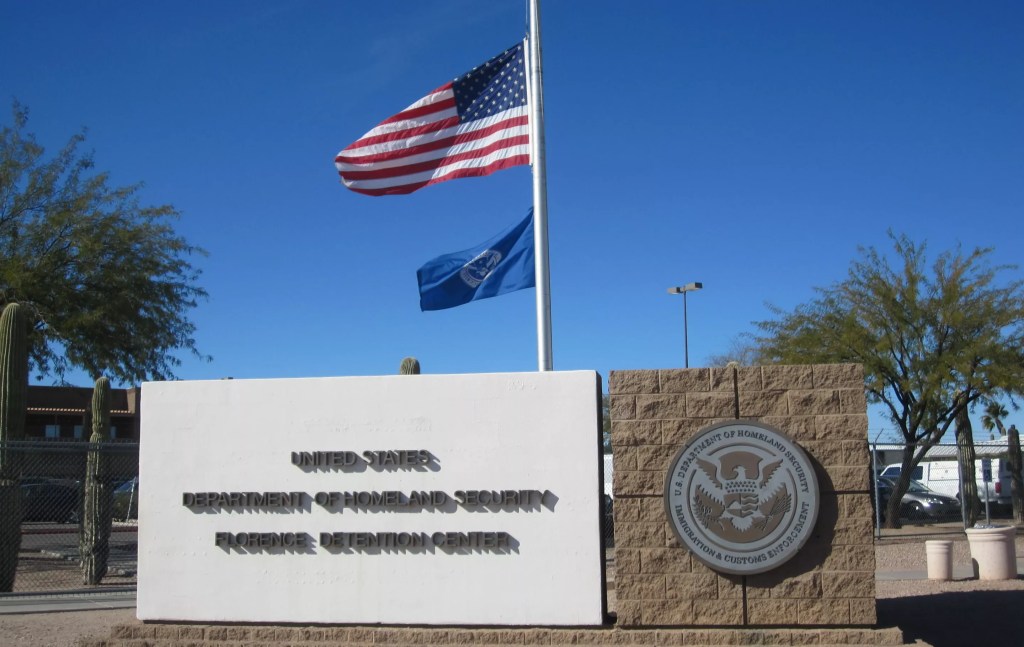
So far, three cases have been attributed to ICE detention centers in Florence. In a Feb. 5 letter addressed to Homeland Security Secretary Kristi Noem and ICE Acting Director Todd Lyons, Rep. Greg Stanton and three other Democrats requested “detailed information” regarding cases.
The three other signatories — Sen. Mark Kelly and Reps. Yassamin Ansari and Adelita Grijalva — did not respond to requests for comment. But in an interview with Phoenix New Times, Stanton responded “hell yes” when asked if he’s worried about the disease spreading among detainees.
“How are you going to isolate these people? Where are they going to get medical treatment? Who’s providing that medical treatment?” he asked. “We need to know the answers to that.”
The spread of measles, which is one of the most contagious diseases on the planet, is very “dangerous” in a setting like a detention center, Stanton said. “ICE needs to be as fully transparent” and answer “tough questions” about how “they’re going to handle something as dangerous as a measles outbreak in their facility,” he added.
In the letter, the representatives outlined two dozen questions for DHS and ICE about the current status of the outbreak and how they’re managing it, including questions about medical care and vaccinations, protecting the other detainees and ensuring access to legal representation. The Arizona representatives requested a response by Feb. 19.
“Measles is a highly contagious disease that can spread rapidly in congregate settings,” the letter shared with New Times reads. “It is critical that you agencies act swiftly, transparently, and in coordination with federal, state and local public health authorities to contain the outbreak and prevent further spread.”
On Jan. 16, the Pinal County Public Health Services District confirmed it had identified a positive measles case stemming from an individual in federal custody. The district has since confirmed two more cases, “all involving individuals in federal custody,” district spokesperson Jassmin Castro wrote in an email to New Times.
On Jan. 21, DHS confirmed that one case involved a Mexican citizen held at an immigration facility in Florence, but hasn’t disclosed where the other two cases occurred. Two measles cases were reported at the Dilley Immigration Processing Center in Texas by the Texas Department of Health Services on Jan. 31.
Citing privacy laws, Castro declined to share further details about the “individuals, facilities, or locations, including which centers the cases occurred in.” CoreCivic, which owns and operates the federal facilities in Florence, directed New Times to ICE and DHS. CoreCivic spokesperson Brian Todd added that “all detainees have daily access to sign up for medical care and mental health services” and that the facility “works closely with local hospitals and providers.”
In a statement, an unidentified DHS spokesperson said, “Medical staff is continuing to monitor the detainees’ conditions and will take appropriate and active steps to prevent further infection. All detainees are being provided with proper medical care.”
Castro added that the district is working on contract tracing and with partners to reduce the spread, but “the overall risk” to the community remains “low” — which would make sense, considering the positive cases are locked behind barbed wire. However, Stanton said he’s concerned about the outbreak spreading.
“This affects not just inside this facility, of course, it affects all of Arizona when you have an outbreak of this nature,” Stanton said. “This is a real issue and ICE owes a lot more explanation about how this happened and what they’re going to do about it.”
Brandon Waggy/Flickr
Measles in Arizona
The outbreak in Florence comes as Arizona is facing its largest measles outbreak in decades. Since August 2025, nearly 260 measles cases have been reported in the state, most of them concentrated in the remote community of Colorado City along the Arizona-Utah border. But recently, positive cases have been identified in Maricopa, Pima and Pinal counties. This year has already seen 34 positive cases.
The last huge Arizona outbreak occurred in an ICE facility. In May 2016, an outbreak hit ICE’s Eloy Detention Center, topping out at 31 positive cases — 22 detainees and nine staffers. Staff contained the outbreak by vaccinating all but one detainee with the measles-mumps-rubella vaccine within three days, according to the Centers for Disease Control and Prevention.
Measles, which spreads through the air, is highly preventable with two doses of the MMR vaccine, which is 98% effective. If an unvaccinated individual is exposed to measles, there’s a 90% chance they’ll contract the disease, which can lower the immune system and lead to deadly side effects like pneumonia and encephalitis.
While measles was considered eliminated in the U.S. in 2000, it came back in full force in 2025. Unfounded concerns over vaccine safety have gone mainstream thanks to the appointment of vaccine misinformation guru Robert F. Kennedy Jr. as the Secretary of the Department of Health and Human Services. MMR vaccination rates have dropped below the 95% herd immunity rate in Arizona.
Stanton has already faced pushback from ICE over past efforts to conduct oversight of ICE detention facilities. In July, he was denied access during an unannounced visit to Eloy Detention Center, which is expressly allowed by law. At the time, Eloy staff cited a DHS policy against surprise visits that has since been struck down by the courts. Stanton is optimistic that DHS and ICE will respond to his letter — but, he added, “We’re not naive.”
“We know that the administration has not always been responsive when Congress has exercised our legal oversight,” Stanton said. “We’re not going to go away.”
Stanton also said he plans to keep a close watch on the recently and “secretly” purchased ICE detention center in Surprise, adding that ICE didn’t receive any input from local leaders or the surrounding community before buying the property. The building itself is “light industrial,” which makes it far from ideal to have “human beings staying the night there,” he said. He’s also concerned that the facility lacks adequate safety features — including sprinkler systems, emergency exits and ventilation — to protect the 1,500 detainees ICE wants to house there.
“If they can’t even answer basic questions about how they’re handling a breakout of measles in one of their existing facilities,” Stanton said, “that’s not going to get the people in Surprise very excited about having a mass 1,500-bed facility where you could easily have a breakout of measles.”