
Justin Sullivan/Getty Images

Audio By Carbonatix
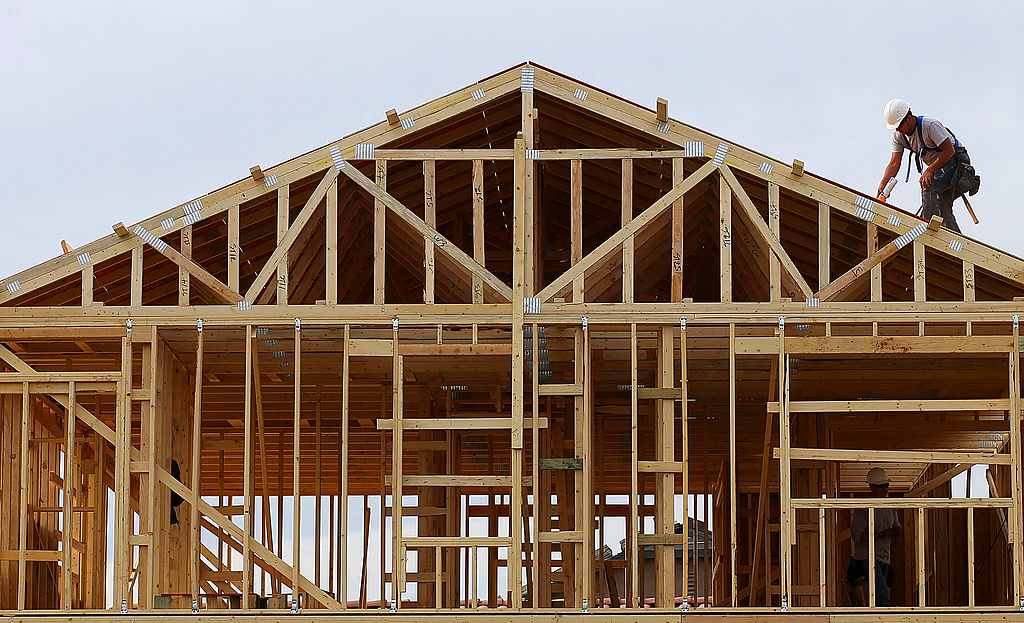
“Affordability” was the buzzword of 2025 and already seems to be the theme of 2026. And in Arizona, housing affordability has been on the tip of lawmakers’ tongues for the last few legislative sessions.
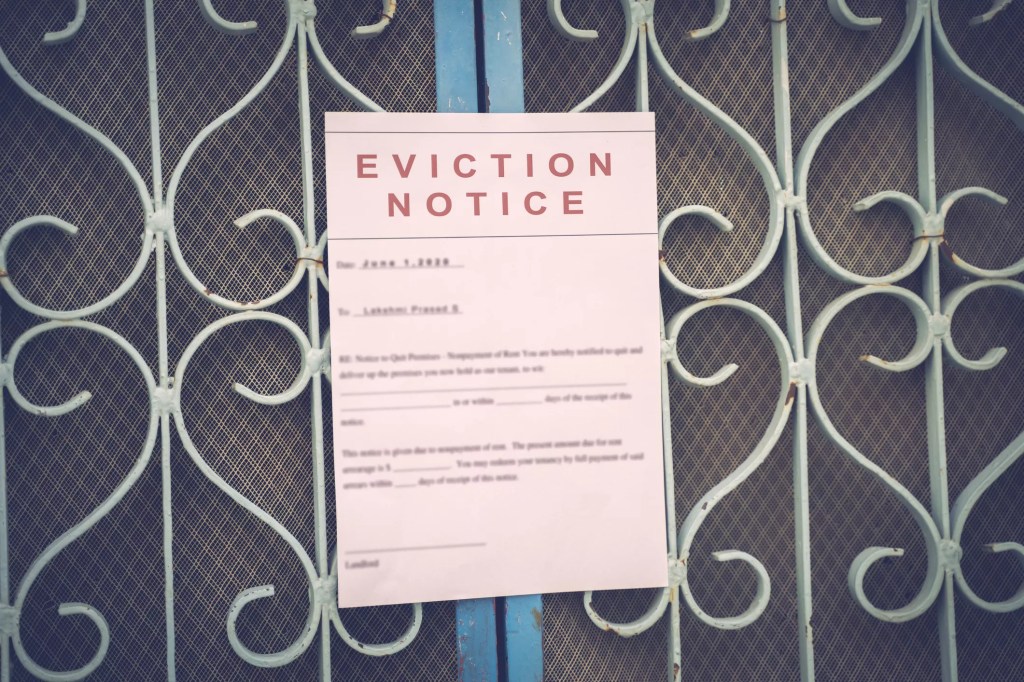
Driven by a housing shortage, home prices and rental costs have skyrocketed in the Grand Canyon State over the last six years, rising by as much as 50%. Worsened by construction pauses during the COVID-19 pandemic and by high construction costs, there simply haven’t been enough homes to go around. Wages have failed to keep up with rising housing costs, resulting in high eviction and homelessness rates. Last year, nearly 85,000 evictions were filed in Maricopa County, just shy of the all-time record set a year prior.
Nearly twice as many people in the Valley fall into homelessness as climb out of it, according to Central Arizona Shelter Services CEO Nathan Smith. Getting an unhoused family into housing can take four to six months, “a traumatic experience that sets people back further and further and further.” Better, he said, to make sure they don’t lose housing in the first place.
“We can swim upstream a bit and stop the bleeding before they fall into homelessness,” Smith said.
There seems to be some political will to address these issues. Lawmakers from both sides of the aisle have supported housing legislation that Gov. Katie Hobbs has signed. In 2024, Hobbs signed a package of housing laws meant to increase the state’s housing stock, forcing cities to allow the construction of accessory dwelling units on single-family properties and expand the type of missing “middle” housing that’s allowed to be built around a city’s downtown corridor. Although, there’s a bill this session that aims to roll some of those changes back.
“There is a lot of bipartisan understanding that affordability is important,” said Nicole Newhouse, the executive director of the Arizona Housing Coalition. “Everybody is grappling with it.”
This legislative session also features several housing measures, sponsored by both Republicans and Democrats. Here are six housing bills that could actually make a difference — and that actually could become law.
lakshmiprasad S/Getty Images
House Bill 2682: Rental assistance
While this bill is far from the sweeping reform required to substantially reduce the number of Arizona families being evicted from their homes, it’s a step in the right direction.
The bipartisan legislation, introduced by Democratic state Rep. Alma Hernandez, would set aside $5 million to establish and administer a statewide rental assistance program. The bill is also co-sponsored by several Republicans, including state Reps. Justin Wilmeth and Tony Rivero.
The bill would establish the program under the Arizona Department of Economic Security. Eligible families could apply for financial aid — up to two months’ rent or $5,000, whichever is less — when faced with a temporary financial hardship that could result in eviction. The money would show up within five days and would be issued directly to the landlord. The bill is expected to help 1,000 to 3,000 families a year.
To be eligible for the financial assistance, tenants must have at least one child under the age of 18 living at the home, have been living in the home for a least 12 months, be no more than two months behind on rent, show proof of income and be facing an “unexpected and temporary financial hardship,” according to the bill text.
“We know that what Arizonans are really struggling with is making ends meet,” Hernandez said at a press conference on Feb. 3, calling the $5 million in funding “just a start.”
The vast majority of evictions are associated with a renter’s inability to pay rent, Newhouse said, and rental assistance is “far cheaper” than the response required to get someone back into their home after they’ve been evicted. Most of the state’s rental assistance programs come through federal channels, but after COVID-19-related funds ran out and federal dollars were cut back, that money has essentially dried up, resulting in the recent skyrocket of eviction filings.
To substantially cover everyone facing eviction, the state would need to allocate $400 million to the rental assistance program, or 80 times what the bill sets aside. But Arizona “just simply does not have that kind of money,” Newhouse said.
“We’ve got to start somewhere. So is it enough? Does it cover enough people? Absolutely not,” Newhouse said. “But it is a starting point for the state to get into this space of recognizing that we need to put some skin in the game to help people pay their rent when rents are high and their wages are not keeping up.”
A companion bill, House Bill 2698, would establish a study committee to streamline the process for residents to access rental assistance. It would also gather more information about what’s causing evictions from the county justice courts, said Courtney LeVinus, the President and CEO and the Arizona Multihousing Association. The bill would help policymakers make “better and more informed decisions” about how to design rental assistance in the “most efficient manner,” she said.
On Feb. 3, the rental assistance bill advanced through the Arizona House of Representatives’ Commerce Committee on a 7-4 vote. It must still pass the appropriations and rules committees before going before the full House for a vote.

Gage Skidmore
House Bill 2804: Rural low-income tax credit
In 2021, Arizona was the first state to create a low-income housing tax credit in tandem with the federal program. But at the end of 2025, it was also the first state to let its program expire. Now, legislators are trying to bring the program back, although in a diminished capacity.
Republican state Rep. Teresa Martinez introduced a bill that would establish new tax incentives and funding mechanisms for affordable housing projects in rural Arizona. This credit aims to increase Arizona’s housing stock by supporting the development of affordable housing projects in rural parts of the state, which have been hit hard by skyrocketing home prices.
The federal Low Income Housing Tax Credit program, created in 1986, has produced more than 90% of the nation’s affordable housing. The state’s old program helped cover the gap to make these affordable housing developments possible, as it’s “really expensive to put these units in the ground,” Newhouse said.
Only the rural-specific version is likely to pass the Arizona Legislature, as some Republican lawmakers “really deplore tax credits” that are “carved out for special populations,” Newhouse said. Arizona Senate President Warren Petersen has been an opponent of expanding the state tax credit, instead favoring broad, non-specific tax cuts.
“I can’t get the full program, I need to get something across the line so we can continue to build affordable housing,” Newhouse said, adding that “we think there’s a real shot” at passing the rural-specific bill in 2026.
On Feb. 5, the House’s Rural Economic Development committee unanimously recommended passage of the bill. Now, it’ll head to the appropriations and rules committees.
Gage Skidmore/Flickr/CC BY-SA 2.0
House Bill 2325: Limiting Institutional Investors
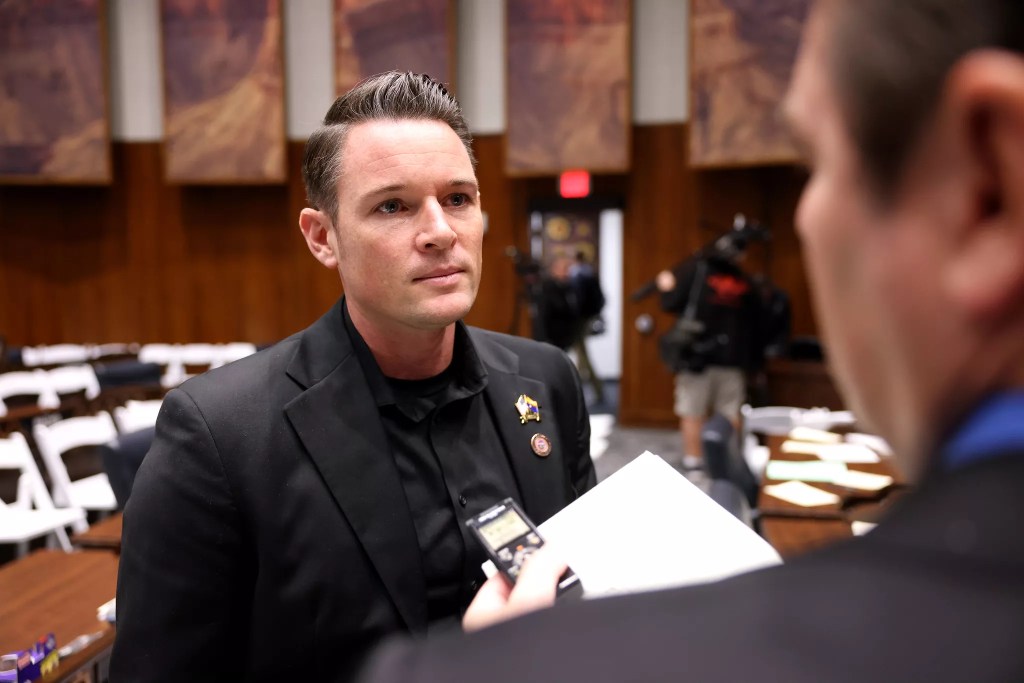
This divisive legislation was introduced by Republican state Rep. Nick Kupper shortly after President Donald Trump indicated that he’d like to put guardrails on the power of institutional investors — that is, hedge funds and banks — on the housing market.
The bill aims to make it easier for first-time homebuyers to enter the housing market by limiting the number of homes institutional investors can own. The bill would bar such deep-pocketed investors from bidding on a home for the first 60 days it’s on the market and would prohibit them from owning more than 50 single-family homes in the state. The bill also requires institutional investors to disclose how many homes they own to the Arizona Department of Housing each year.
However, Kupper’s bill hasn’t gotten much support from housing groups. Newhouse said the issue facing potential Arizona homeowners isn’t the prevalence of institutional investors but is “simply that we don’t have enough homes. Even if we converted everything back to starter homes that are owned by institutional investors, it’s not going to create the supply that we need that would drive the prices down.” Newhouse said the Arizona Housing Coalition’s calculations show that the bill wouldn’t necessarily result in “any real material change in terms of cost.”
It’s unclear if Kupper’s bill will get any traction. (He did not respond to a request for comment.) The Arizona Multihousing Association opposes the bill, citing concerns that trying to “control or manipulate” the market is counterproductive and that institutional investors don’t affect affordability in Arizona.
“There is this sense out there that institutional investors are driving first-time homeowners out of the market,” LeVinus said. “The statistics just don’t show that.”
Kupper’s bill hasn’t yet received a hearing, but it has been assigned to the Commerce Committee in the House.

Gage Skidmore
Senate Bill 1080: On-campus housing for teachers
Miss the glory days of living on campus? This bill, introduced by Republican state Sen. John Kavanagh, certainly plays on the idea of bringing that back.
If passed, school districts could enter into public-private partnership agreements with housing development companies to lease school buildings or land to build affordable housing developments. The housing would be specifically for workforce sectors, such as firefighters, law enforcement, medical professionals, childcare workers, teachers, school employees and others.
“This is a really important piece of legislation, because at this point, housing policy is workforce policy,” Newhouse said. “There’s a lot of potential when you just look at the sheer land mass.”
Considering how many schools are closing due to low enrollment numbers and the expansion of private school vouchers, it’s an interesting idea. However, it’s unclear if legislators will be interested in discussing it. It’s been assigned to the Senate Education Committee, but has yet to receive a hearing.
Gage Skidmore/Flickr/CC BY-SA 2.0
House Bill 2243: Landlord transparency
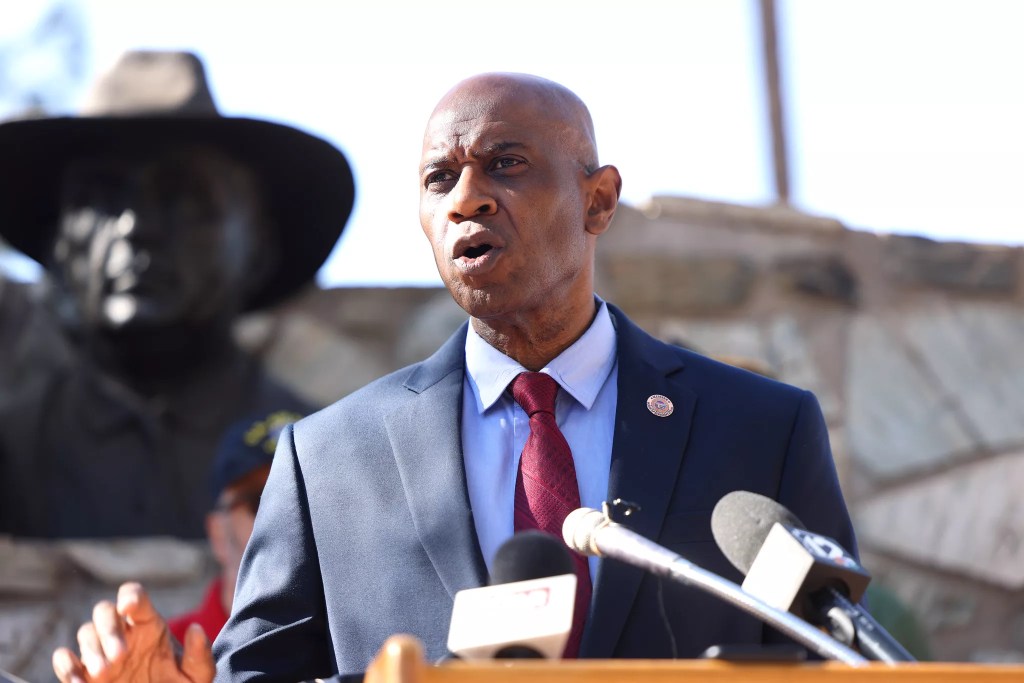
This bill, introduced by Republican state Rep. Walt Blackman, would require landlords to disclose the cost and purpose of any rental application fee. It would also require landlords to provide potential applicants with an itemized list of information used to screen them and any criteria that result in an automatic denial of an application. It also bars a landlord from charging an application fee if no unit is available.
“Good landlords already operate this way, but this bill sets a consistent standard,” Newhouse said, calling it “good, solid” policy. “We want to make sure that everything is basic and transparent and fair.”
The bill has not yet received a hearing.
TJ L’Heureux
House Bill 2620: Emergency shelters for veterans
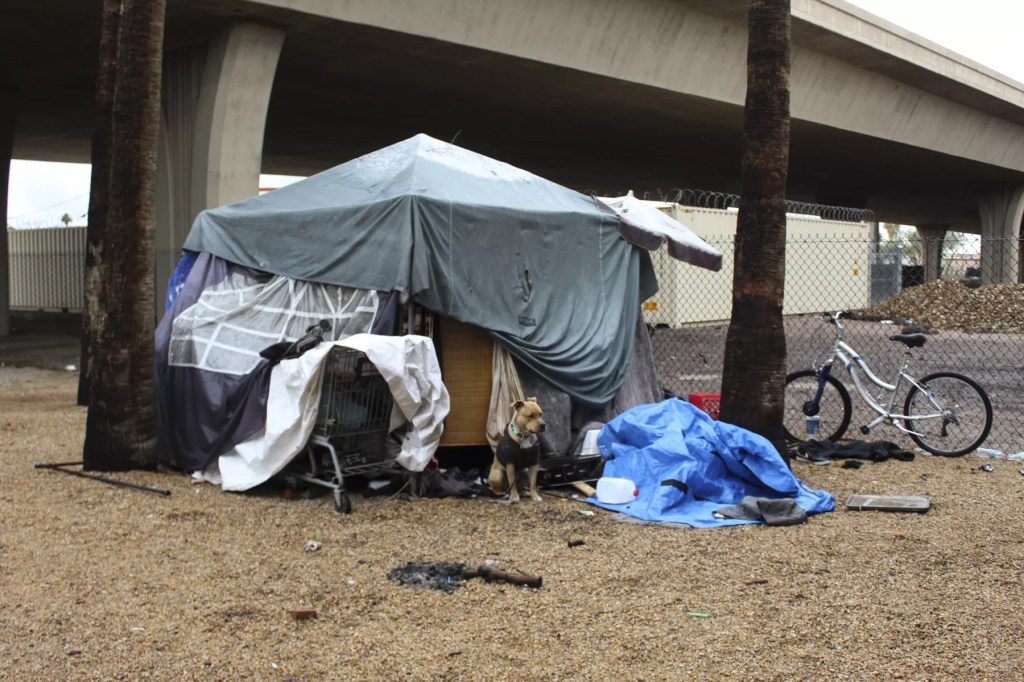
In Maricopa County alone, nearly 500 unsheltered veterans were reported in the county’s “point in time” count in 2025, a slight increase from the previous year. This bill, introduced by Blackman, aims to combat that problem.
The bill would require the Arizona Department of Veterans’ Services to allocate $300,000 in grants to emergency shelters each year for the next five years. The money would go toward “low-barrier, single adult” emergency shelters that provide aid to homeless veterans in Arizona who are 55 or older.
“We need to get veterans back to zero. We’re not that far away from that,” said Smith, the CEO of Central Arizona Shelter Services. “A lot of them are stuck in our shelters, and they oftentimes need really intense assistance.”
The bill has been assigned to the House Federalism, Military Affairs and Elections Committee, but has yet to receive a hearing.