
Morgan Fischer

Audio By Carbonatix
For the last few weeks, the far-right elements of Arizona’s political scene have pounded out a steady drumbeat of calamity and alarm. The Republican-led Maricopa County Board of Supervisors — all traitors to the party, they claimed — was maneuvering to remove duly-elected Maricopa County Recorder Justin Heap from office.
That cacophony of conspiracy theories hung over the days leading up to Heap’s planned appearance before the board on Wednesday.
District 1 supervisor Mark Stewart, who won office in 2024 by expressing election integrity concerns, attempted to distance himself from his own vote to compel Heap’s appearance. Stewart seemed to be rattled after getting hammered by Turning Point USA and far-right state Sen. Jake Hoffman for his vote, going so far as to put out placating statements and retain separate counsel from the rest of the board. Meanwhile, District 4 supervisor Debbie Lesko — who has plenty of election skepticism in her record, including a vote against certifying Arizona’s electoral votes in the 2020 election while in Congress — took to social media to push back against the “trolls” suggesting Heap’s head was on the chopping block.
All of it culminated in a board meeting on Wednesday that didn’t result in Heap’s dismissal nor in any singing of kumbaya. Heap appeared as requested — and it was only a request, board chair Kate Brophy McGee reiterated several times — and left with his job intact. The board of supervisors asked for another meeting and were rebuffed. In the meantime, the board learned little new information about under-oath voter disenfranchisement claims made by Heap’s chief of staff in court, got no closer to reaching an election administration agreement with Heap’s office and seemed generally exasperated by the whole experience.
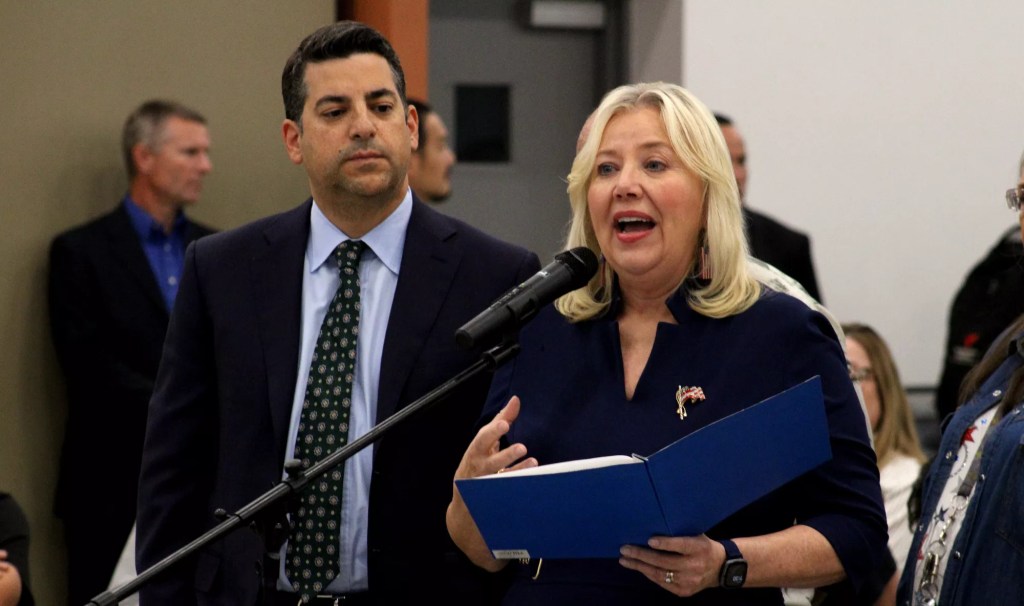
“Just respond to us so we can get this done,” Lesko told Heap during the meeting. “This is really causing a lot of chaos in the community.”
The saga between the board and Heap goes back a year. Heap wanted to tear up what’s called a Shared Services Agreement between the board and the Recorder’s Office that was struck by his lame-duck predecessor, Stephen Richer. The negotiations over that agreement, which delineates election duties, have devolved into litigation and name-calling between the two entities.
It was during a court hearing late last month that Heap’s chief of staff, Sam Stone, said under oath that voters were being “disenfranchised now” because the Recorder’s Office doesn’t have an Agilis Machine, a type of ballot sorting machine that Heap had requested the board’s approval to purchase. Alarmed by that assertion, Brophy McGee attempted to compel Heap to appear before the board and answer its questions about Stone’s testimony.
Heap won a temporary restraining order to prevent that from happening, although the judge lifted it earlier this month. Brophy McGee instead scheduled a fact-finding hearing and requested — but did not compel, she insisted on Wednesday — that Heap attend and voluntarily answer the board’s questions. Still, rumors swirled online that if Heap played hooky, the board could vote to oust him and install a recorder of its choice.
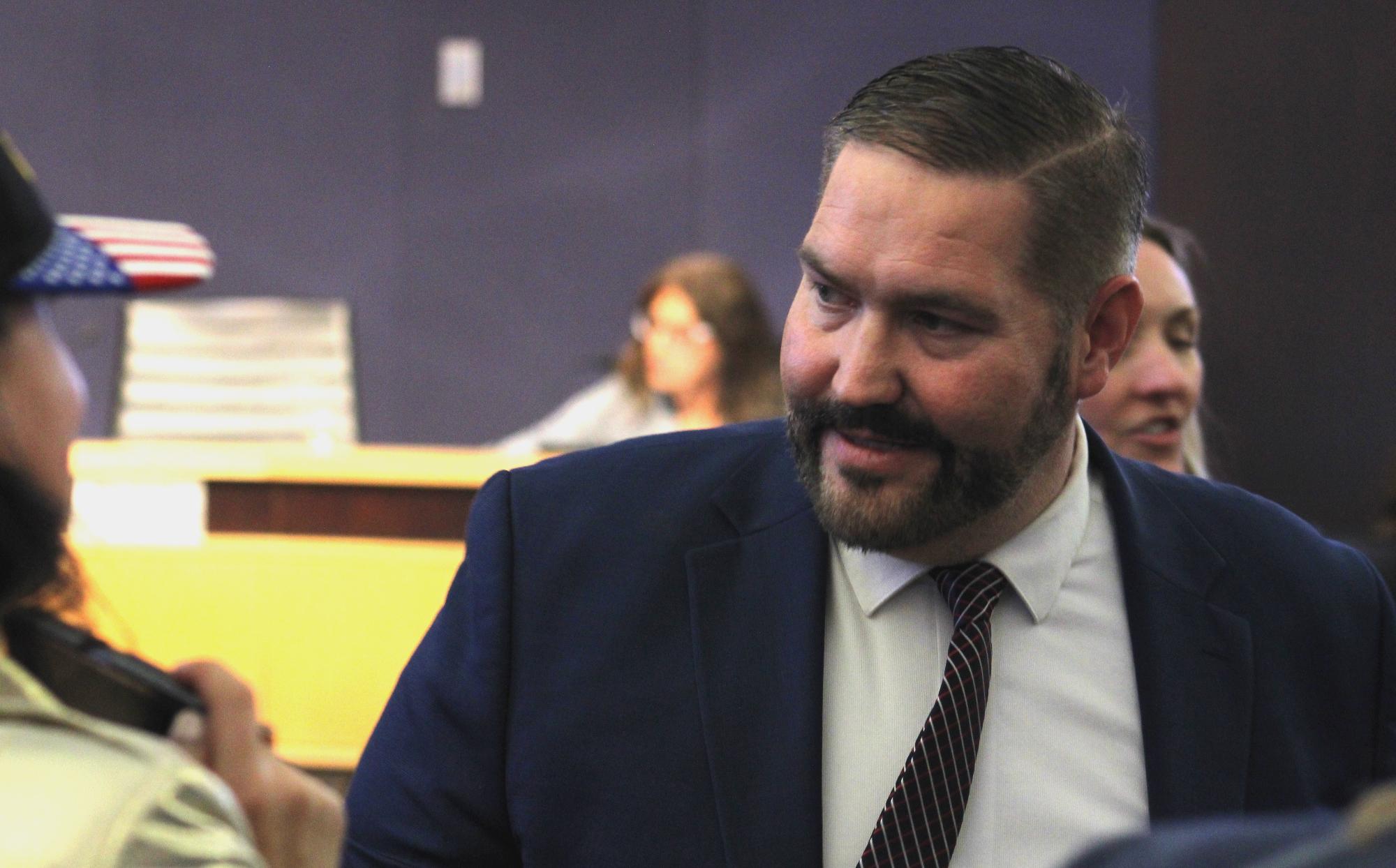
Despite attempts by Lesko and others to dispel the notion that Heap’s job was on the line, Heap’s supporters packed the meeting to show their support. They wore MAGA hats, waved mini flags and gave a thumbs up or down in reaction to statements made during the hearing. Many signs pledging support to Heap, which violate the body’s decorum, were left at the door.
Morgan Fischer
Stalemate
The hearing provided little in the way of fireworks, though. Heap provided generally bland testimony that lacked any significant new information. He said the board’s earlier request for documentation related to potential voter disenfranchisement had put “incredible stress” on his team. He also didn’t defend Stone’s testimony in court and instead suggested that there could have been disenfranchisement under prior recorders, but none had occurred during his tenure. That would seem to call into question Stone’s definition of “now.”
After Heap’s 15-minute testimony, Brophy McGee asked several times for a similar follow-up meeting. Heap brushed her off with a “maybe,” claiming he was worried the board would try to remove him if he didn’t show. At one point, Stewart — who was attending remotely from someplace he claimed was three hours ahead of Arizona, which would put him in the Atlantic Ocean, somewhere in South America or eastern Canada — moved that the board declare that Heap had fulfilled his obligation by giving his testimony. No one seconded the motion.
After the meeting, supervisor Thomas Galvin threw water on the idea that anyone was looking to oust Heap.
“There is no motive on our part to remove anyone duly elected from office,” Galvin said, adding that Heap “was ducking behind that excuse because he didn’t want to come in here.”
After Heap finished, the board heard from Korey Langhofer, the attorney representing the board in the lawsuit brought by Heap’s office. Langhofer said settlement negotiations between the two parties over a new Shared Services Agreement were “dead” because Heap’s attorney, James Rogers of America First Legal, has refused to send him a serious written response to a Feb. 11 settlement offer from the county. Instead, Langhofer said, Rogers had referred him to a social media post by Lesko, suggesting that it stand in for the board’s offer.
Fed up with waiting for Heap’s attorney to meaningfully engage, the board took matters into its own hands. In a unanimous vote, the board approved a resolution that would implement the policies outlined in the settlement offer. While it doesn’t include matters that both parties need to agree upon, the changes, which will take effect right away, are ones the board can make unilaterally.
The board “wishes to declare its policy on the issues raised by Recorder Heap in a manner that respects the statutory rights of all parties, ensures smooth operations of elections in Maricopa County, and puts to rest most issues currently in litigation,” the resolution reads.
Specifically, the county’s election IT staff will now be split evenly between the recorder and the board, as requested by Heap. It also allows the recorder to select locations for both in-person early voting and Election Day voting.
After the meeting, Heap pushed back against the notion that he hasn’t been negotiating, but appeared to be ready to wait for the full lawsuit to play out in court.
“The board has not had any negotiations with us,” he told reporters. “Now that we are about to get a ruling, now suddenly, the board wants to try to force a quick resolution in an agreement with the recorder, which tells me they think they’re going to lose this lawsuit.”
That may signal that, despite the board’s resolution, the saga will not end soon.
“We have honestly tried to negotiate with the recorder; we have given him what he wants,” said Lesko, sounding at her wits’ end. “I call on the recorder to please come back to the table, respond to us.”