
Cheyla Daverman

Audio By Carbonatix
Independent Journalism in Phoenix Needs You
We need to raise $15,000 by August 9 to support the reporting our community depends on. Reader support keeps us independent and is playing a larger role in funding local journalism and shaping what comes next. If you believe independent local journalism matters, make a contribution today.
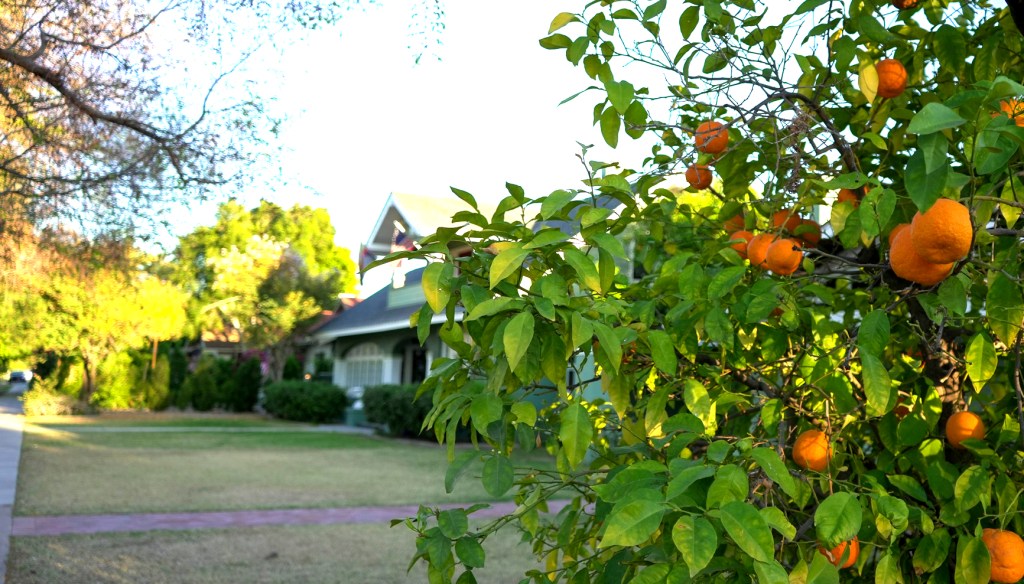
As temperatures have warmed in the spring months — and really warmed more recently — citrus trees across the Valley have begun to blossom and swell with ripe fruit. You may notice pops of orange and yellow peaking through emerald leaves, and want to sample this abundance.
But is it OK to take from trees that aren’t yours?
Here’s what to know about citrus trees in the Valley, and the etiquette of pilfering a bit from them.
Citrus in the Valley
Making up one of the traditional “5 C’s” of Arizona’s economy, citrus has long been an integral part of the state’s agricultural history. That Phoenix rarely sees freezing temperatures and has a temperate climate (outside of summer) helps citrus grow well in Arizona.
Many homeowners choose to plant citrus trees, but many such trees around the Valley are the remnants of orchards that used to dominate the area.
“Most of the time people don’t realize that there’s trees in the public,” said Jonas Sunshine Callewaert, who runs Sunshine’s Orthopathy, which can often be found at the Downtown PHX Farmer’s Market. “There’s so much citrus still, all between the houses.”
Citrus season in Arizona stretches from November to June, with navel and blood oranges ripening first. “Then mandarins and last to be picked are the Valencias,” said Emily Cimino, standing behind the Sunshine’s Orthopathy stand earlier this year.
Cheyla Daverman
Can I pick fruit off someone’s tree?
That depends.
Technically, if you’re going onto someone’s property to pluck an orange or a lemon, you could be trespassing, particularly if that area is fenced off. Snatching some fruit in that scenario could be considered burglary under ARS 13-1506A, since technically it’s venturing onto property with the intention of theft.
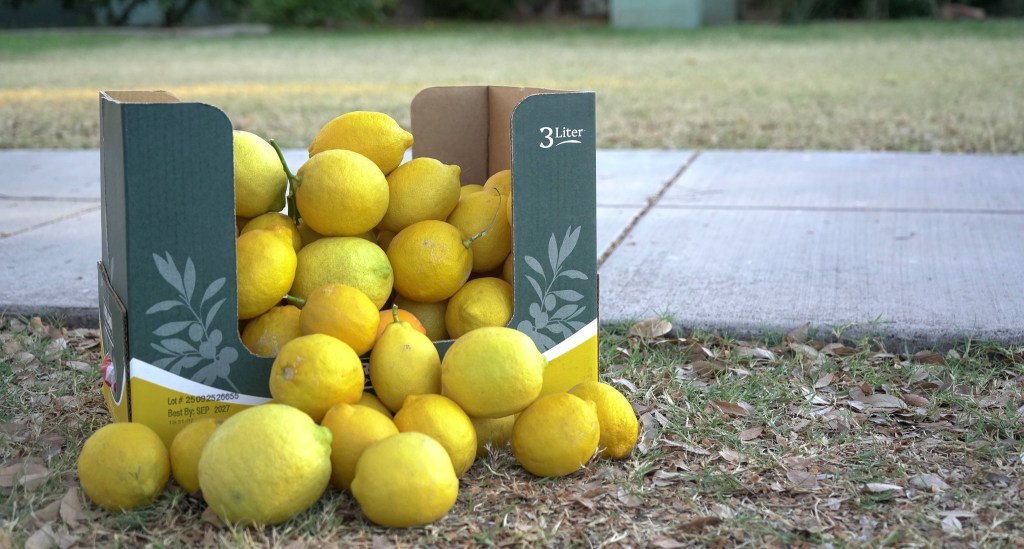
But the etiquette is much more flexible than that. Callewaert said that if you can reach an orange without stepping onto someone’s property — if it hangs over the street or sidewalk, or into your backyard — you should be all right. Especially so, if the fruit has already fallen to the ground.
Still, as Cimino noted, good manners would suggest asking the owner for permission. Reddit users felt similarly when considering that same question, agreeing that asking for permission is the best course of action to avoid any kind of conflict. Many commented that neighbors often put fruit out for free, making all the legal considerations moot.
And, depending on the time of year — specifically, the end of the citrus season, when it gets really hot — picking fruit from someone’s tree might be what the tree really needs.
“It’s good for the health of the tree. That way, the tree can direct its energy towards next year’s growth,” Cimino said. “If it’s still holding onto the fruit, when it gets really hot — like, above 100 — and there’s still oranges on the trees, the tree will actually suck the water back in from those oranges, and it’s not good for trees to do that.”
Cheyla Daverman
Is there anything else I should know?
Yes! There’s one type of orange that might not be worth wading into the moral dilemma of harvesting someone else’s citrus.
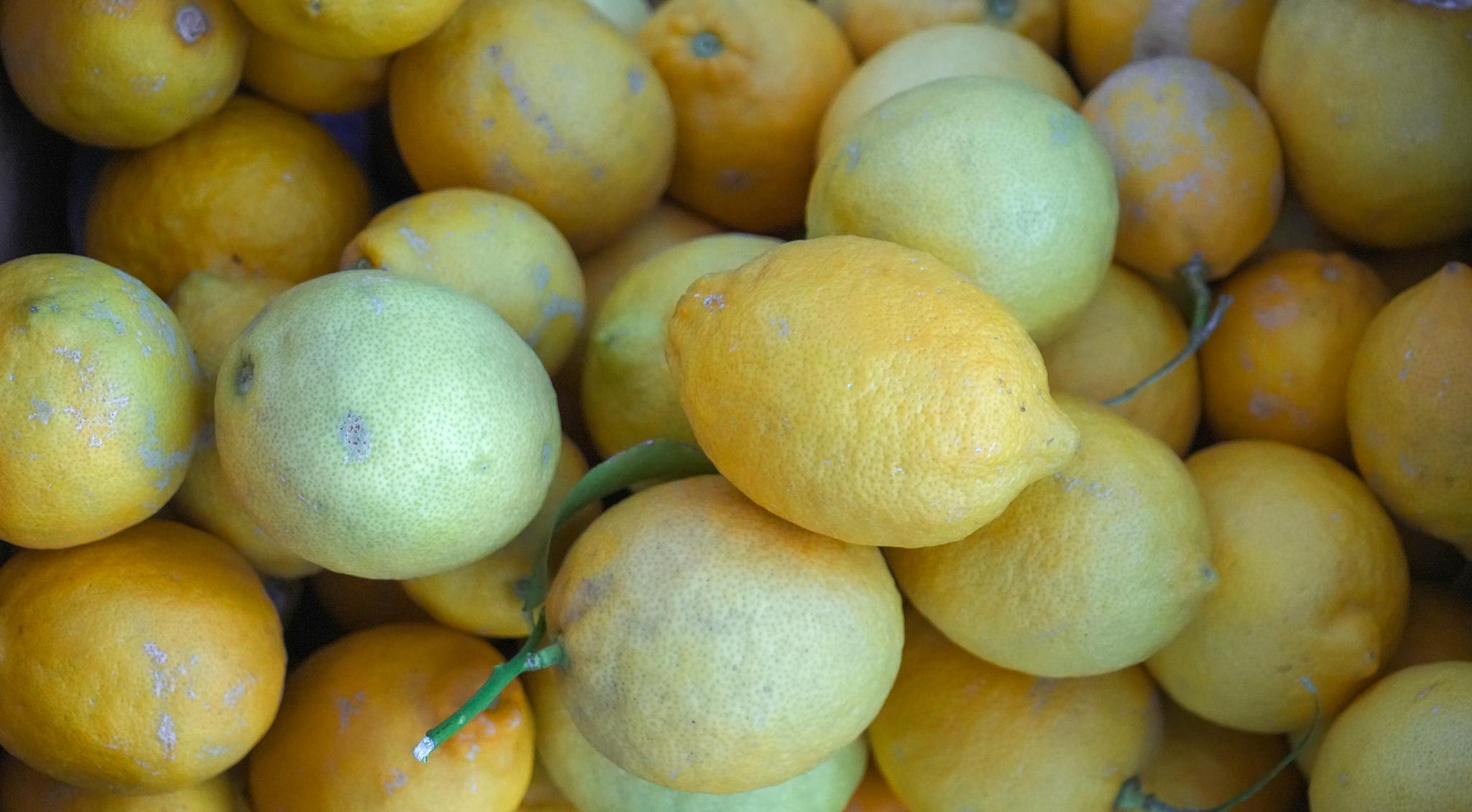
Sunshine’s Orthopathy stand was laden with a variety of citrus found in Arizona — pale yellow grapefruits, the vibrant orange of Arizona sweets and the deep red of California bloods. They pick 10-15 citrus varieties, but one common variety was not on the table.
“There’s this orange called the ugly orange, or Seville orange,” said Callewaert. “It’s a little bumpier. You can recognize it once you get familiar with it.”
These are common in the Valley, and the untrained neighborhood harvester might wind up disappointed.
“It’s a lot of the oranges you see leaning over fences,” said Cimino. “They taste sour and they won’t taste good at all, and you don’t know it until you pick it and take it home.”
Reddit users also warned about Seville oranges, also known as ornamental oranges.
“I still remember the sensation of biting into a rubber glove full of sawdust, then spitting and choking, thinking, ‘What kind of demon orange is this?’” one user wrote. “And that’s how I learned about ornamental oranges.”
They do have their uses, though. While many consider Seville oranges inedible, they have a long history of being used for marmalade in the United Kingdom. The oranges are high in pectin, the “jelly” that holds fruit together and keeps it firm, which makes them exceptional for marmalade. Their bitterness and fragrant peels create a nice balance of sweet and tart once cooked down with sugar.
So should you start up an orange-picking racket, plucking Seville oranges from Phoenix neighborhoods and shipping them to the U.K.? Probably not.
The Arizona Department of Agriculture warns that “fruit, leaves and plants must undergo specific safeguarding measures and a certificate or permit issued by a regulatory agency to leave or enter the state,” a measure in place to protect Arizona crops from protect Arizona’s crops from citrus greening disease, which can kill trees.
But picking them? Fine, in certain contexts.