
Morgan Fischer

Audio By Carbonatix
Advertising Can't Do It Alone
The challenges facing local news organizations are very real. That's why reader support matters more than ever. If you believe independent journalism matters, make a contribution today and help us reach our summer fundraising goal of $15,000 by August 9.
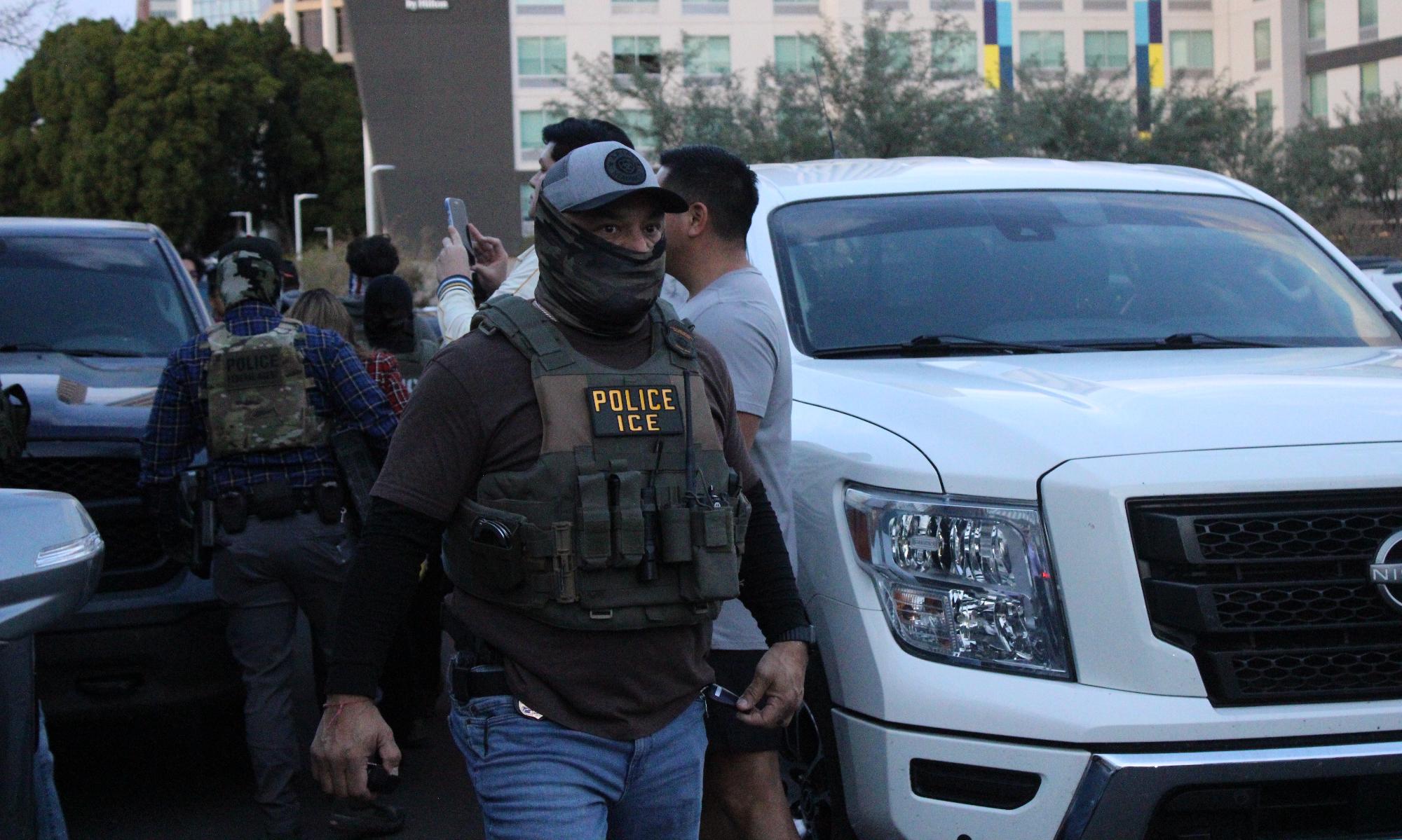
Immigration and Customs Enforcement is all over the Valley, and will be for the foreseeable future. But soon, ICE may be barred from using city of Phoenix property for its operations without first obtaining permission.
Friday morning, the Phoenix City Council released a draft of the city’s hotly disputed response to federal immigration enforcement operations. The council will vote on the so-called “Community Transparency Initiative” at its March 25 meeting. The initiative proposes a number of measures, including collecting data on possible criminal and civil rights violations by federal agents within city limits, tracking incidents with officers, protocol with different types of warrants and training municipal workers on what to do if they encounter agents.
But most notably, the draft policy would prohibit ICE or any civil law enforcement agency from using city property — for staging, processing or as an operations base — without the city’s explicit approval.
“City property exists for public use and enjoyment in support of authorized City Purposes,” the draft policy reads. “The City has a duty to ensure that all real and personal property under its ownership and control is used appropriately. Accordingly, City-Owned and City-Controlled property may be used only for authorized City purposes and shall not be used for any unauthorized or non-City purposes. Prohibited uses include, but are not limited to, using City property as a staging area, processing location, or operations base for civil law enforcement actions, unless approved by the City Manager or their designee.”
ICE did not immediately respond to a request for comment.
The policy does not apply to the service of a judicial warrant or when a suspect flees from agents. Some city properties — including the Phoenix Municipal Court, city airports and properties owned by the city but “controlled by another governmental entity, a nonprofit partner, or other third-party organization” — are excepted.
The proposed regulation would require city departments to identify properties that might be used in such a manner, determine what is needed to control access to them and where signage should be posted. The signs are required to read:
THIS PROPERTY IS OWNED AND/OR CONTROLLED BY THE CITY OF PHOENIX. USE FOR ANY CIVIL LAW ENFORCEMENT PURPOSE, INCLUDING AS A STAGING AREA, PROCESSING LOCATION, OR OPERATIONS BASE IS NOT PERMITTED WITHOUT PRIOR WRITTEN AUTHORIZATION.
Morgan Fischer
The policy also states that City Manager Ed Zuercher will approve or deny requests by federal agents or other civilian law enforcement agencies to use city property, with the recommendation of Police Chief Matt Giordano, who will serve as the point of contact for other police agencies. Employees who become aware of unauthorized use of city property by law enforcement agents are required to inform their supervisors and document details about that unauthorized usage, but they are not to “engage, obstruct, or impede unauthorized users engaged in civil law enforcement without further direction from the City Manager or their designee.”
If passed, the new regulation would automatically expire in March 2029.
The effort comes after federal authorities raided more than a dozen Zipps Sports Grill locations in late January and detained around 40 people, prompting tense standoffs between protesters and masked federal agents. It also comes in the wake of revelations that the agency is opening a 1,500-bed immigration processing center in a converted warehouse in Surprise.
Getting the initiative to this point has been a contentious process. In February, activists disrupted a council work session about the initiative, causing it to end early. The activists felt the proposal did not go far enough to protect residents and prevent Phoenix from escalating into the same violence seen in other cities between federal immigration agents and protesters during deportation sweeps, including the killings of U.S. citizens Renee Nicole Good and Alex Pretti in Minneapolis.
“None of it is proactive,” Poder in Action spokesperson Mike Cassidy told the Arizona Republic after the February work session. “We see how (ICE officers) are behaving around the country.”
Poder, in partnership with other community organizations, put together 14 demands for the city to incorporate into this newest draft, Cassidy told Phoenix New Times. The organization will be looking at the new policy today to see how many of those demands were met.
If the proposal passes, Phoenix will follow in the steps of other cities and jurisdictions grappling with how to work against — or with — federal immigration agents sweeping through cities nationwide, arresting immigrants for deportation and engaging in often violent confrontations with protesters and people documenting their actions.
According to the Vera Institute, Chicago — which was the site of an ICE crackdown last fall called Operation Midway Blitz — was the first major city to adopt what some are calling “ICE-free zones.” In that case, Chicago Mayor Brandon Johnson signed an executive order prohibiting the federal government from using city property as staging grounds for immigration operations.