
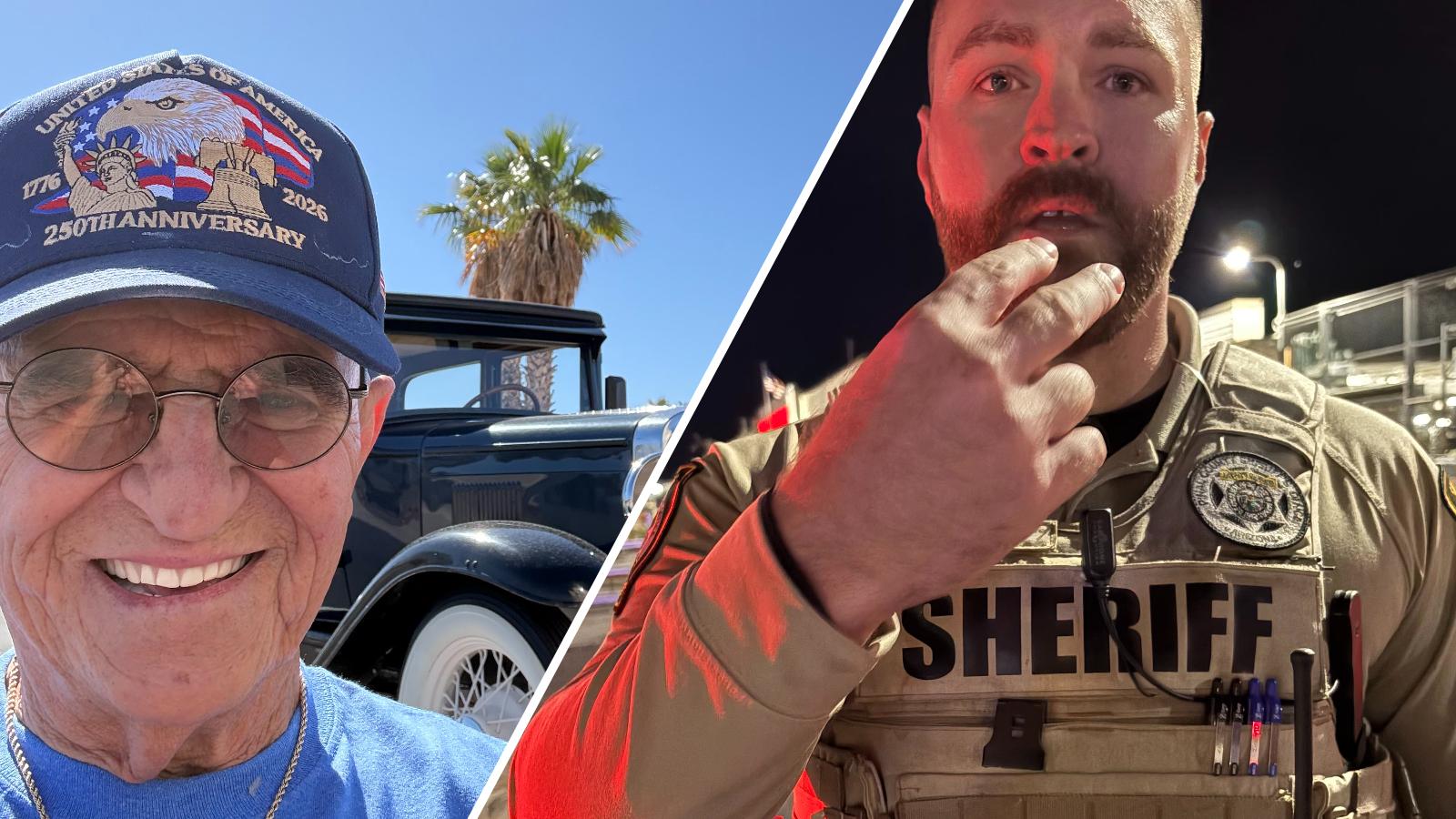
Photos courtesy of Tom Garro

Audio By Carbonatix
“My name is Tom.”
That’s the sign that Thomas Garro keeps in his 2019 Chrysler 300 when he drives for Lyft. The 79-year-old is deaf and communicates through American Sign Language and text, and those four words help lower any barriers between him and his customers. A gesture at the sign and driver and rider are quickly on the same page, short-circuiting any potential awkwardness.
A Sun City resident, Garro has driven for Lyft for seven years and has a five-star rating. With 13,649 rides with the company, he’s met all sorts of different people with all sorts of personalities. Whether they are friendly, weird or grumpy, they fill his day with the kind of variety that others require plane tickets to access. He loves the job.
Or loved it. One day in early January, Garro was pulled over by a Pinal County Sheriff’s deputy while giving a woman a ride to a Walmart in San Tan Valley. What could have been a routine traffic stop instead became a chaotic and violent encounter, with the deputy seemingly frustrated by dealing with Garro’s disability. The incident ended with Garro — a slight septuagenarian at only 5-foot-3 — held on the ground and placed in handcuffs so tight they left him bleeding.
Garro hasn’t worked since. He’s too scared to get back behind the wheel.
“I start driving and I get really anxious and scared that the police are going to pull me over again,” Garro told Phoenix New Times through an ASL interpreter.
Garro is still unclear about what happened during the Jan. 9 traffic stop — which was first reported by the Daily Moth, a site for the deaf and hard-of-hearing community — and why. He couldn’t hear what the deputies were saying and couldn’t properly communicate for most of the encounter, in part because his hands were cuffed behind his back. He’s never received an explanation for why the deputies tackled him to the ground, shoved him against a pickup truck and handcuffed him so tightly and roughly that he bled.
The citation he received stated that he lacked valid insurance and was driving 60 miles per hour in a 45-mile-per-hour zone. Garro denies he was speeding and cleared up the insurance issue by showing proof of coverage to a judge. The speeding citation was dropped when the deputy listed on his ticket, identified as “Deputy A. McRae,” failed to show for a hearing.
The deputy may not be able to get out of the next one. Garro said he plans to sue the Pinal County Sheriff’s Office. His lawyer, Jesse Showalter, said he has requested but not received any documentation from the department about that day beyond the citation. Showalter would not confirm when they plan to file their notice of claim — a required precursor to a lawsuit — but said they’ve filed a special action in Pinal County Superior Court to get the public records.
New Times also submitted a public records request for the incident report and Professional Standards Bureau history for McRae, but that request has not yet been fulfilled. Sam Salzwedel, a public information officer for the Pinal County Sheriff’s Office, acknowledged the public records request but said it would not be fulfilled in time for this story. He declined to comment further on the case due to potential pending litigation, but did say that there is no active internal investigation into the deputies who handcuffed Garro.
Garro’s experience highlights the difficulties deaf and hard-of-hearing people face when interacting with law enforcement, and how the inability to communicate can lead to misunderstandings that sometimes escalate quickly. Unfortunately, his experience is more common than it should be.
“All of it was so fast,” Garro said, thinking back on that day. “Nothing. I understood nothing.”
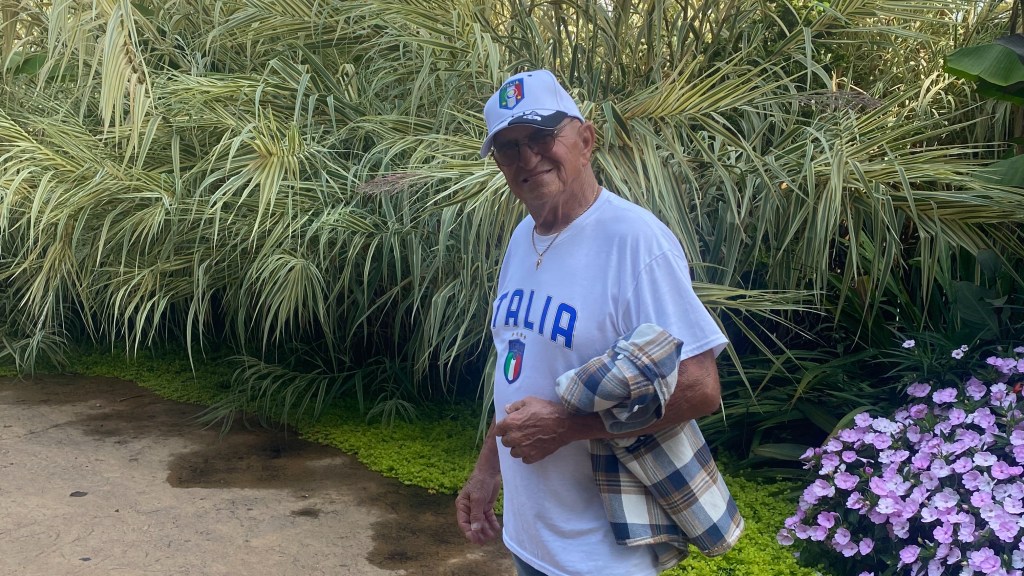
Provided by Tom Garro
A traffic stop gone wrong
When Garro first saw flashing lights signaling him to pull over, he wasn’t nervous. Typically, he’s able to convey to officers that he can’t hear.
“I point to my ear and I shake my head,” he said, demonstrating. “Most cops understand what that means and they realize that I’m deaf and they respect that most of the time — change their way of interacting.”
This time didn’t go smoothly. The deputy who approached Garro’s driver’s side window — it’s not clear if that deputy was “A. McCrae” — kept talking while Garro gestured to him that he couldn’t hear. Garro handed over his license and, after some pointing by the deputy, his registration, too.
Despite Garro’s signaling about his disability, the deputy was “talking and talking,” Garro said. That Garro couldn’t hear him seemed to fluster the Pinal cop. “It was obvious he was mad,” Garro said. Finally, the officer wrote down “insurance.”
Garro, who had valid insurance, said he accidentally grabbed an old, expired card from his glove compartment. He said he handed it to the deputy, who threw the card down on his seat and, without explanation, walked back to his truck. Then Garro — and his backseat passenger — waited. And waited.
Finally, after what Garro estimated to be 45 minutes, the passenger typed on her phone that she was scared and wanted to leave. So, Garro got out and walked around the car to open the door for her.
That’s when everything happened, he said.
The deputy rushed over and grabbed him, Garro said, slamming him to the ground and holding his head to the pavement. Another deputy came over, and the two pinned him down. They spoke to Garro — “They were saying something, I don’t know!” he said — while they handcuffed his hands tightly behind his back.
Once he was cuffed, the second deputy lifted him and threw him against the patrol truck, he said.
“I was shaking at that point. I felt a little bit dizzy at that point,” Garro said. “I was screaming.”
Two bystanders filmed the arrest on their phones, though the footage is low quality and far away. In one, Garro can be heard screaming while a deputy yells “stop” multiple times. In the other, Garro is on the ground while a deputy pins him. Salzwedel declined to tell New Times if the deputies wore body cameras and if they recorded Garro’s traffic stop.
After he was cuffed, the deputies walked him to one of their trucks. They tried to put him in the backseat, but the cuffs were too tight. “Every time they moved me, it was just like digging more and more into my wrists,” Garro said. “I was screaming and there was blood coming off my wrists.” The deputies loosened the cuffs but kept his hands behind his back as they put him in the backseat. One then drove Garro’s car to the nearby Big O Tires parking lot.
Confused, scared and bleeding from the cuffs, Garro said he thought of Renée Good, who’d been shot and killed in her car by a federal immigration agent in Minneapolis just days earlier. He feared for his life.
“I can’t hear. They could shoot me and I’d never know it was coming,” he said. “God saved me that day. He was taking care of me.”
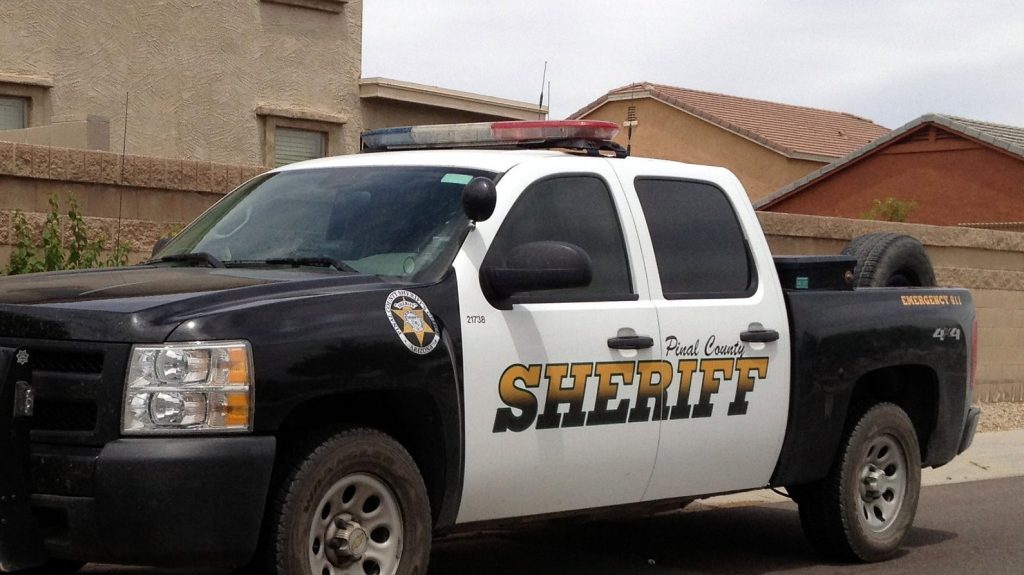
Mesa0789/Flickr/CC BY-ND 2.0
A persistent fear
Garro’s isn’t the first notable instance of a police interaction with a deaf person going south.
In October 2024, ABC 15 publicized body-worn camera and surveillance footage from an incident two months earlier in which two Phoenix police officers rushed, tackled and Tased a deaf, Black man with cerebral palsy whom they’d incorrectly assumed was a shoplifting suspect. The man, Tyron McAlpin, faced felony assault and resisting arrest charges until the video went public, leading prosecutors to dismiss his case. The cops involved were eventually suspended for only 24 hours.
McAlpin is now suing the city. Showalter, Garro’s attorney, is also representing McAlpin in that lawsuit.
Advocates say that deaf and hard-of-hearing people often worry about not being understood during interactions with law enforcement. Many people have never met a person who can’t hear, and the tense nature of law enforcement interactions adds further complications. For the deaf community, it’s a real fear that a simple traffic stop could spiral out of control because of an inability to communicate.
There are ways to try to prevent that from happening, said Nikki Soukup, the executive director of the Arizona Commission for the Deaf and Hard of Hearing. The commission provides notecards that people can keep in their car visors and hand to law enforcement officers. There are also resources for officers, like smartphone applications that connect directly to an interpreter. Proper training with regular refresher courses is also important, she said.
Soukup pointed to the Blue Envelope Program, which is geared towards law enforcement encounters with people with autism, as a possible model that departments and the deaf community can look to for solutions.
“Having these types of tools to aid officers when they’re out on patrol, having that knowledge and the tools and the resources available for them so that when they do encounter someone who does not hear,” Soukup said, “then they are able to better serve.”
The Arizona Peace Officer Standards and Training Board, which licenses all law enforcement officers in the state and determines the training curriculum for law enforcement agencies, offers an optional online video training that departments can provide to officers, said AZPOST Executive Director Chuck Miiller. (Miiller declined to comment on Garro’s case.) There are also outside consultants that departments can reach out to directly for additional training, but it’s up to the individual agency to seek it.
Pinal County declined to say whether or not it provides this type of training to its deputies.
Some relevant training is required. Two courses in the AZPOST basic training curriculum, which all recruits receive, touch on encounters with people who can’t hear, according to two lesson plans provided to New Times by Miiller. The first is a section of a Cultural Awareness and History of Law Enforcement class on “Common Community Concerns.” The second is a section in a course on Interpersonal Communication, which goes more in-depth and includes a bullet point about handcuffing someone who uses sign language.
“You may have to handcuff someone who is deaf and communicates through sign language. Understand that this will be exceptionally traumatic,” the lesson plan reads. “If it is safe to do so, explain what is happening and how long they will be handcuffed. Then, try to remove them as soon as possible.”
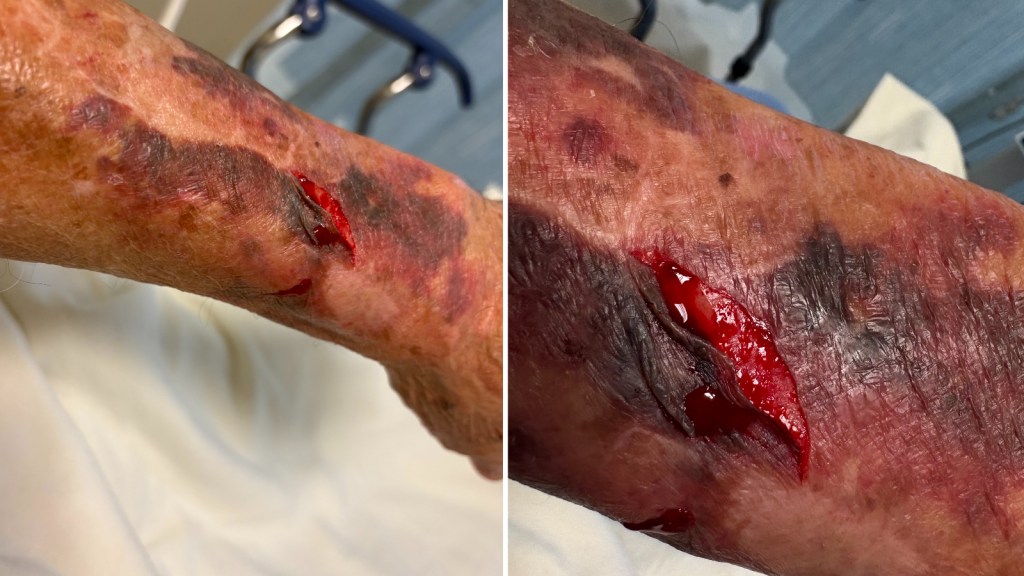
Courtesy of Tom Garro
To the hospital, then home
Garro doesn’t know how long he waited as he sat cuffed in the backseat of a patrol vehicle, with his hands behind his back. He said he was terrified the deputies would take him to jail. With his hands restricted, he had no way of communicating at all. He couldn’t write, he couldn’t text and, without an interpreter, no one would understand him even if he was free to sign.
“I felt like I’m done for,” he recalled. “I don’t understand what’s happening.”
An ambulance arrived. Medics used a phone to ask him if he was hurt, but Garro couldn’t respond. The officers uncuffed him. At first, he typed to the medics, then he Facetimed a friend who served as an interpreter for him. Ultimately, the deputies gave him the choice of going to the hospital or waiting in the ambulance for an interpreter. He chose the hospital.
Being uncuffed and in the ambulance made him feel better, Garro said. He was taken to Banner Ironwood Medical Center, where medical staff examined him and bandaged his injuries. They communicated through a Video Remote Interpreting service. Garro was also finally able to text his girlfriend, Maryann Romano, who is also deaf. She had her daughter, who is hearing, call the hospital.
The whole time he was at the hospital, Garro said, he wondered if his next stop was jail. But he never saw the deputies again. When he was discharged, he was free to go. He spent $19 on a ride to his car — in a Lyft, of course — which was still parked in the Big O Tires parking lot off the Hunt Highway. Then he drove all the way home to Sun City.
Garro hasn’t driven for Lyft since that day. In fact, that final ride was never completed, so he never got paid for it. He gets social security, but it’s not enough, so he’s had to borrow money from his niece to get by.
He’s also been in physical therapy for his injuries, though he didn’t go into detail about them. He also said he dreams about the encounter, which a therapist told him were symptoms of PTSD.
“It’s like a scar on my brain now,” Garro said.
One detail sticks with him, though: He remembers the deputy as having multiple pens in his pocket.
“Like you can’t even write to me! You have literally more than enough pens in your pocket, but instead you just throw me on the ground instead of choosing to communicate with me?” he said. “It’s crazy.”