
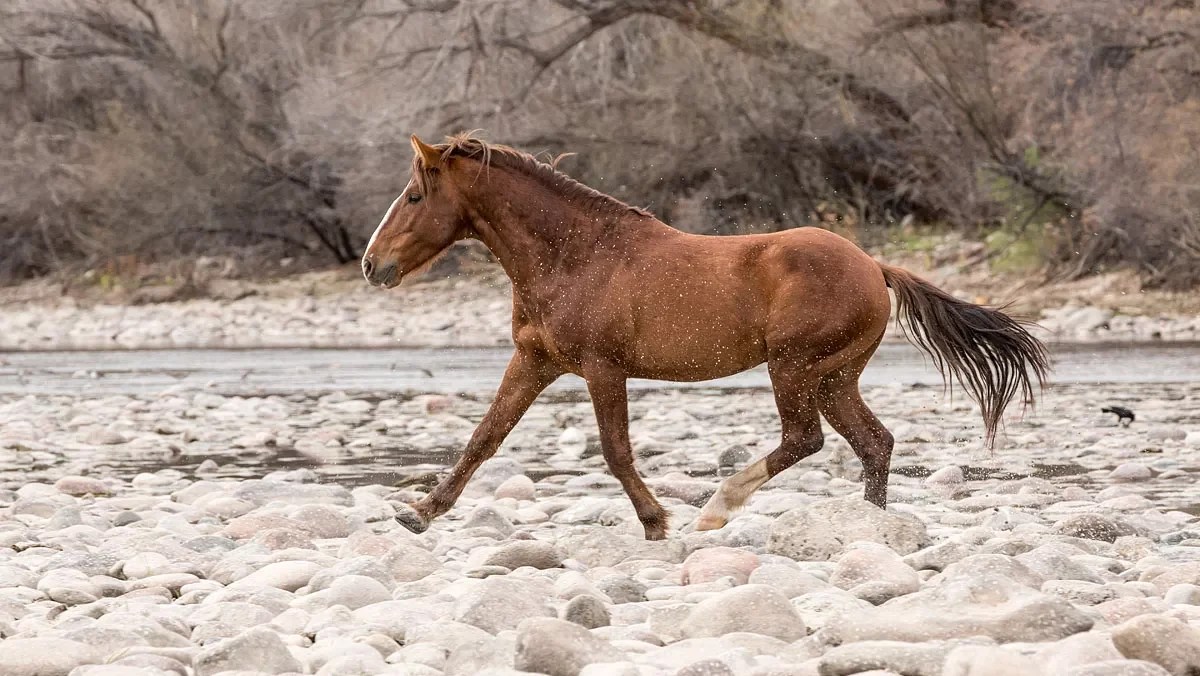
Andrew Pielage

Audio By Carbonatix
A decade after Arizona lawmakers passed legislation establishing protections for the Salt River wild horses, the battle for the iconic herd is once again galloping through the Arizona Capitol. Republican lawmakers are pushing legislation to halt a new round of planned removals that advocates warn could shrink the population to genetically dangerous levels.
A strike-everything amendment to Senate Bill 1199 would place a three-year moratorium on horse removals from the Lower Salt River while researchers conduct a peer-reviewed genetic viability study examining how many horses are needed to maintain a healthy breeding population. Supporters say the proposal prevents the herd from falling below sustainable levels under a recently renewed state management contract.
The legislation follows the renewal of a contract between the Arizona Department of Agriculture and the Salt River Wild Horse Management Group earlier this year. While the latter organization retained management authority over the horses that its held since 2018, the new contract included mandatory removals for the first time.
For Simone Netherlands, founder of the Salt River Wild Horse Management Group, the issue is no longer just about herd management. She says it is about whether the state is pushing the population toward long-term genetic collapse.
“We must ensure that future removals do not make this herd genetically unviable,” Netherlands told Phoenix New Times. “When populations become too closely related, they can self-extinguish over time.”
The nonprofit currently manages roughly 273 horses along the Lower Salt River corridor. Netherlands said the organization spent the last decade building what it describes as one of the country’s most successful wild horse fertility control programs, reducing annual foal births from more than 100 per year to an average of two.
She said the Forest Service sent a 2024 letter to the Arizona Department of Agriculture, which has authority to manage the horses, arguing that previously discussed population targets of roughly 150 to 200 horses were still too high. The agencies pushed for significantly lower herd numbers based on forage-allocation concerns and environmental impact claims.
“It went from real cooperation to they seemed to be making things as hard as possible for us,” Netherlands said, referring to leadership changes within the Arizona Department of Agriculture.

Andrew Pielage
To remove or not to remove
Netherlands said that her organization ultimately agreed to limited removals because it feared losing the management contract altogether to a competing bidder, the Wild Horse Transition Team, which Netherlands has claimed would have sold removed horses at auction.
“We were sad that we had to remove horses,” Netherlands said, “but if it has to be done, we want to be the ones to do it.”
The Salt River Wild Horse Management Group believes it can preserve family bands and ensure that removed horses are not funneled into auction systems or separated from one another.
State Rep. Cody Reim, who represents Scottsdale and who introduced the strike-everything amendment, has framed the legislation as a pause intended to give researchers time to independently evaluate the herd’s long-term viability. The specifics of that research were not explicitly stated in the bill.
The proposal would halt removals for three years except in cases involving urgent veterinary care or humane emergencies.
“The current management group is being forced to reduce the Salt River herd by as many as 150 horses, starting this year,” Reim said in a statement announcing the amendment. “These horses are a cherished part of Arizona’s heritage.”
Reim did not respond to requests for comment from New Times.
Though Republicans are currently leading the push to halt removals, Netherlands argued the issue transcends party lines, saying support for the horses comes from “people from all sides.” She believes lawmakers became more skeptical of the removal plans after seeing the horses firsthand, recalling when she took Reim and his family into the Tonto National Forest to observe the herd near the river.
“He saw firsthand how healthy the horses looked,” she said. “He questioned why the agencies were suddenly so adamant about removals when the herd had been much larger just a few years earlier.”
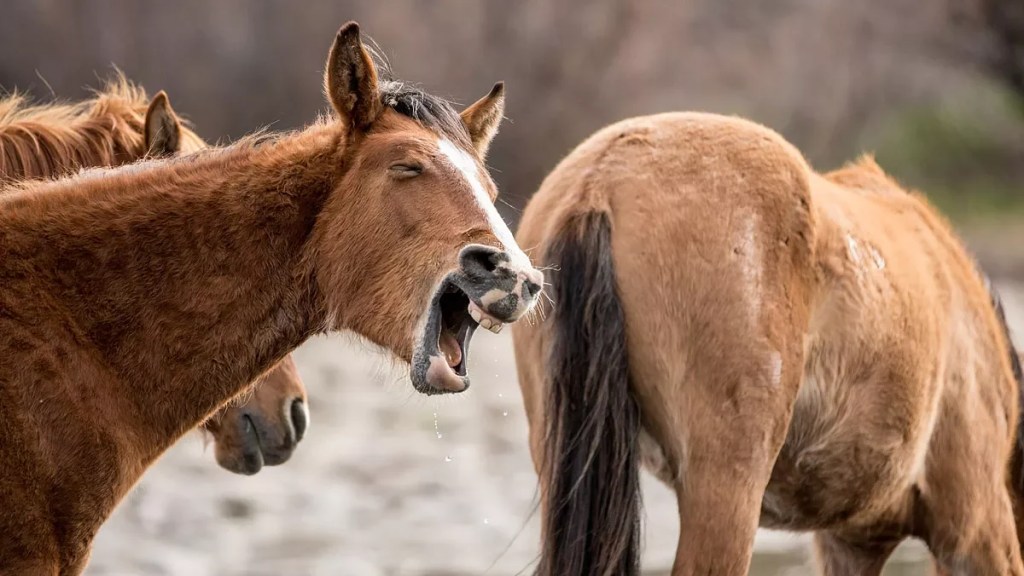
Andrew Pielage
Bad for the environment?
The debate surrounding the horses has increasingly centered on competing interpretations of science and environmental stewardship.
Critics of the current management strategy — including some environmental advocates and supporters of competing management proposals — argue that the horses place pressure on fragile riparian ecosystems and desert vegetation within the Tonto National Forest. In a recent Facebook post from the opposing Wild Horse Transition Team, group leader Jackie Hughes criticized the Netherlands-led management organization, writing that attempts at cooperation had become a “nightmare.”
“Instead of being part of a collaboration to ensure ‘our horses’ and ‘our public lands’ are cared for, they devalue the horse and the public that would potentially adopt, train, love them, and have zero respect for the forest,” she said.
Hughes, a former Arizona Department of Agriculture liaison, has built a following among critics who believe the current management approach places too much emphasis on public attachment to the horses and not enough on ecological sustainability. Supporters of her approach argue that the herd requires stricter long-term population controls to reduce environmental strain on the Lower Salt River corridor.
Netherlands disputes much of the environmental criticism directed at the herd, saying that the horses’ impact is overstated and ignores other forms of environmental pressure in the area. She pointed to the droves of annual recreational visitors, off-road vehicle use and cattle grazing elsewhere in the forest as examples of environmental impacts she believes receive less scrutiny.
Despite their pushback, the nonprofit itself has made major concessions over the years. The organization agreed to fence the horses into a significantly reduced management area, shrinking the range they historically occupied to roughly 30% of its former size.
Now, with lawmakers proposing a moratorium and agencies still advocating for removals, the future of the herd may hinge on whether the legislature accepts the central premise behind the amendment: that reducing the population too quickly could create a different kind of extinction risk altogether.
Whether Reim’s bill will become law — and whether Gov. Katie Hobbs will sign it, essentially overriding her own Department of Agriculture — remains unclear. The Arizona House of Representatives has yet to vote on the measure, and it will have to clear the Arizona Senate after that.