
TJ L’Heureux

Audio By Carbonatix
With devastating cuts likely coming to the state’s share of Colorado River water, Arizona cities have been gearing up to diversify their water supplies. Yet, despite grave and passionate warnings — from experts, residents and even former city leaders — one East Valley city is ditching critical water funding.
On Tuesday evening, the affluent suburb of Scottsdale unanimously passed a $2.1 billion budget for fiscal year 2026-27 that didn’t include $233 million for various water projects, both active and planned. In its place, the budget included $100 million for “water source and supply.” The change — which leaves critical water resources, like a wastewater purification facility, without assured funding — elicited spirited criticism from attendees at the meeting.
“Scottsdale is not yet in a crisis,” said Bruce Hallin, the former director of water supply for the Salt River Project, during the public comment portion of the meeting. “But without significant investment in water infrastructure today, we are placing undue risk on future generations.”
Scottsdale currently receives its water from four sources: the Colorado River, the Salt River Project, groundwater and treated wastewater. Colorado River water accounts for nearly 70% of that supply, including 90% of the supply in north Scottsdale. The city relies on the Colorado River more than any other city with roughly 250,000 or more residents, said Sarah Porter, the director of Arizona State University’s Kyl Center for Water Policy.
That supply is about to take a huge hit. Negotiations have stalled between the seven Colorado River Basin states over how to allocate the river’s dwindling water supply, and the federal government may impose cutbacks when the current river agreement expires at the end of September. Porter said that cities like Scottsdale “need to be prepared for a potentially 100% cut in supplies in the years to come.”
The Scottsdale City Council had done that in the past. In 2024, the council adopted a six-year strategic water plan that included wastewater purification and recycling via its Advanced Water Treatment facility. Per that plan, Scottsdale would “become the first city in Arizona to implement direct potable reuse” — that is, sending purified water right back into taps, rather than storing it in an aquifer for up to a decade — “on a system-wide basis.”
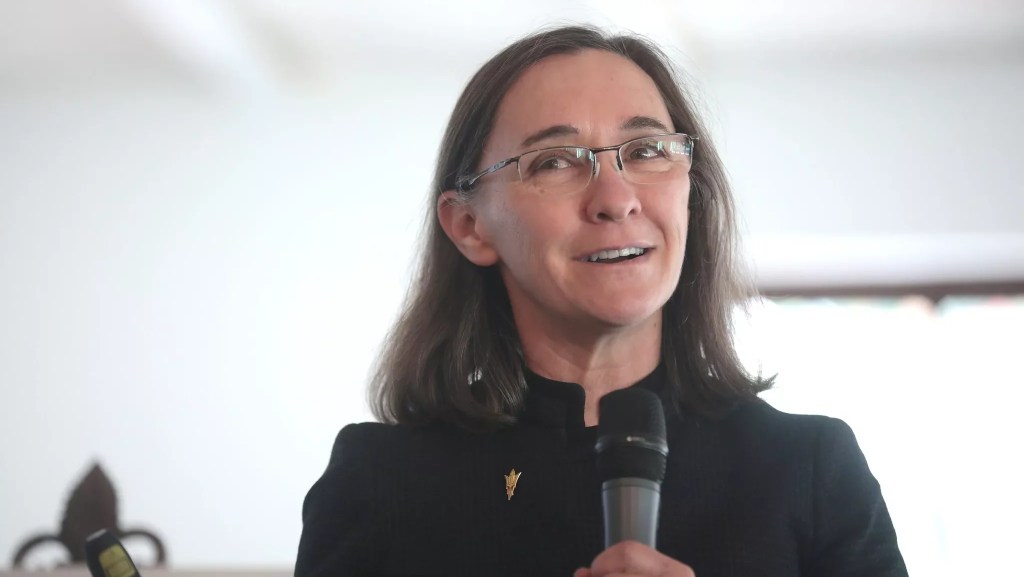
“You never want to have all your eggs in one basket,” Councilmember Solange Whitehead told Phoenix New Times ahead of the vote. “To avoid a catastrophe, we have to diversify, and that profile will include local recycled water.”
It’s funding for water recycling — which does not rely upon the Colorado River — that is now up in the air.
Gage Skidmore/Flickr/CC BY-SA 2.0
A MAGA talking point
The issue has become a far-right bludgeon ahead of city council elections this fall.
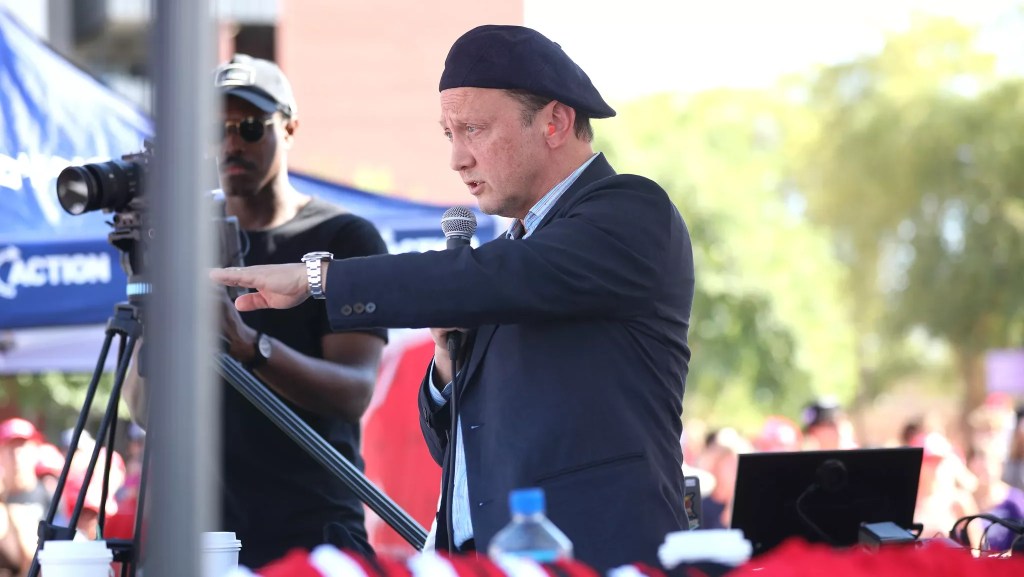
Comedian-turned MAGA hype man Rob Schneider has turned to social media to fervently push back against Scottsdale’s water recycling project, labeling it “toilet to tap” or poop water and slamming it — without evidence — as unsafe and untested. He’s tossed “Sewage Solange” epithets at Whitehead, who has been a vocal advocate of the project, and teamed up with far-right Republican city council candidate Michelle Ugenti-Rita to push against the project.
Whitehead said Schneider’s rhetoric is “undermining trust in Scottsdale’s state-of-the-art treatment facility. It’s saying don’t trust the government. Well, the local governments are responsible for providing safe, secure and affordable water. These antics are undermining municipalities across the West.”
Porter said she understands why people are concerned, but said the recycled water is clean and safe under these treatment processes.
“Who would want to drink wastewater? Nobody,” she said. “It’d be a terrible thing to do. Effluent” — that’s wastewater that has gone through treatment — “is a different thing. It’s a water of completely different character. And then, when that effluent is treated to potable water, it’s completely different. It’s your tap water.”
For more than 20 years, Scottsdale’s Advanced Water Treatment Facility has treated recycled water via indirect potable reuse, allowing it to reenter the city’s water supply as drinking water, according to the water department’s website. It’s a complex, intensive system that treats the recycled water through the city’s conventional water reclamation plant — further treating it with ozonation, ultrafiltration, reverse osmosis and ultraviolet photolysis — before it’s injected into dry wells, where it receives natural filtration over several years. Then the water reaches an aquifer or the Reclamation Water Distribution System for drinking.
The wastewater enters an intensive treatment process to become effluent, at which point it can be used to water golf courses or create snow at Arizona’s Snowbowl. To become drinkable, it’s put through a second advanced treatment process. That water isn’t going directly from treatment to taps just yet, though. The direct potable water use project has to navigate an extensive process that could take years of testing and permitting before that pipeline opens up.
“It’s quite an effort to demonstrate to the (Arizona) Department of Environmental Quality that your plant should be permitted to be able to deliver that water to taps,” Porter said.
Since the strategic plan was passed in 2024, the city has been moving the ball in that direction. Scottsdale received the state’s first permit for direct consumption of ultrapurified water and was working with the state to finalize the next steps in the permitting process, making it further along “than anyone else in Arizona,” Porter said.
After the next step is finalized, the treatment plant will begin treating water through this process and collecting data over several years. But now that funding has been pulled, that progress came to a screeching halt.
Gage Skidmore/Flickr/CC BY-SA 2.0
‘Kicking the can down the road’
At the Tuesday meeting, City Manager Greg Caton cast the water funding change as preemptive, noting that the Arizona Department of Environmental Quality will be issuing new testing standards for purified water facilities. That will likely affect the project’s cost, so the city is waiting to allocate funds specifically for APRW.
That pause will cause “additional lag time,” Porter said. She called the decision “misaligned with the need for alternative water supplies” because the project is already on a tight timeline and “Scottsdale can’t just flip it on and off.”
During the public comment portion of Tuesday’s meeting, several residents offered similar warnings.
Former Scottsdale Mayor David Ortega said that “the budget is basically saying, ‘Let’s put it off, let’s wait and see how bad it is,’” while ex-councilmember Betty Janik said, “It looks like politics to make the budget look good is winning out over common sense in this election year.” Scottsdale resident Dan Ishac told the council it was “committing the biggest sin in government” by “kicking the can down the road.”
Those comments fell on deaf ears. Whitehead introduced a motion to allocate $20 million from the city’s water budget contingency fund — about half of the fund’s amount — toward drilling wells and to APRW. Vice Mayor Maryallen McAllen, who told New Times that “we could not have picked a worse time to do this,” seconded Whitehead’s motion. But Councilmember Barry Graham made an alternate motion to pass the budget and five-year capital improvement plan without Whitehead’s request. Without the votes on her side, Whitehead voted to support Graham’s motion, which passed unanimously.
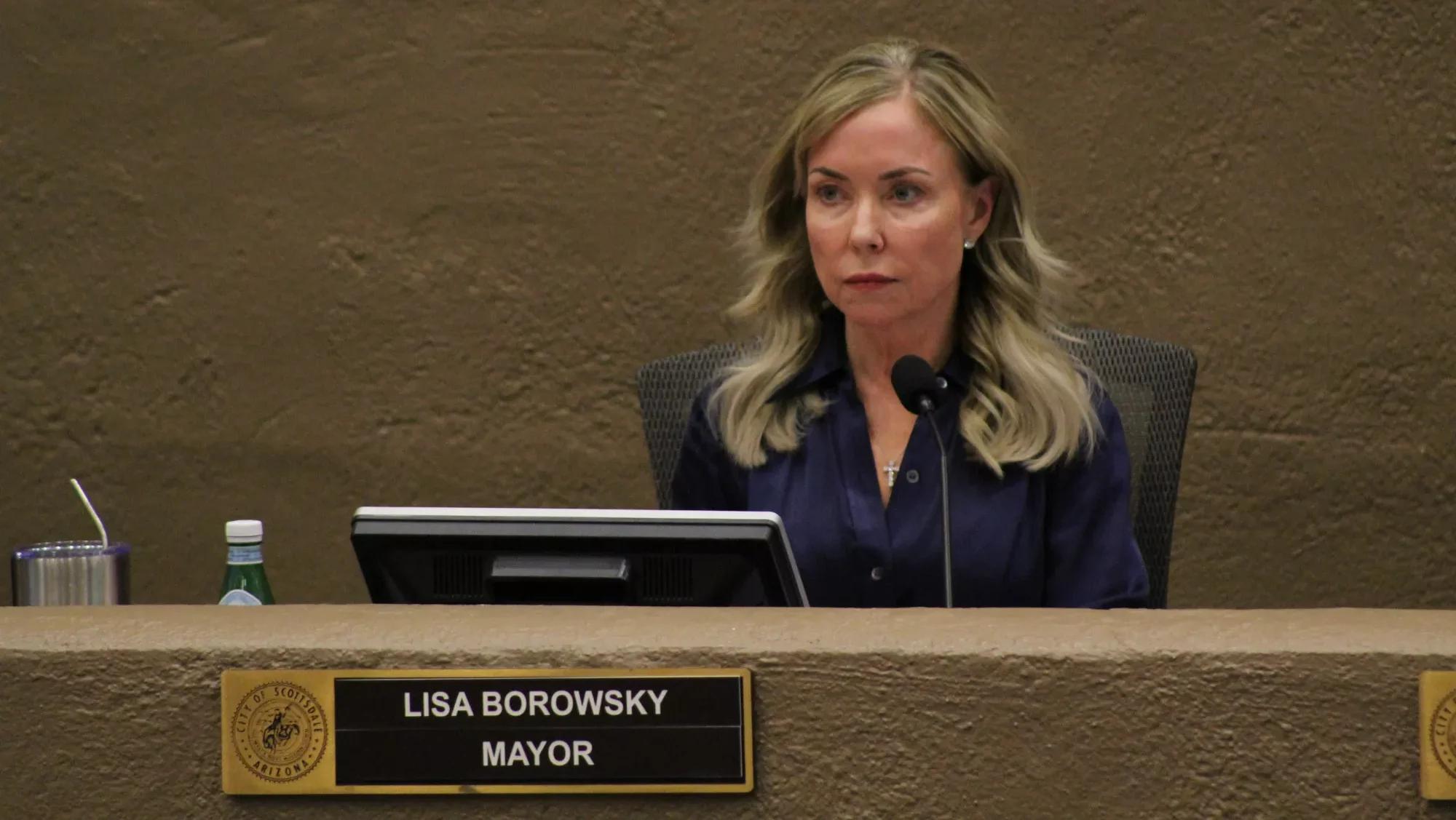
During the meeting, Mayor Lisa Borowsky said she was also concerned about water, but was “reassured” that the council and members of the public will have a “comprehensive discussion” to “readdress the funding” of the strategic plan after they learn how much it’ll cost. Council member Adam Kwasman, who has been among those pushing misleading toilet-to-tap claims, said he’d like to reach out to Robert F. Kennedy Jr. about Scottsdale’s pure water.
In response to questions from New Times, Scottsdale spokesperson Holly Peralta wrote in an email that “the city’s commitment to water security has not changed.”
“This budget approach is intended to provide flexibility while ensuring future investments are guided by the best available technical, regulatory and financial information,” she added. “Scottsdale will continue to evaluate all available water supply options and make strategic investments that protect the community’s long-term water future.”
Borowsky, Kwasman, Graham and fellow councilmembers Kathy Littlefield and Jan Dubauskas did not respond to a request for comment.