
Provided by Cactus Cru

Audio By Carbonatix
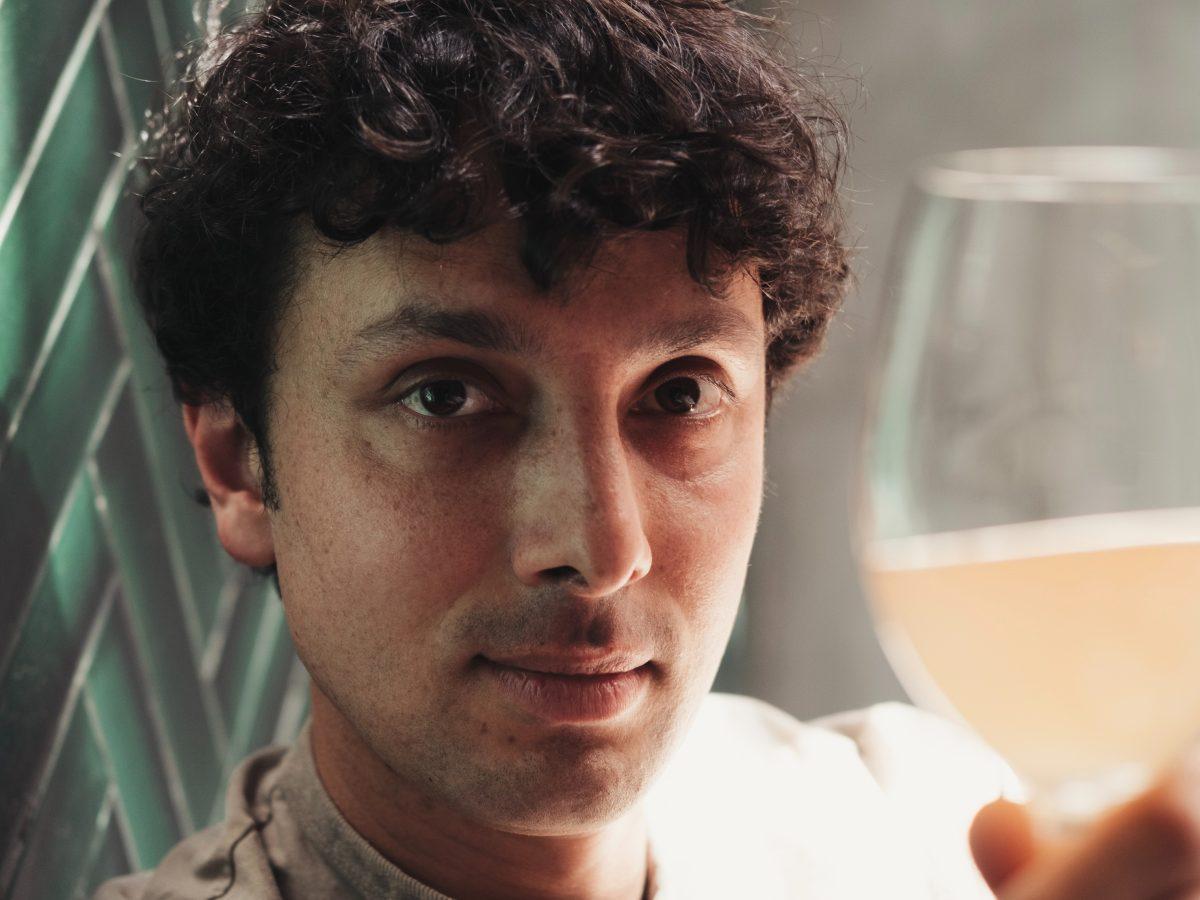
Before Timo Geis took up winemaking, he became enamored with natural wine. And for a few months, he was content to spread the love by distributing it.
In 2019, he launched an import and distribution company focused on bringing unique bottles to Arizona. Geis saw the potential in introducing the most stringent end of the low-intervention category, made with organic grapes, zero additives and no filtering, to the local wine audience.
“I guess I’m just a millennial and I fell in love with this cool up-and-coming natural wine scene,” says Geis, who was raised in Sedona. “I saw there wasn’t a lot of that culture here in Arizona.”
Geis’s imports quickly became sought-after and graced lists at noted Valley establishments including Restaurant Progress, Pa’La, Glai Baan and Sauvage Wine Bar & Shop. But soon, he became curious about more than sourcing bottles. He decided to try making the wine himself.
His new company, Cactus Cru, bottled its first wine in 2021.
The wines quickly gained popularity and are now on lists at lauded restaurants including FnB, Bacanora, Valentine and Citizen Public House, as well as boutique wine bars and shops across the Valley. He’s eyeing potential Sedona spots for a tasting room, and hopes to eventually add a second in Phoenix.
But Geis isn’t stopping there. He’s gone from wine importer to wine maker, and now to Arizona wine advocate.
In January, Geis was elected to the Arizona Wine Growers Association board and, a month later, was named Chair of its Branding & Marketing Committee. So far, he’s sparked partnerships with movers and shakers behind the city’s biggest events to put Arizona wine on more radars and he plans to equip bars and restaurants with information to help them better showcase local vino.
Many of these ideas are new to the 45-year-old nonprofit’s leaders and members. And most of Geis’s fellow Arizona winemakers are at least a decade older, with some making wine nearly as long as he’s been alive.
The transition from the familiar formulas to novel ideas may not be easy. Yet this millennial specializing in an unconventional winemaking style is using his gumption to keep the Arizona wine industry relevant for years to come.
“It’s about making sure Arizona wine stays up to date and doesn’t get left behind,” Geis says.
So, who is this relative newcomer who holds the future of Arizona wine in his purple-tinged hands?
Provided by Cactus Cru
France-born, Sedona-raised
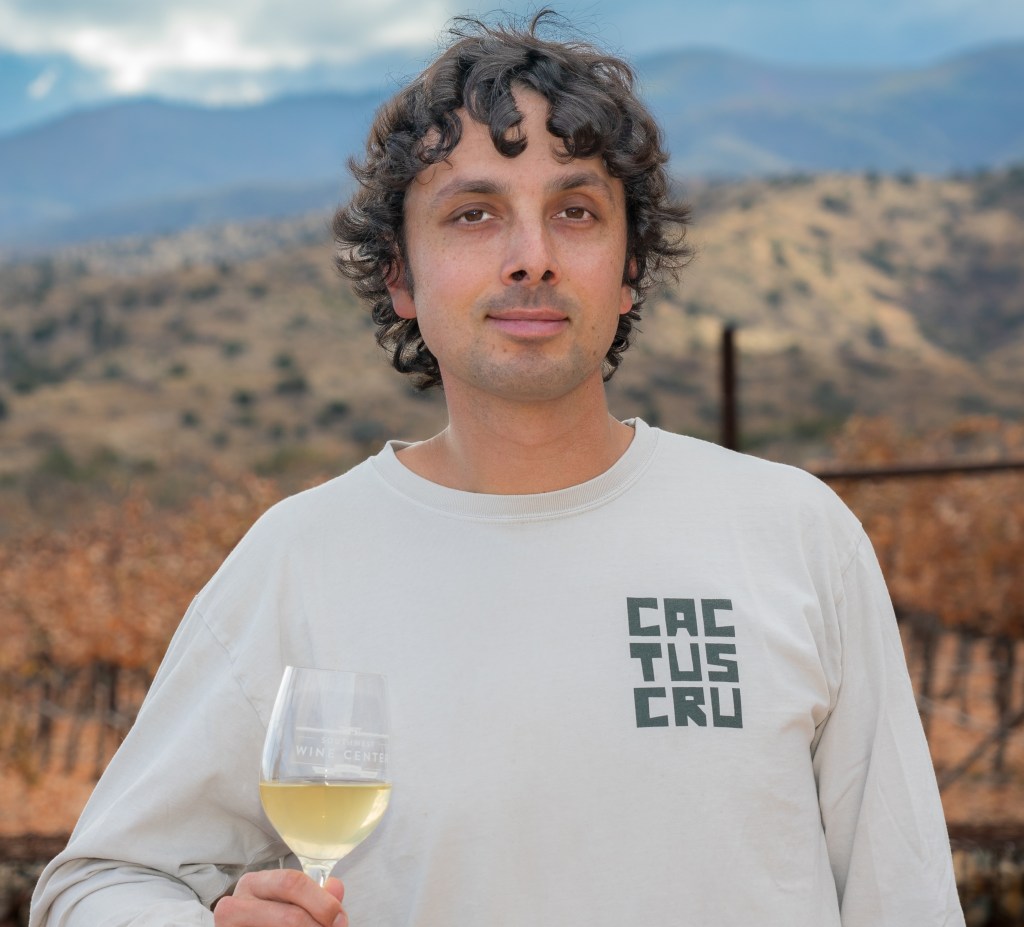
Born in Alsace, France, Geis was raised by his French father and his mother, who is from India. His parents divorced when he was a toddler, and he was 4 years old when he moved to Sedona, where his mother, now retired from careers in real estate, yoga and meditation, still lives.
He spent most of his childhood in Arizona, interspersed with long stints in France.
“It was a lot of back and forth, but it was the best of both worlds,” Geis says.
After graduating from high school in Sedona, Geis spent time in Spain, Italy, Germany and France. He also lived in Colorado, Florida and Kentucky, where he earned bachelor’s degrees in Spanish and his first language, French, from the University of Louisville.
Geis grew up with wine at his father’s and grandparents’ tables, but he wasn’t interested in it until he started working in restaurants while in college. As he moved up the management ranks, he was required to become knowledgeable about the wines on the list.
A mentor encouraged Geis to pursue sommelier certifications. After earning a Level Two Certified Sommelier certification through the Court of Master Sommeliers at age 28, he returned to Alsace for his first harvest internship in 2018.
There, at an organic domaine winery, Geis’s journey with natural wine began.
Provided by Cactus Cru
Real-world education
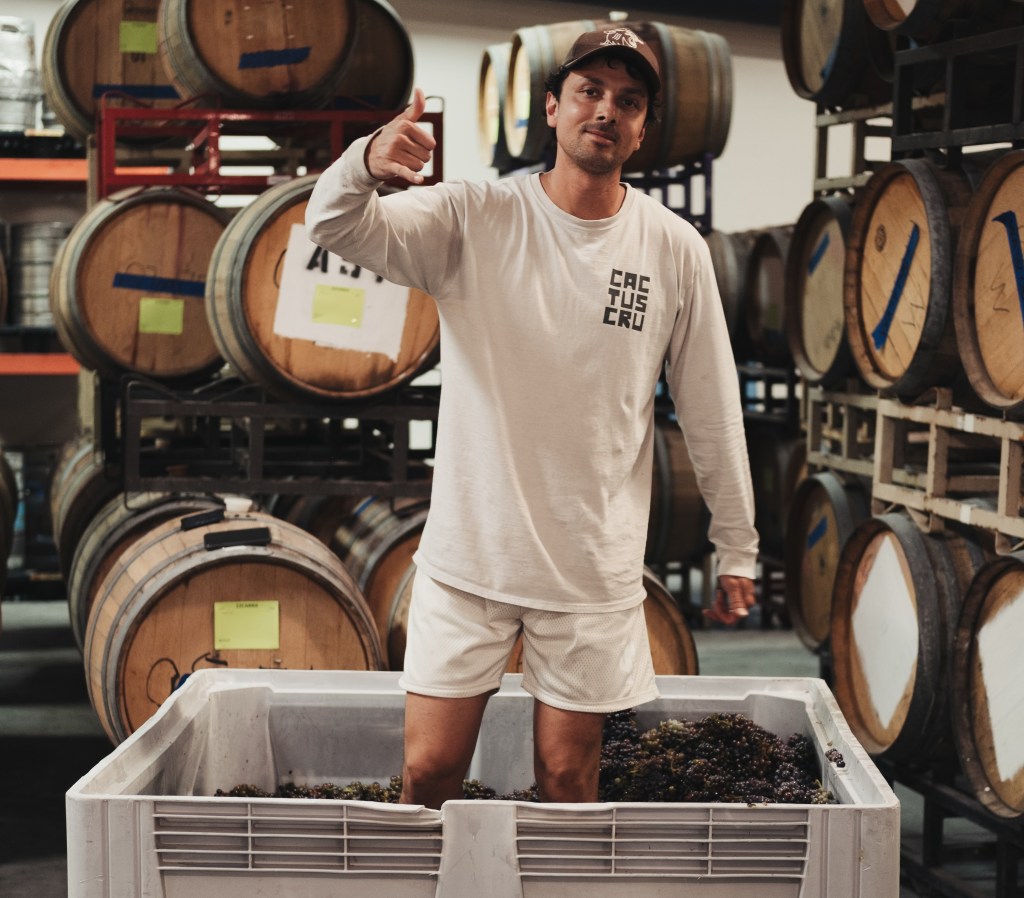
During that internship, he spent much of his time scrubbing and sanitizing massive tanks in preparation for the fruit to arrive. It was physically demanding. He only picked grapes once during that season.
“It was not at all the romantic picture I’d imagined after passing my sommelier exam,” Geis says.
But he got his first opportunity to process a Pinot Noir using semi-carbonic maceration, a technique that involves layering whole clusters of grapes beneath destemmed grapes to kick off fermentation. The result is a tannic, dry wine.
“It was an eye-opening lesson in how much of winemaking is invisible, meticulous cleaning and preparation, long before the glamorous part begins,” Geis says.
In 2019, Geis spent his second harvest season across several countries, each with their own conditions. In Spain, he was met with hot, sunny skies as he picked grenache. In southern France, the days began before sunrise, where Timo experienced the backbreaking work of picking white muscat grapes that grow low to the ground.
Heavy rain postponed the harvest in Italy, and threatened to do the same in Germany. However, Geis and his peers picked the German grapes despite the conditions due to the high sugar levels and rot setting in.
After completing two harvests, Geis returned home to launch his natural wines import business, which he has since sold.
Before he turned 30, the young wine aficionado had found his calling. He’d import and distribute his favorite earthy and zippy sips in Arizona.
But then everything came screeching to a halt.
In March 2020, COVID-19 grounded Geis’s fledgling business just months after it took flight. Geis had a huge inventory to sell, but no one was buying.
“I just got all of these wines and everyone was locked down,” Geis recalls. “(My thoughts were) I think it’s over.”
Instead of moping, however, Geis came up with a plan.
Provided by Cactus Cru
From pandemic project to new profession
Some had sourdough. Others had pickleball. Geis had wine.
The lanky entrepreneur bought as much high-end winemaking equipment as he could fit in the bedroom area of his studio apartment in Sedona, and started experimenting.
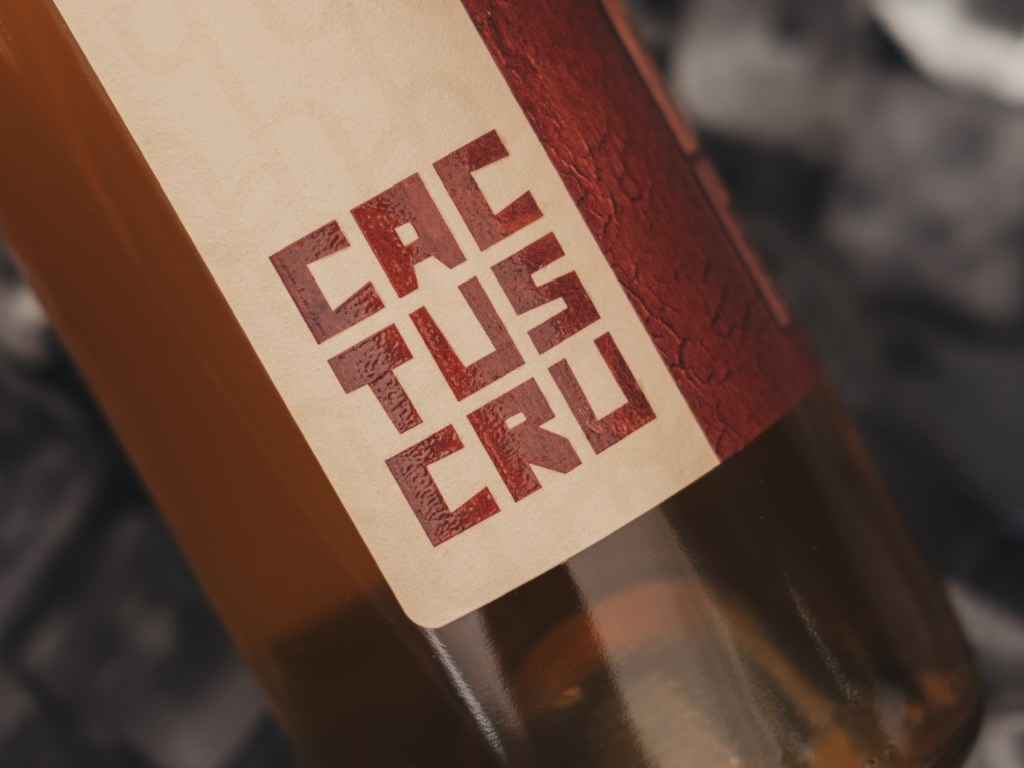
His 2020 pandemic project became Cactus Cru. When Geis joined the Arizona wine world, almost no one was making what he considers true natural wine. When he reached out to wineries asking if they would do a custom natural wine with organic grapes he procured, he was ignored and once laughed at.
“Some people didn’t take me seriously. I’m just some random dude,” Geis says. “At that time I had no credibility in the industry.”
Geis continued to experiment at home and signed up for classes at the Southwest Wine Center at Yavapai College, where he earned his enology certificate. Encouraged by his professors, Geis entered a sparkling cabernet into the school’s Emerging Wine Competition. It medaled.
Geis would go on to make his first commercial wine at the Southwest Wine Center – a still cabernet sauvignon – which made its way to Bacanora, Sauvage and other spots in Tucson and Flagstaff.
After three years of trial and error making homebrew in his Sedona apartment, receiving a formal wine education and networking with newbies and veterans in the Arizona wine industry, Geis had the cred needed to show his natural wine mission was no joke.
In 2023, he moved his operation out of his apartment. Today, his wines are made at Arizona Stronghold Vineyard and Bodega Pierce in the Verde Valley. He moved to Phoenix and splits his time between the Valley and Sedona.
And now he’s using his knack for collaboration to bring the same success to the industry through his work with the AWGA, the nonprofit advocate for the state’s wine industry.
Provided by Cactus Cru
‘You’ve got to try’
Kelly Bostock, winemaker and co-founder of Dos Cabezas WineWorks and longtime AWGA member, has seen the industry grow over the years. She is acutely aware of the obstacles that threaten to stagnate it.
Alcohol consumption is decreasing. Young people are opting out of wine as their libation of choice. Locally, recent festivals haven’t been lucrative for participants as attendance has dropped. She’s game to try something new.
“Any idea that Timo is throwing out there is worth it,” says Bostock, who worked with Geis on the AWGA event committee. “You’ve got to try.”
A partnership between the AWGA and State Forty Eight, manufacturer of original Arizona-inspired clothing, accessories and other merchandise, is one of those ideas.
When Geis approached Sam Dallas, partnerships manager for State Forty Eight, with the idea to bring the company to wine festivals and to create a merchandise collaboration for t-shirts and possibly hats, Dallas was immediately on board.
“At State Forty Eight, we always are going to do what we can to promote local,” Dallas says. “Timo has the same understanding, viewpoint and passion around that.”
The designs are still in the works, but Dallas says the products will be unique, creative and speak to festival attendees. He used the word “legend” to describe Geis and his ability to leverage friendships and relationships to benefit the AWGA and the state’s wine industry as it grows.
“His passion is genuine,” Dallas says. “There’s nothing he can’t accomplish.”
Provided by Cactus Cru
Lighting a fire
For events, Geis brought on JT Taber, founder of Pour Amour and Matt Baquet, co-founder of Eros Works, the team behind events such as VIVA PHX and FORMfest.
They partnered with the AWGA on the association’s signature Off the Vine wine festival. Together, they plan to make the previously annual event happen three times a year.
Taber met Geis in 2021, when he owned the now-closed Buena Vida Bodega, a Garfield Historic District shop that carried Cactus Cru wines. After attending Pour Amor and Eros Works events, Geis approached Taber and Baquet and asked if they would consider taking a crack at the festivals, to make them more exciting and appealing to new audiences.
The Off the Vine festival in February was their first collaboration. The new format of elevated music and food along with a crowd-friendly layout generated positive feedback from audiences and winemakers, Taber and Baquet say.
Future plans include a membership tier for restaurants and wine shops that includes merchandise, information packets, social media perks and other goodies. This, he says, would help the people in the hospitality trenches better showcase and sell Arizona wine.
He also plans to update and refresh the AWGA website, marketing and social media. Geis is surrounded by winemaking colleagues who are at least 10 years his senior. The age gap brings a different perspective and vision.
“He’s bringing a relentless energy of trying to reposition the industry. He knows aesthetics is important,” Taber says. “The AWGA deserves that same level of attention.”
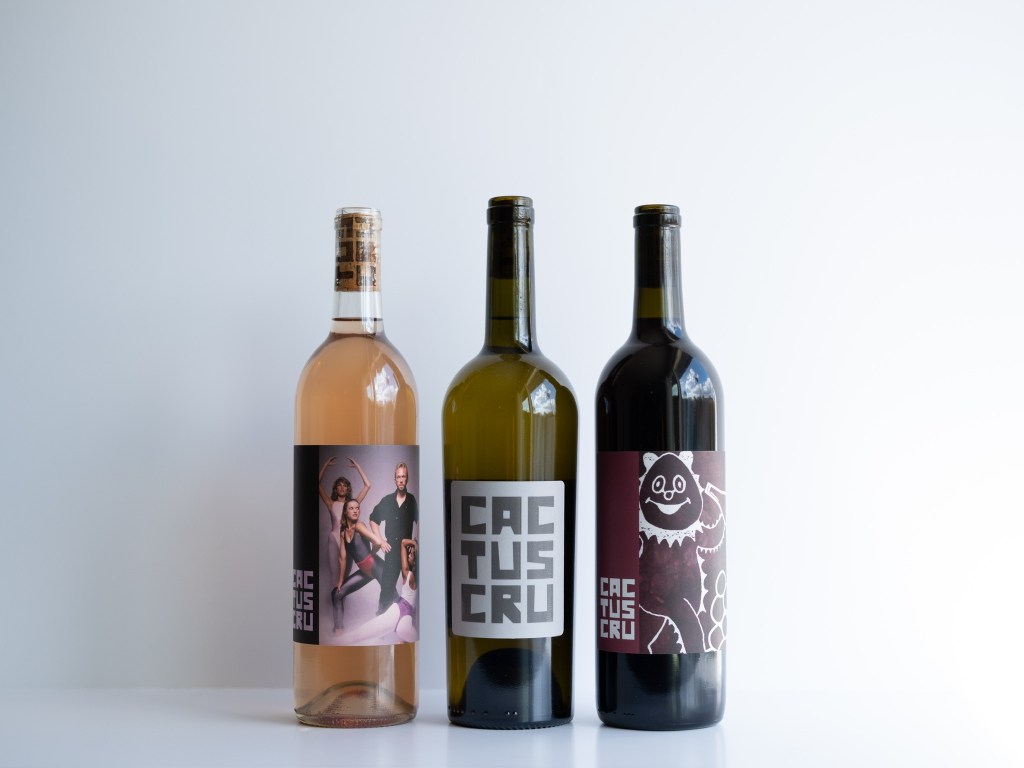
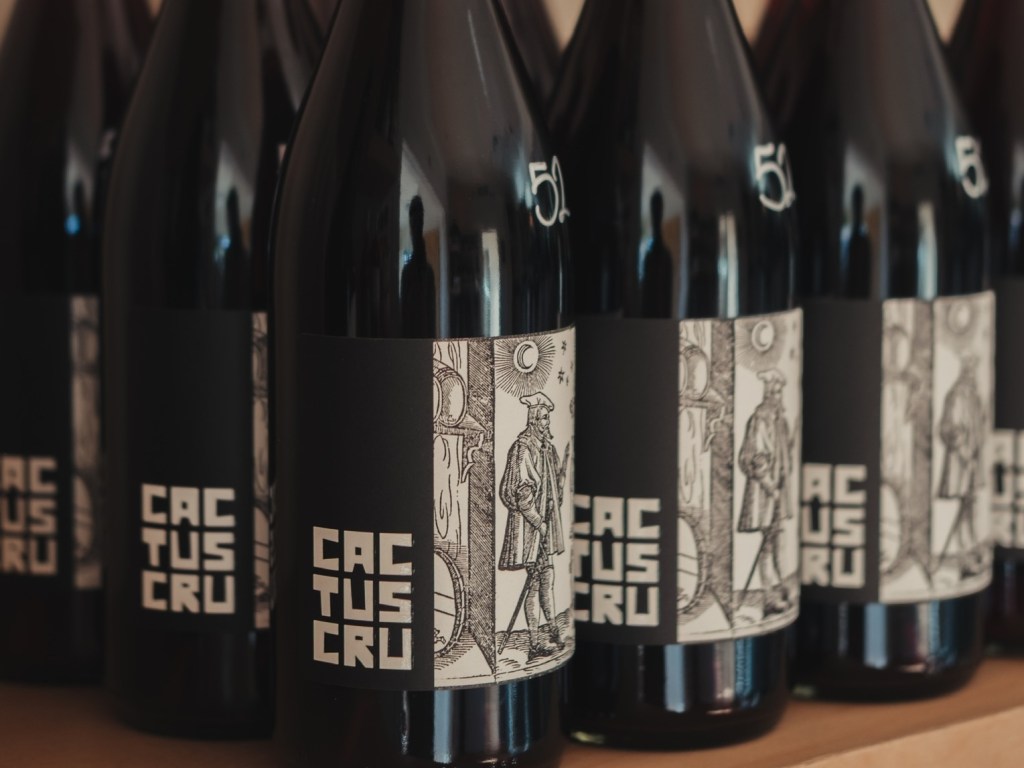
To promote his exclusively Arizona natural wine, Geis curated slick marketing and social media that exudes a mellow lifestyle. There are also head-turning labels featuring fun fonts, color-rich palettes and playfully drawn characters that reflect the wine behind them.
Geis also makes the wine business very personal. A vintage photo of his late father is the label for his Dance France rosé, named after the dancewear company his father started in the 1980s. His dad was a serial entrepreneur who inspired Geis’s ventures. The label is an homage that sparks conversation about the wine.
Those visual techniques and social media savvy are tools that can be applied across the industry, Baquet says.
“He’s definitely a trailblazer in that sense,” Baquet says. “In this day and age, you have a small window of opportunity to make an impression. So I do think we’ve got to tell the story and frame this industry in a way that looks like it’s ready to be taken seriously.”
While Baquet believes Cactus Cru and other up-and-coming wineries can coexist with the old guard establishments, he acknowledges that Geis’s ideas are unlike what the association has pursued previously.
These changes may cause some friction as Geis brings the Arizona wine world into new territory, he says.
“But that’s how a fire starts. That’s what the industry needs, a little fire lit under it so it can get to where it can be,” Baquet says. “Some people come in and shake things up every now and then and that’s when good things happen.”
Building customers and community
Dos Cabezas’ Bostock believes fighting any pushback now will be worth it in the long run.
“If you’re tiptoeing around trying to keep all the old school people on board, and do things the way they’ve been done forever… it’s just not working,” Bostock says. “Not to listen to somebody who’s trying to shake things up would be a mistake.”
Bostock likes that Geis brought Taber and Baquet on board. She says their ideas are fresh and appeal to the younger demographic the industry wants to attract.
“They bring that energy and that hustle, and that’s what Timo’s got,” Bostock says. “You have to have that spirit.”
Bostock also believes Geis’s demeanor, communication style and collaborative streak make him the right person for the job.
“He’s got great ideas and a very laid-back, chill manner that’s not overbearing, which is really lovely to work with,” Bostock says. “He’s a likable person, and that goes a long way.”
Earlier this year, Geis worked with an Arizona Office of Tourism-sponsored campaign that put on concerts at wineries, hoping to attract millennial and Gen Z drinkers.
As well as generating a new customer base, Geis also hopes to foster a community of like-minded people who love wine, and the people and stories behind it, as much as he does.
“I’m not trying to shake things up in a competitive way. I’m just trying to do my thing and hopefully people appreciate it,” Geis says. “It’s a supportive industry… We all want to see each other succeed.”