
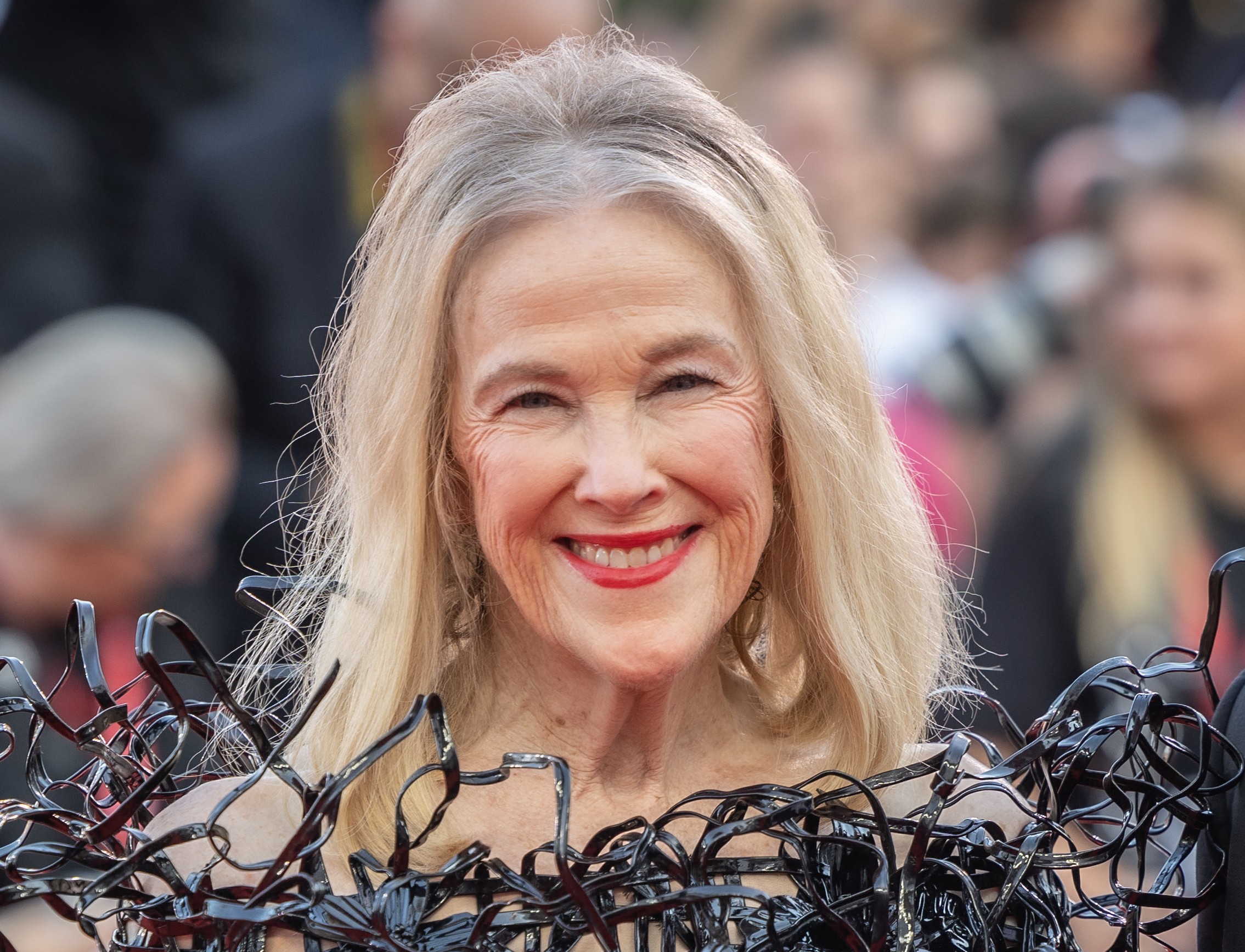
Harald Krichel/Wikimedia Commons

Audio By Carbonatix
Catherine O’Hara, the beloved actor and comedian who died Friday at the age of 71, occupied that rare position in contemporary screen culture: a comic actor, a cult figure and a mainstream star.
Her work spanned more than 50 years, from improv sketch comedy to Hollywood features and offbeat TV classics.
She was celebrated for her unmatched comic timing and chameleon-like character work. Her roles were often absurdist and quirky, but they hid a razor-sharp humor.
Born and raised in Toronto in a close-knit Irish Catholic family, O’Hara was one of seven siblings. She once remarked that humor was part of her everyday life; storytelling, impressions and lively conversation helped hone her comedic instincts.
After high school, she worked at Toronto’s Second City Theatre, a famed breeding ground for comedy talent, and sharpened her deadpan improvisational skills.
Big break
O’Hara’s break came with “Second City Television” (“SCTV”), a sketch comedy series that rivalled “Saturday Night Live” in creativity and influence. Alongside contemporaries Eugene Levy, John Candy, Rick Moranis and Martin Short, she defined her distinctly smart, absurdist comedic voice.
O’Hara was not merely a performer on “SCTV”; she was also a writer, winning an Emmy Award for her contributions. This dual role shaped her career-long sensitivity to rhythm, language and character construction.
Unlike sketch performers who rely on repetition or catchphrases, O’Hara’s humor emerged with a different comedic logic. Audiences laughed not because the character was “funny,” but because the character took herself so seriously.
Though briefly cast on “Saturday Night Live” in the early 1980s, O’Hara chose to stay with “SCTV” when it was renewed, a decision she later described as key in letting her creative career flourish where it belonged.
The transition to film
By the mid-1980s, O’Hara was establishing herself as a screen presence. She appeared in Martin Scorsese’s offbeat black comedy “After Hours” (1985) and showcased her comic range in “Heartburn” (1986).
Later in the 1980s, she landed what would become one of her most beloved film roles: Delia Deetz in Tim Burton’s left-field “Beetlejuice” (1988).
Delia — a pretentious, New York art-scene social climber — allowed O’Hara to combine physical comedy and imbecilic dialogue (“A little gasoline … blowtorch … no problem”).
Burton once noted “Catherine’s so good — maybe too good. She works on levels that people don’t even know. I think she scares people because she operates at such high levels.”
She went on to play Kate McCallister, the beleaguered mother in the holiday blockbusters “Home Alone” (1990) and “Home Alone 2: Lost in New York” (1992). Audiences loved the fact that this rather thinly written role became the films’ beating heart.
Working with Christopher Guest
Another distinctive phase of O’Hara’s career was her work with writer-director Christopher Guest on a series of largely improvised mockumentaries that have become cult classics.
Three standouts were “Waiting for Guffman” (1996), where she plays a desperate local performer in a small-town theater troupe, and “A Mighty Wind” (2003), where she teamed up with old pal Levy as an ageing folk duo.
Her best turn came in “Best in Show” (2000), in which she and Levy played a couple competing in a national dog show. Her character Cookie Fleck remains one of the finest examples of improvised comedy on film.
Her relentless monologues about former lovers are objectively inappropriate, yet O’Hara delivers them with such earnest enthusiasm that they become strangely compelling.
Her gift for improvisation glittered in these films: these eccentric characters were often laugh-out-loud funny — but O’Hara never mocked them.
Later success
She returned to TV in “Six Feet Under” (2001-05) and guest appearances on “The Larry Sanders Show” (1992-98) and “Curb Your Enthusiasm” (1999-2024). More recently, she appeared in prestige shows such as “The Last of Us” (2023-) and “The Studio” (2025-).
But it was the role of Moira Rose, the eccentric, ex-soap opera star in the Canadian sitcom “Schitt’s Creek” (2015-20), created by Eugene Levy and his son, Dan, that would become O’Hara’s most significant late-career move. And what a role it was.
Written for O’Hara’s unique talents, Moira was a larger-than-life character with a bizarre, unforgettable vocabulary, dramatic mood swings and a wardrobe that became nearly as famous as the character herself.
Feminist media scholars have noted the rarity of such complex roles for older women, particularly in comedy, making O’Hara’s performance culturally significant.
The show became a global streaming blockbuster during COVID lockdowns and O’Hara’s multi-award-winning performance became a social media phenomenon, spawning memes and viral clips.
There are so many standout moments – her drunken meltdown after losing her wigs, her audition for “The Crows Have Eyes 3” and the show’s moving finale where she performs Danny Boy at Alexis’s graduation.
An enduring legacy
O’Hara had a remarkable ability to play flamboyant, self-absorbed characters who were often uproariously funny.
Many comedians and actors have cited O’Hara as an influence for her fearlessness, her ability to blend absurdity with emotional truth, and her steadfast commitment to character integrity. She influenced performers like Tina Fey, Maya Rudolph, Kate McKinnon and Phoebe Waller-Bridge.
O’Hara also refused to chase conventional stardom. Rather than choosing projects designed to flatten her eccentricities, O’Hara favored collaborative environments that valued creativity over control.
For her, comedy was always an art of intelligence, empathy and generosity.
Ben McCann is an Associate Professor of French Studies at Adelaide University. This article is republished from The Conversation under a Creative Commons license. Read the original article.