
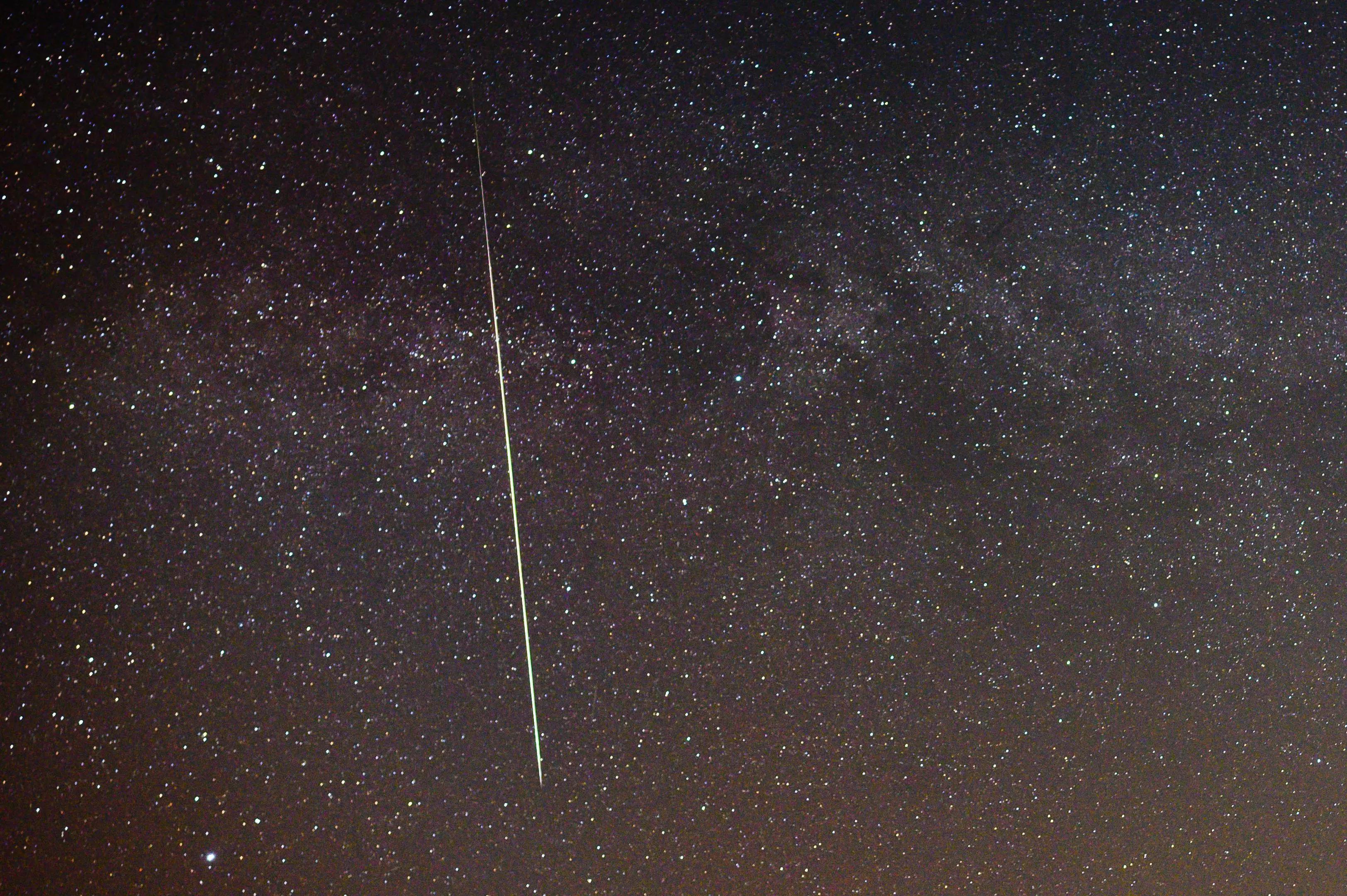
David Wipf/CC BY 2.0/Flickr

Audio By Carbonatix
The summer skywatching season kicks into high gear this week as two meteor showers reach their peak on the same night.
The Alpha Capricornids and Southern Delta Aquariids both peak Thursday night into Friday morning. While neither is known for high meteor counts, as they each typically produce a dozen or more per hour, their shooting stars tend to be memorable.
The Alpha Capricornids can cause bright fireballs in the sky, while the Southern Delta Aquariids often creates moderately fast meteors that leave lingering streaks. Both will overlap with the annual Perseids meteor shower, which started ramping up this month, giving Arizona skywatchers several chances to spot shooting stars this summer.
Here’s when to see the Southern Delta Aquariids and Alpha Capricornids peak this week and where you can see meteor showers tonight.

Jason Jenkins/CC BY-SA 2.0/Flickr
What time is the meteor shower tonight?
Meteors from the Alpha Capricornids and Southern Delta Aquariids will be visible any time after dark. The strongest concentration of shooting stars will start just before midnight and last until 4 a.m.
What are the Southern Delta Aquariids?
The Southern Delta Aquariids are a summertime meteor shower caused by debris from Comet 96P/Machholz that peaks in late July. It produces 10 to 20 meteors an hour, which tend to feature long, graceful streaks.
What are the Alpha Capricornids?
The Alpha Capricornids meteor shower peaks the same night in late July and is famous for creating flashy shooting stars that often blaze through the night sky.
Where is best location to view tonight’s meteor shower?
Areas with the darkest sky possible and unobstructed views of the southern horizon are best. Get as far from the lights of metro Phoenix and head towards the southern outskirts of the Valley. Areas like Buckeye, Queen Creek, San Tan Valley and Gold Canyon are ideal locations, since you don’t have to look through light pollution to see.
Where should you look to see the Alpha Capricornids?
To see the Alpha Capricornids, you’ll want to look toward the constellation Capricornus in the southeastern sky after midnight.
Where should you look to see the Southern Delta Aquariids?
The constellation Aquarius will be visible in the southern sky.
What are some meteor shower viewing tips?
Bring a blanket, chair or other seating to kick back and view as much of the sky as possible. Try putting away your phone for 15 to 20 minutes to permit your eyes to adjust to the dark.