
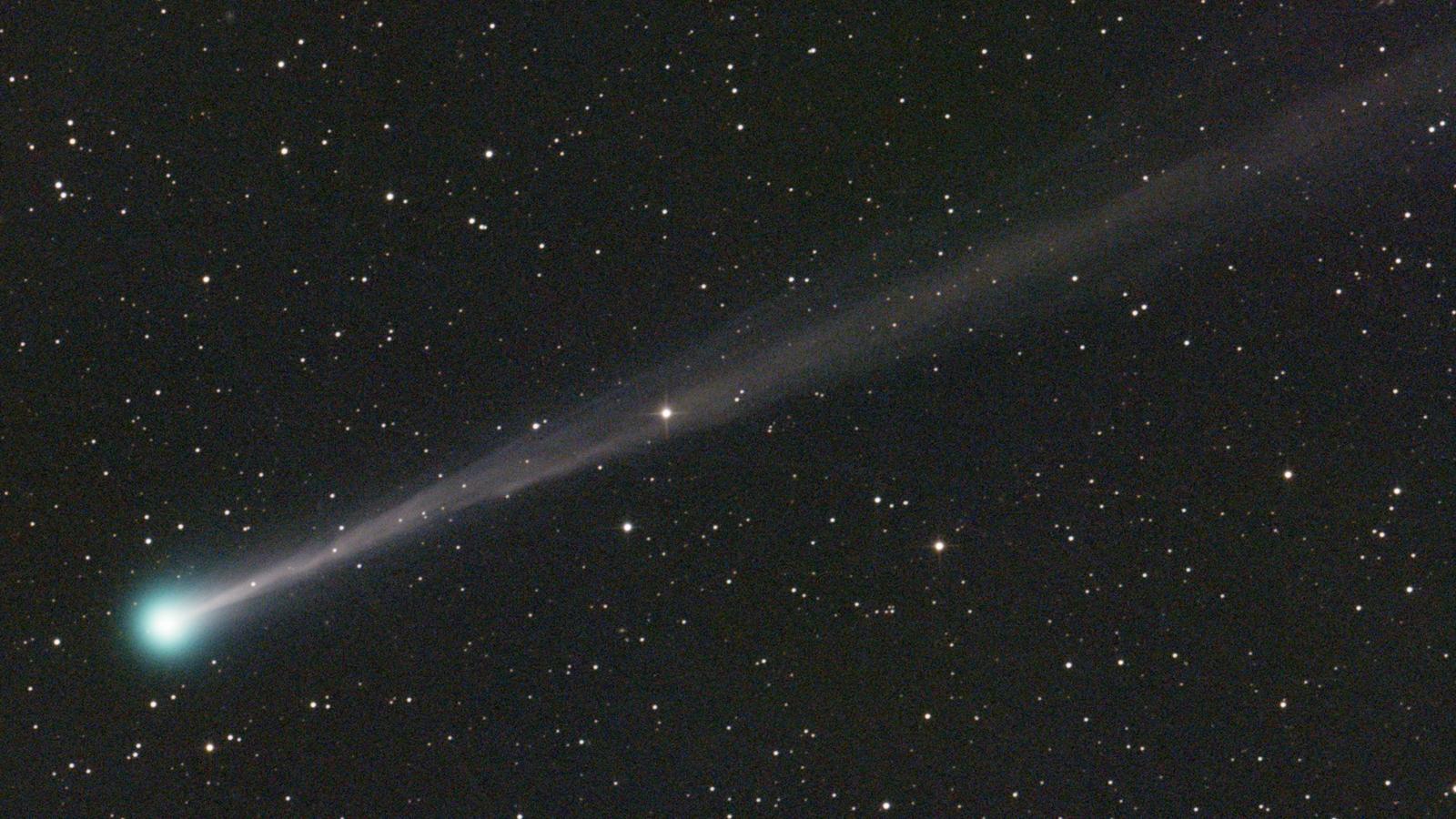
Dimitrios Katevainis/CC BY-SA 4.0/Flickr

Audio By Carbonatix
Arizona skywatchers have a rare chance to see Comet C/2025 R3 (PanSTARRS) in the pre-dawn skies this week.
The hyperbolic Oort cloud comet was discovered last year and has been steadily growing brighter in recent weeks. It’s now considered to be a naked-eye comet by astronomers and is currently visible across the Northern Hemisphere.
Early risers will have a limited window to spot the comet under dark skies before it fades from view. Comet C/2025 R3 will appear between 90 minutes to two hours before sunrise each morning through April 21.
Here’s how to see Comet C/2025 R3 (PanSTARRS) from Arizona.
Is there a comet in the sky tonight?
Yes. Comet C/2025 R3 (PanSTARRS) is currently visible in the early morning sky for observers across the Northern Hemisphere, including Arizona.
What time is the comet visible?
Comet C/2025 R3 appears 90 minutes to two hours before sunrise each morning and will remain visible through April 21. The best viewing window is during the darkest pre-dawn hours.
Where should I look for Comet C/2025 R3?
Look low toward the eastern horizon just before sunrise. A clear, unobstructed view away from the light pollution of the city sprawl will improve your chances of spotting it.
Can you see Comet C/2025 R3 with the naked eye?
Yes, under dark-sky conditions. The comet may appear as a faint, fuzzy glow with a short tail. Binoculars or a telescope will reveal more detail.
What apps can help find Comet C/2025 R3?
Skywatchers can track the comet using apps like SkySafari or Stellarium Mobile Sky Map, which show its real-time position in the sky.
Where is Comet C/2025 R3 right now?
The comet is moving through the inner solar system and will make its closest approach to Earth on April 26 at about 45.5 million miles, according to NASA. Its brightness may change slightly as it nears the sun.
Why is it called Comet PanSTARRS?
The comet was discovered in 2025 by the Panoramic Survey Telescope and Rapid Response System (or Pan-STARRS) at the Haleakala Observatory in Hawaii. In astronomy, comets are typically named after the survey or observatory that finds them.
Will Comet C/2025 R3 hit Earth?
No. Astronomers have confirmed there is zero risk of impact. So there’s no need to alert Ben Affleck or Steve Buscemi to get involved.