
Sara Crocker

Audio By Carbonatix
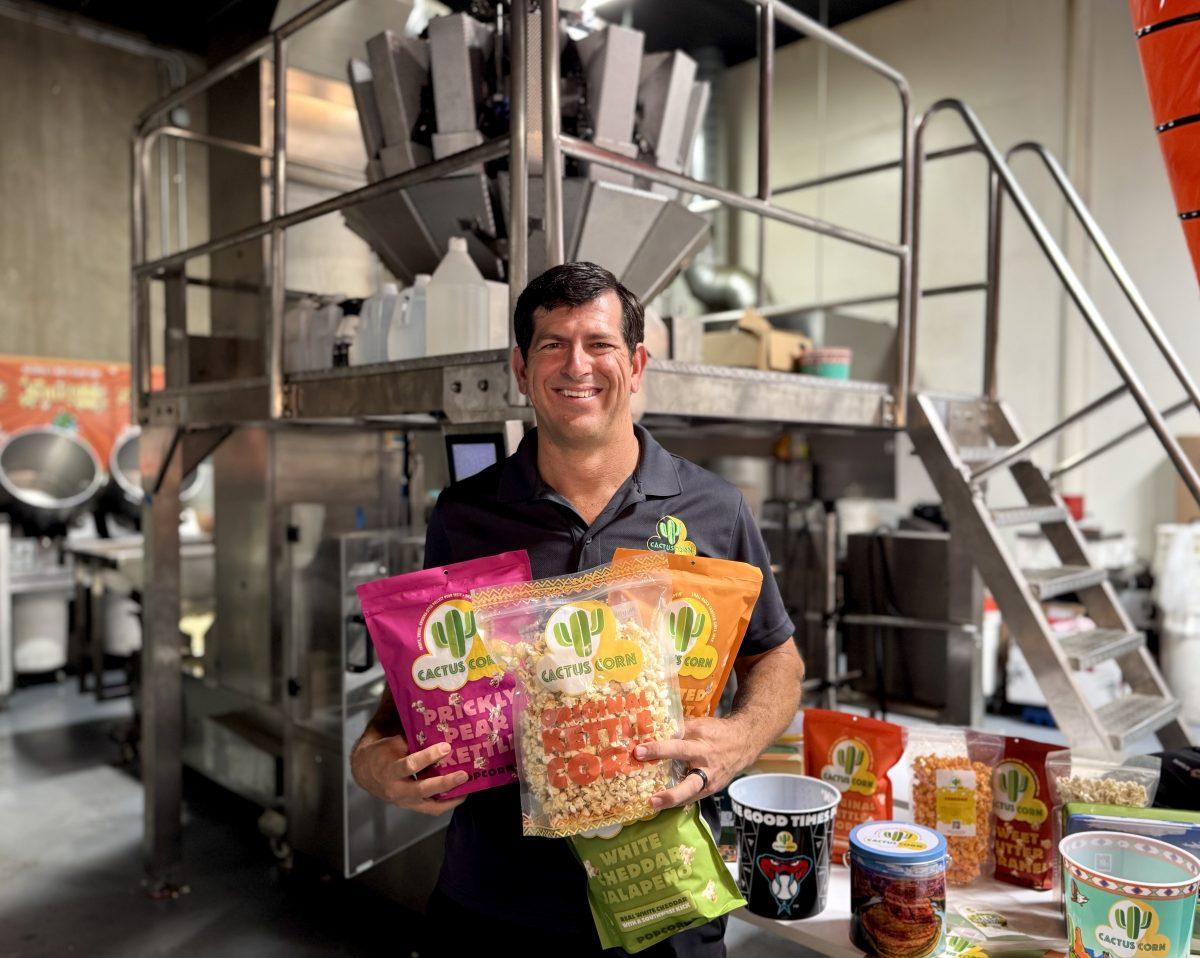
When Chris Levandowski’s parents tasted salty, sweet kettle corn for the first time at a farmers market in Prescott in the late 1990s, the snack hooked them. They loved it so much, they decided they needed to bring it to the masses. What better venue than the home stadium of the newly arrived Arizona Diamondbacks?
“They went downtown to a Diamondbacks game — the very first game of the Diamondbacks in Arizona — as fans,” Levandowski says. “By game number two, they were outside selling bags of Cactus Corn.”
After 10 seasons selling outside the stadium, Cactus Corn got called up by the Diamondbacks to join the vendors inside Chase Field.
“Popcorn and baseball really go well together,” Levandowski says. “Baseball’s a long game, so it’s the perfect snack.”

Provided by Cactus Corn
In the 28 years since the D-Backs’ inaugural season, the homegrown, family-run popcorn company has gone from slinging long bags of the sugared and salted snack from a stand at Fourth and Jackson streets to selling about 10,000 pounds of kettle corn each month.
In addition to its home base at the ballpark, Cactus Corn is sold at AJ’s Fine Foods, at local gift shops, online and at events like WM Phoenix Open. This year, the local company is leveling up in a big way.
This football season, Arizona Cardinals fans will see Cactus Corn’s classic kettle corn at concession stands throughout State Farm Stadium, building off its collaborations with local restaurants that feed fans at the arena, such as Spinato’s Pizzeria and Someburros. By the end of the year, the popcorn will be available at Sprouts Farmers Market, Levandowski says.
“My hope is we’re this 28-year overnight success story,” Levandowski says. “We’re starting to get on the radar of the right people.”
Sara Crocker
What’s popping at Cactus Corn?
As the company expands its reach, it still makes its popcorn in the heart of the city. Every single sugared, salted kernel comes from a compact production facility seven miles east of downtown, tucked behind the Arizona Humane Society.
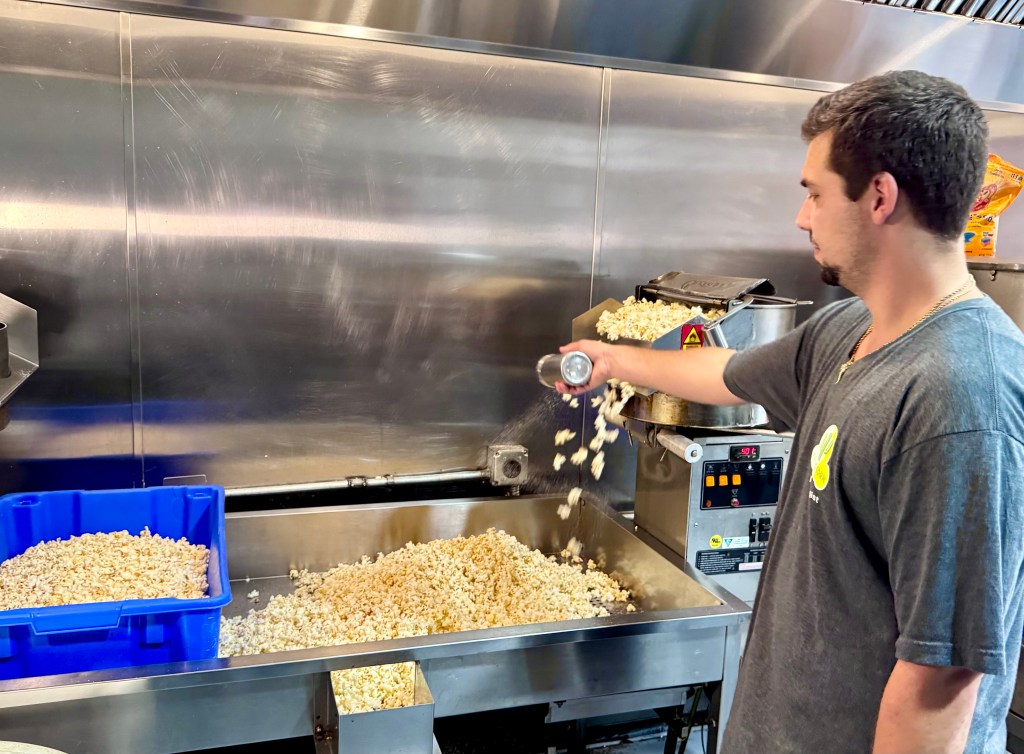
Each batch starts with simple ingredients — dried popcorn kernels, oil, sugar and salt — poured into a metal kettle that sits atop a huge tray to catch popped corn. The whir of the exhaust hood overhead and portable air conditioning units hum over the gentle rumble in the kettle. As the popped corn cascades out of the kettle and into the large stainless steel tray, a nutty, roasted aroma fills the room. A Cactus Corn staffer seasons popped pieces with a shake of salt.
“It can be a little addicting, and before you know it, the whole bag’s gone,” Levandowski says.
Sara Crocker
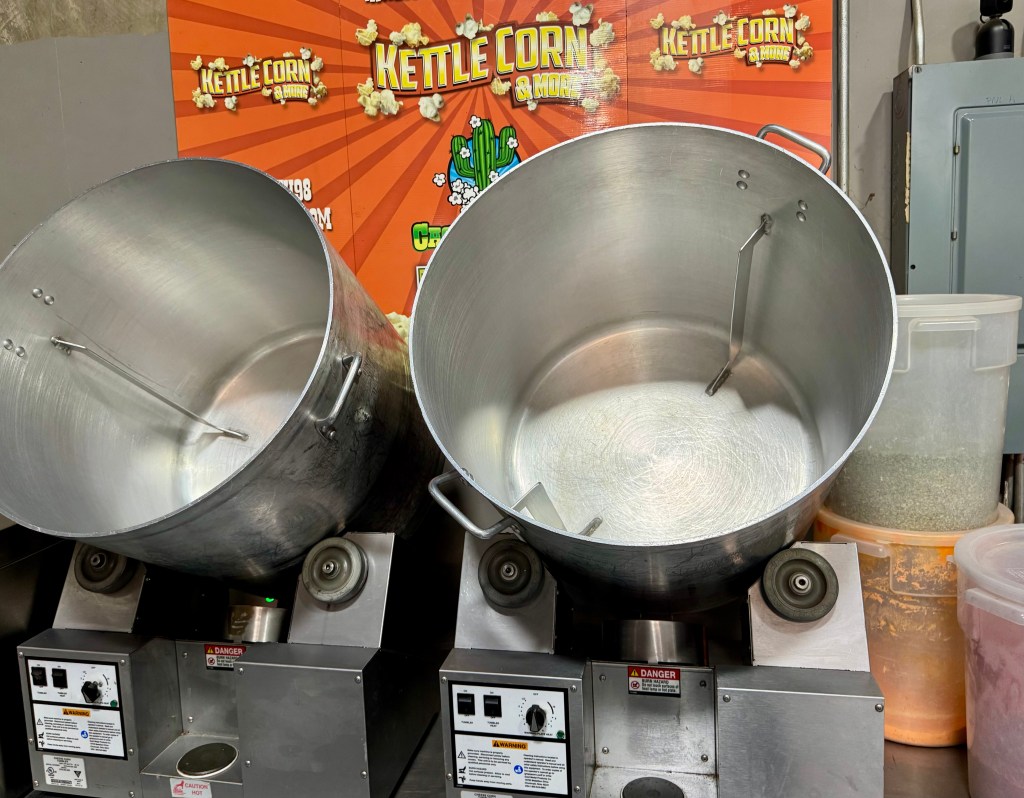
Each classic batch comes together in just four to five minutes. The company also started experimenting with flavors beyond its traditional kettle corn, buttery movie theater-style and caramel corn during the pandemic. To make Cactus Corn’s Southwestern-inspired flavors, staff pours batches of kettle corn into large tumblers. In those inverted metal pots, the corn gets coated with other seasonings, like dehydrated jalapeno and cheddar cheese or prickly pear powder, a magenta dust made from prickly pear cactus fruit.
“We’re just using the best ingredients we can find,” Levandowski says.
The company plans to debut a churro-inspired popcorn as part of its Southwestern popcorn series next month.
-
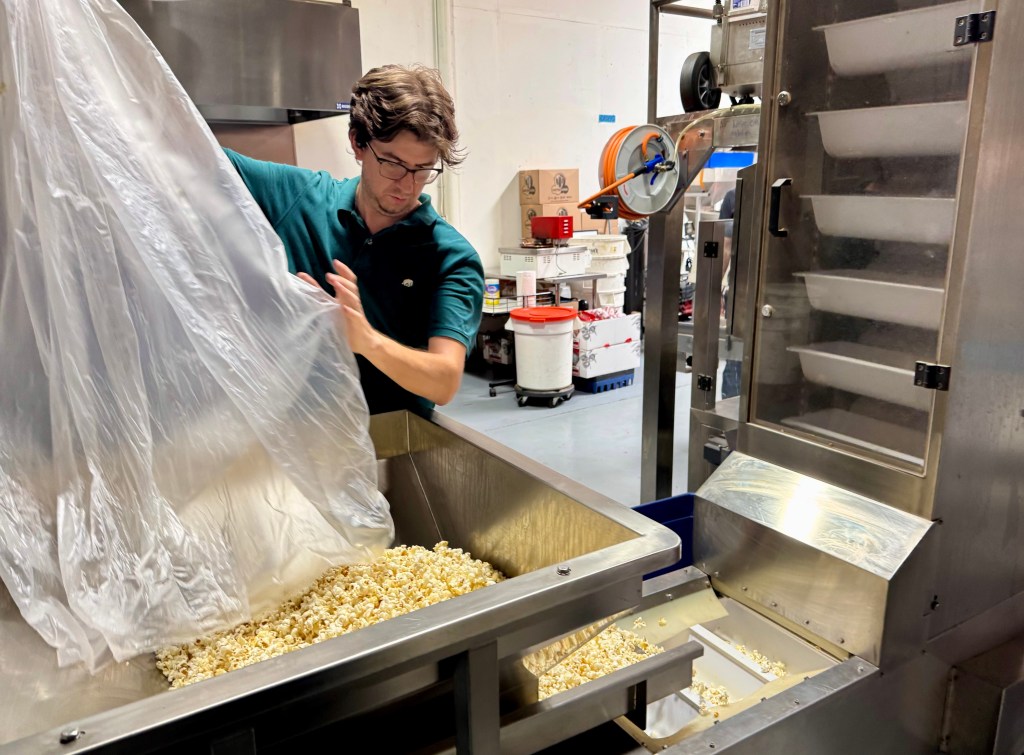
Finished popcorn is fed into a hopper, where it’s divided into smaller portions to be packaged into individual bags. -
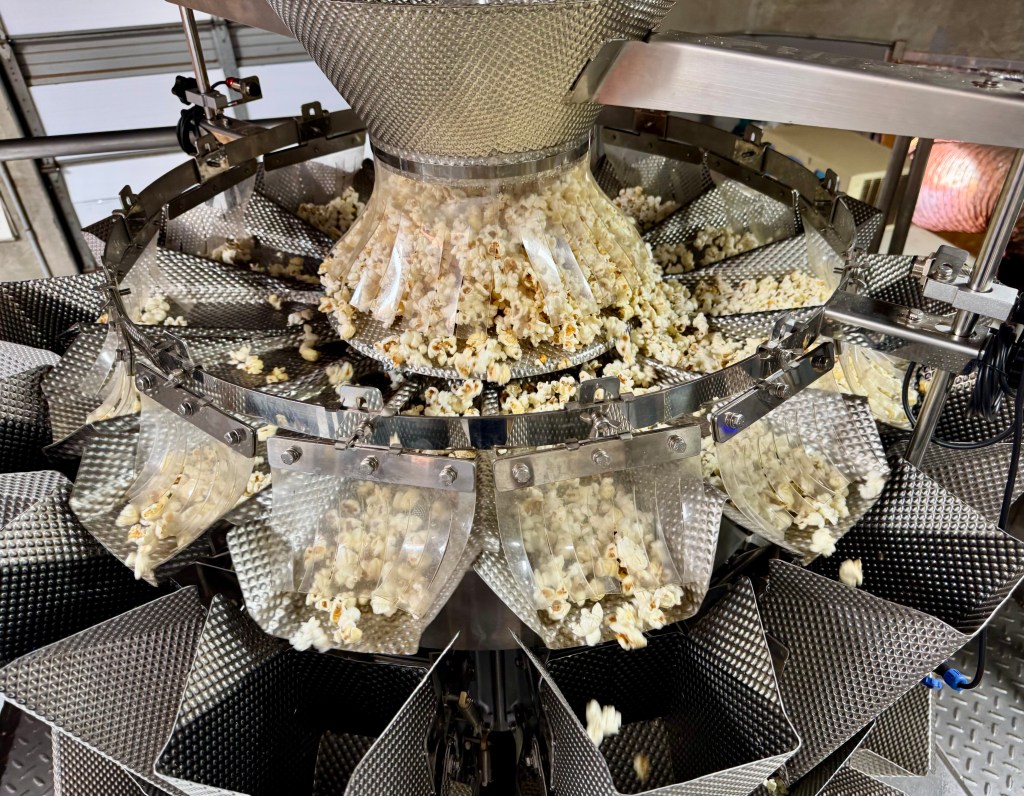
Once popcorn is fed through the hopper, it’s divided into a series of shoots dropping into awaiting bags. -
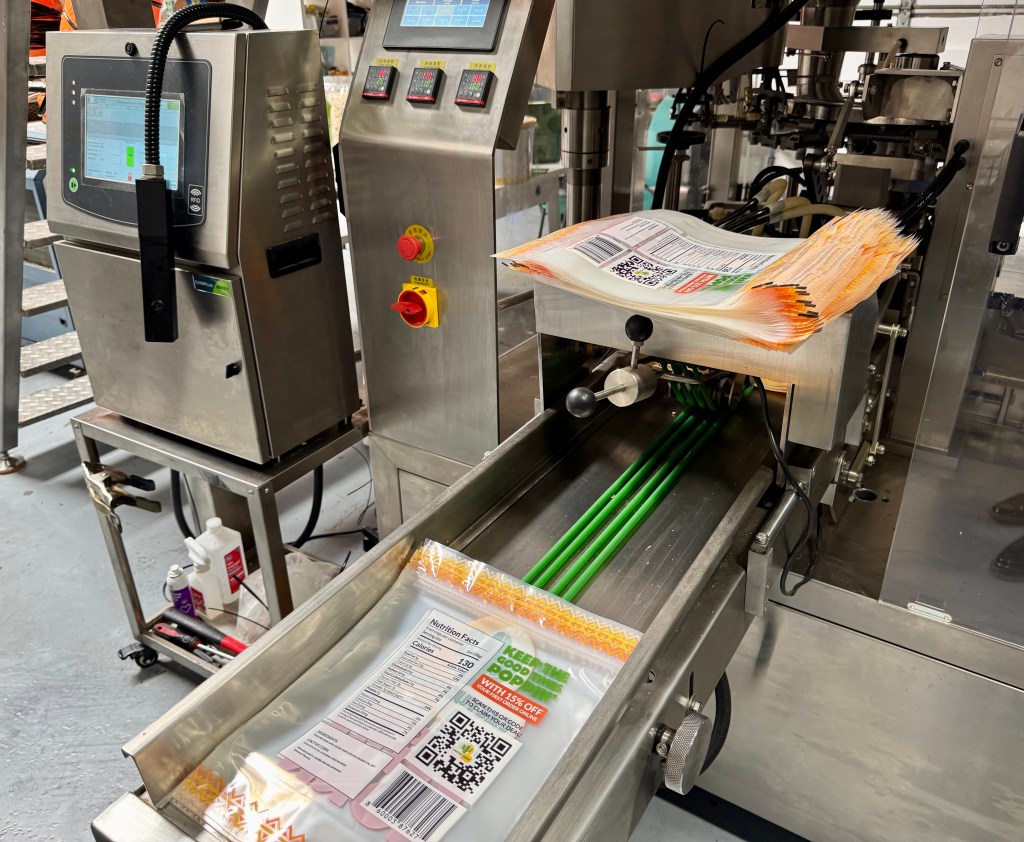
Cactus Corn bags get fed into the packaging machine at its production facility. -
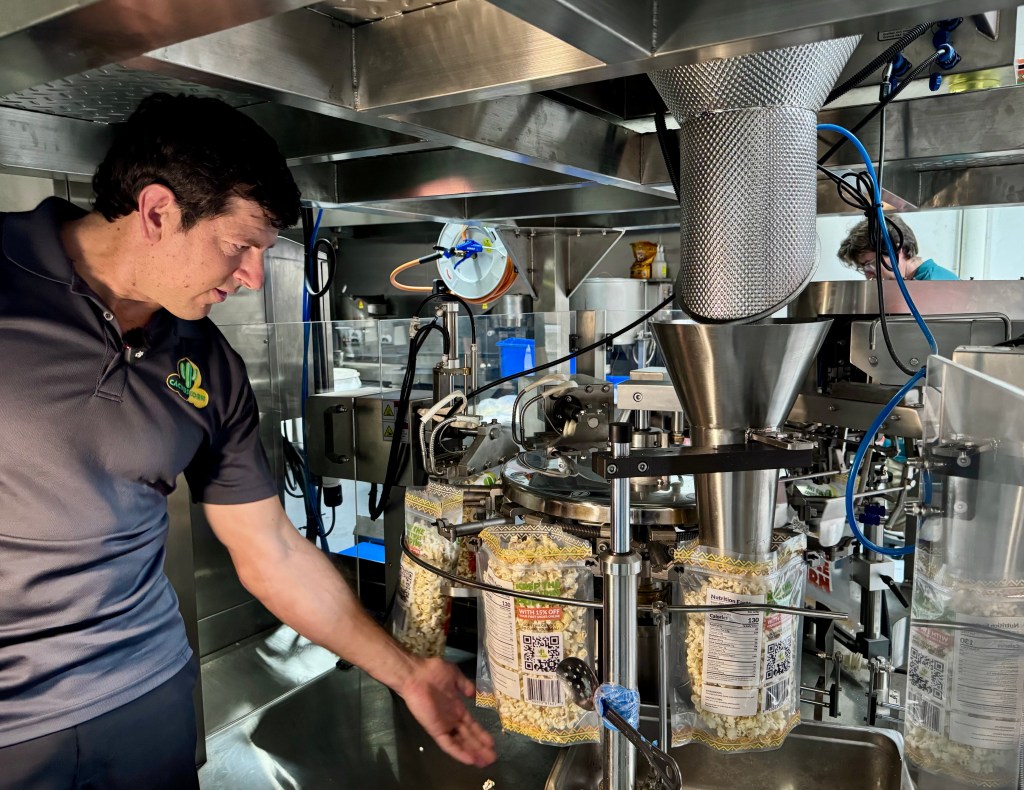
Owner Chris Levandowski taps each bag to help the popcorn settle before the machine seals each one. -
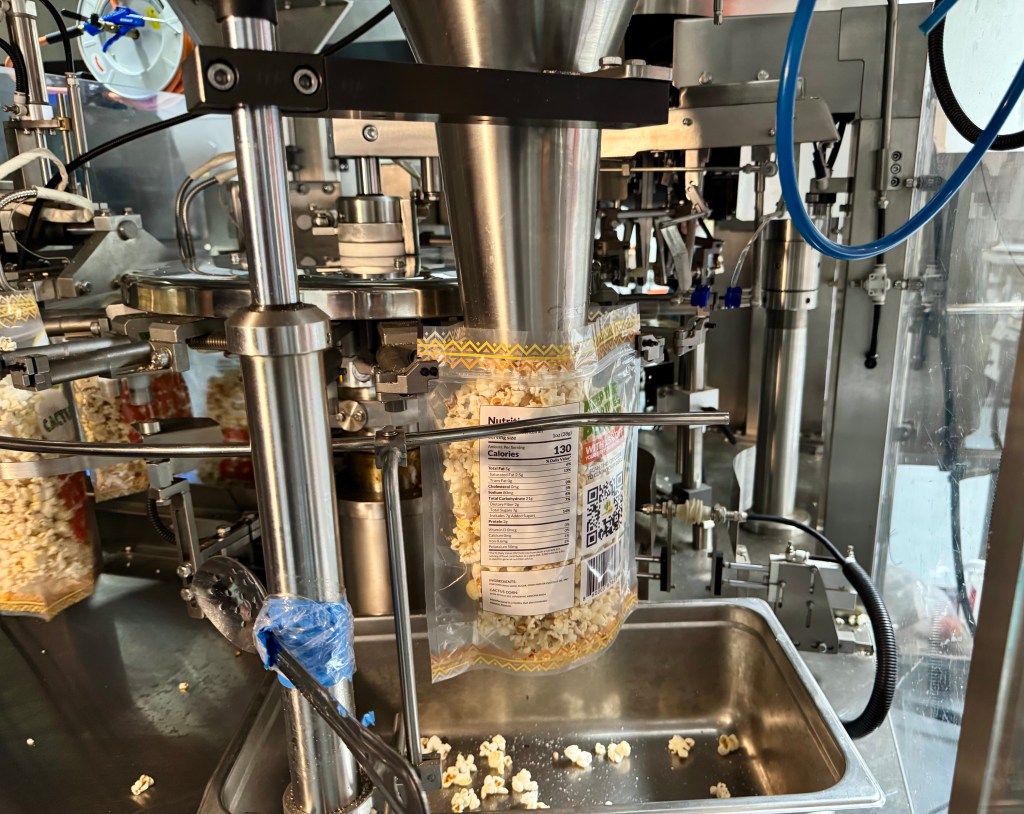
Cactus Corn’s packaging machine fills bags with its classic kettle corn.
In addition to the new flavors, the company has also added new machinery to keep up with the growing demand. Once the corn is popped, Cactus Corn’s staff loads it into the hopper of a towering Rube Goldberg-looking machine. The packager portions out the corn, then fills and seals it in bags. Though dialing in the new machine has proven a steep learning curve, Levandowski says he and the team are excited about how it can help Cactus Corn grow.
“We’re doing our best to keep up with demand,” he says, “and expand our operations.”
The next time you attend any sporting event in Arizona, that sweet, nutty smell of Cactus Corn’s kettle corn will likely be in the air.