
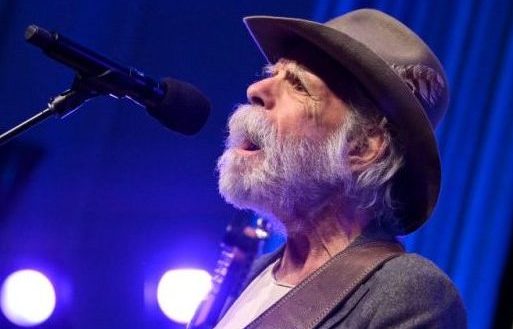
Bryan Bedder/Getty Images for The Michael J. Fox Foundation)

Audio By Carbonatix
Bob Weir, co-founder of the Grateful Dead, has died at age 78. His family announced the death on Instagram on Saturday, telling fans that he “transitioned peacefully, surrounded by loved ones, after courageously beating cancer as only Bobby could. Unfortunately, he succumbed to underlying lung issues.”
Weir was born in 1947 and grew up with adoptive parents, not knowing his birth parents until later in life. He found school challenging due to undiagnosed dyslexia and moved from school to school.
He met lifelong collaborator John Perry Barlow when attending a school for boys with behavioural problems, and together they wrote some of the band’s most famous lyrics.
Some of Bob Weir’s earliest musical memories came from playing traditional songs for cowboys when his family was vacationing on a cattle ranch. But his career really began on New Year’s Eve 1963, when he met Jerry Garcia while wandering the streets of Palo Alto looking for something to do.
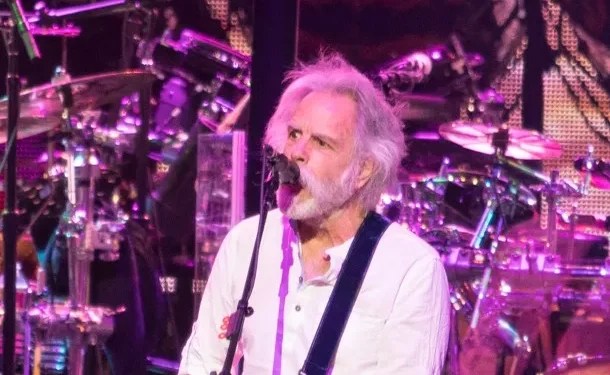
Jim Louvau
The pair first formed a jug band, called Mother McRee’s Uptown Jug Champions, before transitioning to electric and calling themselves the Warlocks. This wasn’t to last, as there was a New York band that was playing under the same name, who went on to change their name to the Velvet Underground.
The Grateful Dead formed in 1965, and for the next 30 years, Weir supported Jerry Garcia’s melodic lead lines with his own idiosyncratic style of rhythm guitar playing. He sought to base his approach to rhythm guitar on McCoy Tyner’s piano, who played with John Coltrane.
This, combined with 60 years of improvisational experience, gave Weir’s guitar playing an inimitable feel that was constantly in a state of flux. Weir had freedom to explore complex rhythmic arrangements and chord inversions due to the robust rhythmic foundation of the band provided by Phil Lesh’s bass and the use of two drummers (Bill Kreutzmann and Mickey Hart) for much of their existence.
John Mayer, lead guitarist in Dead & Company, described Weir’s playing as “almost too original to be fully appreciated”.
Don Was, a member of Weir’s later band, Wolf Brothers, and a storied musician and producer in his own right said: “There is not another guitarist in the world who plays like him. He never plays the same thing remotely the same way twice in a row and will alternate between being as raw as John Lee Hooker to as sophisticated as Andres Segovia from one phrase to another.”
Weir’s unique approach to playing also manifested in his compositions, many of which rely on strange time signatures or intricate playing styles. Whether it’s the 10/4 time of Playing in the Band or the finger-picked introduction to Weather Report Suite, Weir’s songwriting always sought to push the boundaries of what the band could do.
His 1972 solo album Ace featured many tracks that would go on to become Grateful Dead staples. His work with Barlow on songs like “The Music Never Stopped,” “Hell in a Bucket” and “Lost Sailor” helped define the band’s sound across its 30-year duration.
Following the death of Garcia in 1995, Weir has participated constantly in elaborations and continuations of the band’s legacy. His solo band Ratdog even performed on the day Garcia died, ending with a powerful rendition of “Knockin’ on Heaven’s Door.” Weir’s commitment to music carried on until his last days, performing three shows for the band’s 60th anniversary in August, just weeks after starting treatment for cancer.
One of the band’s most successful post-Jerry Garcia iterations, Dead & Company, toured from 2015 to 2023 and was one of the first in the world to play the Las Vegas Sphere. This band brought the Dead’s music to a new generation, playing huge stadium shows led by Mayer, with their final tour playing for nearly a million fans.
When he wasn’t touring with iterations of the band like Dead & Company or Furthur and The Dead, Weir was still pushing his solo projects. From 2018, he has performed under Bob Weir and the Wolf Brothers, a more minimalist outfit without a lead guitarist.
This band’s accomplishments include a number of shows with orchestras across America and, more recently, at the Royal Albert Hall.
Weir hoped that his musical legacy would last 300 years, with the Grateful Dead’s songs becoming their own kind of standard. The band can be credited for founding the jam band genre of music, which focuses on improvisation and the live experience, and includes bands like Phish, Widespread Panic and Billy Strings.
This is before mentioning the hundreds of cover bands, some of which are hugely successful in their own right and have played more shows than the Dead ever did at this point.
Tributes from Guns N’ Roses guitarist Slash to US Secretary of Health Robert F Kennedy Jr. suggest the loss of Weir is being felt across America — and the world.
This article is republished from The Conversation under a Creative Commons license. Read the original article.