
Coco Aramaki

Audio By Carbonatix
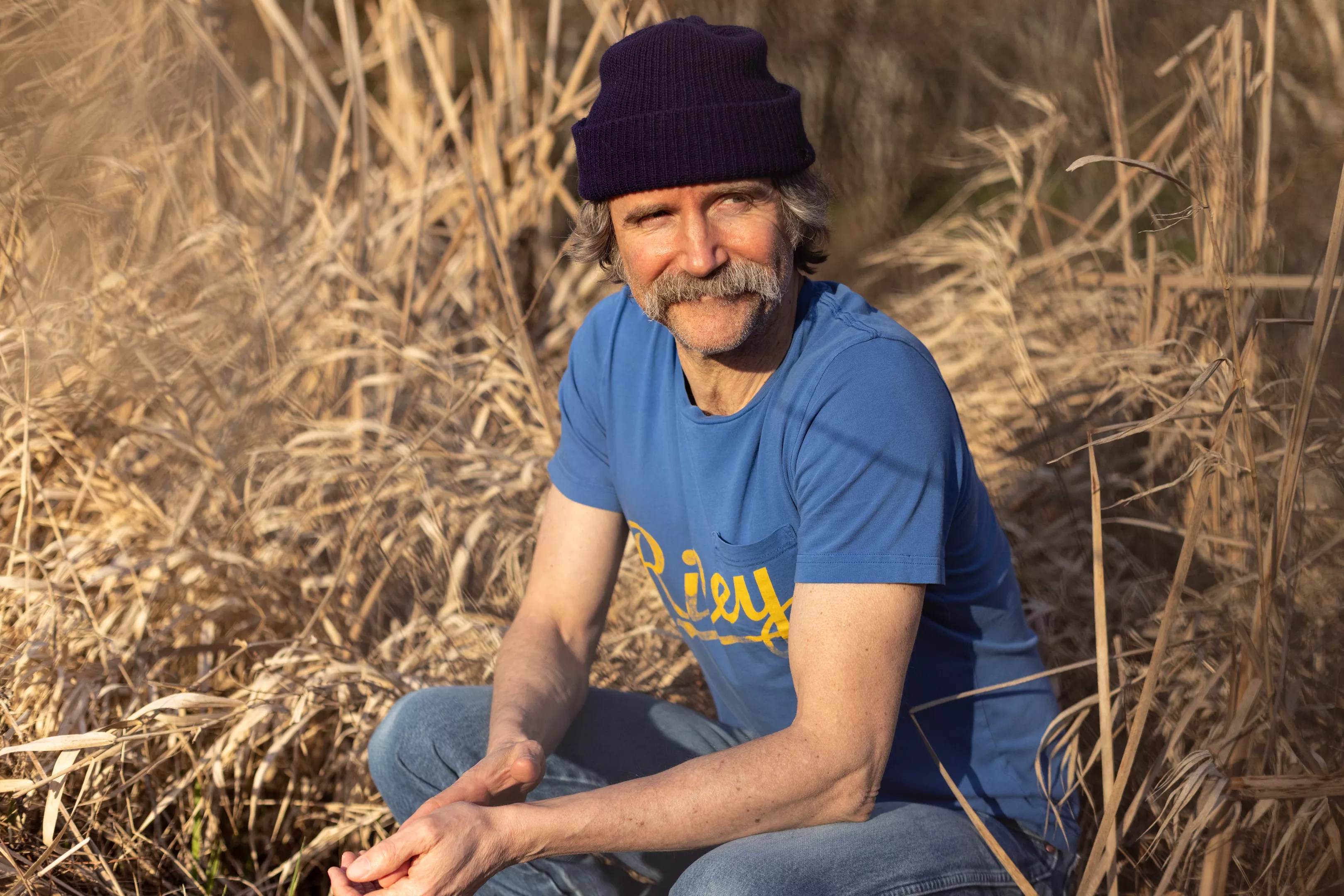
Dean Johnson is apologetic about some of the songs on his sophomore album, “I Hope We Can Still Be Friends,” which was released on August 22nd by Saddle Creek Records.
Johnson has gained a steadfast following since the release of his first album, “Nothing For Me, Please,” in 2023, which showcased his plaintive tenor and close harmonies, along with a wry, sad songwriting reminiscent of John Prine, Roy Orbison, and Neko Case. The former Seattle bartender is taking to the road for his first headlining shows with his three-piece band this fall and will be at Valley Bar in Phoenix on November 14th.
Close harmonies and closer observations
Even if he warns us that he’s going to be salty, Johnson’s high lonesome vocals and wistful observations about human nature, coupled with tight arrangements, sweeping snare brushes, and harmonies that could make the Everly Brothers weep, make even the salty songs sound sweet.
“They’re a handful in there that are a little prickly,” he admits. He prefaces one or two of the tunes by saying to audiences that he hopes that people will still come up and talk to him after the show.
For Johnson, taking one subject and dancing your listener to a more poignant place is kind of his thing. His most popular song, “Faraway Skies”, for instance, begins with a close-up of a houseless person, who confides:
“You wouldn’t know, by looking at me, but I am a cowboy, my friend/Forever out riding on the range of my mind, dreaming of faraway skies,”
The singer confesses, as life passes them by on the sidewalk, that they “were just too slow for these times,” but feels, at least in their mind, “at home on the range”.
Johnson’s vocals shimmer across a dark desert sky, and you can easily picture the “tumble weeds and cattle calls” that his subject describes. Yes, it’s a typical cowboy song, but that’s just the springboard to a Prine-esque introspection into the lives- and humanity- of those on the fringes of society.
For Johnson, whose first album, “Nothing for Me, Please,” was released on his fiftieth birthday in May of 2023, the pressures of a follow-up album were not typical of an indie folk artist. But then again, he is no normal indie folk artist.
“In terms of what you might call pressure feelings on a sophomore album, I didn’t really have that. Maybe somewhat for Saddle Creek, who have taken me on. It’s a pretty big compliment for an artist at my age, and more than a bit unusual,” Johnson notes.

Coco Aramaki
A songwriter’s songwriter (and bartender)
For years, Johnson made his living as a bartender at Al’s Tavern in the North Central Seattle neighborhood of Wallingford. The bar cultivated a cross section of regular townies, musicians, and hipsters, drawn by the cheap Rainer on tap and cheaper games of pool.
“Al’s is a simple old dive bar. I started working there in 2011 and recently just stopped working there in 2023. People really love that bar — the bartenders play their own music, there’s lots of old regulars, it’s noticeable how familiar it all is,” Johnson explains.
“People know me there; some people know all my foibles, but that’s mostly a good thing,” he admits.
Johnson, who had been playing guitar since he was a teenager, found some like-minded musicians frequenting during his shifts. While he had played guitar in a few bands and briefly fronted his own, Johnson was not very self-aggrandizing about his talents. But momentum began to build when he was introduced to Chris Acker, the Seattle-born, New Orleans-based songwriter who stopped in on his 21st birthday while Johnson was bartending. The two struck up a conversation about music, but it would be months before Acker found out that Johnson had songs of his own.
Through Acker Johnson would meet bass player Charlie Meyer and drummer Sam Gelband, who brought Johnson in to join the alt-folk group Sons of Rainer, where Johnson played guitar and sang harmony. They also offered their services, should he ever need a rhythm section of his own. That opportunity came when Sam Doores of The Deslondes and producer Duff Thompson saw Johnson perform and invited him to record at their studio, Mashed Potato Records, in New Orleans. Johnson was reticent about tracking an album live and flying across the country to do so, but his rhythm section “double-teamed” him at the bar one night and convinced him to book a flight to New Orleans to track what would become “Nothing for Me, Please,” in the summer of 2018.
Although the experience was, as he puts it, “a highlight of my life”, Johnson was not confident in the sound of the final product, as most of the songs had been recorded live, with only two small overdubs.
“It’s a natural, older-style recording. I never felt like a really good singer, and I cringe in spots. But I feel like I got so lucky I don’t cringe more than I do. I was just doing the best I could do,” Johnson confides.
A reluctant release and reservation dogs
Afterwards, Johnson sat on the record for almost five years, still unsure if the sound represented the songs. Eventually, at the behest of family and friends, Johnson released the album into the world on Mama Bird Recordings on his fiftieth birthday. Soon, the word was out: Johnson was a hell of a singer and songwriter, and he was contacted by the Wyoming-based Western AF, a YouTube channel that highlights up-and-coming country artists, to do some live performances. From there, writer and director Sterlin Harjo found Johnson and included his song “Faraway Skies” in the third season of his critically acclaimed FX series “Reservation Dogs.” Johnson has been booked and busy ever since, opening for the likes of Regina Spector, Rilo Kiley, Kurt Vile and Gregory Alan Isakov.
Johnson feels fortunate, and perhaps a little befuddled, by the whole experience.
“I certainly wouldn’t have gambled any money that things would have turned out like this. My expectations, in terms of being a songwriter, were really low. I feel grateful for how recognized that first record was, and I really wouldn’t be here without all the support from my Seattle community. Even if that all stops right now, just getting to go out to some faraway city or obscure place and finding, you know, thirty people that have all really absorbed and love those songs; that’s the most special thing,” Johnson admits.
While he might be coming to the game late, he seems to have no problem finding inspiration for songs now that he is on the road.
“I have so many compositions and melodies and fragments, unfinished lyrics, things that are really dear to me. I have a feeling that I have about three more albums that will be outstanding compositions, and I hope I can do that relatively soon in the next few years,” Johnson explains.
The new album continues Johnson’s penchant for live recording — 9 of the 11 tracks that made it to record are sung live, and he keeps a tight, albeit different, stable of musicians for the new tracks. Venerated Seattle drummer and songwriter Serah Cahoone (Band of Horses) produced the album and played drums as well as contributed the low harmonies over Johnson’s sweeping tenor, which helps widen the scope of the songs. Abby Blackwell covered the bass duties, and Sam Peterson provided multi-instrumentalist roles, filling in pockets with flourishes of Hammond organ and baritone guitar.
For the tour, Phoenix fans can anticipate a similar full-band line-up, with Cahoone on drums and harmonies, Peterson providing multi-instrument duties, and either Rebecca Young or Carey Robinson stepping into the bass pocket.
“It’s a sweet little band, and definitely should be a cute tour. It’s our first time doing a headlining tour. The album should be out for a few months by then, so hopefully there will be a crowd and some folks familiar with the songs,” Johnson notes.
Wry, worrisome and high lonesome new songs
And while Johnson is worried that this new set of songs will make him more antagonistic to the listener, his is the righteous, worried anger of the meek. The songs are gorgeous, even if they can be sharp, as in the song “Death of the Party”, where he takes on an “energy vampire” that sucks the life out of the room with their own selfishness. He notes that “words don’t come easily to me/I notice you don’t have that problem”, but the delivery is so beautifully rendered with his three-piece band that you are quick to forgive him for being so direct and cutting. By the end of the song, you realize the criticism comes from a place of genuine concern- the person, so wrapped up in themselves, doesn’t see how toxic their behavior has become, and Johnson is trying to bring them back to reality.
Even if he’s being sharp, he’s sweet about it, like his exhausted lover of “Long Goodbye”, who, confronted with a partner who sees him as lazy and “playing the same old songs”, admits that the relationship has ended:
“I’ve taken down the mirrors babe/there’s nothing here for you to see,” he sings.
Even so, at the end, he admits that he has failed her, owning his own faults in the relationship, noting that he, “tried to say it tenderly, but I failed you again”.
Another offering, “Winter Song”, borrows sonically from Harvest-era Neil Young, but picks up on the cold, bleak months after the harvest is over. The lover, left alone after an autumn romance, finally realizes that he was “only good for lullabies” and is left gearing up for the cold and heartache to settle in.
The album is not short of quintessential Johnson musings about love, life, and death, but the first single off the new record, “Before You Hit the Ground”, might perfectly encapsulate the Dean Johnson songwriting approach.
He begins with a rumination on Buddy Holly and how effortless the young rocker made it seem to write upbeat songs, a skill that seems to elude the singer.
“How do you put the sun in a song? I still can’t find a way,” Johnson sings over a danceable strum of acoustic guitar.
As the song turns, however, he is haunted by the concept of Buddy Holly himself, dead at a brief twenty-two years of life in a tragic plane crash.
“You could close your eyes/Praying that you wake up/to your Mother’s voice/You’ve been sleeping long enough.”
Johnson sings, in the process answering his own question.
Instead of raving on, Johnson is hoping that the final moments of Holly’s life were comforting, wishing that Holly could hear his mother’s voice, and hoping, for both their sakes, that it was all a dream.
Afterwards, the final verse, an interpolation of Holly’s own “That’ll Be the Day” becomes both ironic and deeply moving:
“That’ll be the day/oh that’ll be the day/Darlin’ that’ll be the day/That I die.”
Johnson, the existential crooner, blends his own mortality with Holly’s, finding some comfort in the ending. The two become one, while pedal steel and organ see the song out, the melody still keeping a danceable swing.
It’s this fine line that Johnson’s songs waltz around, teetering between moroseness and earnestness, with a self-effacing wink for good measure.
To that end, Johnson has nothing to apologize for; we should be so lucky to have him and all of his tender songs.
Dean Johnson plays at 7:30 p.m. on Friday, Nov. 14, at Valley Bar.