Jon Gipe/Phoenix New Times Archives

Audio By Carbonatix
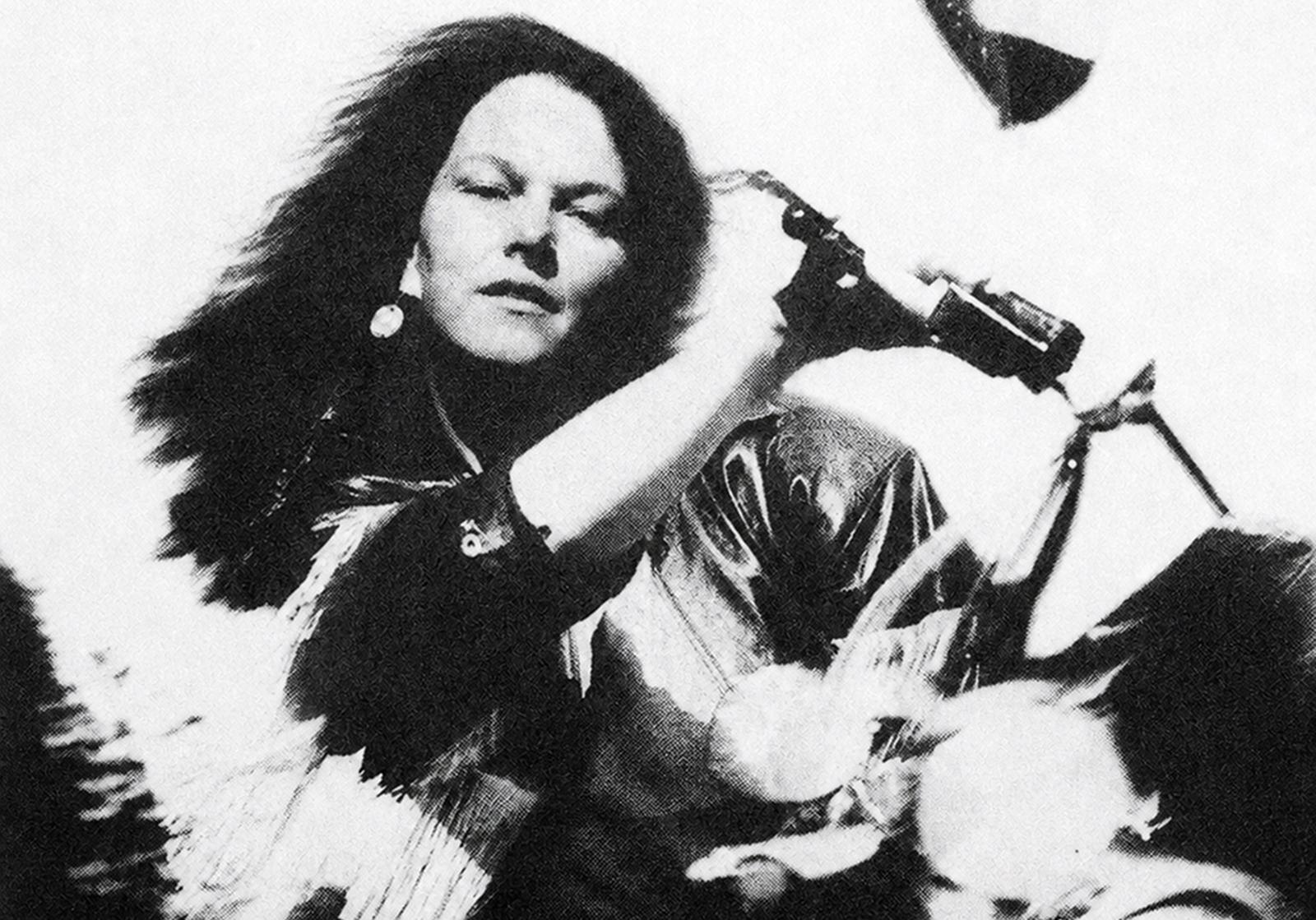
When Mary McCann arrived for a job interview at Phoenix radio station K-15 in 1980, she rolled up on a big blue Harley.
Programmer John Dixon was already impressed with her audition tape, particularly McCann’s energetic delivery, enthusiasm for music and vibrant personality. Then he asked her for a ride.
“I hopped on and we went up the road and back,” Dixon says. “I said to myself, ‘Well, she’s got the job.’”
It was the beginning of a long run in Valley radio for McCann, who later became known as the “Bone Mama” and was one of Phoenix’s distinctive on-air personalities.
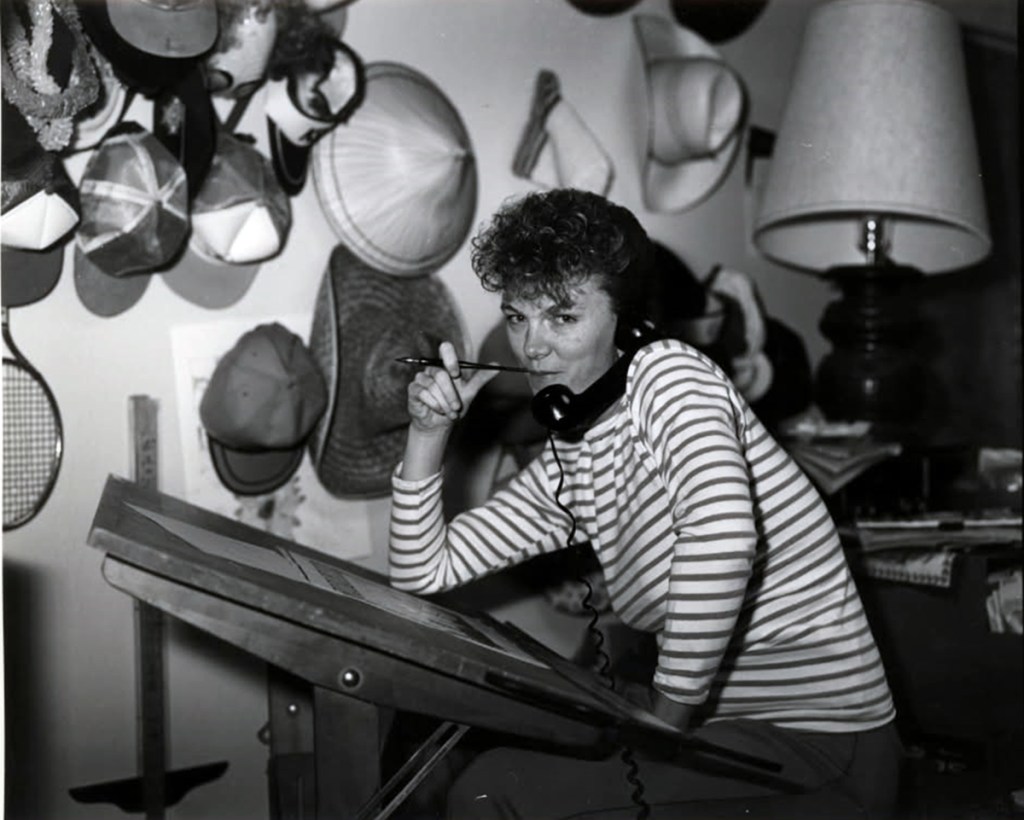
Over the next two decades, McCann worked at some of Arizona’s most iconic stations, including KSTM, KUPD, KUKQ and the original KZON. She became a familiar voice to local listeners with her unique broadcasts and helped shape Phoenix rock radio in the 1980s and ’90s.
Off the air, she was even more active in the Valley’s music and art scenes. McCann was a prolific slam poet and writer who managed local bands, booked clubs and championed Arizona musicians. She was just as passionate about motorcycles as music, remaining an avid Harley rider for decades.
McCann eventually left Arizona but never put her love of radio in the rearview. She continued broadcasting after settling in Washington state, remaining on the air until weeks before her death from multiple myeloma on Aug. 7. She was 70.
Longtime friend Wendy Naylor says McCann approached everything in her life with the same passion and resolve.
“She was just extraordinary,” Naylor says. “She was determined. She was an absolute force.”
Editor’s note: Select photos by Marilyn Szabo.
Szabofoto©
How Mary McCann found her way to Phoenix radio
McCann was born Oct. 14, 1955, in Elmhurst, Ill., the youngest of three children. As her older brother John McCann stated in an online obituary to his sister, she “threw her arms around music and life.”
After graduating from Western Illinois University, McCann began her radio career at a station in nearby Peoria, Ill.
“The tunes, the times, and the poetry of the artists she played inspired Mary to a lifetime of sharing music,” John McCann wrote in her obituary.
By the time she got to Phoenix in 1980, she was briefly living in a bus in the Superstition Mountains.
Her first Valley radio gig came at K-15, the AM sister station of KDKB that Dixon was helping transform into a different sound. The daytime station mixed new wave and punk with emerging alternative sounds from artists like The Clash, Elvis Costello and The Jam.
It was a natural fit for McCann, Dixon says.
“She had a really sincere appreciation of the music,” he says. “She was a personality. That’s a throwback to the old days when you would listen to Wolfman Jack or Tony Evans. You’d listen to the personality, not necessarily the music format.”
K-15 only lasted about six months, but McCann’s Valley radio career was just getting started. By 1981, she was at album-oriented rock station KSTM, also known as “The Storm.”
It was there that Naylor first encountered McCann in 1982. The two initially didn’t hit it off. Naylor remembers McCann as an established personality who could be tough on a newcomer.
That changed after they met again outside the station and became longtime friends.
“The rest is history,” Naylor says. “She was loyal, she was funny, she was smart, she was creative. We both loved music. We loved to go to shows. We loved the blues.”
Szabofoto©
‘She was not your typical DJ’
After leaving KSTM in 1983, McCann landed at KUPD, where her fame grew.
By 1986, she was pulling strong ratings at the hard-rock station. Two years later, McCann was working evenings and had become one of KUPD’s most popular on-air personalities. When she left in February 1989 after reaching an impasse during contract negotiations, she ranked second in her time slot with a 10.7 audience share.
Veteran Arizona concert promoter Danny Zelisko says McCann had the voice and musical knowledge to command listeners’ attention.
“She was a fabulous DJ,” Zelisko says. “She had the kind of authoritative voice that spoke with a knowledge and experience with music that made you want to listen to her. She was really into it.”
McCann also wasn’t afraid to get either creative or weird on the air.
Case in point: During an overnight stint at KUPD, she created “The News According to William S. Burroughs,” inspired by the Beat writer’s cut-up technique. McCann would take lines from different news stories and rearrange them into something new.
“She just did things her own way,” says Larry Mac, a former on-air personality at KUPD who worked with McCann. “She was not your typical DJ. The Bone Mama was a true original.”
Mac says McCann also gave him “valuable advice” when he was “this shy, young broadcaster” trying to find his voice.
“She told me, ‘Be yourself,’” Mac says. “’Be a human. Don’t try to be a DJ.’ It’s something I’ve never forgotten.”
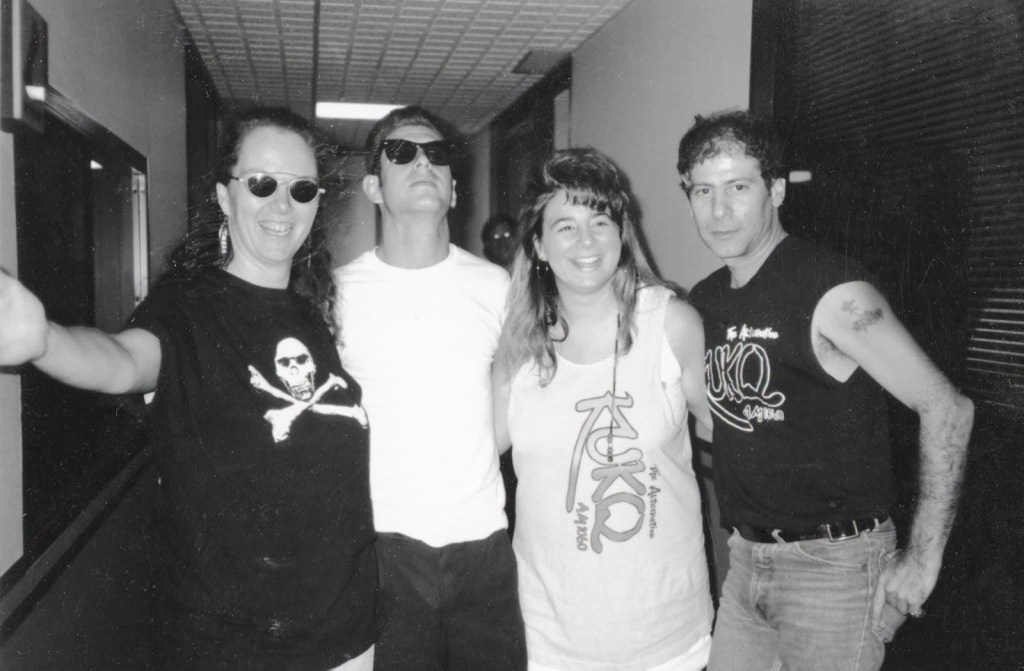
Provided by Leah Miller
The ‘Bone Mama’ is born
McCann joined KUKQ in April 1989, taking over the morning shift shortly after the influential AM alternative station launched.
By then, she had also picked up the nickname that would follow her for decades. McCann and her friends were die-hard fans of Los Angeles roots-rock band the Bonedaddys, whose frequent Valley concerts she attended and promoted.
“She took quite a liking to the Bonedaddys,” Dixon says. “For whatever reason, she became the Bone Mama.”
At KUKQ, McCann became part of the famed alternative station’s OG lineup that included Jonathan L, JT Justice and Leah Miller.
Miller had known of McCann long before they worked together, first as a KUPD listener and later after McCann brought local band Lime Green to KASR, Arizona State University’s student station.
“She was already legend,” Miller says. “She was joyful and, of course, very friendly, but also a little bit sort of goofy silly.”
McCann became a mentor to Miller, who was admittedly “a baby” when she started at KUKQ at age 21. She urged the younger DJ to get involved with the community, announce charity shows and support Tempe’s then-burgeoning music scene.
Miller also watched McCann champion local artists at a time when Valley alternative music was beginning to gain national attention.
“She definitely taught me: Get involved with the community,” Miller says. “She got out there and got involved with local music, which of course I was also interested in, and I followed her footsteps in that.”
McCann’s profile was so large that Miller says callers routinely mistook any woman answering KUKQ’s request line for her, even late at night.
“They would say, ‘Bone Mama?’ every time you answered,” Miller says.
McCann left KUKQ in 1991, saying at the time that she wanted to “feed the artist part of me exclusively.”
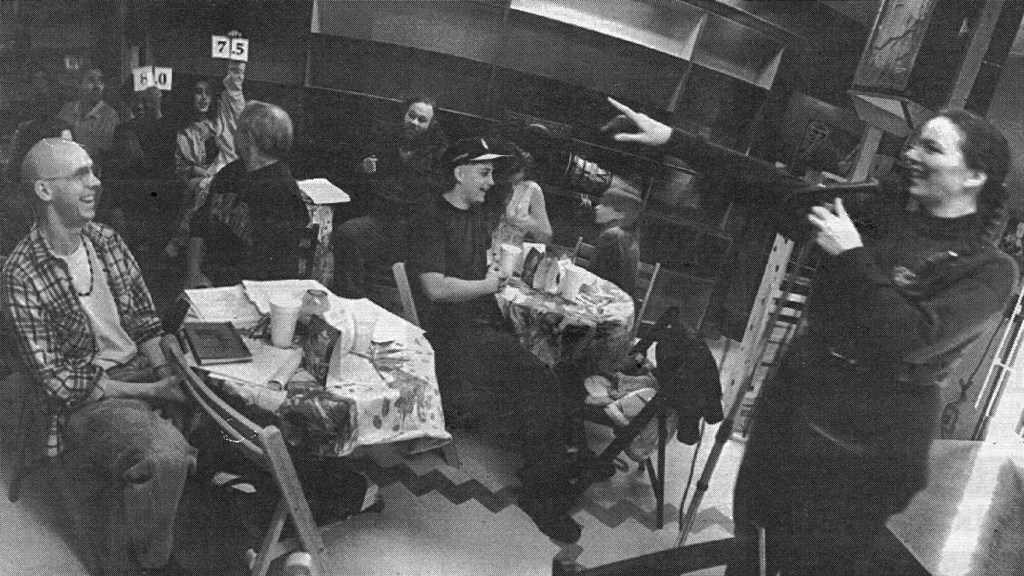
Timothy Archibald/Phoenix New Times Archives
Poetry, local music and life beyond the studio
Radio was only one outlet for McCann’s creativity. She also wrote constantly, filling hundreds of journals, according to Naylor. She painted, worked in pastels and watercolors and became a regular in the Valley’s spoken-word and slam poetry scene.
By 1990, McCann was performing weekly at Chuy’s in Tempe. That December, she took second place during an appearance at New York’s Nuyorican Poets Cafe.
She also managed local bands, booked music at Chuy’s and produced “357 Miles East of L.A.,” a 1990 local comp showcasing Arizona artists released by Zia Records.
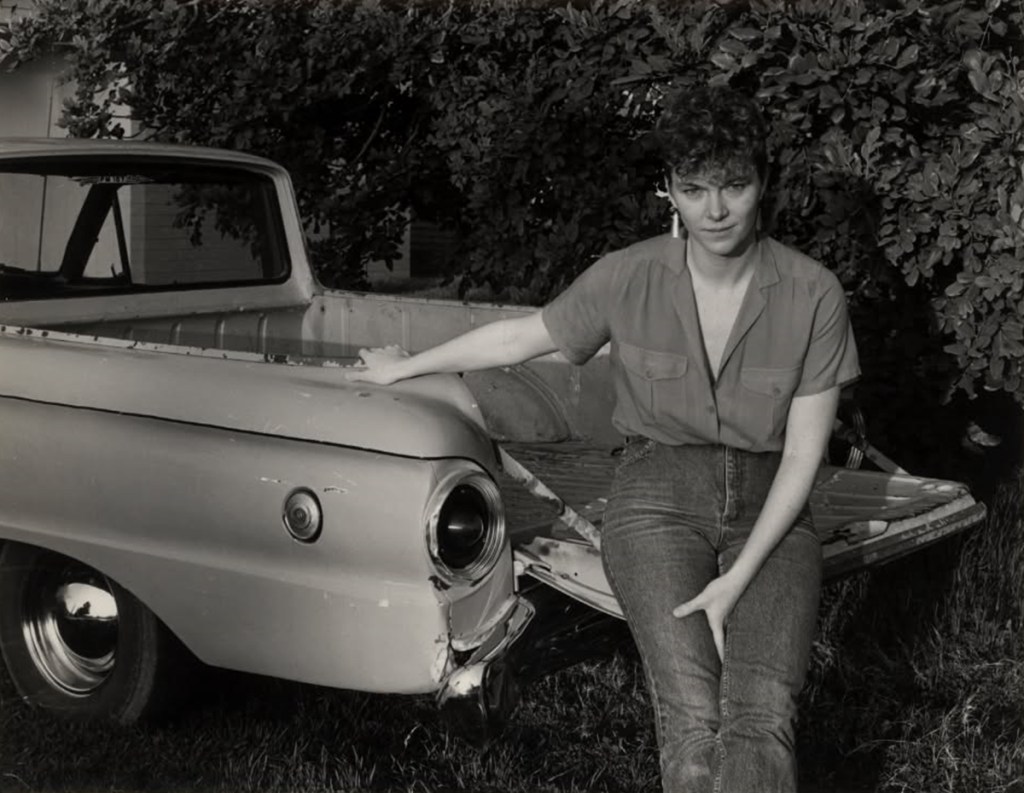
Photographer Marilyn Szabo, who met McCann in the early ’80s, remembers her friend being someone who was hard to miss.
“She was female, she’s a big girl, almost 5-foot-11, with big red hair,” Szabo says. “When she walked in a room, you couldn’t help but look at her.”
Szabo says McCann’s outspoken and over-the-top personality matched her own, hence the reason they were thick as thieves, often going to local art openings and clubs.
“We hung out together all the time. We were determined. We were opinionated. We were bitches. We were self-centered, but we were focused,” Szabo says of her friendship with McCann. “We were like, ‘This is who we are and what we’re going to do,’ and we did it. We both didn’t suffer fools. Mary caught on quick to people and was very outspoken.”
McCann also got into plenty of misadventures. Naylor remembers once hopping on the back of her Harley for a late-night ride to Tucson to see singer-songwriter John Hiatt perform, then returning to Phoenix in time for work the next morning.
“She was that kind of friend,” Naylor says.
Mary McCann gets in The Zone
McCann returned to Valley radio in 1992 after a yearlong hiatus to handle personal matters, first working weekend nights at KSLX before being named the original morning host at then-debuting KZON.
The Zone’s adult-alternative format gave McCann another chance to connect adventurous music with an audience looking for something different.
Ted Simons, the host of KAET’s “Arizona Horizon,” was among her first on-air partners. McCann recruited Simons to deliver offbeat newscasts during her morning show, he says.
“She was able to connect with people,” Simons says. “They loved her. Her fans loved her and they would follow her anywhere.”
Simons says McCann’s appeal came from more than an “outsized personality.” She knew the music and understood the audience.
“It was hard to ignore Mary,” he says. “She could command a room.”
Miller later joined KZON and again found herself working alongside her mentor. Their shifts sometimes overlapped long enough for the two to spend an hour talking and laughing.
“All I remember is joy being with her,” Miller says.
McCann remained with KZON until she was let go in October 1999 after the station flipped formats. She wasn’t done with radio, though.
‘Radio is what she knew, what she loved’
McCann’s life changed in 1993 when she was diagnosed with multiple sclerosis.
Naylor says she didn’t let the medical condition dim her passion for life.
“She put up the most unbelievable fight against this unbelievable disease,” Naylor says.
McCann shipped her Harley to New Zealand and rode across the South Island. She later trained for and completed the long-distance El Tour de Tucson bicycle ride despite the effects of MS.
By the early 2000s, McCann had moved into internet radio while living in Mountain View, California, keeping her home in the Valley for several more years. She eventually relocated to Yelm, Washington.
There, McCann found another radio home. She joined NPR affiliate KNKX in 2008 and went on to host “Sunday Side Up” while also lending her voice to the syndicated “BirdNote” radio program.
McCann was diagnosed with multiple myeloma in 2024. She continued working through her illness, recording her show whenever her health allowed.
Weeks before her death, Naylor visited McCann in Washington. Together with one of McCann’s colleagues, they helped her choose songs for a tribute broadcast.
“She absolutely loved doing her show,” Naylor says.
McCann is survived by her husband, Daniel Bone, brothers Tim and John McCann and numerous nieces, nephews and cousins.
Naylor and other friends are planning a possible memorial event for McCann later this year. In the meantime, KNKX will reportedly name one of its audio studios the Mary McCann Production Studio in her honor.
McCann’s long career makes sense for someone who never treated radio as simply a job, Miller says.
“She lived and breathed music,” Miller says. “Radio is what she knew, what she loved, and she did what she loved.”