

Morgan Fischer

Audio By Carbonatix
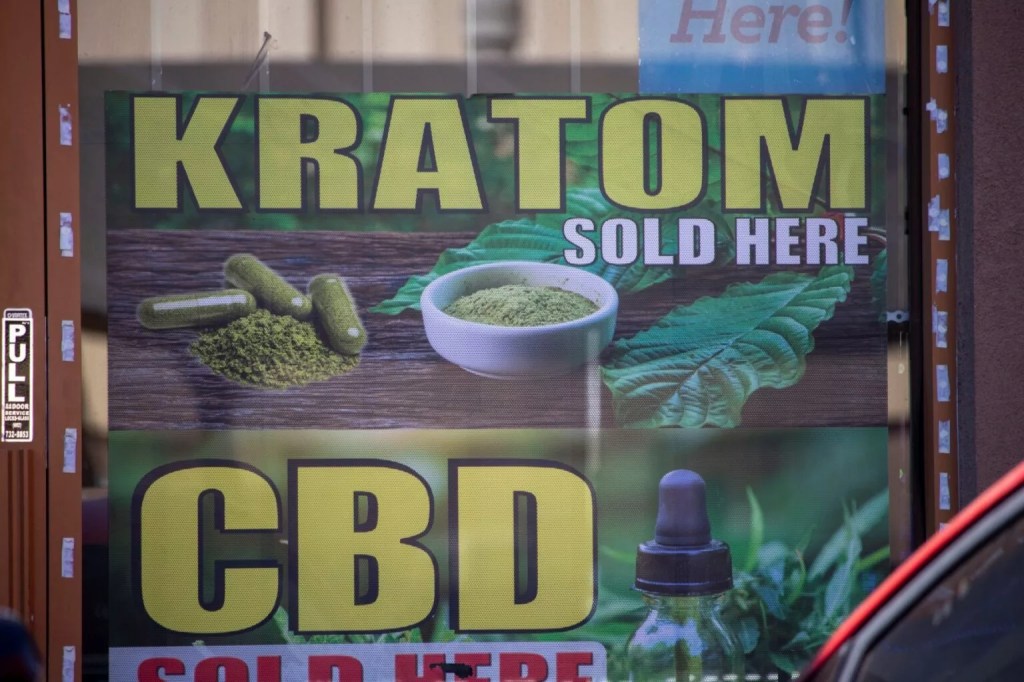
Kratom can be found nearly everywhere in Arizona.
Flapping banners advertise it outside of smoke shops and anyone over 18 can buy it in many gas stations. The opioid-like substance — which is derived from an Asian tree and sometimes called “gas station heroin” and “legal morphine” — is regulated in Arizona. But it’s also pretty easy to get.
Count Arizona Attorney General Kris Mayes among those who think it should be much harder.
On Tuesday, Mayes said in a press release that Arizona needs tougher kratom laws on the books, specifically to stop the sale of products with high levels of the synthetic 7-hydroxymitragynine compound, or 7-OH. She said that the state’s Kratom Consumer Protection Act, which passed in 2019, needs stiffer penalties for selling kratom illegally.
“In the upcoming legislative session, I will be asking members of both parties to work with my office to strengthen this law and increase penalties for those selling these products to minors,” Mayes said.
Arizona’s kratom law allows for the sale of kratom, although only within specific specifications. Kratom products must have a 7-OH content of 2% or less and cannot contain synthetic alkaloids. Contents must be clearly labeled and kratom products cannot be sold to anyone under the age of 18.
Despite that, Mayes said, illegal kratom (and illegal kratom sales) are common.
“These products are really dangerous and basically act like synthetic opioids,” Mayes wrote. “I have already heard from parents whose kids have become addicted to these products sold over the counter across the state.”
Jerod MacDonald-Evoy/Arizona Mirror
To solve that issue, Mayes wants to beef up Arizona’s laws. Violating the law is a class 2 misdemeanor, but the law has been difficult to enforce. Proving kratom was sold to a minor is one thing, but proving a kratom product is adulterated with illegal substances requires expensive testing that many departments don’t have the budget to perform in order to sniff out such low-level offenses.
“In its current form, Arizona’s kratom law asks prosecutors to clear a high bar just to prove a misdemeanor,” Mayes wrote. “Most law enforcement agencies simply don’t have the labs, experts, or budget to do that on a routine basis.”
Mayes isn’t the only one calling for a kratom crackdown. A recent survey found a sizeable chunk of Arizonans favor a kratom ban. The Mayo Clinic calls kratom “unsafe and ineffective,” and though some swear by its properties as a less-addictive opioid substitute, others have warned that the substance is largely untested and dangerous. The Drug Enforcement Agency moved to classify kratom as a Schedule 1 illicit drug in 2016, but backed off in the face of pushback from kratom supporters.
More recently, though, the federal government has exhibited an appetite for restricting 7-OH, a move even some kratom companies support. The Food and Drug Administration announced its intent earlier this year to schedule 7-OH under the Controlled Substances Act.
Until that happens — or until the Arizona Legislature strengthens the state’s kratom laws — Mayes counseled consumers to be skeptical of gas station products that “promise quick fixes for pain, anxiety, focus or energy,” especially if they have the kratom or 7-OH label. Consumers should also avoid brightly colored candies or gummies, products with vague labels and items that boast about providing “extra strength” without disclosing how much 7-OH is contained in the ingredients.
Anyone who suspects a retailer of selling kratom illegally should contact her office.