

Audio By Carbonatix
Cuts are coming to Arizona’s water supply. We just don’t know yet how bad they’ll be, and now the state is lawyering up in preparation for a long legal battle over water rights.
In February, the seven states that rely on water from the Colorado River blew past a deadline to strike a new agreement to govern the future of the river, which has far less water flowing through it than when the original agreement governing the river was struck in 1922. For months, the states have been deadlocked over who has to cut back, with Arizona and other states in the river’s lower basin claiming that the upriver states aren’t sharing the load. The current agreement expires in October, at which point the federal government may impose restrictions unilaterally.
Any imposed agreement is not likely to favor Arizona, and if one is forced upon the Grand Canyon State, expect a lawsuit. On Monday, the office of Gov. Kate Hobbs announced it had retained the powerful New York law firm Sullivan & Cromwell to represent it in any litigation that may arise from restrictions on the Colorado River. Arizona isn’t suing yet — don’t expect any action until June at the earliest — but the state wants to be ready if it comes to that.
“Governor Hobbs is committed to working with the federal government and other Colorado River states to deliver a negotiated settlement that protects Arizona’s fair share of water and stabilizes the system,” Hobbs spokesperson Christian Slater told the Arizona Mirror. “However, it’s critical that Arizona be prepared to defend ourselves in court if an agreement cannot be reached or the Law of the River is violated.”
There’s still time to strike a deal and avoid a lawsuit, but that time is running out. Arizona — which already is receiving less water from the river than it used to — is bracing for some cuts.
Here’s what to know about the river negotiations, and how Arizona could be affected.
What’s going on with the Colorado River?
The Bureau of Reclamation estimates that 40 million people in the Colorado River Basin states rely on the river’s water. That includes much of Arizona, which supplies Colorado River water to much of the state through the Central Arizona Project, and 30 Native American tribes. Parts of northern Mexico also receive river water.
But the river ain’t what it used to be. On average, the river’s flow has decreased by 20% compared to a century ago. That’s largely thanks to a 20-year “megadrought” that has befallen much of the basin. According to the New York Times, the first two decades of this century were the driest stretch in the Southwest at least since the year 800.
That drought has affected the snowpack in the Upper Basin states — Utah, Colorado, New Mexico and Wyoming — that primarily feeds the river. As a result, less water is reaching the downriver Lower Basin states: Arizona, Nevada and California.
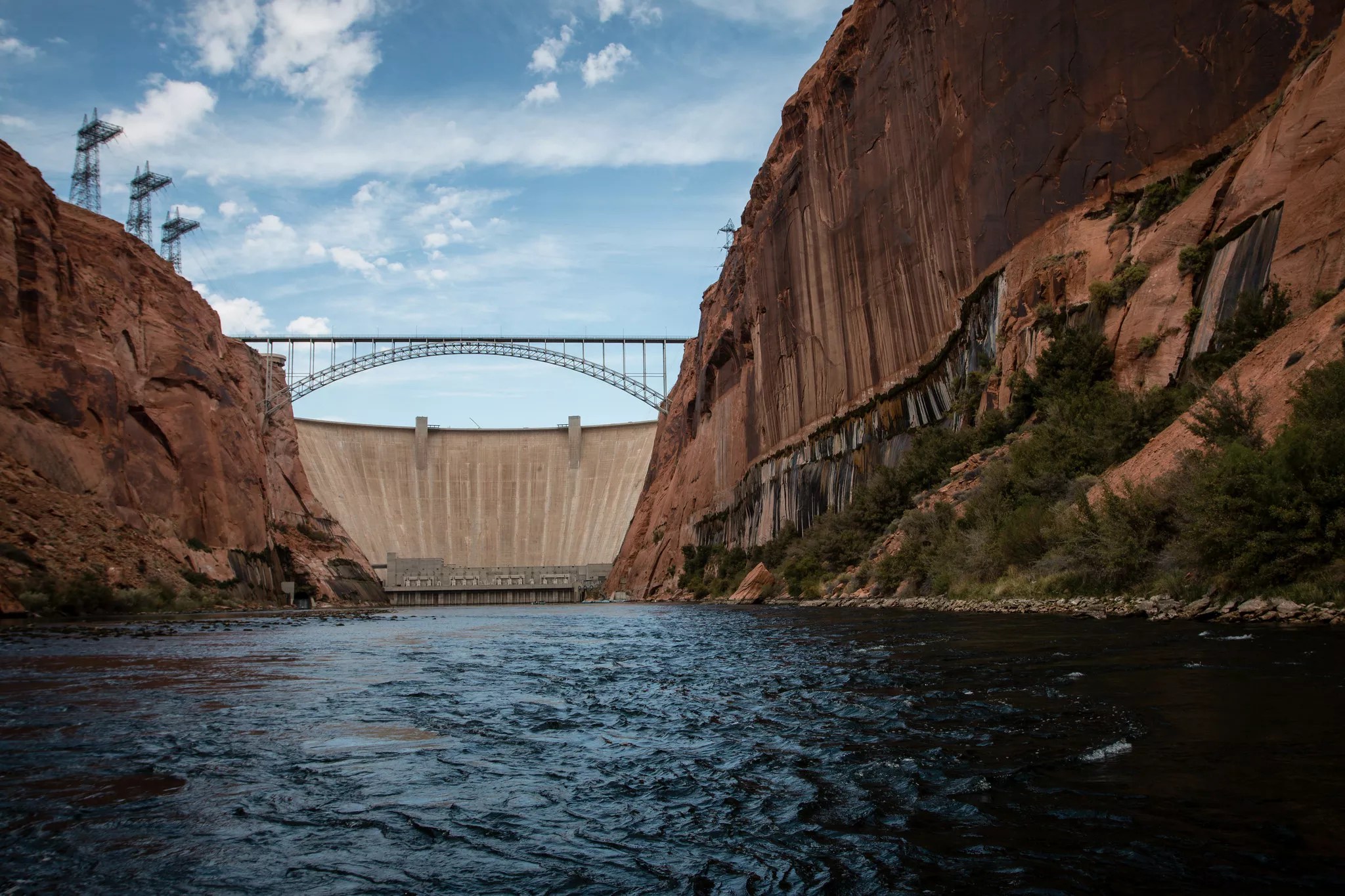
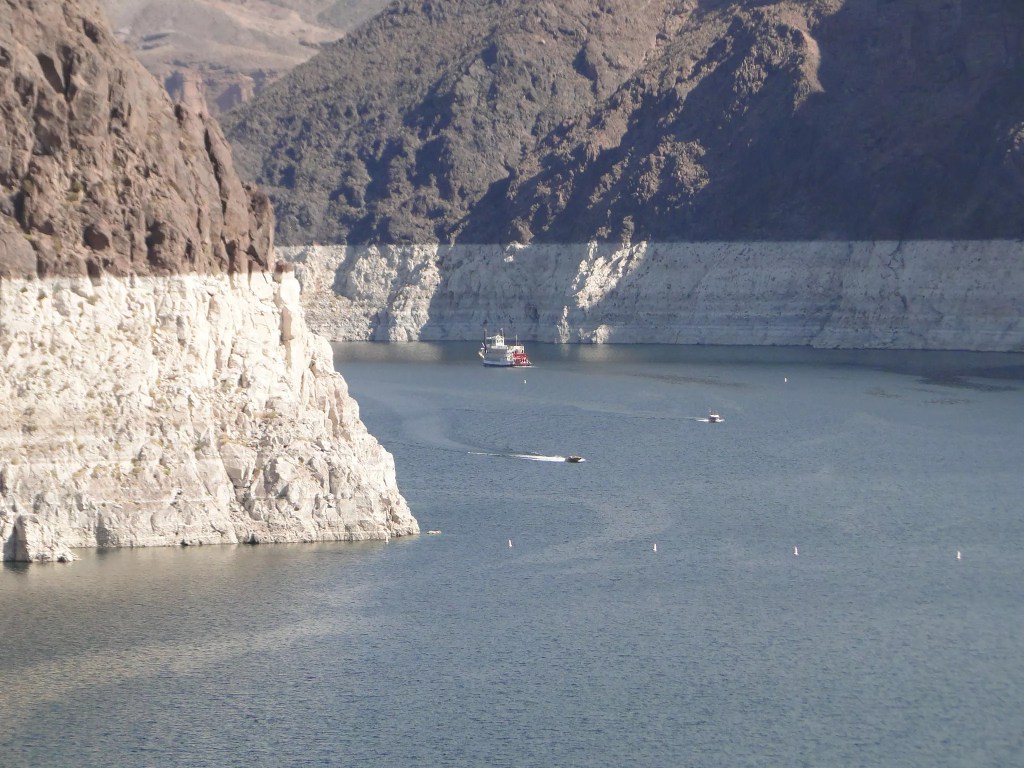
Lake Powell and Lake Mead, the two main reservoirs that provide water to the Lower Basin states, are both less than a third full. One study found that in the next 35 years, both may drop to dead pool status, meaning the water level will be so low that they won’t be able to deliver water to the Hoover and Glen Canyon dams, which generate electricity used by millions of people.
Sean Holstege
What is being done about the Colorado River?
Not enough, at least so far.
River water usage is still largely governed by the 1922 Colorado River Compact, which divided water rights between the seven states just 10 years after Arizona achieved statehood. But the creators of that compact did not anticipate drier times. Back in 2007, the basin states agreed to a deal that clarified where cuts would be made for each of them during water shortages; another update to that compact was made in 2019. The Lower Basin states again agreed to a temporary reduction in Colorado River water in 2023. Last year, Arizona took the biggest cut of any state, losing 18% of its 2025 water allocation, according to KTAR.
The cuts are a band-aid at best, which is why the states have been trying to hammer out a new water sharing agreement.
What’s happened with the Colorado River negotiations?
Negotiations between the Upper Basin and Lower Basin states — as well as Native American tribes — have dragged on for more than two and a half years. At least until January’s meeting in D.C., little apparent progress had been made.
Some of that has to do with a lack of federal leadership. Currently, the Bureau of Reclamation has no permanent leader. Ted Cooke, the former general manager of the Central Arizona Project, had been nominated to the post, but the Trump administration withdrew his name after pushback from Upper Basin states.
The mistrust goes both ways. Arizona has accused the Upper Basin states of being unwilling to make any water sacrifices. Late last year, Hobbs and the state’s top Democratic and Republican lawmakers wrote a letter to Secretary of the Interior Doug Burgum, asking him to intervene.
“We find it alarming that the Upper Basin States have repeatedly refused to implement any volume of binding, verifiable water supply reductions,” Arizona’s leaders wrote. “This extreme negotiating posture — four of the seven Basin States refusing to participate in any sharing of water shortages — has led to a fundamental impasse that is preventing the successful development of a 7-state consensus plan.”
The authors added that with the current guidelines nearing expiration, reservoirs are depleted and “one bad winter away from reaching critical lows.”
According to The Voice of San Diego, the Lower Basin states have offered to conserve 440,000 acre-feet of Colorado River water each year — that’s roughly enough to serve 1.3 million single-family homes a year — if Upper Basin states share cuts when further reductions are needed during dry years. An official from California told the outlet this week that the Upper Basin states haven’t committed to conserving “a spoonful.”
Any agreement between the states would have to be approved by their state legislatures.
Gage Skidmore/Flickr/CC BY-SA 2.0
What happens if an agreement isn’t reached?
It’s entirely possible that they won’t come to terms by the expiration of the current agreement in October 2026.
What happens after that isn’t clear.
“I think people are looking for a concise answer here, but there isn’t a concise answer,” Brenda Burman, former commissioner of the Bureau of Reclamation, told KUNC.
As Hobbs has requested, the Interior Department could take a more active role in brokering a deal. Scott Cameron, acting director of the Bureau of Reclamation since October, has said he expects a finalized plan from the states in May or June 2026. If there isn’t one, it would be reasonable to expect the feds to step in.
Absent an agreement from the states, the federal government could mandate a solution, though it’s not clear when that might happen. Though experts have suggested the federal government won’t let Lake Powell and Lake Mead run dry, the theoretical terms of a federally imposed deal may not be great for Lower Basin states like Arizona. That’s why lawmakers have set up a $3 million war chest for potential litigation — money that was used to hire Sullivan & Cromwell — and why they may allocate another $1 million in budget negotiations this spring.
No matter what happens, though, cuts are coming. How steep they are remains to be seen.