

fsHH (Pixabay), CC0, via Wikimedia Commons

Audio By Carbonatix
Just more than a year ago, Bradley Page was driving on Interstate 10 toward Casa Grande when he suffered a severe stroke. He managed to make an emergency stop on the highway shoulder, where police soon found him in his 2024 Nissan sedan.
But responding state troopers and Pinal County Sheriff’s deputies did not help Page or swiftly transport him to a hospital. Instead, according to a lawsuit filed in Maricopa County Superior Court this week, the cops treated the 62-year-old Black man “like a dangerous felony suspect,” shooting him with stun batons and siccing a police dog on him.
As a result of the canine deployment in particular, Page suffered serious injuries to his arm on top of the lasting effects of his stroke. His lawsuit names the Arizona Department of Public Safety and the Pinal County Sheriff’s Office as defendants, as well as four DPS troopers, a sheriff’s deputy and a sergeant with the sheriff’s office.
Page is suing all the defendants on negligence grounds, arguing in his suit that officers should have recognized “the most obvious signs of a stroke” and known the difference between “acute medical emergencies and criminal behavior of drug intoxication.” He’s also suing for intentional infliction of emotional distress and assault and battery. His wife, Dooreen — also a plaintiff in the suit — is suing over a loss of consortium with her husband. The pair is seeking a variety of damages.
“Law enforcement used extreme and unnecessary force against Mr. Page,” his attorney, Benjamin Taylor, said in a statement to Phoenix New Times. “We are seeking justice for his family.”
DPS spokesperson Bart Graves declined to comment on the ongoing litigation, while the Pinal County Sheriff’s Office didn’t immediately respond to a message about the matter.
Page’s mid-drive stroke occurred on Feb. 3, 2025. Officers from the Gila River police department were the first to arrive after Page made an emergency stop on the shoulder. Per the complaint, the Gila River officers “understood that this was a potential medical emergency and had weapons drawn only as a precautionary measure.”
Not long after, a DPS trooper identified in the complaint as “J. Harries” arrived on the scene. “Without properly assessing the situation,” the complaint says, Harries “rushed to the erroneous conclusion that the situation warranted being treated as a ‘high-risk’ stop.” The complaint alleges that Harries admitted he had not seen Page well enough to have a sense of what was happening in his car.
Harries directed other troopers to stop traffic and block the car. He and others pointed guns at Page, who was “leaning back and forth in a sporadic motion” in the front seat of his car. At that point, the complaint notes, the DPS troopers should have clocked that Page was having a medical episode. “Dizziness and loss of balance are classic, well-known symptoms of acute stroke that any trained law enforcement officer should recognize,” the lawsuit says.
Pinal County Sheriff’s Office Facebook Page
Dog bite
Instead, the officers allegedly amped up the temperature. Harries ordered Page to turn off his car, roll down the window and stick out his hands. Because Page was in the “throes of a stroke,” the complaint read, he struggled to comply and instead “inadvertently caus(ed) the wheels of his car to spin,” leading it to become stuck in the gravel.
Another state trooper, identified as “A. Wheeler,” fired two 40-millimeter foam batons at Page’s window. The batons are considered less lethal weapons and are meant to achieve “pain compliance,” though they can be deadly in certain circumstances. Page managed to stick his arm out of the window, the complaint says, only for Wheeler to fire two more batons, striking Page’s left arm.
“Unable to fully perceive what was happening as a direct result of his stroke,” the complaint says, Page retracted his arms and tried to roll up his window. “The effects of the ongoing stroke caused him to roll his window up and down sporadically as he tried to process what was happening and protect himself from further assault.” Wheeler then fired again at Page, “this time deliberately aiming to break the window.”
The complaint quotes an incident report in which Harries described Page as “appear(ing) to be in an altered state” and “shifting from side to side in his driver’s seat and mumbling things.” New Times has requested that report from DPS but has not yet received it. Instead of recognizing stroke symptoms, Harries assumed Page was “attempting to barricade himself” and called for canine and SWAT teams from the Pinal County Sheriff’s Office.
“This decision escalated an already dangerous and inappropriate law enforcement response to what was, and should have been recognized as, a medical emergency,” the complaint says.
A deputy with the sheriff’s canine unit arrived at approximately 7 p.m., though the complaint does not specify how long it had been since Page made his emergency stop. The deputy, identified only as “Sanders” in the complaint, observed Page “drift in and out of consciousness.” And though Page was not “becoming aggressive toward any of the officers in any way,” Sanders deployed a police dog to remove Page from the car.
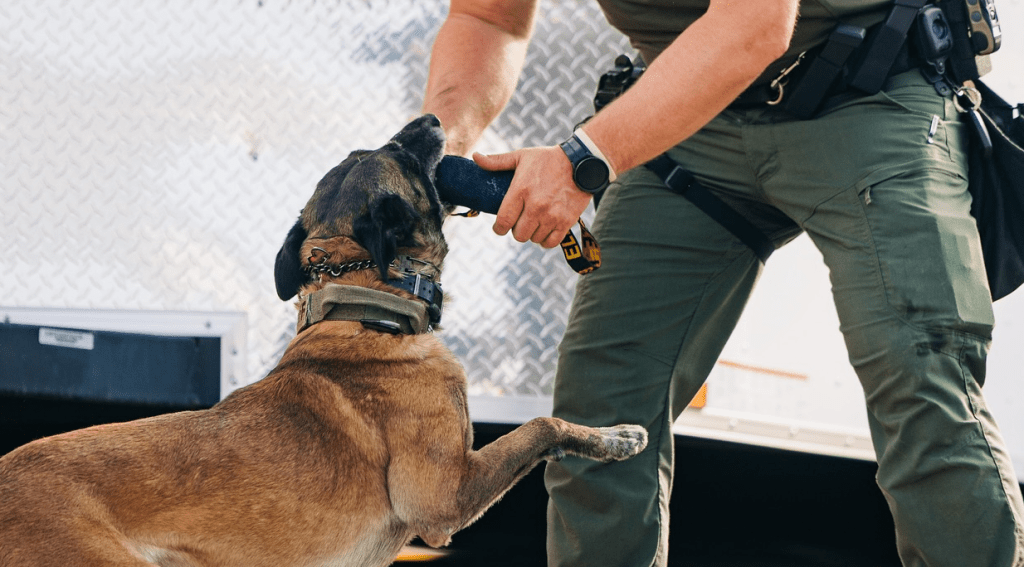
Page’s left arm again bore the brunt of it. The dog bit Page and “violently held on to Plaintiff Page’s left bicep with its clamped jaws.” Multiple officers approached the vehicle to confirm that Page was unarmed, though they didn’t retrieve the dog. They tried to pull Page from the car only to realize he was still wearing his seatbelt, which they had to cut free.
One Page was finally removed from the car, the complaint says, officers released the dog and forced Page’s face to the ground, handcuffed him and searched him, finding nothing of note. After holding him in the back of a police vehicle for more than an hour, he officers eventually transported Page, still in “the grip of a stroke,” to Chandler Regional Hospital. There, medical providers confirmed he suffered a stroke, according to the lawsuit, which also says blood tests “revealed that no illegal substances were in his system.”
The complaint says that as a result of the incident — particularly the use of a police dog — Page suffered “sustained, permanent and disabling injuries,” specifically to his left arm. The dog bite left four penetrating wounds, as well as soft tissue damage, a hematoma and injuries to his tendons, nerves and arteries.
Page was also charged with failure to comply with a police officer and reckless driving, though both counts were dismissed on Jan. 28 by the prosecutor in Western Pinal Justice Court, according to court records.