
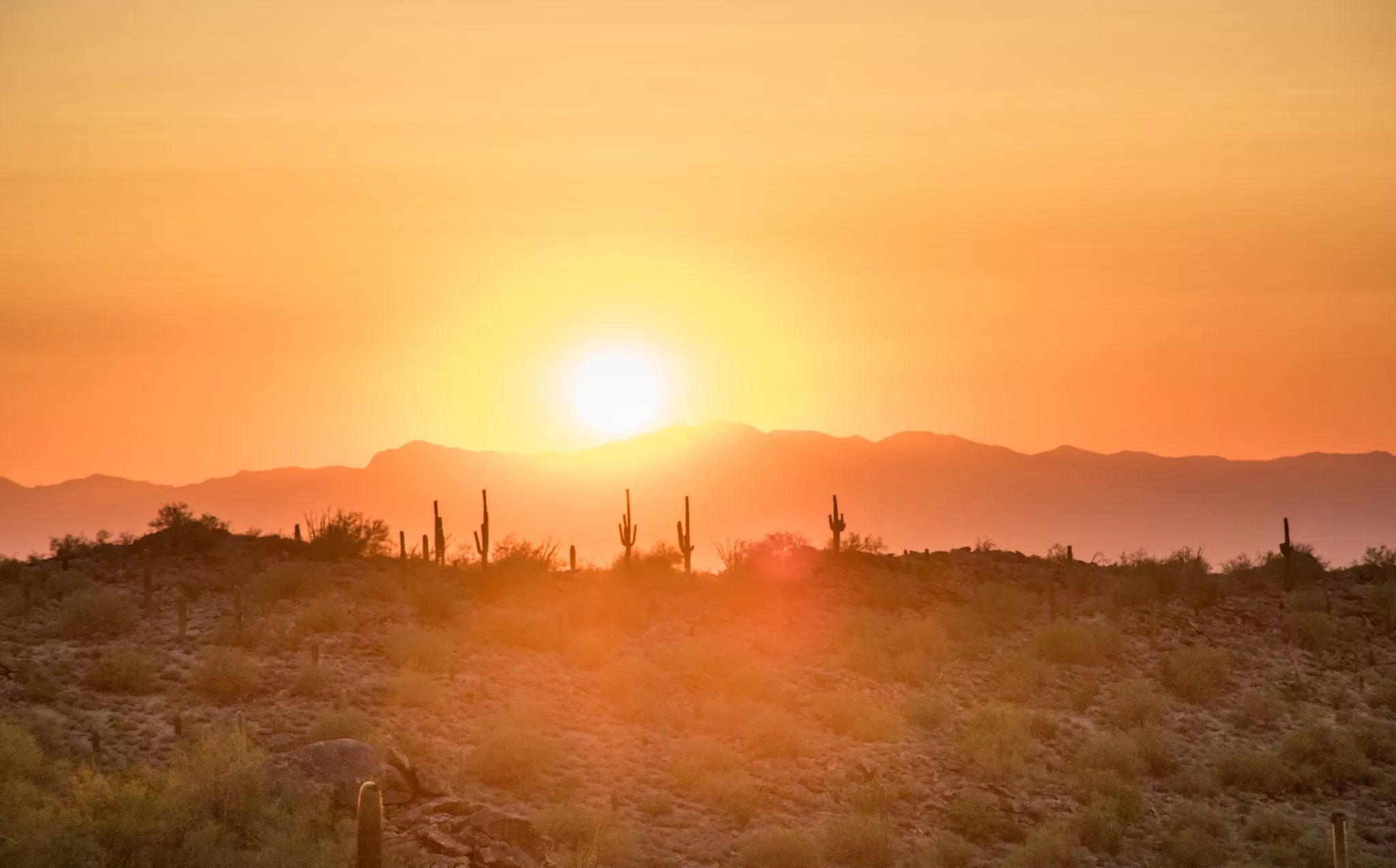
Alexander Nie/Flickr/CC BY-SA 2.0

Audio By Carbonatix
Punxatawny Phil is a goddamn liar.
A month ago, the weather-predicting groundhog saw his shadow, presaging six more weeks of winter. He might need to get his eyesight checked, because we sure as hell didn’t get any winter in Phoenix this February, with temperatures cracking the low 90s by the end of the month.
In fact, we just endured the hottest February in Phoenix history.
According to National Weather Service Phoenix data, the average temperature last month was 67.7 degrees, nearly 10 degrees higher than the average since the National Weather Service began tracking it in 1896. This February beat out the previous recordholders — from 1991 and 2025 — which averaged 66 degrees.
“Abnormally dry and then abnormally dry has been the story for this past winter,” NWS meteorologist Ryan Worley told Phoenix New Times. “Not just for Phoenix, but for the state as a whole.”
The final two days of February also set records. Temperatures reached 92 degrees on Friday and Saturday, which matched the highest February temperature that’s ever been recorded in Phoenix’s history, Worley said. That record was previously set 40 years ago, when temperatures reached 92 degrees on Feb. 27, 1986. Normal February temperatures in Phoenix are a good 20 degrees below that.
February 1986 likely had similar conditions to this year’s version, with an “area of high pressure that’s just been sitting over the region for the past several days, helping bring these warmer temperatures to the region,” Worley said.
Typically, Phoenix has multiple weather systems move through the region in February that bring rain, cooler temmpatures and cloud cover. But those weather conditions have been largely absent this month. There’s been a couple, “but they’ve been fairly weak,” Worley said. In fact, Phoenix’s rainfall this month has been 10 times lower than what it normally is.
“We just really haven’t seen those systems that have helped cool us down,” Worley said. “It’s just been persistent high pressure and warmer temperatures over the region, and we just haven’t really seen much of a break.”
Visitors to the Valley may be getting hotter conditions than they anticipated, and they should plan for it, Worley said. That means taking breaks in the shade, drinking plenty of water, wearing light, loose clothing and applying sunscreen. “They might not be used to it,” Worley said.
March could see a “relative cooldown” at the start of the month, Worley said, with temperatures falling into the mid-80s. However, that’s still 10 degrees above normal for the start of March, and rain isn’t expected. Phoenix will likely start to consistently see 90-degree days by late March, but the first triple-digit day shouldn’t arrive until late April or early May.
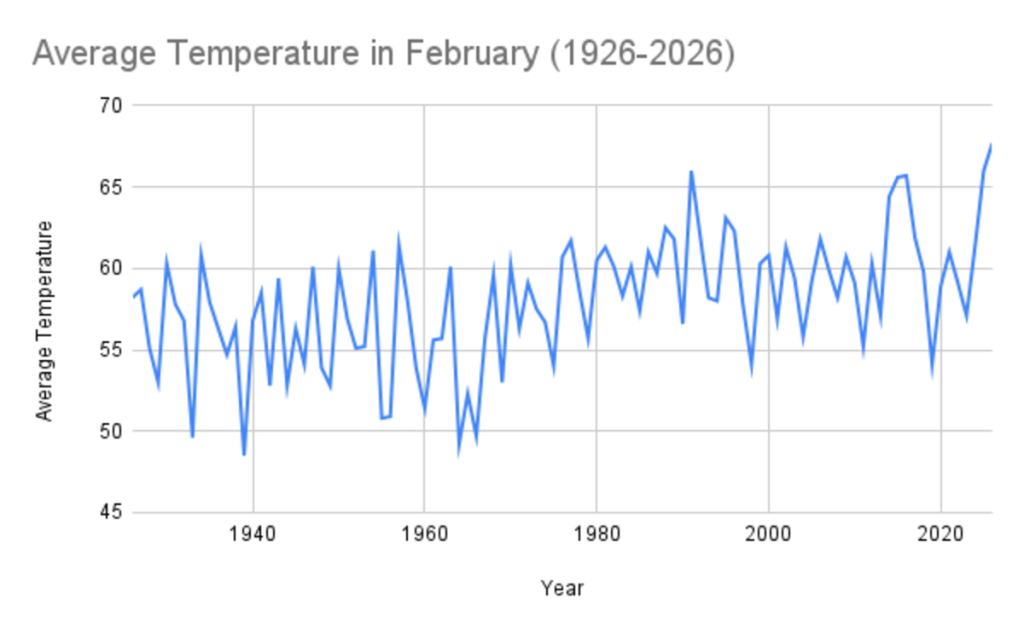
Data: National Weather Service
Hottest Februarys in Phoenix history
Here are the 10 hottest Februarys in Phoenix’s history by average temperature.
1. 2026 – 67.7 degrees
Tie-2. 1991 – 66 degrees
Tie-2. 2025 – 66 degrees
4. 2016 – 65.7 degrees
5. 2015 – 65.6 degrees
6. 2014 – 64.4 degrees
7. 1995 – 63.1 degrees
8. 1988 – 62.5 degrees
9. 1996 – 62.3 degrees
10. 1992 – 62.1 degrees