
O’Hara Shipe

Audio By Carbonatix
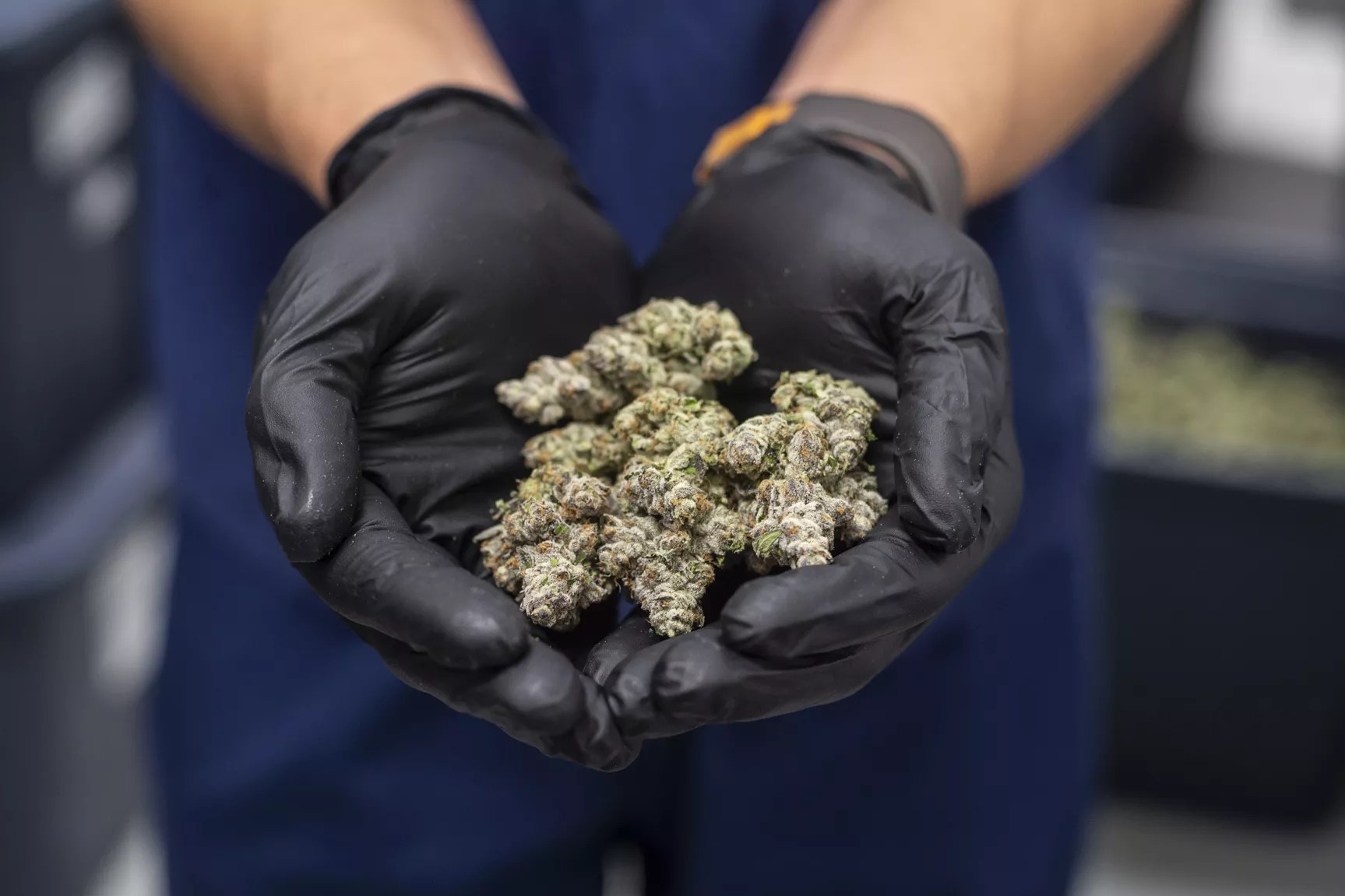
Donald Trump wants to reschedule marijuana as a less dangerous drug — a move that could open up banking and research opportunities for marijuana businesses — but Arizona’s weed community is maintaining a healthy skepticism.
“Over the last 24 hours, I’ve heard more from folks saying, ‘I’ll believe it when I see it,’” said Ann Torrez, the executive director of the powerful Arizona Dispensaries Association. “There was a lot of doubtful feeling that it’s not really going to happen.”
Last week, Trump issued an executive order directing the Department of Justice to speedily reclassify the plant as a Schedule III substance. Marijuana is currently a Schedule I substance, on par with LSD and heroin, and officially considered to have no medicinal value. Schedule III drugs — which include ketamine, anabolic steroids and Tylenol with codeine — are considered to have accepted medical use and low to moderate potential for abuse.
Weed has been a Schedule I drug since 1970, when President Richard Nixon signed the Controlled Substances Act. Views of marijuana usage have drastically changed since then — and waves of states, including Arizona, have legalized the drug for recreational use. It remains federally illegal, though in 2023, the Biden administration’s Department of Health and Human Services recommended that cannabis be rescheduled.
Trump is attempting to do the same, albeit through executive order.
“It is the policy of my Administration to increase medical marijuana and CBD (cannabidiol) research to better inform patients and doctors,” Trump wrote in the executive order. “It is critical to close the gap between current medical marijuana and CBD use and medical knowledge of risks and benefits, including for specific populations and conditions.”
Torrez called the executive order “a monumental moment” for the marijuana industry, though she and others admitted that cannabis folks are employing a wait-and-see approach before planning any ticker-tape parades.
Laura Bianchi, a partner at the Scottsdale law firm Bianchi and Brandt who has advised clients on marijuana law since 2010, says the industry isn’t getting ahead of itself yet. Currently, nothing about the law has changed.
“It’s an important step forward, but it’s also important to understand that it’s an executive order. You cannot reschedule marijuana by executive order,” Bianchi told Phoenix New Times. “It doesn’t guarantee anything.”
But if it does happen, here’s how it would affect Arizona’s $1.3 billion weed industry.
Kevin Hurley
The tax code
If marijuana is rescheduled as Trump has directed, the biggest boon for Arizona’s weed businesses will be a major change to federal tax law — specifically, 280E of the Internal Revenue Code, which prevents businesses that “traffic” Schedule I and II drugs from deducting expenses on their taxes.
“Any normal business deduction that any other traditional business takes, the cannabis industry cannot. So it’s a huge burden,” Bianchi explained. “Because it doesn’t apply to Schedule III drugs, that would disappear as a matter of law, which is fantastic.”
Torrez agreed that 280E has been problematic for businesses.
“When you stifle the industry in that way, you stifle growth, research and internal creativity and you burden businesses with lending that is less attractive or affordable,” Torrez said. “I think with Arizona, you’re going to see a lot more innovation coming into play because people are going to have the financial ability to do some of that with this relief.”
Though the language of Trump’s executive order is focused on medical marijuana and the plant’s rescheduling is based on its medicinal value, Bianchi made clear the tax code provision would no longer apply to all cannabis-licensed entities. “That’s probably the one benefit that will apply to the whole industry,” she said.
However, it remains to be seen whether rescheduling would mean more access to traditional banking for weed companies. Because weed is federally illegal, dispensaries mostly operate on a cash-only basis. Earlier this year, Arizona Attorney General Kris Mayes joined other states in asking Congress to address that issue.
“There’s a hope,” Bianchi said. “It’s more of a perception that if it’s rescheduled, banks could decide that the risk for exposure of working with the cannabis industry is lower.”
Atomazul/Shutterstock.com
Medical marijuana
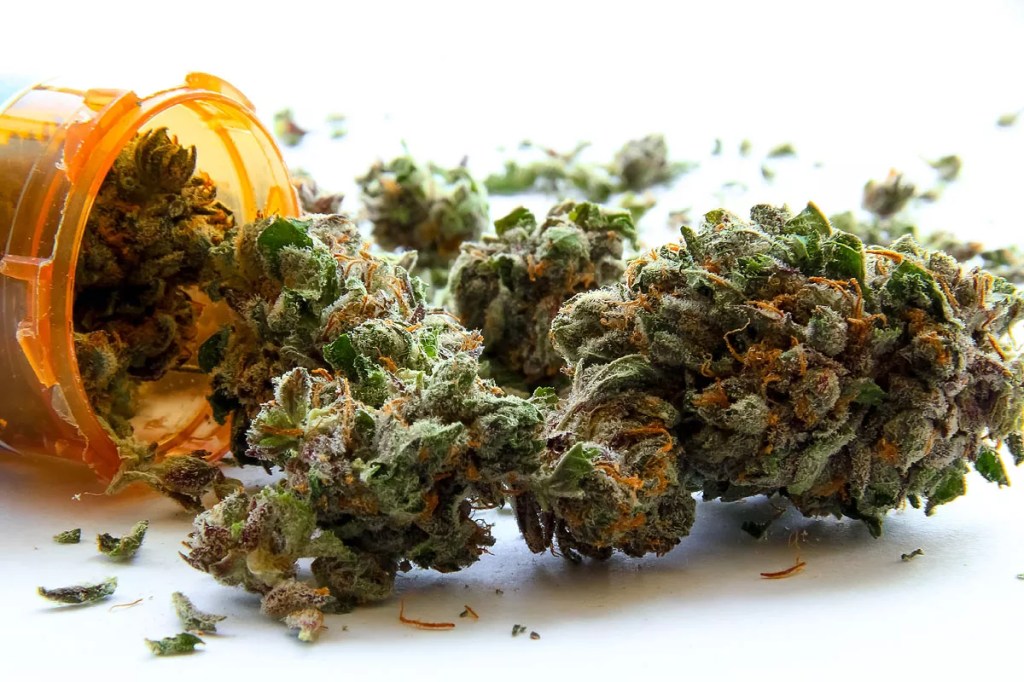
There are an estimated 106,000 registered marijuana patients in the state, according to the Arizona Department of Health Services. That’s way down from the almost 300,000 patients who were enrolled in December 2020, the month before recreational sales started.
They didn’t go away, Torrez said. They just got what they needed without a prescription.
“We have a sound adult use program that actually probably encompasses a lot of medical activity,” Torrez said. “We have a lot of patients who didn’t stop using their medicine; they just stopped identifying as patients. So this could also help encourage some of those folks to come back into the medical space.”
In addition, rescheduling cannabis will likely lead to more research on the plant’s medical benefits in Arizona and beyond. For years, weed research was caught in a catch-22 — the plant’s Schedule I status prevented any research on it, and the lack of research on its medical benefits meant it was stuck as a Schedule I substance with no accepted medicinal usage.
If weed is rescheduled, it will open the door to more robust scientific research on the health benefits that proponents have long claimed that cannabis possesses.
“We’ve been in that conundrum for so long that the plant has been put at a disservice, and consumers and patients have been put at a disservice,” Torrez said. “I think you’re going to see more patients coming back to the program because now they’re going to see more innovation and focus on medical marijuana products.”