
Morgan Fischer

Audio By Carbonatix
Keep Phoenix New Times Free
We’re aiming to raise $10,000 by April 26. Your support ensures New Times can continue watching out for you and our community. No paywall. Always accessible. Daily online and weekly in print.
Last week, a Haitian immigrant died in federal immigration enforcement custody after being housed in Florence Correctional Center. When Democratic Rep. Yassamin Ansari traveled to Florence to get answers, she said, she ran into an “appalling” show of force.
On Friday morning, Ansari went to the U.S. Immigration and Customs Enforcement detention facility to conduct a congressional oversight visit after 56-year-old Emmanuel Damas died in an East Valley hospital on March 2 after a prolonged toothache, which his family says his jailers did not take seriously. He’d been transferred to the hospital from the medium-security, male-only ICE Florence facility.
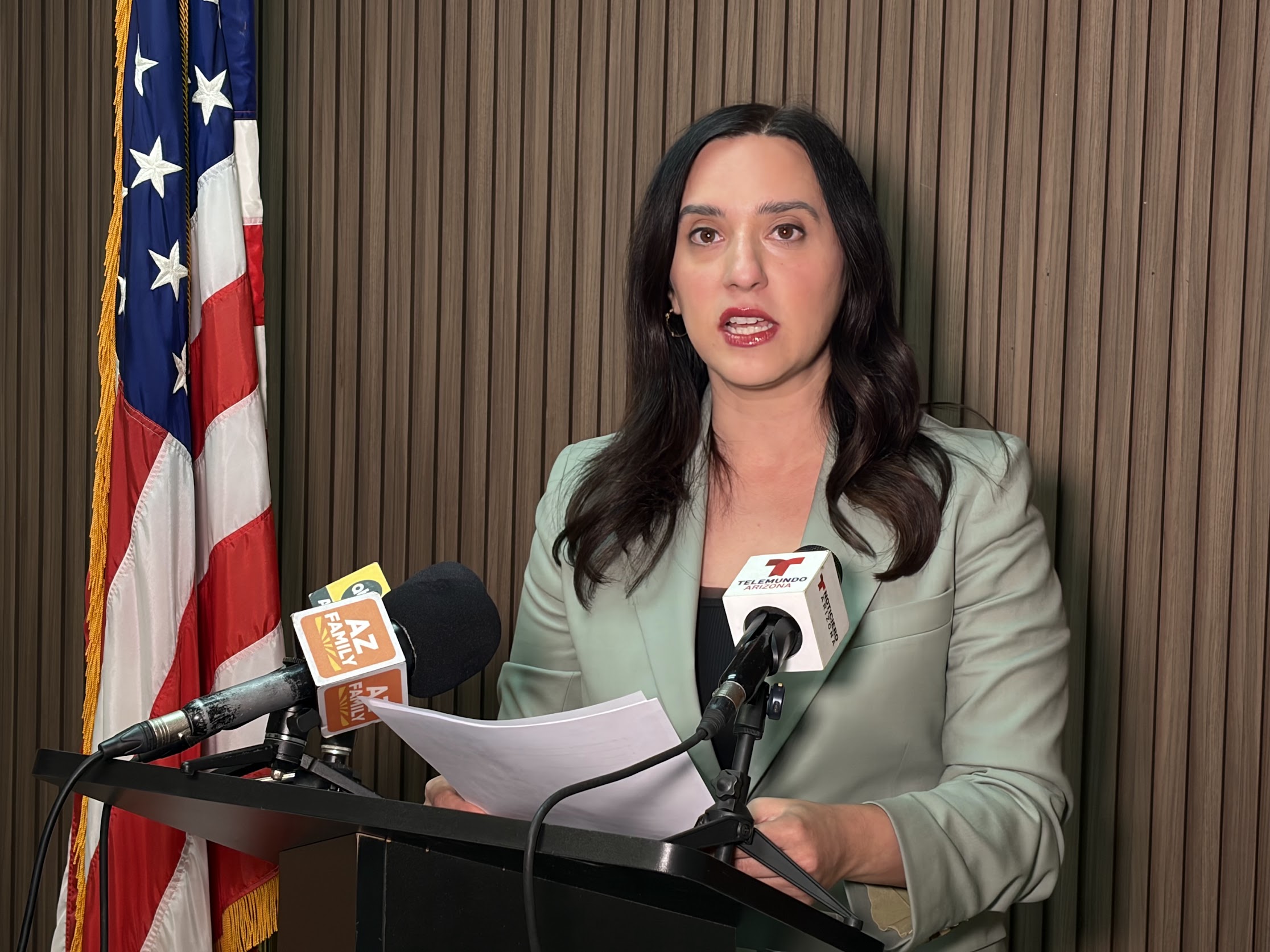
“Because of their negligence, a toothache became a death sentence,” Ansari told reporters at her Phoenix office after the visit. Damas died because ICE denied him adequate medical care, she said.
“ICE is trying to cover up a lot of what happens inside these detention centers,” Ansari said. “It’s unacceptable that human beings are dying in ICE custody, using taxpayer dollars, under the supervision of these private companies, and there is literally no accountability taking place.”
In a lengthy statement published more than a week after Damas’ death, ICE wrote that Damas was arrested in Boston for assault and battery in mid-September. He was moved to ICE custody under the Lake Riley Act, a 2025 law, passed after an undocumented immigrant killed a college student in Georgia, that made it easier for the government to deport people so much as charged with crimes.
By late September, Damas was transferred to Florence pending his immigration hearing. In early January, an immigration judge ordered his removal, according to the agency. Damas filed an appeal with the Board of Immigration while in custody in Florence. The facility, owned and operated by the private prison company CoreCivic — which also owns Arizona’s other large detention facility, in Eloy — can hold more than 1,800 detainees, split between ICE and the U.S. Marshals Service.
On Feb. 19, according to ICE, Damas reported shortness of breath and was transferred to a local hospital before being moved to a Phoenix-area hospital. He died less than two weeks later. His cause of death remains unknown.
During her visit, Ansari said she tried to get answers from ICE and CoreCivic about the facility’s medical practices and procedures, but her questions were met with “extreme reluctance.” Ansari said she and her team were greeted by “more than 20 people” for a conference room chat. “Felt like overkill to me,” she said. The oversight visit was Ansari’s first to the facility and the fifth overall in her first 14 months in office, including visits to Eloy Detention Facility and the Phoenix-Mesa Gateway Airport facility.
She said staffers were cagey and unhelpful in their responses, telling her that urgent medical concerns from detainees were addressed within 48 hours, but that emergencies were determined “accordingly.” ICE staffers, the facility’s warden, the assistant warden, a nurse, guards, and other operational employees, including staffers responsible for operations and security at the facility, were also in the meeting. CoreCivic’s private counsel, whom Ansari did not name, told her he expects there to be litigation surrounding the events of Damas’ death, Ansari recalled.
Ansari was then given a short tour of the facility, but was not permitted to speak with any of the detainees, whom she saw only through windows and at the dining facilities. Seven days prior to Ansari’s visit, her team gave ICE and the Department of Homeland Security a “heads up” that she was coming, in accordance with DHS’s policies and protocols that Ansari called “outrageous.” Several federal judges have blocked that policy, including as recently as March 2, but the agency is still implementing it. ICE previously cited the policy to denied her visit to Eloy Detention Facility.
“If you’re getting a carefully curated visit led by ICE and the company, then you’re probably not getting a real assessment of what’s happening,” she said. “They will find every possible way to make it more difficult. These visits are, I have found, useful fact-finding, useful for getting a better understanding of what it’s like, but the much more valuable piece is when you can actually talk to people who are there.”
ICE also denied Ansari the chance to speak with a detainee who’d filed the necessary paperwork to talk with the congresswoman. Ansari took up the matter with an ICE supervisor, to no avail. Ansari said she plans to make another trip to the facility next Friday to try to meet with the man.
Phoenix New Times asked ICE for a comment; the agency said it will respond in a few days. In a statement to New Times, CoreCivic spokesperson Brian Todd wrote, “The safety, health and well-being of the individuals entrusted to our care is our top priority. We take seriously our responsibility to adhere to all applicable federal detention standards in our immigration facilities, including our Central Arizona Florence Correctional Center (CAFCC), which is required to undergo regular review and audit processes to ensure an appropriate standard of living and care for all detainees.”
A timeline of Damas’ final days
On the same day as Ansari’s visit, ICE published a detailed timeline of Damas’ medical care, including a stay at Florence Anthem Hospital before he was moved to the Intensive Care Unit at the John C. Lincoln Medical Center. The report showed Damas’ health continued to decline after he was hospitalized, despite tests generally coming back normal. The report didn’t mention Damas’ teeth or a toothache.
The report described a man in crisis. Damas was intubated with a ventilator — and later two chest tubes to remove excess lung fluid — and his oxygen levels continued to drop. The hospital reported he had a “likely diagnosis to be septic shock due to pneumonia” and his “ammonia, liver function tests, and white blood cell counts returned elevated.” Four days before he died, the hospital scheduled Damas for a minimally invasive procedure to remove scar tissue from the right lung. Still, his health worsened.
“When it was clear that he was not going to make it and had deteriorated significantly, they called his family,” Ansari said ICE officials told her. “And his family was able to come to the hospital when he passed away.”
Ansari said three days before Damas died, ICE’s medical liaison told his family they could visit him. Damas’ family, whom ICE did not directly identify, arrived the next day and stayed with him throughout the night. Damas died the next day. The hospital physician reported the preliminary cause of death as unknown. New Times has requested the autopsy report from the Maricopa County Medical Examiner’s Office.
An investigation into Damas’ death will be conducted later this month. “That’s by no means an independent investigation,” Ansari said, since a part of ICE, the Office of Professional Responsibility, will be leading that inquiry. “Unacceptable,” she said.
When asked about the timeline ICE released, Ansari reiterated her calls for an independent investigation, saying that ICE otherwise will keep the public in the dark.
“The timeline is one thing,” she said. “But the issue really is, how does a toothache lead to somebody’s death in a matter of weeks? And how did it get to that point?”
So far this year, 11 people, including Damas, have died in ICE custody, according to the agency. This is tracking to break a record, set last year, of the most ICE custody deaths in a single year in the past two decades. Last year, 31 people died in ICE custody, including three in Arizona. In Florence, 32-year-old Lorenzo Batrez Vargas died during detention due to a viral lung infection, according to Pinal County Medical Examiner’s Office records.
Ansari also raised the alarm on the case of another detainee housed in Eloy detention center who has “experienced severe medical neglect.” For nearly a year, the Congresswoman has been advocating for the medical release of Arbella “Yari” Marquez, a leukemia patient who has thrown up blood and lost 70 pounds and who now struggles to walk. ICE has suggested Marquez lied about her condition.
“I’m witnessing somebody who could be a future statistic being denied the care that she needs,” Ansari said. “So many of these deaths seem to be avoidable.”