
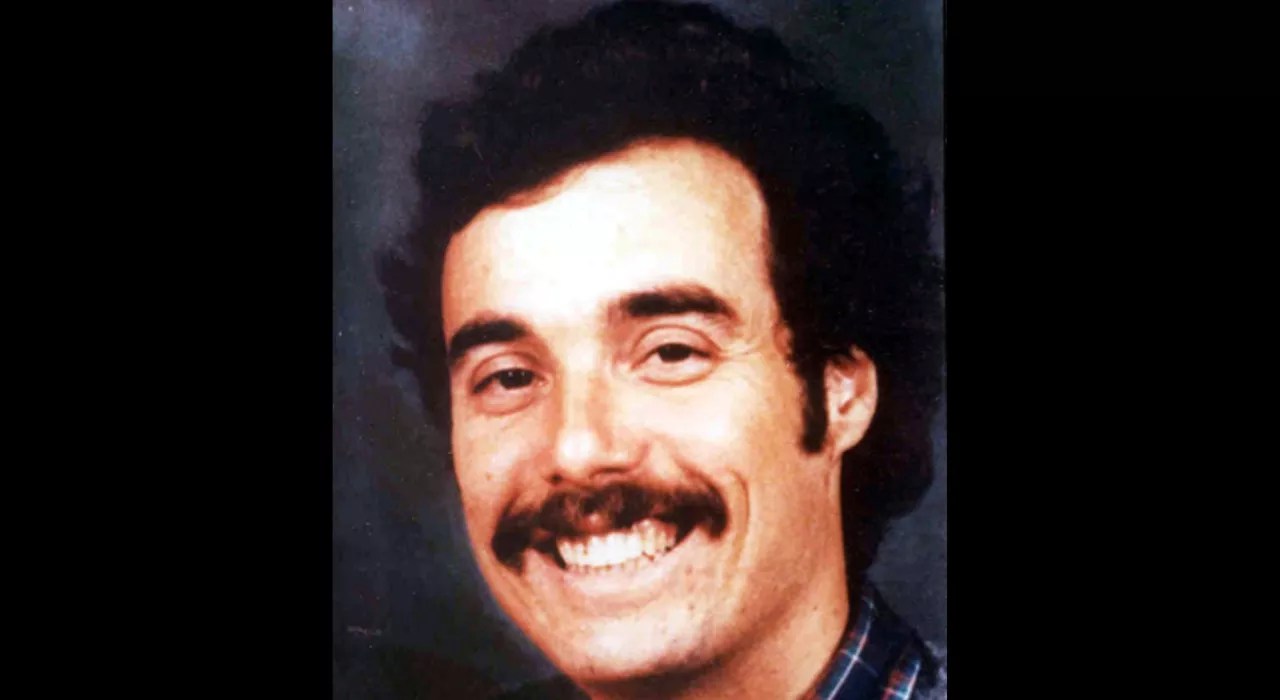
Courtesy of Dan Levey

Audio By Carbonatix
More than 25 years after his brother was gunned down in central Phoenix, Dan Levey sued to keep his older brother’s killer in prison. After a year-and-a-half court battle, that’s where the convicted killer will stay.
“I don’t see any redeeming reason to let this person out,” Dan Levey told Phoenix New Times after learning that a scheduled parole hearing for the killer would not take place. “He committed first-degree murder. He didn’t give my brother any chance to get away, and my brother was just an innocent person.”
On an early Sunday morning in November 1996, Howard Levey sat in his car outside Clarendon Elementary, reading the sports sections of the newspaper and listening to the radio. He was waiting for his weekly pickup basketball game to begin.
But before the 40-year-old father of two had a chance to hoop with his buddies, he was shot twice by Granados.
After shooting Levey, the 22-year-old stole his car and left Levey for dead on the side of the road. Two years after the murder, Granados accepted a plea agreement and was sentenced to life in prison, with no possibility of early release for 25 years. At sentencing, court documents show, Judge Michael McVey criticized Granados for his lack of remorse and recommended that he never be released from prison due to “his lack of any shame, callousness, and viciousness of this crime.”
Levey’s family thought Granados’ plea agreement meant he could be released only via an “executive commutation” hearing from Arizona’s governor, rather than a parole hearing. According to Levey’s lawsuit against the Arizona Department of Corrections, Rehabilitation and Reentry, these terms were used interchangeably by prosecutors.
But in July 2024, a parole hearing was scheduled for Granados before the Arizona Board of Executive Clemency. Granados’s attorneys argued that his plea agreement clearly allowed parole. Before that hearing could take place, Maricopa County Superior Court Judge Frank Moskowitz granted a temporary restraining order to delay the hearing while the parties litigated the issue of whether Granados was eligible for parole.
In mid-November 2025, Moskowitz issued a ruling, finalized in a Dec. 24 judgment, that Granados isn’t eligible for parole. However, Levey’s claim that the ADCRR violated the Victims Bill of Rights through its parole “simple internal review” process remained undecided.
“There was some measure of justice that was levied,” Levey told New Times of his reaction in the courtroom that day. “We’re happy with the final outcome. I could feel my brother up in heaven, smiling down. He’d be proud that we’re continuing to fight to make sure that the person’s held accountable and responsible.”
Levey described his brother as gentle and unpretentious, and said his family never wavered in opposing parole for his killer. Granados’ crime, he said, was senselessness and severe. Granados’ case was initially a capital death penalty case before he pleaded down. Levey initially hoped Granados would receive a death sentence. He eventually sided with his family members who wanted life without parole, to avoid a painful trial.
After being admitted into Arizona’s prison system at 24 years old, Granados has spent most of his life there. He’s now 51 years old and is being held in the Arizona State Prison Complex – Stafford, 175 miles east of Phoenix in southeast Arizona. His online prison record shows 11 disciplinary infractions from 2000 to 2023, ranging from resisting a verbal order to possessing or manufacturing a weapon. Throughout his 27 years in prison, he has completed two dozen work programs, including his GED in 2007 and a business technology course. He’s currently considered a medium custody risk.
It’s possible that Granados and ADCRR could appeal Moskowitz’s ruling. Granados’ attorney didn’t respond to New Times’ request to comment. The Arizona Attorney General’s Office, which represented ADCRR in this suit, declined to comment.