
Wing-Chi Poon/Wikimedia Commons/CC BY-SA 2.5

Audio By Carbonatix
They say Arizona is a state of transplants. For decades, new residents have flocked to the Grand Canyon State each year, attracted by the natural beauty and affordable cost of living. But now, according to a new study, more and more Arizona residents are transplanting themselves right back out of the state.
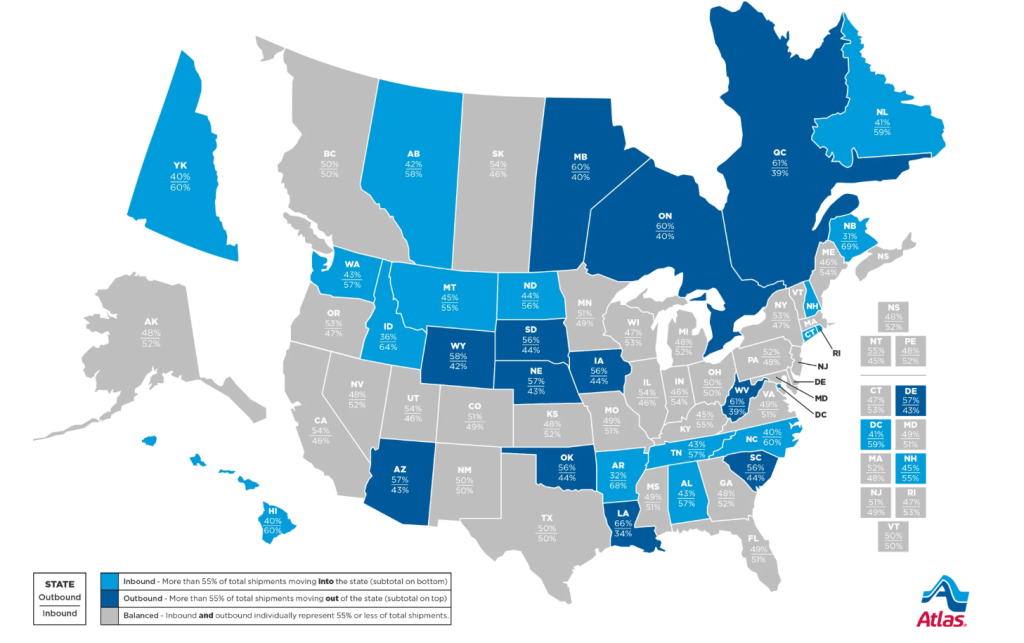
According to an analysis by the moving company Atlas, more people are now moving away from Arizona than moving to it. Over the past year, 57% of interstate moves recorded by the company in Arizona were outbound moves rather than inbound. That’s the highest that percentage has been since 2016, when Atlas began tracking moving trends.
Arizona is tied with Delaware and Nebraska for the fourth-most popular state to leave this year. Louisiana and West Virginia were the biggest net-negative migration states, with 66% and 61% of all moves being out of the state, respectively.
Atlas
Arizona has been a net-negative migration state since 2022, per Atlas, though not to this extent. Before then, more people were moving into the state than out of it, with 58% of all moves being inbound in 2019. That trend has since reversed itself.
Why? The study pointed to affordability — specifically housing costs and the increasing cost of living — as reasons why people are opting to leave the state. For years, Arizona was an affordable paradise for East Coasters and Californians looking to escape expensive housing prices, grocery bills and taxes in their respective cities and states.
Times, and Arizona, have changed. Housing costs skyrocketed during and after the COVID-19 pandemic, and new home builds came to a halt during the same period. In the meantime, Arizona’s population continued to grow, stressing the available housing supply.
Elected officials and organizations have pushed to bridge the gap by encouraging the building of thousands of housing units. Gov. Katie Hobbs has signed laws forcing cities to allow accessory dwelling units, or casitas, and mandating cities rezone to allow “middle housing.” However, those solutions will take time to have an effect. According to the Common Sense Institute, Arizona still has an immediate housing shortage of more than 56,000 units.
That crunch has led some to seek greener pastures. According to a poll released by Nobel Predictive Insights at the start of the year, more than one in four Arizonans had “seriously considered leaving Arizona due to housing prices.” Housing was a top-three concern for 40% of respondents, and only 13% said that housing in Arizona is affordable.
The numbers would suggest that it isn’t. An Arizona State University study found that it takes a median household income of $123,752 to afford the median home price in Phoenix. That’s $44,108 more a year than the city’s median household income, according to the Census Bureau. Rent is also expensive — the median monthly rent for apartments in Arizona is $1,700, which is more than $200 above the national average, according to the Census Bureau.
There are some signs of improvement, though. Rents in some areas of the Phoenix area have been dropping in recent months, even by small amounts, which follows the current nationwide trend. As for home prices, 86.9% of Phoenix area homes tracked by Zillow lost value over the last year, the fourth-most of any major city in the country. Phoenix home sellers also lead the nation in pulling homes off the market without making a sale. All that suggests the marketing is softening a bit.