
halbergman/Getty Images

Audio By Carbonatix
Today is Local News Day
A national day of action to support and celebrate the trusted local journalism that strengthens communities. If you believe local news matters — this is the day to show your support. Make a contribution today to help keep our reporting free and accessible to all.
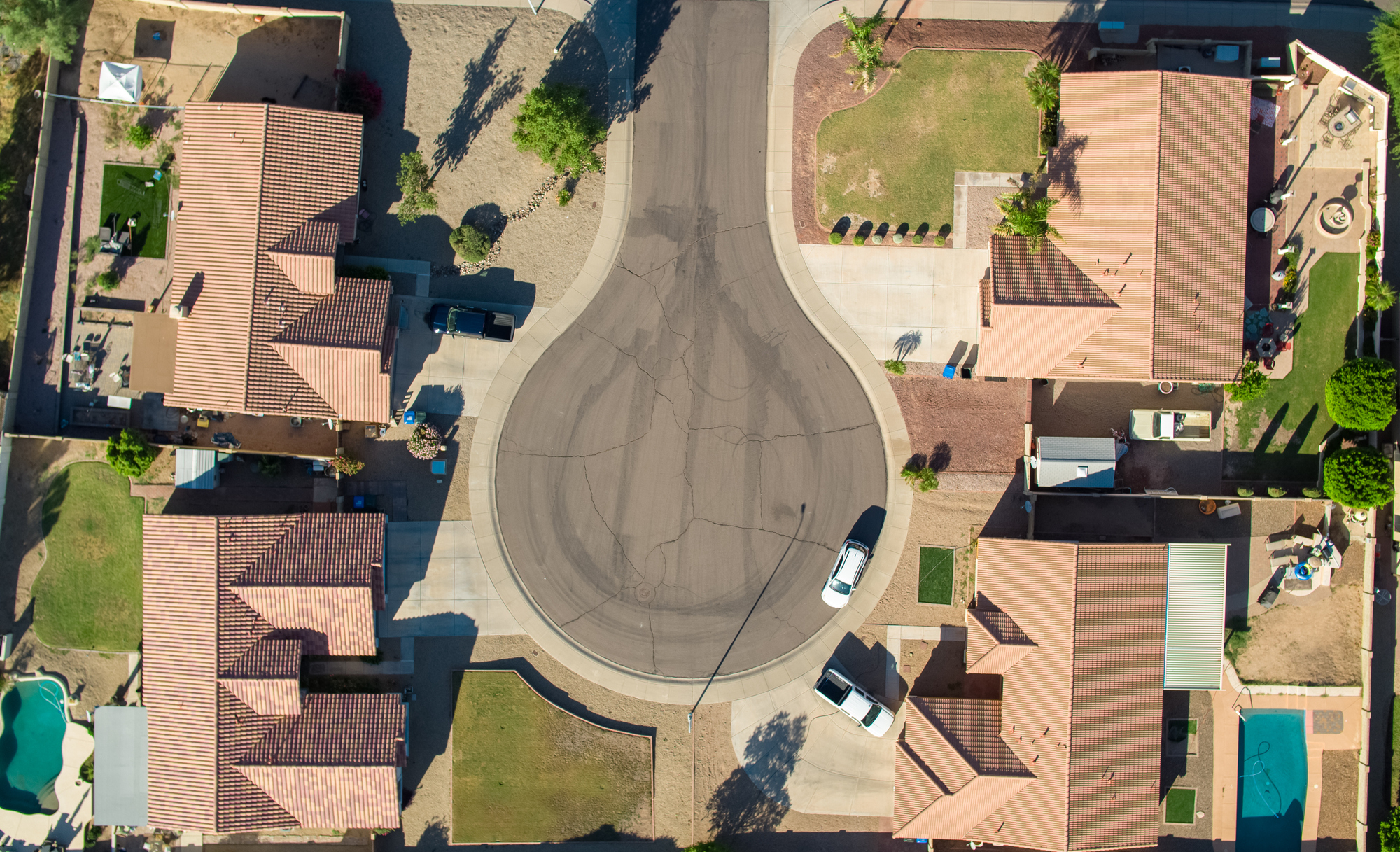
Artificial intelligence-powered robots, lifted by balloons to near the edge of the atmosphere, have been gliding down back to Earth on parachutes and taking high-resolution images of Arizona that could be used to determine insurance rates for homeowners in the Grand Canyon State.
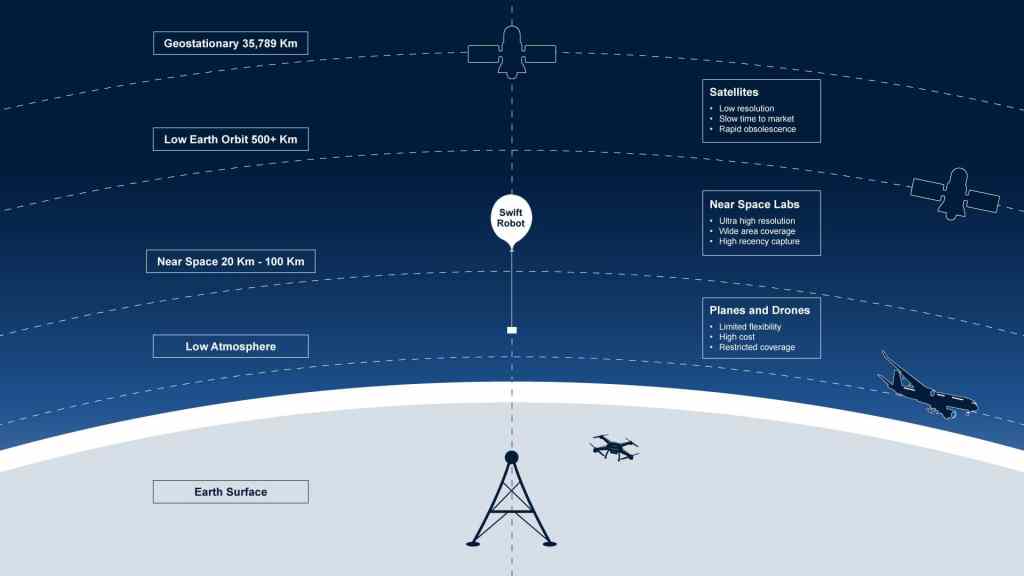
Startup firm Near Space Labs has been using stratospheric balloons to lift its AI robots to altitudes as high as 40,000 feet, where they take high-resolution images. According to flight data, several of its balloons have been flying over the state, mostly over the Phoenix area.
The company did not respond to multiple requests for comment from the Arizona Mirror asking about the flights, but the company has spoken to other media in the past about how it is using the technology to assess property risk and other issues.
The high-resolution images are taken “near space,” an area of the atmosphere that is above where commercial airliners fly but below where satellites typically would be.
But this new technology also raises new privacy and policy concerns.
“They may not implicate the same constitutional concerns,” Jay Stanley, senior policy analyst at the American Civil Liberty Union’s Speech, Privacy and Technology Project, told the Mirror. “But as a policy matter, I think a lot of Americans would raise their eyebrows at what many would consider wide-area surveillance.”
Because Near Space Labs is a private company, certain constitutional concerns raised by the use of wide-area aerial surveillance, first created for the wars in Iraq and Afghanistan, would not apply to them. In general, public policy around aerial surveillance is stuck in the past, Stanley said.
And with the advent of new technologies such as AI, it creates additional challenges that have yet to be addressed, Stanley said.
“So, as these powerful new technologies become available in American society, including to companies, policy makers need to take a close look to see if they are taking power away from normal, everyday people to big, rich companies, and if they are invading privacy in ways that we care about and the potential for misuse,” Stanley said.
He said that he could understand if insurance companies want to find ways to understand risk, “but what are the limits of what they are doing? What are the potential abuses, side uses of this data that somebody could misuse?”
Like 800,000 drones
Insurers have long relied on airplanes to get aerial photos, and recently have been using drones to capture photos of homes to assess home risk and value. Recently, insurers have been using aerial photography to deny insurance claims on properties that they deem too risky, though in many cases, consumers have been unaware their homes were even being photographed, according to reporting by The Wall Street Journal.
“Our balloons capture what 800,000 drones would with one flight,” Near Space Labs CEO Rema Matevosyan told CNBC last year.
On its website, Near Space Labs allows users to “request imagery,” and the site notes that the images are from “Texas, California, Arizona and other areas we’ve collected to date.” The Mirror’s request for images from Arizona went unanswered.
Policymakers in some states have looked to address how insurance companies can use aerial photos to evaluate claims. A proposed bill in California would have required insurers to tell consumers how to get a copy of those pictures, which could then be used to dispute changes or cuts. The bill was held in committee.
Insurance company Swiss Re is already using Near Space Labs’ technology.
The Mirror was able to identify nine balloons — all using “NSL,” the company’s callsign — flying over Arizona this week.
They flew over and near the cities of Green Valley, Sahurita, Benson, Tucson, Gila Bend, Goodyear, Surprise, Sun City, Sun City West, Surprise, Peoria, Glendale, Phoenix, Scottsdale, Mesa, Gilbert, Chandler, Tempe, Sun Lakes, Oro Valley, Queen Creek, Casa Grande, Eloy, Tolleson, Sundance, Goodyear, Lake Pleasant, Arizona City, Cave Creek, Paradise Valley, Marana, Black Canyon City, Anthem and Deer Valley.
The flights tracked by the Mirror took place between November 7 and November 12, with multiple balloons flying over the Phoenix area on November 8 and 9.
Near Space Labs
Climate change
Arizona, like many states in the southwest, is facing the ongoing impacts of climate change, from increasing deadly heat to bigger and hotter wildfires.
The impact of climate change is something that insurers have been paying attention to and another key element of Near Space Labs’ work. The company has received grant money from the U.S. Department of Agriculture to address “aerial imaging” of properties after severe weather events that have worsened due to climate change.
Increasing wildfires spurred on by the droughts resulting from climate change have led insurers to stop offering new homeowner policies in states like California, which have been hit hard by devastating wildfires over the past decade. Eight other states have seen similar issues with major insurers pulling out of providing homeowners’ insurance.
The New York-based company, which raised $20 million in Series B funding this year, has said in interviews that it plans to help underserved communities that are impacted by climate change. Supporters of the technology note that the robots have zero emissions and are greener than their satellite counterparts.
Stanley said that understanding the impacts of climate change is important, especially for insurers who are impacted by major climate events, but there is concern about policy keeping up with the evolving technology.
“This is not a liberal or conservative issue,” Stanley said. “These are also issues about ordinary people and about how powerful tech companies can leverage these new technologies over us.”
This story was first published by Arizona Mirror, which is part of States Newsroom, a network of news bureaus supported by grants and a coalition of donors as a 501c(3) public charity.