
Mario Tama/Getty

Audio By Carbonatix
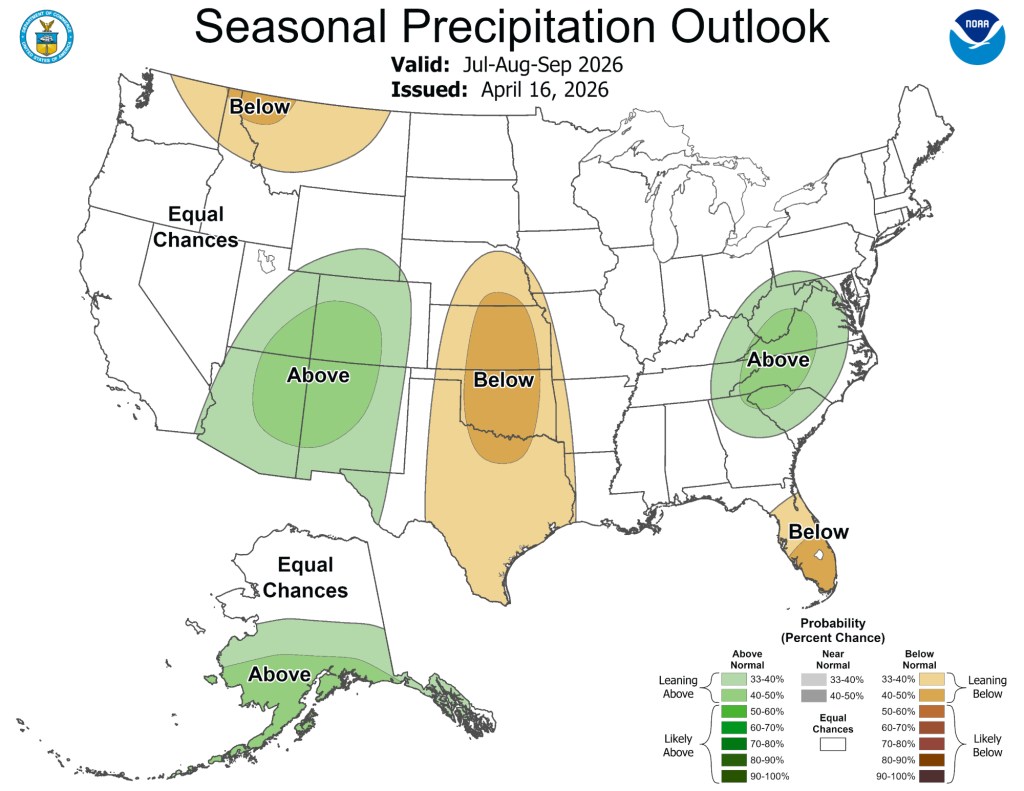
For the second year in a row, Phoenix stands a better chance of having an unusually wet monsoon than an unusually dry one, according to forecasts from the National Weather Service’s climate prediction center.
Monsoon season runs from June 15 to Sept. 30 each year. A typical monsoon brings 2.43 inches of rain to the Valley each year, a mark the Phoenix area passed last summer with 2.76 inches of rain. That came on the heels of two abnormally dry monsoons in 2024 and 2023, which saw only 0.74 and 0.15 inches of rain, respectively.
The NWS forecast heading into the summer of 2025 predicted a wetter monsoon, on balance, and the same holds for this summer. According to NWS meteorologist Mark O’Malley, the Valley has a 40% chance of above-normal precipitation from July through September, compared to a 33% chance of near-normal precipitation and a 27% chance of below-normal precipitation.
National Weather Service
A wetter monsoon can offer much-needed reprieves from the Arizona heat, though that doesn’t necessarily mean this summer will be cooler. Last summer was not record-breaking hot but was still scorching by historical standards.
In Arizona, monsoon conditions occur with the change of the seasons, when winds shift from generally eastward, coming from California and Nevada, to a southerly direction. As a result, moisture is pushed northward from Mexico. Additionally, when the land in Arizona heats up as summer temperatures climb, it draws cooler air from coastal areas, which brings moisture that eventually dumps rain on the state.
Arizona has had a particularly hot winter and spring, with February (which averaged 67.7 degrees) and March (78.8 degrees) breaking records. This April (77.6 degrees) was the third-warmest in Phoenix history. Because the surface of the state has been so abnormally warm, that could lead to an earlier monsoon season.
“That is potentially a driver,” O’Malley said. “However, there are many more things that go into it. That is one of several inputs that determine the amount of thunderstorm activity.”
Last year, monsoon rains arrived very late, with 2.26 inches of rain in September and another 3.26 inches in October. (Though some of that later rain was not technically monsoon-related.) When, specifically, will the rain arrive this year? Unfortunately, that’s too difficult to say.