
BCFC/Getty Images

Audio By Carbonatix
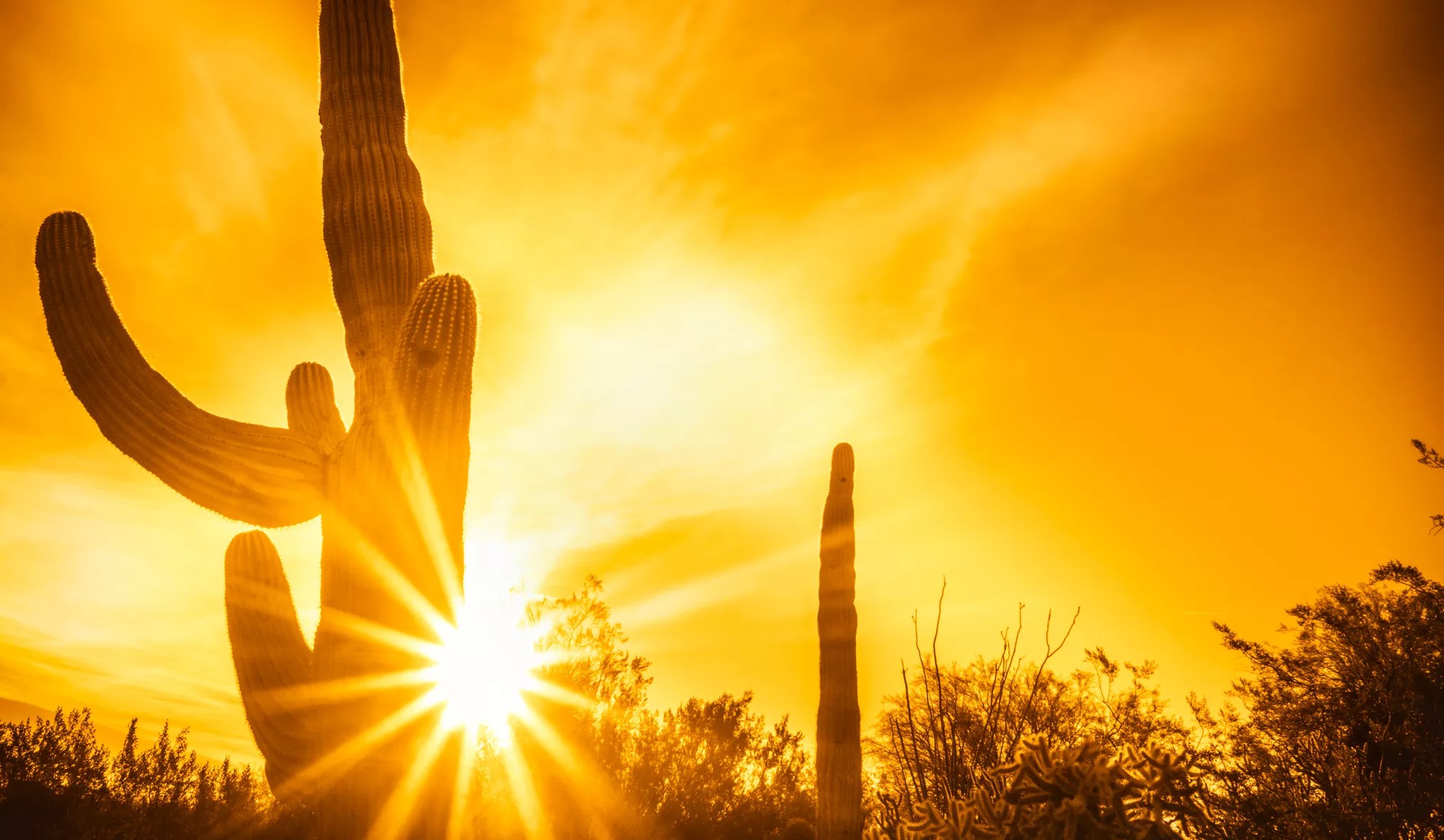
Thirty-eight years ago, Phoenix had a scorching March day. After several days of temperatures in the low 90s, the Valley registered 100 degrees on March 26, 1988. Three days later, the high temperature was back in the 70s.
Ever since, that day has stood as the earliest 100-degree day in Phoenix history. Until now. At 2:56 p.m. on Wednesday, Phoenix reached triple-digits for the first time in 2026, shattering the 1988 record by more than a week. What’s more, the high temperatures are here to stay — the National Weather Service is predicting highs between 102 and 107 for Thursday through Sunday.
For context, the record high for April is 105 degrees. This year, Phoenix is expected to hit 107 on March 20.
“It’s quite unprecedented,” said NWS meteorologist Sean Benedict.
Triple-digits in March sucks, of course, but it’s not quite the same as triple digits in July. The angle of the sun at this time of year means our mornings and evenings are still cooler, with temperatures in the high 60s and low 70s as the sun rises. That offers some relief, but it also means the heat can catch residents off guard, with jumps of more than 30 degrees between the morning and the afternoon. It’s an extreme version of the adage that winter in Phoenix ends at 2 p.m. each day.
This winter and spring have already been alarmingly hot and dry. Last year provided the hottest December in Phoenix history, with an average temperature of 63.2 degrees. (The runner-up: December 2024.) This January was the fourth-hottest on record (61.1 degrees), and February was the hottest ever at 67.7 degrees, breaking the previous record by nearly two degrees. Those months have also been dry, with negligible rainfall outside of one storm in January.
Somewhat counterintuitively, though, that could mean good things for summer. Not that it will be cooler — Benedict said there’s little predictive insight to be gained about summer heat from spring and winter temperatures — but that it could be wetter.
The start of monsoon season is affected by how quickly the Earth’s surface heats up in the Southwest and Mexico during spring and early summer. Last year, the monsoon arrived late, with a wet September redeeming a very dry June, July and August. The previous monsoons, in 2023 and 2024, were among the driest in recent history.
But this winter, Benedict said, has not seen a very good snowpack at higher altitudes in the region. That means the surface will likely heat up faster, which helps spur high-pressure circulation that eventually leads to summer rainfall. “If you have snowback, the ground is more moist and cooler, and you delay that warming,” Benedict said. Factoring in the early heat and the dry winter, Benedict said NWS’s Climate Prediction Center gives the best odds for normal precipitation — rather than below average, which has been the case the last couple of years — this summer.
“We could get storms earlier,” he said.
After subjecting us to record-breaking early 100-degree temperatures, that’s really the least the weather gods could do.