Courtesy of Scottsdale Research Institute

Audio By Carbonatix
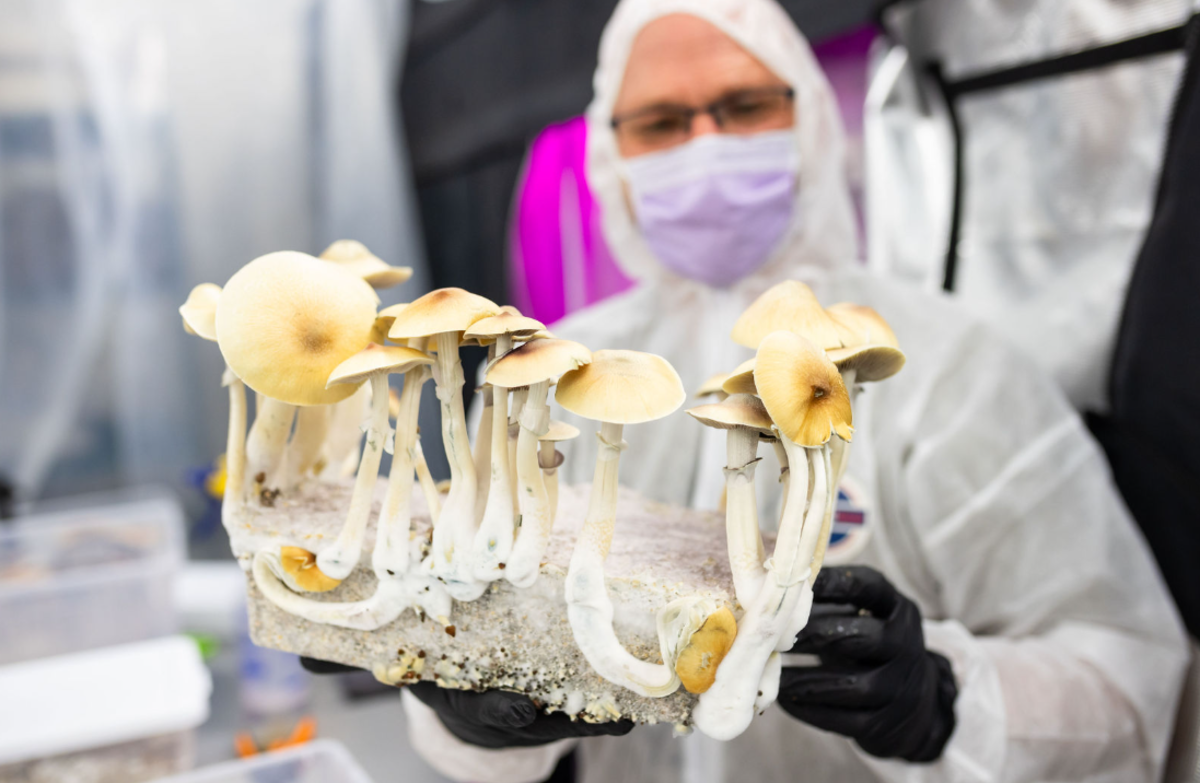
The Scottsdale Research Institute is in the midst of a clinical trial of whole psilocybin mushrooms, thought to be the first of its kind in the nation. Test subjects have ingested the psilocybin-infused chocolate hearts, and the first round of the study will wrap up in August, principal investigator Dr. Sue Sisley told Phoenix New Times.
The trial, which is partially funded with $5 million in taxpayer money allocated by the Arizona Legislature and Gov. Katie Hobbs in 2023, places Arizona at the forefront of psychedelic research amid a federal change in attitude regarding psychedelic research and use.
The study, which dosed test subjects earlier this year, split 24 people into three groups — eight firefighters, eight police officers and eight military veterans — and will test the therapeutic efficacy and safety of whole mushrooms for patients with PTSD. Each participant took 30 milligrams of psilocybin in the form of about 4.5 grams of whole mushrooms, which are also grown at the lab’s own facilities under a Drug Enforcement Administration license. Each individual chocolate contains 10 milligrams of psilocybin.
Friday morning, Sisley spoke with New Times by phone interview about the progress the study has made, the Trump administration’s recent executive order on psychedelics and even Joe Rogan.
The interview has been edited for clarity and brevity.
What was the process of getting this study off the ground?
The hurdles are massive. It’s taken us five years to get the study underway. The clock started when we first applied for our psilocybin mushroom manufacturing license (in 2021). We’re the only entity in the county — that I’m aware of — growing federally legal mushrooms for Food and Drug Administration clinical trials. The process of negotiating with the DEA and getting the license was a massive amount of work, and then once we finally got the license, we were starting to grow all these different strains.
We had to teach ourselves how to do this. We brought in experts to help us refine our techniques. I think at one point we had 14 different strains of psilocybin that we were cultivating at the lab, just testing small amounts to see which one grew the best, which one was the hardiest, the most able to avoid contamination and grow to its full expression. We were trying to figure out which shrooms grew the best in our labs at the shortest incubation periods. We interviewed a lot of people in the underground who were using these different strains, trying to figure out which ones worked the best for them. We interviewed a lot of military veterans and patients who were using it anyway.
We settled in on this strain, “Jedi Mind Fuck,” which has been a good choice for us because they’re easier to grow.
In what format do test subjects ingest the psilocybin?
We tried all these different methods. Initially, we were just going to put them in capsules, but that was too many capsules for people to consume at one time. We moved to a hot tea but the FDA didn’t like the erratic stability after the water was added, so that didn’t work. Ultimately, we settled on these chocolates. It took us almost two years to get the chocolates perfected to the point where they could be used in the human trial.
The back-and-forth with the FDA was so intense because they demanded a level of standardization that’s not easy to achieve with natural materials like mushrooms. We’re not a pharma company. We weren’t going to try to chemically treat them and do all those things to make them fit into their little proprietary model. We’re trying to keep the mushroom as it is, let it grow to its full expression and then try to standardize it from there. It took many, many rounds of growth cycles until finally we got to the point where the DEA was satisfied.
I’m really happy that we’re able to fill the void for these scientists and hopefully get them to start studying real mushrooms, which is what people are actually consuming every day. The real world is full of millions of people who are taking either large macrodoses or microdoses to try to heal themselves. They’re not waiting for FDA approval. And rightly so, because a lot of these people don’t have much time left on the earth.
Courtesy of Andrew Neugebauer
How many researchers do you supply with chocolates?
We have three researchers who have signed supply agreements, one of which we’ve already shipped out. They’re at the University of Arizona’s College of Medicine. Dr. Francisco Moreno got a million-dollar grant from the state, and the law in Arizona said you had to use natural mushrooms, so he needed our collaboration. We were happy to do it, because he’s a great guy and he’s doing a really important study that’s a follow-up to a trial he did over a decade ago that looks at psilocybin mushrooms for treating severe OCD. That study was really promising, showing a really positive signal.
Now, he’s going to get to use the whole mushroom.
What’s it like working with the current FDA?
We’ve made very little progress under other administrations. This administration, we are seeing improvements in how the FDA has been dealing with this process. I’ve spent two decades now hitting my head against the wall trying to deal with the government agencies that are just trying to constantly impede legitimate research.
I’m really happy to see the FDA finally opening its mind to a discussion. We’re not asking them to approve anything; we’re asking them to stop blocking the science that is needed to explore natural materials.
What did you make of President Donald Trump’s April executive order to expedite research on psilocybin and other psychedelics for treating mental illness?
Funding remains to be seen. They’ve announced they’re going to create federal-state matching funds, which means Arizona could be eligible for $10 million because it issued $5 million for ibogaine and $5 million for psilocybin. That could work wonders for Arizona. Was this just a very joyful announcement without any real-world implications? That’s the big question.
I have seen a lot of executive orders over my lifetime from the president, and most look like political theater to me. There’s a press release, all the media coverage, and then I don’t see anything meaningful materialize after that. The funding hasn’t materialized yet. There’s no evidence that the DEA is going to cooperate with the Right to Try law, which was a big part of the executive order. We helped write that.
Does the Right to Try law impact your current work?
In August, we will be finishing the study and when you finish phase one and apply for phase two, you are legitimately qualified under the Right to Try law. That was in the executive order. The DEA was going to create regulations to make Right to Try law functional for psychedelics. But we got a letter from the DEA in February saying that they refused to allow us to participate in Right To Try. We can’t do anything that the DEA doesn’t approve.
Now, we’re asking the DEA for a pilot program by letting us treat 20 patients with life-threatening illnesses under Right to Try with our federally legal mushrooms, but so far no response. It’s been five weeks now and we haven’t gotten any communication back from them.
We’re going to reach back out to Joe Rogan, who was at the signing ceremony. He told folks there that if there was any evidence that the administration wasn’t moving forward on its promise to implement Right to Try for psychedelics, he would step in and let the president know that there’s some foot-dragging. The president hopefully would respond because he clearly wants Joe Rogan’s audience in his camp. I think they probably genuinely like each other.
Why is it so important to get Right to Try practically implemented for psychedelics?
We’re giving them an opportunity for a real victory here, for the DEA to embrace this pilot project and show the public that they are a benevolent agency that cares about the public. If they don’t allow sick people who are dying to have access to an investigational drug, that speaks volumes to the public that the DEA doesn’t care about them. It’s common sense that sick people should have access to investigational drugs. It’s their choice. It’s a matter of personal liberty. If somebody who’s sick wants to eat a mushroom, why is the government criminalizing that behavior?
Once you’ve completed a phase one trial, that means you have an investigational drug that has met all the pharmaceutical criteria of safety. Effectiveness, we don’t know, because they’ve just completed phase one only, and that’s typically only safety data. We’re measuring safety and efficacy in the same trial, so that’s a big deal. That’s what you’re going to see at the end of our trial.