

Jarek Tuszy

Audio By Carbonatix
In a 6-3 decision released this morning, the U.S Supreme Court upheld controversial Arizona voting restriction laws that critics say disenfranchise minority voters.
In 2016, the Democratic Party sued the state of Arizona over laws that bar most people from delivering another person’s mail-in ballot – which some refer to as “ballot harvesting” – and that disqualify ballots that are cast in the wrong precinct. Democrats argued that the laws discriminate against non-white voters and violate the 1965 Voting Rights Act. A federal district court initially upheld both laws in 2017 before the U.S. Ninth Circuit Court of Appeals reversed the decision. It was then kicked up to the U.S Supreme Court, who heard arguments in the case last March.
Conservatives, including Republican Arizona Attorney General Mark Brnovich, who defended the laws in federal court, argue that the laws aren’t discriminatory and aim to stop voter fraud. Most of the right-leaning Supreme Court agreed.
Justice Samuel Alito, who authored the opinion on behalf of the court’s conservative majority, argued that
“neither law” violates the Voting Rights Act and that Arizona makes it “very easy to vote.” He also asserted that the “racial disparity in burdens” caused by the ban on out-of-precinct voting is “small in absolute terms.”
Broadly, Justice Alito asserted that states can enact restrictive voting laws to prevent voter fraud.
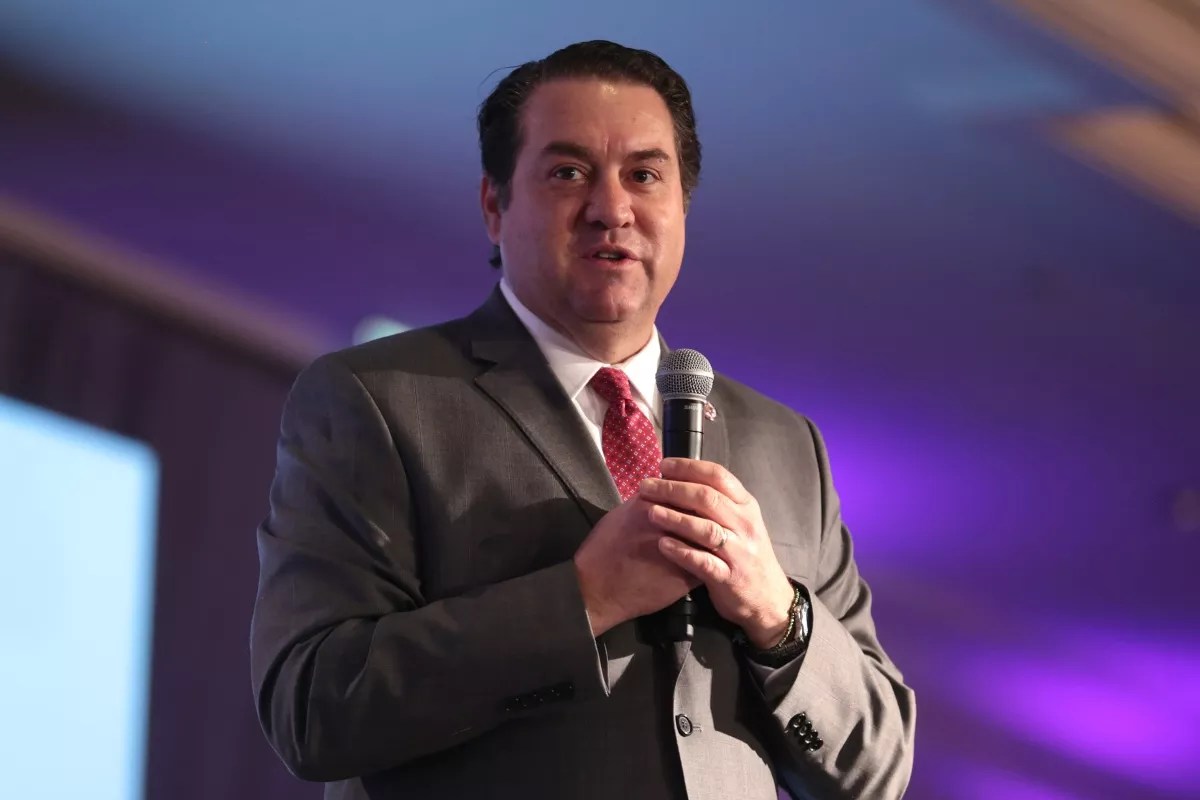
Attorney General Mark Brnovich
Gage Skidmore
“Third-party ballot collection can lead to pressure and intimidation. Further, a State may take action to prevent election fraud without waiting for it to occur within its own borders,” he wrote. “One strong and entirely legitimate state interest is the prevention of fraud. Fraud can affect the outcome of a close election, and fraudulent votes dilute the right of citizens to cast ballots that carry appropriate weight.”
But in a dissenting opinion held by the court’s liberal minority, Justice Elena Kagan slammed the ruling as undermining the Voting Rights Act. She also characterized Arizona’s voting restriction laws as highly discriminatory.
“Never has a statute done more to advance the Nation’s highest ideals. And few laws are more vital in the current moment. Yet in the last decade, this Court has treated no statute worse,” Justice Kagan wrote. “Arizona is the national outlier in dealing with out-of-precinct votes, with the next-worst offender nowhere in sight. The second rule – the ballot-collection ban – makes voting meaningfully more difficult for Native American citizens than for others. And nothing about how that ban is applied is ‘usual’ either – this time because of how many of the State’s Native American citizens need to travel long distances to use the mail.”
“The majority reaches the opposite conclusion because it closes its eyes to the facts on the ground, she added.
President Joe Biden weighed in on the ruling this morning.
“I am deeply disappointed in today’s decision by the United States Supreme Court that undercuts the Voting Rights Act, and upholds what Justice Kagan called ‘a significant race-based disparity in voting opportunities’,” he said in the statement. “While this broad assault against voting rights is sadly not unprecedented, it is taking on new forms. It is no longer just about a fight over who gets to vote and making it easier for eligible voters to vote. It is about who gets to count the vote and whether your vote counts at all.”
Similarly, the chair of the Arizona Democratic Party, state Representative Raquel Terán, called the ruling an “attack on Arizonans trying to exercise their right to vote.”
“It’s impossible to ignore that this ruling and these voter restriction laws are the culmination of Republicans’ longtime efforts to sow distrust and doubt in our election system, with politicians like Mark Brnovich leading the charge,” she said in a statement. “In open court, the Arizona Republican Party’s own lawyer admitted that the purpose of the laws was to gain political advantage. This is just the latest proof that Republican leaders are willing to betray Arizona voters for their own political gain.”
In a news release, Brnovich’s office trumpeted the decision as an instance of the AG’s office “successfully” defending Arizona’s election laws.
“Today is a win for election integrity safeguards in Arizona and across the country,” Brnovich said in the statement. “Fair elections are the cornerstone of our republic, and they start with rational laws that protect both the right to vote and the accuracy of the results.”
You can read the full Supreme Court ruling here: