
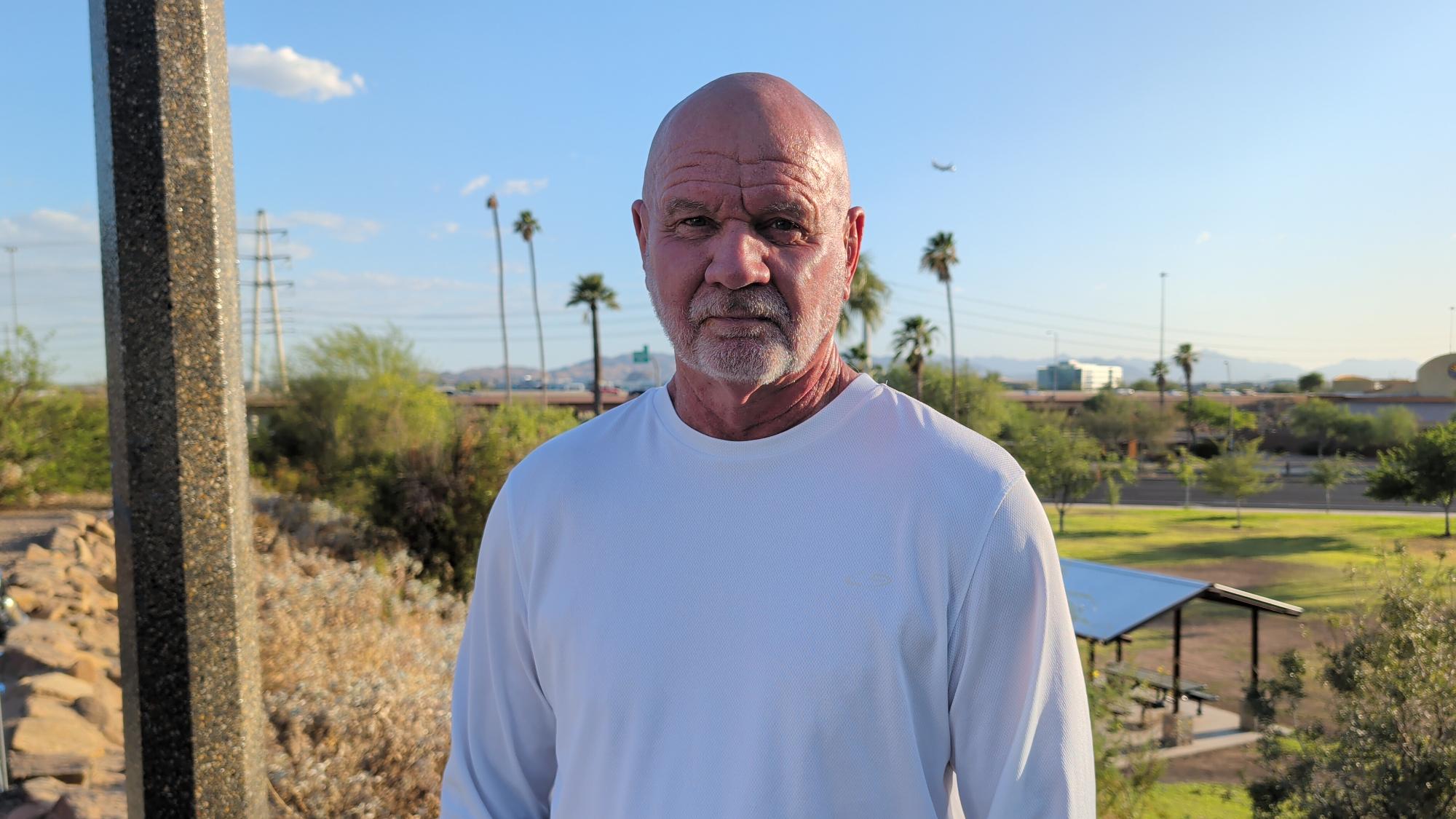
Jonah Manthey

Audio By Carbonatix
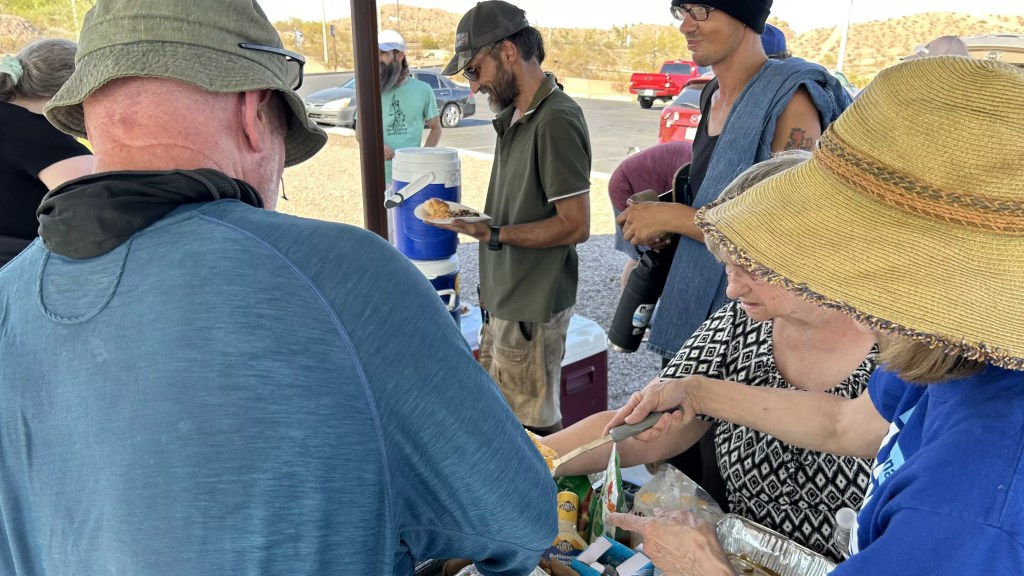
On a mild Sunday afternoon in April, Ron Tapscott stood next to a picnic table at Moeur Park in Tempe. He passed paper plates to volunteers, who then passed food to hungry people. The table was filled with offerings, from watermelon to donuts, and the line was long. Every Sunday for the past several years, many in Tempe’s unhoused community have come here for a guaranteed bite to eat.
As long as supplies last, of course.
“We’re short on plates, everyone,” Tapscott shouted every few minutes as volunteers distributed food to a crowd of around 40 people.
They were getting short on food, too.
These picnics are organized by New Deal Meal, which Tapscott started two years ago. A silver-whiskered man who dresses plainly and pauses before he speaks, Tapscott founded the organization to continue the work of AZ Hugs founder Austin Davis, who’d incurred the city of Tempe’s ire by holding similar weekend feedings in its parks. Tempe police prosecuted Davis for holding the events without a permit, making him a cause célèbre until the parties struck a plea agreement that barred Davis from continuing the events. So Tapscott and Dave Wells, a retired Arizona State University professor who cofounded New Deal Meal, stepped into the void.
Tapscott has drawn the city’s scrutiny as well — Tempe also ticketed him for a food distribution event before dismissing the charges. He’s pretty practiced at doing just that. The 79-year-old has been organizing in Tempe for more than a decade, founding a number of organizations dedicated to agitating for change in the quirky suburb. Over the past few years, he’s found himself at odds with the city government. The Tempe Tribune once labeled him the “city gadfly.”
It’s a mantle Tapscott wears proudly.
“I’m not going to watch people get bullied and pushed down, and I’m not going to watch democracy be eroded by people in power,” he said.
Tapscott’s relationship with Tempe’s municipal leaders wasn’t always this tense. It used to even be collegial.
Years ago, he and other Tempe activists worked with the city council. Tapscott would gather activists and councilmembers to meet at his home and discuss how to work together to solve problems in Tempe. They’d sit around Tapscott’s living room and discuss the issues, recalled Katherine Kouvelas-Edick. She runs the Aris Foundation, which also serves meals to unhoused people.
“He created an excellent collaboration amongst us — until there was none,” she told Phoenix New Times.
TJ L’Heureux
A testy relationship
That spirit of cooperation splintered on the shoals of professional hockey. In 2022, Tapscott created Tempe 1st, an organization designed to oppose a $2 billion proposal to build a new hockey stadium and entertainment district near Tempe Town Lake in an effort to coax the NHL’s Arizona Coyotes away from Glendale. Tapscott and other residents were concerned about what seemed to them like a sellout to wealthy developers, and Tempe 1st campaigned vigorously against a special election referendum to approve the development deal.
Much to the Tempe City Council’s dismay, voters rejected the proposal in 2023. The Coyotes eventually moved to Utah.
Tapscott’s relationship with city leaders soured after that campaign. He said it was also a turning point in Tempe residents’ relationship with the council — residents lost trust and the council stopped pretending to listen. “Post that, everything has been adversarial, conflicted,” Tapscott said. “Lobbying efforts have suffocated.”
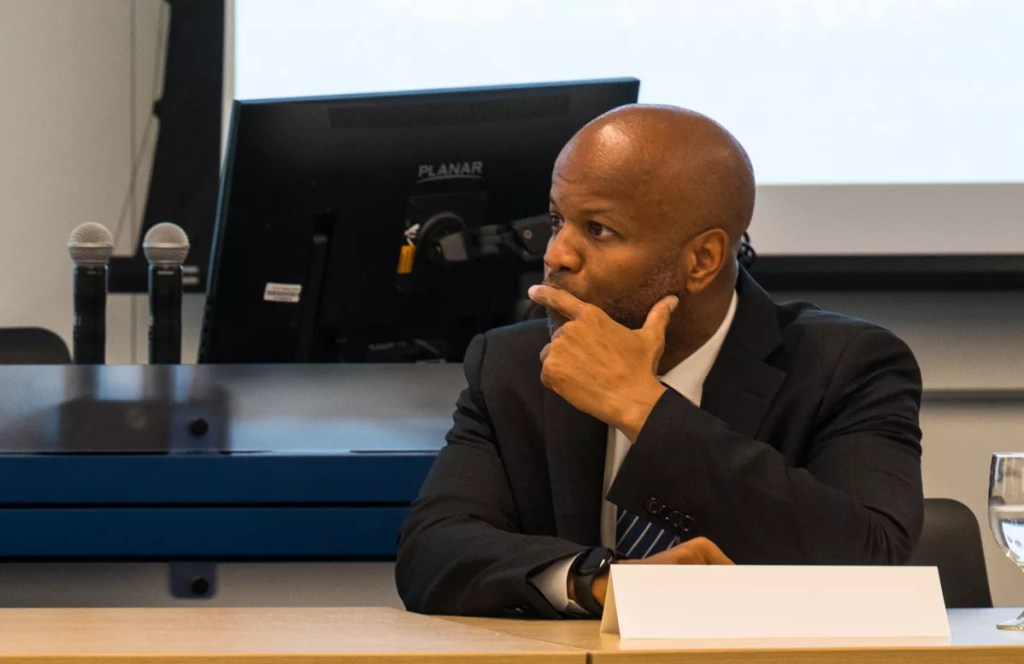
That view was later reinforced when, in 2024, reporting by New Times revealed that the council had trashed Tapscott and other activists in an illegal closed-door meeting two years earlier. A consultant hired by the council called those who opposed the hockey arena project “CAVE people,” standing for “citizens against virtually everything.” Tempe Mayor Corey Woods specifically namedropped Tapscott, dubbing him a “crazy uncle” and “self-appointed emperor” of the CAVE people.
Tempe disputes the characterization that the meetings were “secret,” though the Arizona Attorney General’s Office ruled that some of what was discussed in the meetings “were not permissible topics.” Tempe was also required to release a recording of the meetings — which is how the “CAVE people” comments came to light — and the city council underwent open records law training as a result.
It’s hard to win back trust after that — though Tapscott hopes the recent city election, which saw two incumbent councilmembers lose their seats to reform-minded challengers, will change that.
“Our city has been captivated by the worst instincts and personalities,” Tapscott said. “These seven sitting councilpeople are beyond reform.”
Tapscott was more amused than offended when he heard about the secret meetings. “I’ve always stood up to these kind of institutions that abuse people,” he said. Though he never expected he’d become such a thorn in Tempe’s side.
U.S. Department of Labor/Flickr/CC BY 2.0
A political bent
Tapscott grew up in a working-class family in Virginia and attended an inner-city high school. He graduated from Kent State University in 1969 — one year before the Ohio National Guard killed four student protestors on its campus. He’d already left by the time of the shootings, but he witnessed the mass antiwar protests that led up to it. Tapscott went to college to become a psychologist, but this experience shifted his attention elsewhere.
“I changed my mind and decided I had to be politically active,” he said.
After graduating from college, Tapscott worked for a housing agency in Milwaukee and helped to organize a tenants’ union and rent strike. He then spent 20 years working as a union organizer in factories. But then the deindustrialization period arrived and “completely decimated the blue-collar working class in Milwaukee,” he said. Jobs were moved overseas, factories were shut down and Tapscott was forced into unemployment.
“We had little heat in our house,” he recalled. “When I went up to tuck my kids in, I could see my breath in the hallway. And it wasn’t just tucking them in, it was zipping up their snowsuits so they could sleep.”
During this hardship, he experienced one of many times in his life when he saw people be kind just for the sake of it. He calls these “solidarity stories.” When he and other unemployed workers were protesting at the unemployment office, another man who received his unemployment check offered Tapscott groceries for his family. “He was going through the same thing like hundreds of us were,” Tapscott said.
In 1987, Tapscott moved to Arizona to find a new career and be near his retired parents. He earned a master’s degree in clinical social work and worked as a clinical director for the Phoenix Fire Department, setting up emergency response systems in the aftermaths of 9/11 and Hurricane Katrina. He traveled to the sites of these disasters and helped the firefighters working there.
This was Tapscott’s final job before he retired in 2012. He wanted to spend his twilight years woodworking and improving the piano skills he’d first honed when he joined an experimental jazz garage band as a teenager. He also wanted to stay socially active through community service, though that’s turned out to be far more involved than Tapscott ever imagined.
TJ L’Heureux
‘This is on us’
Lately, that’s meant the weekly food events for Tempe’s unhoused. Davis had spearheaded that effort for a few years, holding his mutual aid events in city parks without a problem. But in 2022, Tempe required him to obtain a permit to operate, citing city code. He applied for one but was rejected because he’d continued to hold events. Rather than stop the feedings, which unhoused people relied upon, he continued to host them despite the city’s refusal to permit them. In 2023, the city issued its first citation to Davis. He was arrested in 2024.
The “picnics” could have ground to a halt after that, if not for Tapscott. He and Wells created New Deal Meal, which they styled as a private club to avoid the code’s restrictions on “public gatherings.” It was a clever attempt at squeezing through a loophole in city code, though Tapscott was apparently doubtful about its prospects.
“He was very pessimistic from his past experience with the city,” Wells said. “And turned out he was right.”
In January 2025, the city cited Tapscott for continuing to hold the park events. In May, though, the city prosecutor dropped the charge “in the interest of justice.”
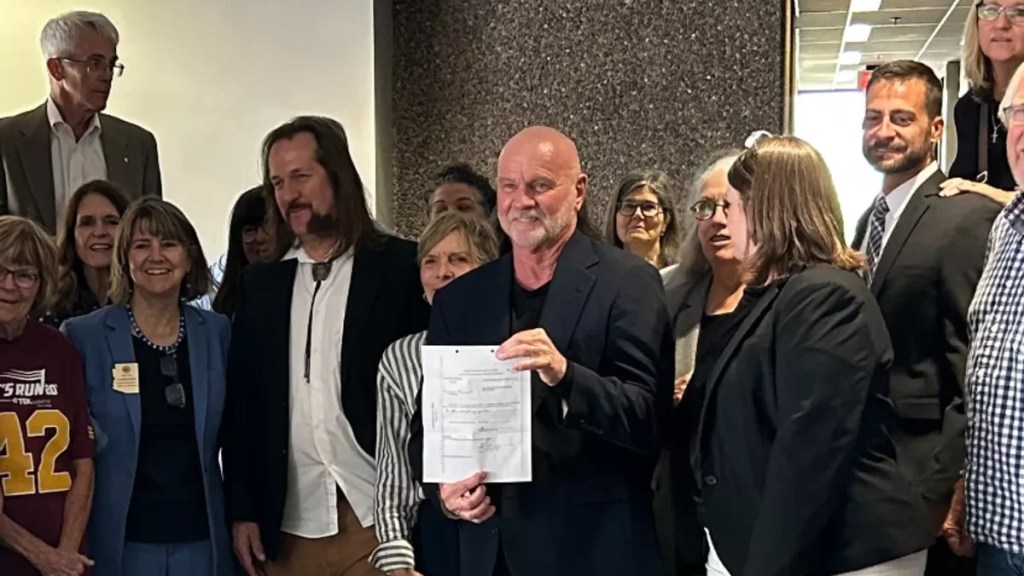
That may be the signal of a larger trend in Tempe government, which is feeling the heat from its residents. After the city council passed an even more restrictive parks ordinance — seemingly aimed squarely at mutual aid efforts led by Tapscott and Davis — Tapscott and others launched an effort to put a repeal measure for the ordinance on the ballot.
After petitioners turned in enough signatures to do just that, the council voted unanimously to repeal the divisive ordinance. Notably, any repeal measure would have appeared on the same ballot as several councilmembers running for reelection, possibly endangering their chances of retaining office. Even without the repeal measure driving turnout, sitting councilmembers didn’t get off easy. Out of three incumbents facing reelection, two were defeated by upstart challengers in a late-May runoff.
Tapscott hopes the new council is better than the old one. For the city’s part, Tempe spokesperson Kris Baxter-Ging wrote to New Times in an email that “this April, the City of Tempe partnered with Tempe Neighbors Together, which the Tapscotts have been involved with, for its annual food and resource drive.” Baxter-Ging also noted that Tempe “works with dozens of nonprofits and provides extensive funding for them,” including “advocacy groups for homeless services as well as those who address the root causes of homelessness.”
Perhaps that means more collaborative days are on the horizon for Tapscott and Tempe. But if they aren’t, he’s prepared to buzz just as loudly as he did before. He’ll keep poking city leadership in the side until they make things work as intended. As far as he’s concerned, no one else is going to do it.
“The guardrails in the systems have been broken down,” he said. “This is on us.”