
Morgan Fischer

Audio By Carbonatix
On a sunny Sunday morning inside Phoenix Sky Harbor Airport’s Terminal 3, a 44-year-old Zimbabwean woman approached her United Airlines flight’s gate counter with her husband. A gate agent had called her repeatedly over the terminal’s intercom.
As the couple stood in front of the counter, the gate attendant made references to Patience Gore’s boarding pass — odd, since she already had it in hand. As Gore approached the counter, three men walked up to her.
“Ma’am,” one said, “you’re going to need to come with us.”
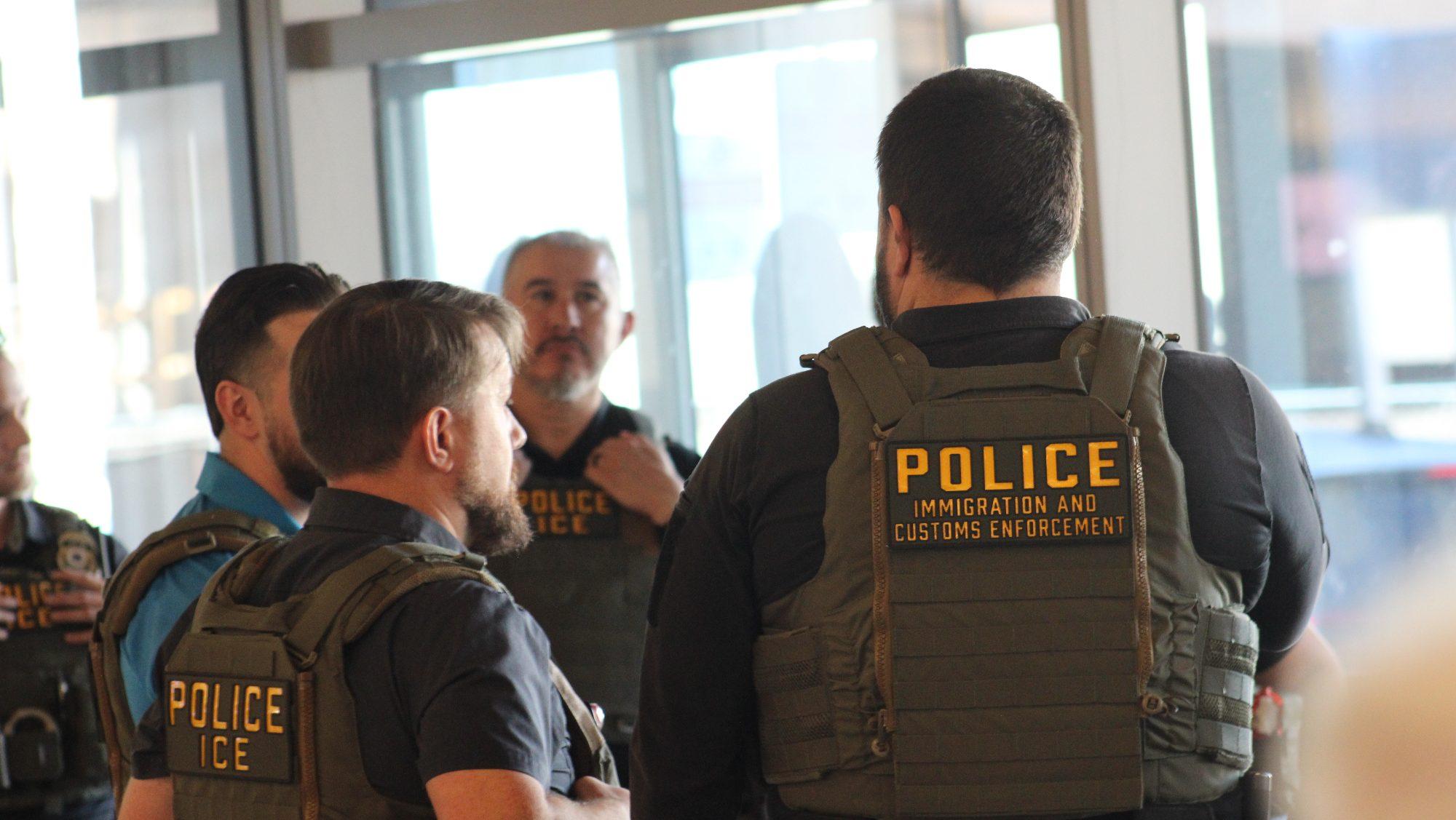
The men worked for Immigration and Customs Enforcement. For the next two weeks, in March of this year, ICE detained Gore in three separate facilities in Arizona. A 2011 order from an immigration judge may have been all that saved her from being deported, even though she had legal status, no criminal record, and an 11-year-old American citizen daughter at home.
Her detention was harsh. She was denied basic necessities and medical care, and the ordeal disrupted an in vitro fertilization cycle, jeopardizing her chances to have another biological child. The Department of Homeland Security released her after her lawyer filed an uncontested habeas petition.
Now Gore and her husband, Olaoluwa Omotosho, a 36-year-old U.S. citizen from Maryland, are suing United Airlines. Their lawsuit’s account of events, above, ultimately asserts that the gate agent set her up, calling Gore to the counter knowing that ICE would seize her.
The suit states: “Taken together, the near-simultaneous intervention, abrupt cessation of the purported airline interaction, absence of any identified airline issue, absence of any visible surprise or inquiry by United personnel, and absence of any further call concerning the purported airline matter or final boarding while Plaintiffs remained in the terminal support a reasonable inference that the encounter was anticipated.”
The couple is suing United Airlines for negligence and false imprisonment for the airline’s role in her apprehension. They allege that the incident cost them more than $75,000 in damages, mainly from legal fees and the failed IVF cycle.
When reached by phone, Gore, who is representing herself in the case, declined to comment. ICE acknowledged Phoenix New Times’ request, but did not respond to questions. United Airlines did not respond to New Times’ request to comment.
Withholding of removal
Morgan Fischer
To understand this fiasco — in which a law-abiding immigrant is snatched by the state, held in deplorable conditions, and then freed with a shrug — it’s important to understand how Trump is twisting laws meant to protect people who move to the United States seeking safety.
Over the past year and a half, the Trump administration has created what Third Country Deportation Watch describes as an “opaque web of formal bilateral agreements and behind-the-scenes deals” to send increasing numbers of immigrants to countries where they have no ties. As of May, the organization has found, the administration has deported more than 22,000 immigrants to at least 26 different third-party countries since Trump took office in January 20, 2025.
This system has become a back door for the administration to deport people who couldn’t get asylum in the United States but do have what’s called a withholding of removal order. Weaker than asylum status, that legal status is nonetheless meant to protect migrants who fear persecution in their home country from being deported there. Undeterred, the Trump administration has made deals with third-party countries to accept deported migrants and then, presumably, in turn deport them to their home country, effectively bypassing the protection that a U.S. court offered.
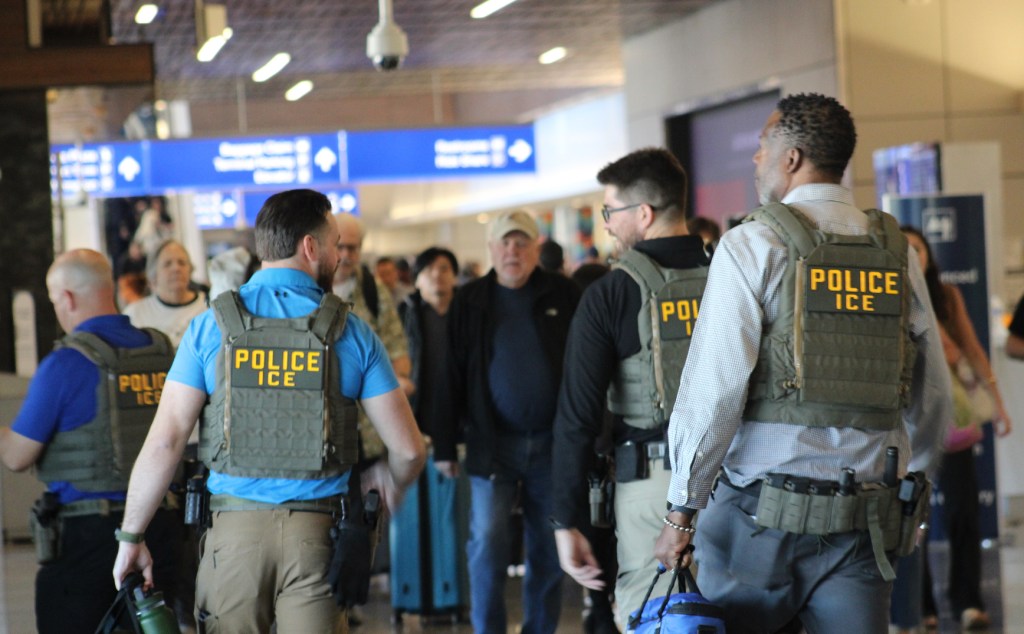
Meanwhile this year, ICE has upped its presence at airports nationwide. About a week after ICE agents detained Gore, the administration deployed dozens of agents to Sky Harbor in a poorly explained effort to ease security staffing issues during a partial government shutdown.
When New Times reached out to Sky Harbor about Gore’s case, spokesperson Gregory Roybal wrote that “federal law enforcement agencies can legally conduct enforcement activities at U.S. airports” and added that Sky Harbor “is not notified of federal law enforcement activities.”
Based on Gore’s lawsuit and habeas corpus filing in federal court, which got her out of detention in March, her arrest appeared to be targeted.
Striving to become a citizen
Her habeas petition says Gore, a citizen of Zimbabwe, has lived in the U.S. for about 24 years. In 2011, her asylum request was denied, but an immigration judge in Omaha, Nebraska, granted her a withholding of removal. This meant that Gore couldn’t be deported to Zimbabwe, as her life and freedom were in danger there.
By appearances the administration may have been angling to deport her through this third-party system. Her habeas petition stated that ICE hadn’t yet established a destination for her. Her habeas attorney, Edward Wea Neufville, III, did not respond to New Times’ requests to comment.
In the 15 years since she won the withholding of removal order, Gore has built a life for herself, her habeas petition showed. She has sole legal custody of her 11-year-old daughter, a U.S. citizen. For 12 years she has worked for USAA, the huge insurer, where she is now a senior manager who models risk. In August 2025, she married Omotosho.
According to her habeas petition, she has no criminal history. She was complying with required ICE check-ins. She has been working toward permanent legal status with her employer and her husband sponsoring her.
Before her arrest in Phoenix, Gore and Omotosho hadn’t encountered any trouble traveling. They’d visited Puerto Rico and Atlanta together, her habeas corpus petition stated. On the morning of March 15, they’d gone through Sky Harbor’s check-in and security and received their boarding passes without issue.
Then, everything changed.
The undercover ICE agents at the gate didn’t offer any visible identification before they physically grabbed Gore and told her she wasn’t free to leave, the habeas petition and lawsuit state. The agents said they had a warrant for Gore’s arrest and a removal order. But they only showed Omotosho a warrant without a judge’s signature and briefly displayed a piece of paper that mentioned “removal,” he said in an affidavit in her habeas petition.
Omotosho described the agents — all of whom declined to give their names and badge numbers except for one agent named “Crossley or Crossell” — as “rude, dismissive, and refused to meaningfully answer questions.” The United employees at the gate didn’t intervene or ask the ICE agents any questions.
In the days following Gore’s arrest by ICE at Sky Harbor, she was shuffled through multiple facilities: the ICE Phoenix Field Office, Florence Detention Center, Eloy Detention Center. Her lawsuit says Gore had to sleep on a mattress placed directly on the floor and to use an exposed toilet. She couldn’t get a change of clothes, clean undergarments, or basic privacy. She’s sensitive to light but wasn’t allowed sunglasses, so she got awful headaches. Breakfast was served at 4 a.m., lunch at 11 a.m., and dinner at 4 p.m., a meal schedule that left her hungry, uncomfortable and sleep-deprived.
It was under these conditions that she lost the chance at a potential pregnancy.
‘Irreparable harm to our family’
Four days after her arrest, Gore’s attorney, Neufville, filed a request for humanitarian parole and a motion for compassionate release with the field office, citing Gore’s ongoing IVF treatments. ICE didn’t respond to that request, according to her habeas petition.
Medical documents submitted to Arizona’s district court state that Gore was undergoing a time-sensitive IVF protocol that required “precise hormone administration, frequent medical monitoring and highly time-sensitive procedures that cannot be carried out in ICE detention.” Gore’s Fallopian tubes are blocked, court documents state, but she’d created two viable embryos through a prior IVF cycle that her doctor called her “only realistic remaining chance to have a biological child.”
ICE didn’t respond to her attorney’s humanitarian request. Nor did it identify a “concrete” third-party country to which Gore could be “lawfully” removed, which Neufville argued in the habeas petition meant there is “no significant likelihood of lawful removal in the reasonably foreseeable future.” In other words, ICE grabbed Gore before they had a plan for what they intended to do with her.
Her stay in ICE detention forced her to abandon her prepared IVF cycle, the lawsuit states. She resumed fertility treatment after she was released, but without the opportunity of months of physical preparation — instead being confined to squalid, harsh conditions — the cycle produced no viable embryo.
In an affidavit in his wife’s case, Omotosho wrote: “Her sudden detention, without notice and without accommodation, has interrupted that (IVF) treatment and places at risk a medically time-sensitive and potentially irreplaceable opportunity for us to have biological children.”
In its response to Gore’s habeas petition, DHS did not oppose her request for release. District Judge Susan Brnovich granted Gore’s habeas on March 26. A day later, Gore was released from ICE detention.
She was free once again. But the harm was done.
“I have repeatedly communicated to ICE and to counsel that my wife is essential to the stability of our households and to the care of our minor child,” Omotosho wrote in his affidavit. “Her continued detention is causing ongoing and irreparable harm to our family unit.”