
Elias Weiss

Audio By Carbonatix
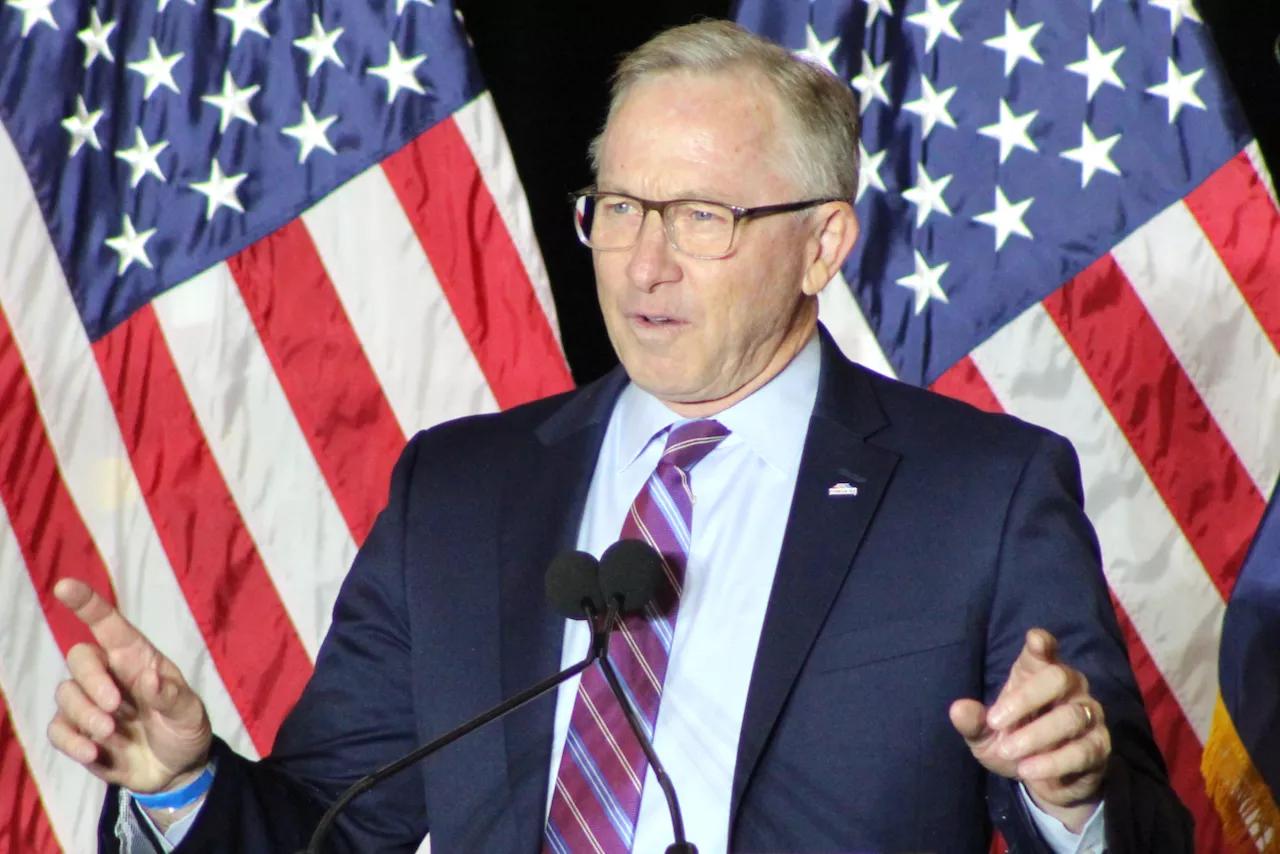
After much speculation, Democratic Gov. Katie Hobbs announced Tuesday that former Mesa Mayor John Giles, a Republican-turned-independent, would join her ticket as her running mate.
While Hobbs’ announcement came as no surprise, Giles’ party-affiliation history raised eyebrows. Last week, the New York Times reported, citing anonymous sources, the prominent anti-Trump Republican would be Hobbs’ pick as the Democratic nominee for Arizona’s first lieutenant governor. In November, Arizona voters will be casting a ballot for lieutenant governor after they approved creating the office via a 2022 ballot measure. If elected alongside Hobbs, Giles would be first in succession for governor.
“Whether you’re a Democrat, independent or Republican,” Hobbs said standing beside her running mate in a video announcement Tuesday, “if you believe in protecting our freedoms and putting Arizona first, we’re ready to fight for you.”
Giles, an Arizona native, has been a registered Republican since 1986, according to his Maricopa County voter file. From 2014 to 2025, he served as Mesa’s mayor — a nonpartisan position. But his political preferences have seemingly shifted in the Trump era.
Technically, he isn’t a Republican anymore. In May, Axios Phoenix reported, Giles changed his voter registration from Republican to “no party preference,” or independent. His county voter file shows he also voted in the July 2026 Democratic primary.
“Extremists shouldn’t stand in the way of getting things done,” Giles said in the announcement campaign video. “As mayor, I focused on getting results and bringing people together to solve problems.”
Over the past four years, Giles has moved away from the Republican Party, or at least the MAGA wing of it. He served as the co-chair of the Republicans for Harris coalition in Arizona and even spoke at the 2024 Democratic National Convention while he was mayor.
Two years earlier, he endorsed Hobbs over MAGA firebrand Kari Lake in the 2022 gubernatorial race. In the Senate race he endorsed Mark Kelly, the Democrat, over Blake Masters, the Republican venture capitalist and protégé of Peter Thiel. The GOP precinct in his legislative district censured Giles in response.
With this pick, Hobbs’ campaign appears to be wooing Arizona’s independents. More than 302,000 voters registered as “other” when selecting a political party, Arizona Secretary of State’s office data show. To win statewide races, Democrats and Republicans need to capture voters in this demographic. Comparatively, more than 193,000 voters registered as Republicans, while nearly 176,000 voters registered as Democrats.
In November Hobbs and Giles will face off against Trump-endorsed Rep. Andy Biggs and his running mate, Sine Kerr, a former state senator and dairy farmer. It’s unclear how much the candidate’s lieutenant governor pick will matter to voters.
Here’s what you need to know about Hobbs’ pick for her lieutenant governor.
Who is John Giles?
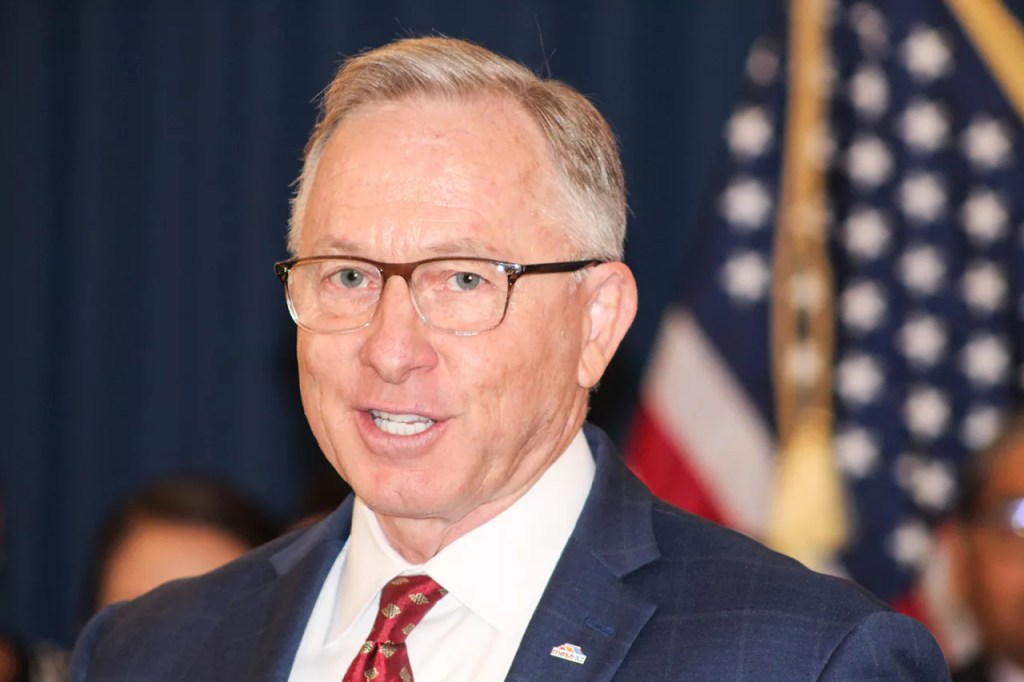
The Mesa native served as the city’s mayor for more than a decade. He ran for the position after the city’s previous mayor, Scott Smith, resigned to run for governor. Giles also had a short stint on the city council in the late 90s.
Giles won more than 72% of the vote in a 2014 special election, handily defeating Danny Ray, a small business owner. Giles went on to serve two more terms as Mesa’s mayor, winning reelecting with ease. Under his leadership, Mesa expanded its higher education footprint, supported small business development and enshrined protections for LGBTQ+ residents. But Giles’ vision for Mesa wasn’t without pushback.
Elias Weiss
Giles supported Arizona State University’s expansion into downtown Mesa and then the Polytechnic campus. Not all Mesa residents were on board: Voters initially rejected a sales tax hike to fund the campus. Still, Giles pushed to spur interest in higher education in Mesa. Under his leadership, the city launched its Mesa College Promise program, which offered free community college tuition to eligible high school graduates.
As the mayor of Arizona’s third-largest city, Giles pushed new solutions for citywide problems. He worked to launch Mesa’s Off the Streets program, which aimed to convert local hotels into emergency housing shelters. Under his leadership the city also implemented a Climate Action Plan to make the city more sustainable. That plan included a goal to become carbon-neutral by 2050.
During Giles’ second term, he spearheaded the revival of a non-discrimination ordinance to protect Mesa’s LGBTQ+ community. City leaders discussed the ordinance in 2015 but conservatives in Mesa sank it. Part of that opposition came from members of Mesa’s Church of Jesus Christ of Latter-day Saints community, which does not support same-sex marriage.
Giles is also LDS. He served a two-year mission for the church in South Korea and went on to attend Brigham Young University in Utah. At BYU he met his wife of more than 40 years, Dawn. Despite the pushback, Giles believed that protecting human rights and codifying LGBTQ+ protections in local statute was the right thing to do.
Critics also targeted Giles for his vote in favor of a contract with CoreCivic, a private prison company. In the past two years, the company has gained national scrutiny for running deadly Immigration and Customs Enforcement detention facilities, including two in Arizona. The idea was the city would hand people convicted of misdemeanors to CoreCivic to transport and house in its notorious Florence facility. Giles believed it was a cost-saving measure.
As mayor, Giles also led Mesa’s handling of the COVID-19 pandemic. The city used federal relief funds to provide financial assistance to struggling small businesses. Later, they made the project, called the Mesa Business Builder, permanent.
Since leaving office a year and a half ago, he has remained a public figure in the political sphere, while also working as a government affairs lawyer for the firm Udall Shumway.
Do you have information about this story? Contact the reporter on Signal at 623-295-9472.