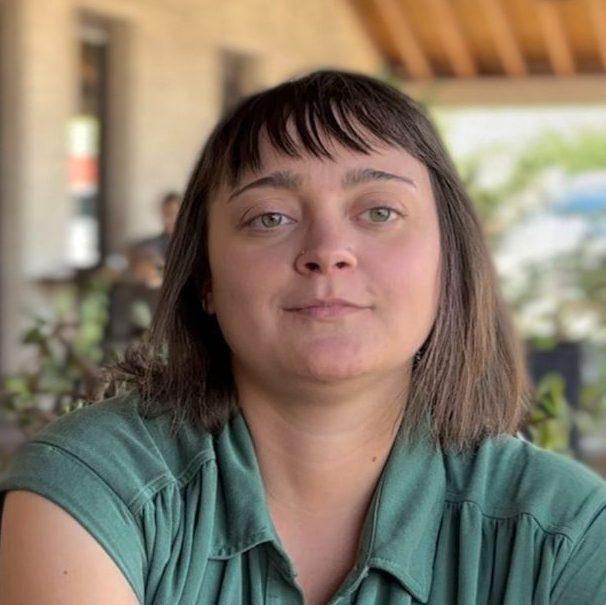
Itzia Crespo

Audio By Carbonatix
As told to Clarissa Sosin.
I was a nonprofit worker. Then I lost my job and came face to face with the nightmare that is supposed to be Arizona’s social safety net.
I worked in refugee resettlement. My team helped refugees obtain temporary cash assistance through the Arizona Department of Economic Security, the state agency that also processes applications for other benefits like SNAP and Medicaid. We had an office in Glendale, where we helped people from countries like Afghanistan, Iraq and Haiti who’d fled violence or persecution as they settled into their new lives and navigated DES’s bureaucratic systems.
Last fall, the Trump administration was slashing funding left and right. Refugee resettlement programs were no exception. My team had federal funding and knew we were at risk. Our bosses told us not to worry, that they would figure something out. But then they called a virtual meeting. By the end of September, I was out of work — a casualty of Trump’s funding cuts.
I had no income and no health insurance. Getting on Medicaid was my main concern. I have mental health issues and a kidney condition that requires regular check-ups. So, I turned to DES for benefits, the very agency I’d worked with in my job.
What I didn’t know was that I was about to enter a bureaucratic process that had become stagnant from federal funding cuts and changes within DES itself that would take months to complete. DES blew through legal deadlines, leaving me in disbelief with no one to turn to for help. My professional experience gave me an insider’s understanding of the system and the ability to fight for my case. Without that, I’m not sure if I’d have my Medicaid yet. I waited months for my application to go through, and even then, it was processed only after I jumped through countless hoops.
I’d been on Medicaid before in Arizona. The application is relatively straightforward. You fill it in online, submit your supporting paperwork, such as a termination letter and copies of your bills, and then you wait. The state is required to process it within 45 days, but in the past, I’d heard back as quickly as two weeks later. So I logged into my online account and updated my information. By Oct. 9, my application was complete.
The two weeks came and went. Then three weeks passed and four. I started to worry.
I tried to get an update on my application. I chatted with the website’s AI bot, hoping this would be one of the times I’d get through to a human agent. I called the DES hotline. Often, it would disconnect me after asking for a code I’d never received. When I did make it through, either online or on the phone, I was told, “We’re still verifying your paperwork,” or, “It’s still within the 45 business days.” At one point, I spoke with an agent who could see that my paperwork had been submitted. So I waited. But then 45 days came and went without a word. I was worried about my healthcare. I’d already spaced out my appointments more than I should have or postponed them altogether because I couldn’t afford to pay out of pocket. I’d stopped picking up prescriptions that I felt I could go without. I knew a lot of people had been laid off and that the system was backlogged. But I was frustrated, and the state had missed its mandated deadline to get back to me.
So, I kept trying. I called, I went online. I went online, I called. Finally, I decided to go in person.
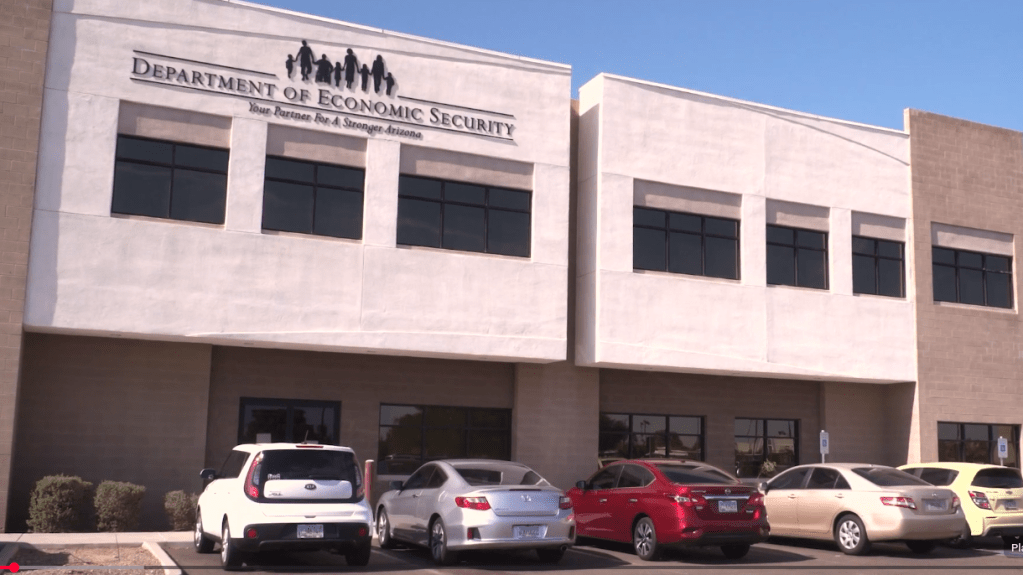
Arizona Department of Economic Security
My first visit was to the South Phoenix location. I arrived midmorning. The room was filled with rows of people sitting quietly in chairs, occasionally asking each other for help with their paperwork or complaining about the wait. Most of the agent booths lining the outskirts of the room were unmanned, with only a couple of people working. There were no numbers to reserve your spot in line. Instead, your seat was your number — when an agent called the next person, everyone stood and moved over one seat. The line shifted slowly while a sign at the front tracked the wait time. I waited four hours, slowly zigzagging my way through the rows of chairs to the front of the queue. When I finally met with an agent, they said that applications were taking upwards of 60 days to process instead of the required 45, and they sent me home.
Ultimately, getting on Medicaid took me more than five months.
In that time, I went in person to two different locations, including the one in Glendale that I used to work with through my nonprofit job. Once, I arrived at the South Phoenix office before they opened at 8 a.m. A line of people waiting to get in already snaked around the block.
I tried everything I could think of. I wrote to my elected representatives. I contacted the media. For the most part, I got generic responses, if any at all. I spoke to the office of Gov. Katie Hobbs, which actually answered the phone. I was ultimately told to reach out to Arizona’s ombudsman office, which assigned an investigator to look into my application. My doctor’s office got involved, too. Their Medicaid assistor took on my case.
I don’t know what worked. Was it the ombudsman? Was it the assistor? Was it just that my application needed time to work its way through an overwhelmed, underfunded and understaffed system? I will never know.
Medicaid, SNAP and other programs like these are vital public benefits. People rely on them to live. They use them to access basic healthcare, to feed their families, to stay afloat when everything falls to pieces because they’ve lost their job and are trying to get back on track. For most, they are a temporary but very necessary stopgap.
I’m fortunate that I was able to advocate for myself. I have access to reliable internet and am tech-savvy. I don’t have kids that need watching while I spend hours at the DES office. I’m young and physically able to sit or stand in long lines, a feat that is much harder on many of the elderly and disabled people who waited alongside me. I had the time, wherewithal and resources to fight for myself. Not everyone does.
The entire process was a mess from the moment I submitted my application. Phones went unanswered. AI bots gave generic responses. The human workers, when you finally reached them, were overwhelmed and didn’t know how to help. I found myself wondering what I was going to do if — and then it became when — they missed the legal deadline to get back to me. Could I hold the state accountable? Was that even possible?
DES is blowing through legal deadlines without consequence. It needs to be held to account.
It’s not a topic that people want to talk about. Whenever anyone talks about Medicaid or other benefits like SNAP, or whenever the media reports it, it’s never about the waiting process and the bureaucracy that bogs down the system. It’s always about the people who are denied or who have lost their coverage or whose Medicaid premiums went up.
Those people matter, but so do we — stuck in a system that’s not working, wondering when it’ll be our turn to finally be helped.
Have information about this story? Reach Clarissa Sosin on Signal at @csosin.27.