
Courtesy of Stickman Records

Audio By Carbonatix
The way we consume music is akin to our relationship with food. We have our musical comfort foods: the genres we fall back on to give us a warm, nostalgic glow. We have our tastes that dictate who we are as “a rap guy” or “jazz cat,” much in the same way that being “a craft beer person,” “a sushi fanatic,” or “knows way too much about Korean barbecue” become cornerstones of who we are – the traits our friends lead with when describing us to strangers, the aspects of our beings we highlight in online dating profiles. And just like food, there are types of music we’re picky about eating, sounds that don’t go down smoothly or actively clash with our palates.
In my case, for most of my
But a band called Elder changed that.
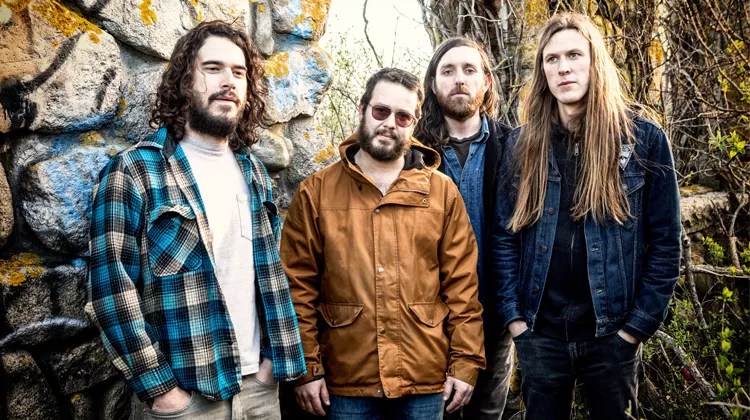
The Boston power trio’s 2015 album, Lore, challenged and shattered my preconceptions of metal as a genre. It has all the hallmarks of metal at its most inaccessible: a dense, fantasy-obsessed mythology detailed in its lyrics; portentous album art; song lengths in the double digits (the shortest song on the
Elder started as a stoner/doom metal band, the kind of group you’d crank up on the hi-fi while rolling a fat blunt on your Ouija board. They fused the long, droning song lengths and bowel-shaking low end of doom metal with stoner metal’s love of fuzzy, Tony Iommi-
It’s on 2015’s Lore (and 2017’s phenomenal follow-up, Reflections of a Floating World) that the band’s sound takes a quantum leap. In interviews leading up to Lore‘s release, DiSalvo credits the influence of German psych-rock groups like Colour Haze and
What makes Lore stand out is how deftly it marries Elder’s love of heavy, stoned riffs with the grandiosity of prog and the woozy atmospherics of psych-rock. They also manage to evoke classic rock like Led Zeppelin and Thin Lizzy with their melodic sensibilities and epic, fleet guitar work without sounding like a tribute act. Like all the best hard rock bands, they’re able to strip the past for its best parts and reassemble those components into a faster, sleeker, and meaner heavy metal machine.
DiSalvo’s voice also becomes even more clear and easy to understand on Lore, making the fantastical and poetic lyrics of songs like “Spirit at Aphelion” and “Legend” easy to grasp.
Before listening to Elder, I had a few other experiences that gradually opened me up to metal. Driving home one night from First Friday, a friend played a Burzum mix in my car. I didn’t know about frontman Varg Vikernes’ monstrous beliefs or personal history at the time. All I heard was beautiful music that sounded more like my beloved shoegaze than harsh metal. And like most hipsters trying to keep a toehold on the zeitgeist, I was as blown away by Mastodon’s Leviathan as everyone else was when it first breached in 2004. But it wasn’t enough to make me a full-blown metal convert. I could listen to dissonant and spastic
The thing about Elder was that their druggy, doomy take on psychedelia was a kind of Trojan horse. The heaviness wouldn’t hit you until long after those gorgeous, meandering chords cast their spell on you. While most of their songs clocked in at over 10 minutes long, they never felt long. They often sounded like three or four different songs that have been expertly woven together into one long tapestry of sound. Before you can get bored or restless listening to one segment, it’s moved on to another one.
Their next album after Lore, Reflections of a Floating World, built on their breakthrough and took their sound to stratospheric, hallucinatory heights. The songs are still just as long, but they’re informed by a tighter sense of songcraft. Listen to “The Falling Veil” and you’ll hear more catchy riffs and melodic lines in its 11 minutes than most Guitar Hero bands are able to conjure up on entire albums. Named after the demimonde of Japan’s Edo period, when the arts flourished alongside the rise of a pleasure-seeking middle class that turned brothels into a booming business, Elder’s album soundtracks a world of vapor and spirits that’s on the verge of collapse, a world where everyone is following their bliss off the edge of a cliff. It’s a world that looks an awful lot like our own.
After being exposed to Elder’s suite-long songs, I was open to embracing metal’s marathon tendencies. What used to seem like hubris or absurdity now looked like ambition. Who needs to listen to another plaintive indie band sing sad songs about girls when you can listen to bands like Elder sing about the cosmos? Why listen to just three to four minutes of sweet riffing when you can get 15 minutes of it?
I still won’t listen to country, though.
Elder. With Serial Hawk, Sounds Like Murder, and Hovenweep. 7 p.m. Friday, August 17, at Club Red, 1306 West University Drive, Mesa; 480-200-7529; clubredrocks.com. Tickets are available via Ticketfly.