
Brigette Doby

Audio By Carbonatix
When he was young, S. Barrett Rinzler’s family made their living running a grocery store and raising cattle in Dayton, Ohio. He fondly remembers stock shows at the farm and his dad bringing home steaks for dinner.
“It gave me an affinity for beef,” Rinzler says.
The restaurants he’s built testify to that love. Rinzler’s restaurant group, Square One Concepts, runs Cold Beers & Cheeseburgers, a popular local chain known for its thick burgers.
As that beefy sports grill bloomed into a juggernaut, Rinzler dreamed of launching a small, sophisticated steakhouse. In 2016, he opened Bourbon & Bones in Old Town Scottsdale with an aim to keep the restaurant and its menu classic.
“I don’t want some crazy, concocted beef dish,” he says. “I want to take a big, nice slab of beef and put it in the broiler, and I want you to put it on a plate and serve it, because that’s what steakhouses are.”
As he looks around Old Town now, Rinzler counts about 10 steakhouses that will soon vie for customers’ attention — “a lot,” he muses. More keep popping up across every corner of the Valley. In the past year, at least eight steakhouses have opened around the Valley, and another eight have announced plans to open in 2026.
Even new restaurants that don’t classify themselves as steakhouses increasingly feature large, a la carte cuts of beef on their menus. Nationally, diners are noticing that “everything is steakhouse,” as one Eater article declared.
Is Phoenix just part of the protein-maxxing craze carving its way through America? Or is this simply our wild west cowtown roots reasserting themselves one chargrilled filet at a time?
Tallying up the new places only starts to answer that question. Chefs, restaurateurs and steakhouse diners point to nostalgia, economics and the broader culture for why the plush, familiar comforts of steakhouses are defining how people are dining out right now.
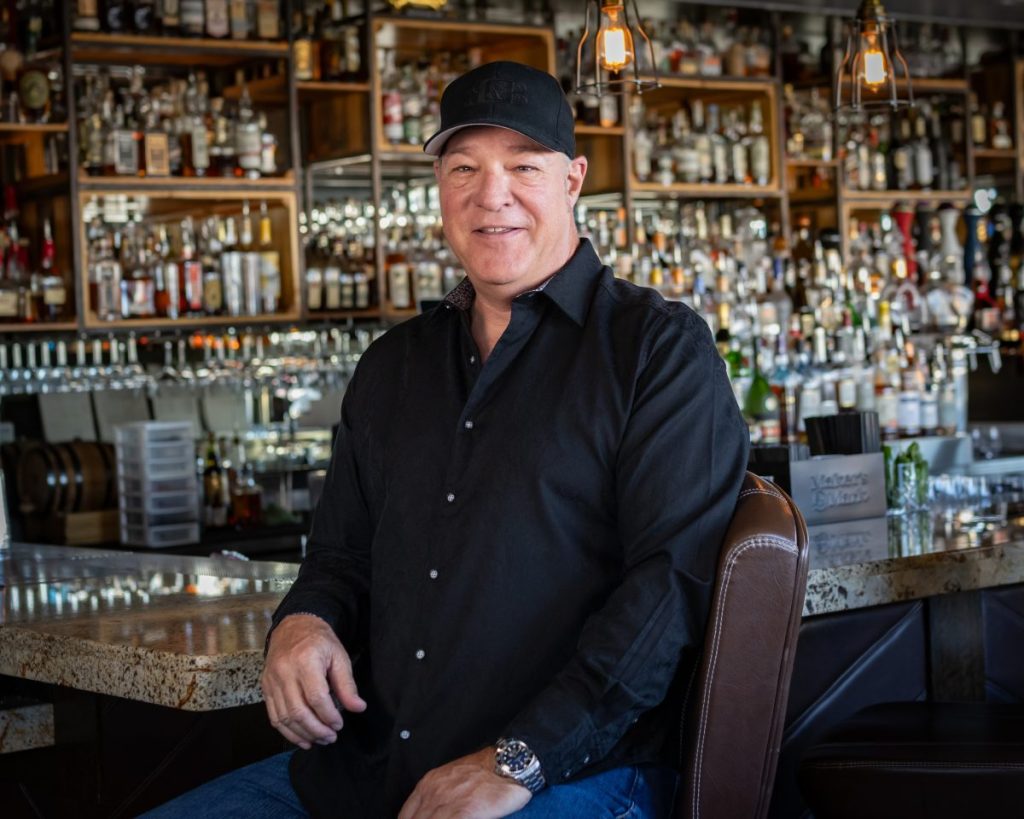
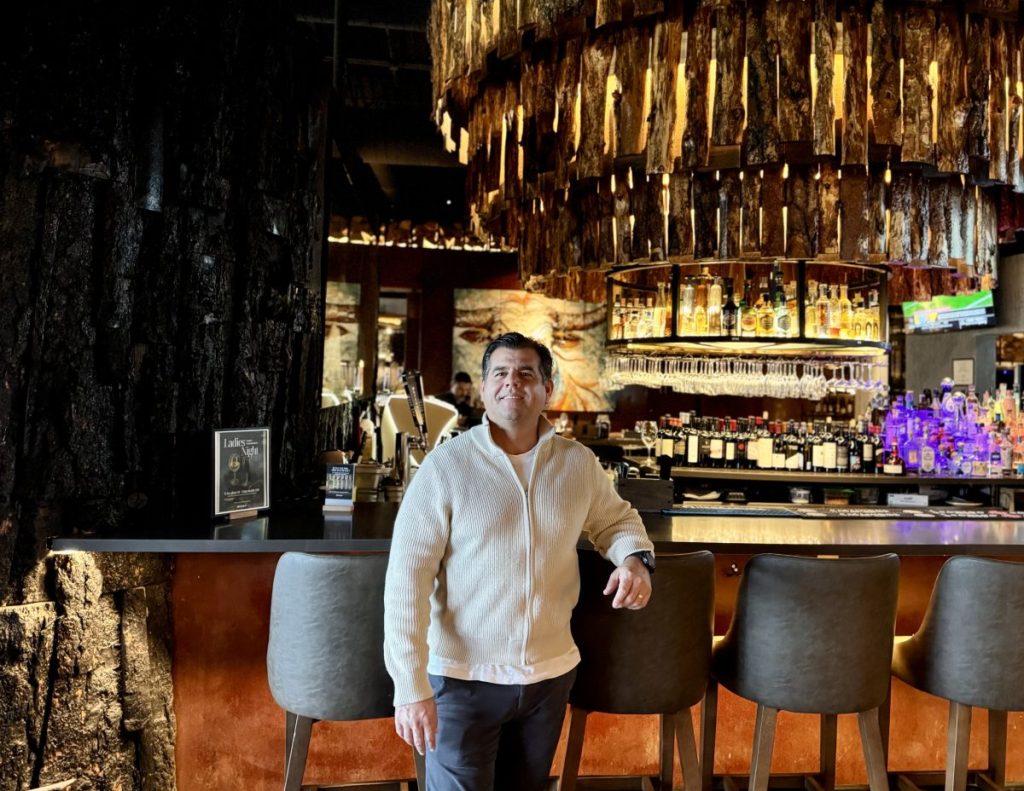
S. Barrett Rinzler opened the first location of Bourbon & Bones in Scottsdale in 2016.
Square One Concepts
A ‘meat-and-potatoes restaurant fortress’
Arizona’s hunger for beef may be resurgent — but it ain’t new. Along with copper, cotton, citrus and climate, cattle were among the proverbial five C’s that defined the state’s early rise. During Arizona’s ranching peak a century ago, the 1.75 million cows outnumbered people five to one.
Steakhouses followed, and they captured the fine-dining scene for much of the rest of the 20th century. When this fledgling Southwestern capital got its first dining guide in 1978, courtesy of John and Joan Bogert’s “100 Best Restaurants in the Valley of the Sun,” the authors noted a clear dining trend. “Just about every menu, including take-no-chances Chinese restaurant’s, offered steaks, prime rib and baked potato,” the venerable Valley food writer and critic Howard Seftel explained in The Arizona Republic in 2015.
Boozy power lunches in the curved red booths at Durant’s became the stuff of legend on Central Avenue. Monti’s La Casa Vieja was a celebratory staple in Tempe. The spring training set swung by Pink Pony and Don & Charlie’s. History buffs and ghosthunters flocked to The Stockyards, while would-be cowboys rode on horseback to dinner at T-Bone Steakhouse in South Phoenix.
It all amounted to a “meat-and-potatoes restaurant fortress,” Seftel surmised. In the Valley, the cow was king.
Over time, however, chefs and diners sought newer, more exciting flavors. The traditional Arizona steakhouse, while still a staple, wasn’t immune from history. The Stockyards changed ownership and underwent a significant renovation in 2004. Some long-time classics — Monti’s, Don & Charlie’s, Pink Pony — shuttered altogether. Post-pandemic, the veneer wore off on Durant’s. In 2023, our former food critic Dominic Armato ruefully called it a “living historical document” and a “mediocre, aging steakhouse charging top dollar for dull, poorly prepared food.”
That would not be the last word on Durant’s or Valley steakhouses. Across the Valley, steakhouses both old and new have clearly set out to reclaim the 20th century.
Durant’s storied dining room was turned over to the Mastro family in 2025. When they reopened the restaurant in December, the revival became one of the biggest restaurant stories of the past year. Meanwhile, new restaurants nodding to a bygone era sprang up: Cleaverman, Shiv Supper Club and Warren’s Supper Club. National chains also rebounded. J. Alexander’s returned to Arizona in Chandler, while STK reopened in Scottsdale.
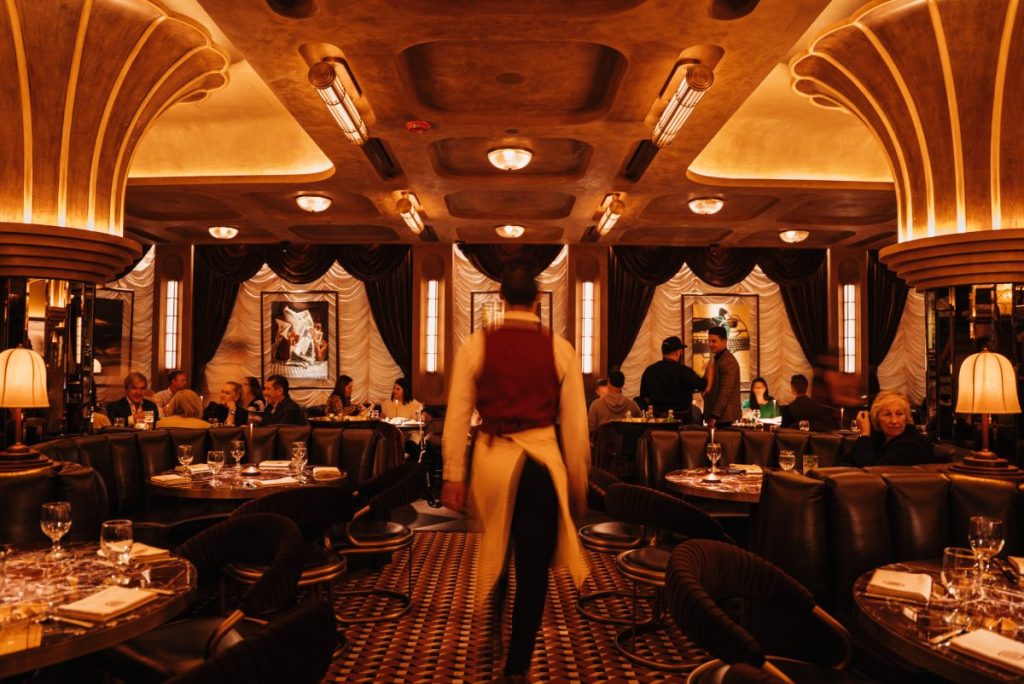
Cleaverman’s downtown steakhouse opened in November, dripping with vintage opulence. Fluted chandeliers cast a warm glow over diners tucked into curved booths surrounding richly veined stone tables. The velvet-draped walls are adorned with bespoke art. Oysters, crab claws and lobster sit on ice at the raw bar, while red cuts of raw meat are on display in a large fridge.
Last year one of the founders, Teddy Myers, laid out the group’s vision for these spaces.
“Downtown Phoenix deserves an institution,” Myers said in a news release. “Cleaverman was built with soul, swagger and staying power. If we get it right, it will be timeless and outlast us all.”
In the midst of the steakhouse epicenter of Old Town sits chef Charleen Badman’s seasonally driven, vegetable-forward eatery, FnB. The restaurant, which she opened in 2009 with Pavle Milic, has drawn acclaim for its produce-focused menu where meat is an element, not the feature, of a plate. She’s seen restaurant trends come and go.
“I don’t even know if steakhouses are a trend in Arizona; we’re known for steaks in Arizona,” she says. “There might just be more joining the crowd.”
This year, that crowd also includes BOA Steakhouse, Drake’s Hollywood, The Guest House, Harry & Izzy’s, Terra Gaucha Brazilian Steakhouse and Uppercut, along with new locations of Fogo de Chao, Origen and STK.
At some of these new-era steakhouses, natural wood, neutral fabrics and plants have replaced the white tablecloths, leather and the haze of cigarette smoke. They’re less stuffy. The design’s fresher, for one. And you might have to talk over a live DJ, for another.
Lee Maen, co-founder of the Los Angeles-based dining group behind BOA Steakhouse, says the evolution was needed to attract a younger crowd. “What we originally wanted to do was a steakhouse that we wanted to go to,” Maen says, “not our parents.”
And yet, behind the trappings, an old blueprint is in play — on repeat. Just scan the menu of any of these steakhouses, new or worn-in. You’ll see a curated selection of steaks, seafood and pasta. A wedge or Caesar salad invariably inaugurates the meal. Then potatoes arrive fried to a crisp or dutifully baked and pummeled with butter, sour cream and bacon. Steaks are cooked to your liking and plussed up with butters, bone marrows, seafood or sauces. Something you order will be finished tableside (quick, pull out your phone!). The martinis will be ice cold, stiff and abundant. When you feel stuffed, you’ll dig deep and order the cheesecake.
The decadence is only limited by your imagination, and maybe your belt. In Arizona, at least, it has always been thus.
Innovative Dining Group
Steak, in this economy?
A walk through the hallways of The Stockyards is a ticket back in time. The probably haunted Phoenix institution has served diners since 1947. Menus from the 1960s and 1970s, adorned with rotund steers wearing crowns, hang in the restaurant’s hallway, encircled by the sentence “Where prime Western beef is king.”
Gary Lasko, co-owner and operator of the restaurant, loves uncovering those details and sharing them with customers. Every historic steakhouse needs lore.
Many of The Stockyards’ original menu items remain. There’s giggle-inducing calf fries — or as one server referred to them, “the last thing over the fence” — and Chateaubriand, the classic French preparation of tenderloin. One of the vintage menus advertises the latter for $8.50 per person.
“It’s crazy to see those prices,” Lasko says.
Today, the 16-ounce Chateaubriand goes for $130 for two. Lasko keeps a spreadsheet of competitor steakhouses, tracking what they charge for different cuts of beef and other dishes to constantly assess where his steakhouse stands.
Prices are on the rise, driven in no small part by all-time high beef costs. Drought and feed costs are squeezing the number of cattle, industry experts say. Tariffs and disease also drive up prices. Restaurant owners say beef costs have leapt as much as 60% in the last year.
“The herd is the smallest it’s been since the ’50s in the United States,” Lasko says.
Yet diners are undeterred. On average, Americans eat more meat now than they did before the pandemic. Nearly one in five beef consumers anticipated eating more red meat in the coming year, per a Cargill study. Chris DuBois, a senior vice president at the market research company Circana, told The New York Times in April that “The demonization of meat is over.”
Podcasters and influencers promote the virtues of a carnivore diet. Aging Americans and those on weight loss drugs seek out more protein to combat the loss of muscle mass. And no less than the federal government continues to celebrate steak and tallow like no other time in recent history. The new food pyramid, released by the Robert F. Kennedy, Jr.-led U.S. Department of Health and Human Services earlier this month, displays a thick, marbled steak at the pinnacle of Americans’ ideal diet.
Scene Select
The relentless pull of the familiar
In “Steak House,” Eric Wareheim set out to define the genre and create a record of iconic examples around the country. What he found on his travels was the DNA of what Valley diners are discovering anew.
“I’ve been around the world 100 times and eaten everywhere and what I come back to is the comfort and consistency and joy that the steakhouse provides,” he told Eater last fall. “It’s simple and I can enjoy it the same as my dad, as my granddad.”
Each place, each clientele may look a little different. But the dishes, the service and the atmosphere all signal an experience that has carried through over generations.
Christopher Gross, the James Beard Award-winning chef behind the eponymous Wrigley Mansion fine dining haven, has been known to visit Durant’s for a prime rib or Maple & Ash for a ribeye.
“The luxury or the appeal to the steakhouse is people still — and me, too — love familiarity and comfort of not thinking,” Gross says. “No one’s recreating the wheel. It works. It rolls.”
And yet, with such a rapidly expanding herd, restaurateurs try to stay one step ahead to stand out. Even Gross, whose restaurant is a destination for its culinary fancifulness, is considering an “if you can’t beat them, join them” tactic. He’s weighing whether to add more steaks and a la carte options on the restaurant’s Classics menu offered two nights a week, which currently includes a prime tenderloin filet au poivre.
Rinzler and Maen see steak sourcing as the key to competing in a crowded arena. During its near-decade-long run and expansion to four Valley locations, Bourbon & Bones has upgraded to elite prime cuts and Wagyu. BOA Steakhouse, meanwhile, serves an 18-ounce dry-aged Black Angus ribeye from the 6666 Ranch, which is featured in Taylor Sheridan’s popular “Yellowstone” series, as well as a vegan Beyond Steak Filet.
Jared Porter, the executive chef for Cleaverman, has reverence for steakhouses, but had never led one. He has cooked throughout the Valley for more than 25 years. Since starting at the classic Phoenix fine-dining restaurant Vincent on Camelback, he has worked at large local restaurant groups and was helming the kitchen at Tesota when a friend suggested he meet with the Pretty Decent Concepts team — backers of Cleaverman, its hidden bar Filthy and the forthcoming omakase Uppercut at the Arizona Center.
Porter took the perceived guardrails of a steakhouse menu as a challenge. Can you work in some unique dishes and ingredients along the way? Can you cook each steak flawlessly? Because there’s very little to hide behind if a steak isn’t perfect.
“It’s flame, it’s high-quality beef and it’s salt, and that’s it,” he says. “Everything else is accentuating that simplicity.”
Porter also says customers’ hunger for simplicity may be a reaction to food trends of the last few years.
“We’ve gone through this hyper-esoteric, highly creative melting pot of different types of cuisines,” he explains. “I don’t think it’s any coincidence that the heaviest hitters in the food world are coming back to these simple roots.”
Splashy steakhouses keep opening in other major cities, too. Celebrity chefs like Jose Andres and Michael Mina have expanded their steak-driven restaurants. Cooking competition-famous chefs like Fabio Viviani and Kwame Onwuachi likewise are jumping into the game, infusing their steakhouses with their heritage.
In Gilbert, Origen adds a Mexican twist to the steakhouse. Its owners founded three restaurants in Mexico before fixing their sights above the border. Origen is the kind of place where most tables will share a variety of plates, owner Eduardo Medina says, with a spread that could include a ribeye alongside cochinita pibil and ceviche.
“I’m happy to have a lot of different steakhouses right now,” Medina says. “Many years ago, it had to be with a white cloth and a sommelier. Today, the steakhouse is more than that. It’s more for everybody. It’s more for sharing.”
Sara Crocker
‘People want to go out and feel opulent’
Costs be damned, Valley steakhouses have stayed busy. Even as Rinzler worries about the growing number of steakhouses, he noted that those already open aren’t seeing lower volume.
Lasko says the past few years at The Stockyards have been their busiest. He agrees with other owners that the booming city and a steady flow of tourists keep steakhouses, and most other high-end restaurants, busy. He also chalks it up to “Hunger Games”-style economic reality we’re facing.
“You’re familiar with the K-shaped economy?” Lasko asks, making the letter with his fingers. “This group’s going up, this group’s going down. We’re up here — steakhouses are up here in the K-shaped economy. That’s why we’re continuing to stay busy.”
It’s also no secret that restaurants of all stripes are adding luxury-signifying products — caviar, Wagyu, a fresh shaving of truffle — to their menus. They cater to the same well-heeled set that airlines and automakers increasingly court, but those items also appeal to the average diner looking to celebrate.
You may not know how you’re going to afford child care or health insurance this year. But even workaday stiffs feel like a boss when they’re dressed up, out on the town, watching a seafood tower and a porterhouse for two land on their white tablecloth.
Scene Select
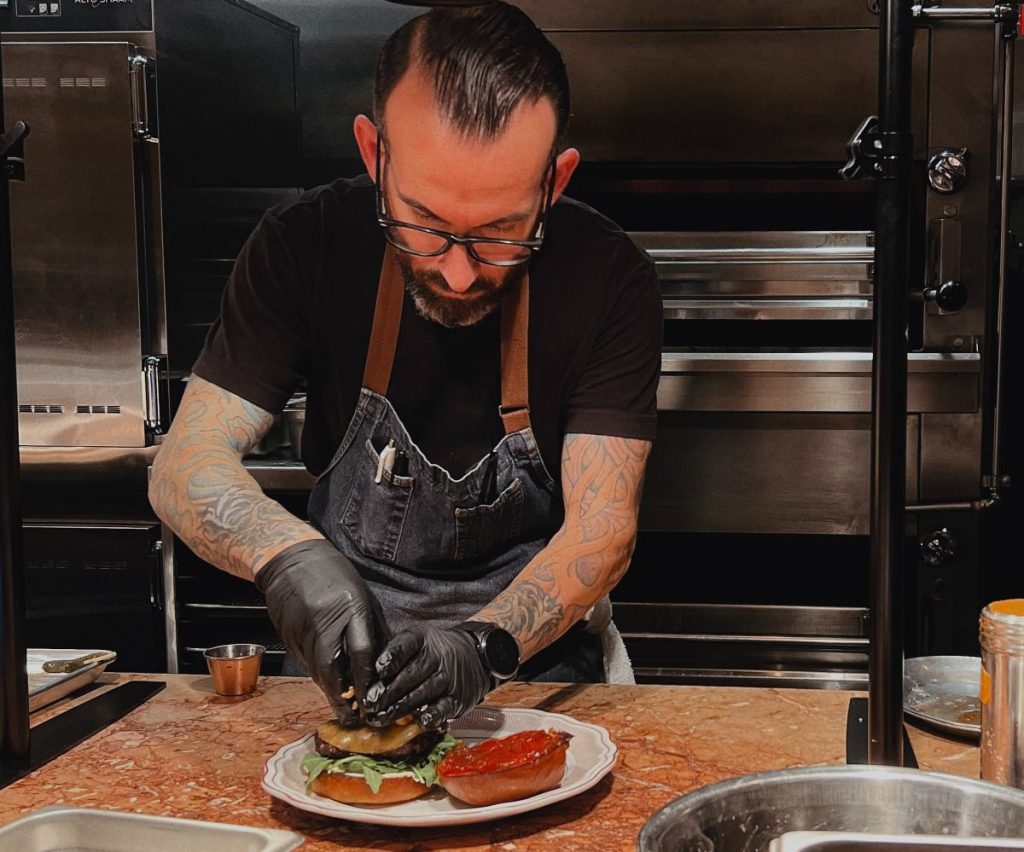
Porter, the Cleaverman chef, is a self-described tightwad. The price point of a luxe steakhouse experience used to give him pause. He asked Myers, “What do you know that I don’t?”
Once he understood the long-term bet Myers and his team were making, to build a restaurant that could become an institution, he got excited.
“It’s not just about the food. It’s about the experience,” Porter says. “People want to go out and feel opulent, even if the world doesn’t allow it.”
If you are trying to be a baller on a budget, owners are encouraging family-style dining and incorporating more affordable items on their menus. They’re what BOA’s Maen calls “outs.” Plates of spicy rigatoni, chicken parmesan or steak frites can lower the cost of admission.
“You don’t have to have the $80 steak,” Maen says.
Savvy diners can find deals if they’re flexible with when they go out. Origen promotes $99 Tomahawk Tuesdays. Medina, its owner, says the restaurant will also add three steaks to its happy hour, for a limited time.
“We have to manage that cost,” he says. “The cost of the meat has been like the Bitcoin.” He starts to trace the air. “It goes up and down but (more) up than down.”
Enticing deals may get new diners through the door. Mary Yamasato found Origen on the reservation app OpenTable and booked it for her husband Eric’s birthday. They drove about an hour from north Phoenix just to try the steakhouse.
For Yamasato, steakhouses have always been a celebratory place with her family, even when she was a vegetarian.
“I just thought, what a statement for his birthday,” she says. “Let’s go.”
It’s that sentiment that gives steakhouse owners confidence about their future, even as they fight to stand out from the crowd. They know the restaurants that pick a timeless lane and execute to high standards won’t measure their returns in months or even years. Rather, they’ll be the outposts that decades from now continue to order white linen, French knives and beef by the quarter. In a western city where steak has long been king, steakhouses still constitute a fortress.
