
Wirestock/Getty Images

Audio By Carbonatix
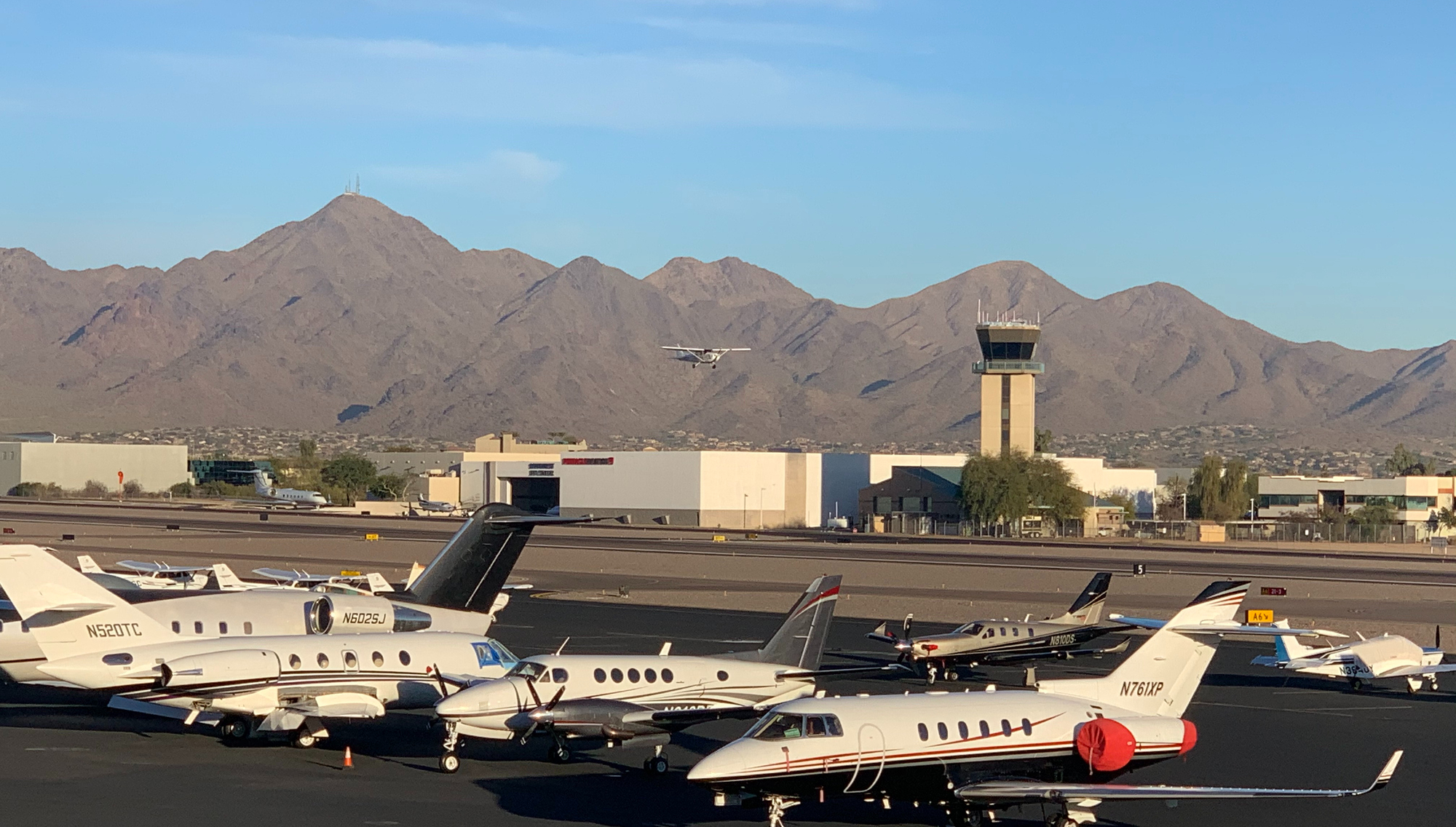
Nearly a year ago, a private jet owned by Motley Crue singer Vince Neil veered off the runway during landing and crashed into another jet at Scottsdale Airport, killing the pilot and injuring several others on board. Neil was not on board at the time.
A survivor who was on the plane, Las Vegas resident Ashley Rosile, is now suing the city of Scottsdale over the crash. Rosile claims the airport, which is owned and operated by the city, negligently allowed another aircraft, a Gulfstream G200, to park in a spot that put it in the path of the wayward Gates Learjet 35A in which she was a passenger. The lawsuit notes that Scottsdale Airport is “among the top 10 busiest single-runway airports globally,” handling “around 166,000 takeoffs and landings on an annual basis.”
The lawsuit adds: “A reasonable municipality prevents collisions between planes by ensuring that parked planes are kept at a reasonably safe distance from the airport’s runway and taxiways.”
The lawsuit also names as defendants the pilot of the Gulfstream; Southwest Jet Center, which towed the other plane into its position at the time of the crash; WW Aviation LLC, which the suit claims owned or controlled the other jet; and Jet Pros, which allegedly managed the other jet on WW Aviation’s behalf.
One day after Rosile filed her suit, a related suit was filed by an insurance company representing Jet Pros. That suit also claims that Scottsdale Airport and Southwest Jet Center improperly parked the Gulfstream that was hit. Additionally, that suit claims that the company that owns the Learjet, the Neil-owned Chromed in Hollywood, should have deployed a drag chute upon landing.
Phoenix New Times has sent requests for comment to Southwest Jet Center, the attorney for Rosile and a representative for Chromed in Hollywood, but has not heard back. Ryan Saba, an attorney for Jet Pros, declined to comment, as did a Scottsdale spokesperson. New Times was unable to locate contact information for WW Aviation.
Rosile and Jet Pros’ insurer, Allianz Global Risks, are both seeking a variety of damages in their respective suits. Allianz says it paid $5.5 million to cover the loss of the Gulfstream.
National Transportation Safety Board
‘Object Free Area’
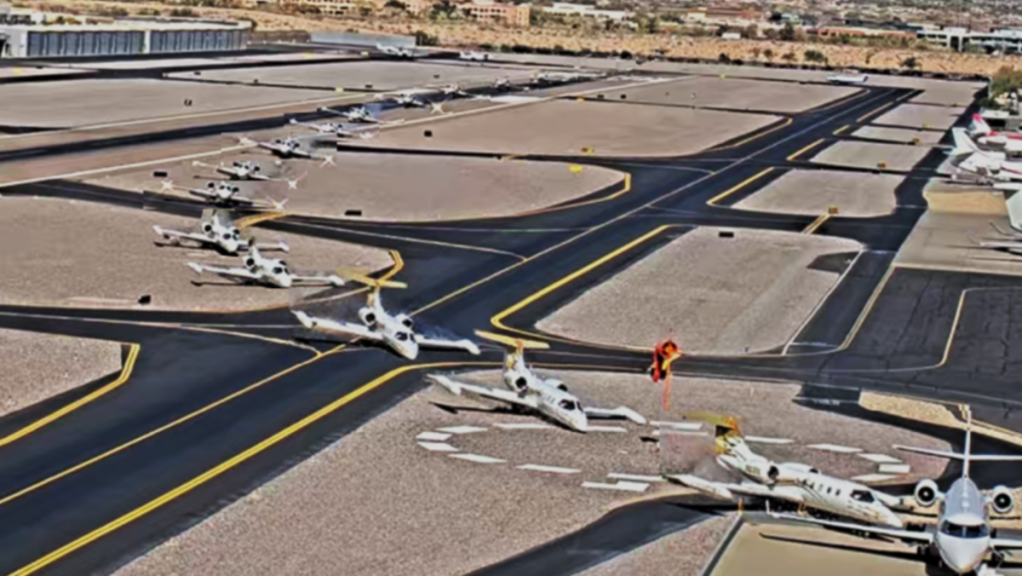
At the heart of both lawsuits is what is called an Object Free Area, or OFA. As Rosile’s suit defines the term, an OFA is a “ground area surrounding runways, taxiways, and taxilanes that must remain clear of all above-ground objects, except for those objects necessary for air navigation or aircraft ground maneuvering purposes.” An OFA’s purpose is to “provide safety by preventing collisions between aircraft and obstacles such as parked aircraft, vehicles, and/or equipment, including when a landing jet aircraft veers off the runway at landing speed.”
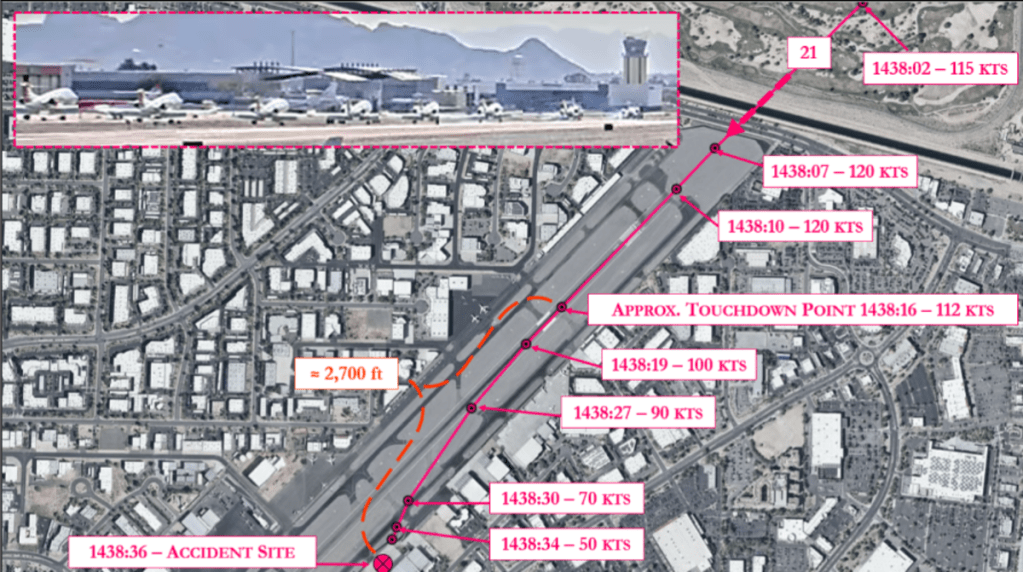
Veer off the runway at landing speed is exactly what the Learjet carrying Rosile did on Feb. 10, 2025. The jet — which was flown by 78-year-old pilot Joie Vitosky along with a first officer, and which also carried two dogs and another passenger besides Rosile — approached the runway for landing at 2:38 p.m. The plane suffered a “left landing gear separation,” with the landing gear not in proper position, causing the plane to skid left off the runway and over a taxiway before colliding with the Gulfstream parked outside a hangar.
Vitosky was killed and the first officer was seriously injured. Rosile’s complaint says she exited the aircraft with the two dogs and helped direct the other passenger to emergency personnel. Rosile, who says she lacked health insurance, claims she suffered physical injuries that, despite being labeled as “minor” in the complaint, cost her $108,000 in medical care costs.
Rosile’s lawsuit contends that the other plane should never have been parked where it was. It claims that Southwest Jet towed the Gulfstream G200 from inside a hangar to its spot at the time of the crash “so a third-party audio-visual technician could have better ambient lighting to install recreational video screens in the plane’s passenger cabin.” That spot, on the northeast side of the runway, “was unreasonably close to the runway and in an
OFA,” the lawsuit says.
The suit also claims the Gulfstream’s owners, operators and pilot should have known it was dangerously parked and that Scottsdale Airport’s air traffic control tower, which “had a clear line of sight to the Gulfstream G200 plane,” should have noticed and had the plane relocated.
National Transportation Safety Board
No drag chute
Whether the Gulfstream was indeed parked in a dangerous spot is unclear. Google Earth satellite images from a span of several years show planes parked similarly close to the runway, as does a photo of the crash included in a preliminary accident report released last year by the National Transportation Safety Board. Notably, the report makes no mention of Object Free Areas, instead focusing on the malfunction of the Learjet’s landing gear. The final NTSB report has not been released and the investigation into the crash is listed as active.
However, a detailed map of the airport on the Arizona Department of Transportation website shows an orange line marking an Object Free Area that passes very near where the Gulfstream was parked. Whether it was indeed over that line, in whole or in part, is not entirely clear based on photos in the NTSB’s report. But the suit brought by Allianz, Jet Pros’ insurer, also claims the Gulfstream was parked inside the Object Free Zone, going on to say that planes regularly parked there.
According to that suit, the Federal Aviation Administration requires that OFAs be 800 feet wide and extend 1,000 feet beyond the end of each runway. By contrast, it says, Scottsdale Airport’s OFA is only 630 feet wide. In 2016, Scottsdale asked the FAA to make an exception for its narrower OFA, which the FAA approved in 2019 under several conditions. One of them, the lawsuit says, was the adoption of a new ordinance that “no person shall park, leave parked, or allow to remain stationary any aircraft at the Airport except within an aircraft parking and storage area.”
That ordinance was never enacted, the suit says, nullifying any exception to the OFA dimensions granted by the FAA. “Despite the fact that the modification was never effective, the City proceeded with airport operations as though it was, including continuing to lease Airport space located in the (OFA) to Southwest Jet Center for use as aircraft parking,” the suit says. The Gulfstream was parked outside Southwest Jet Centers’ hangar at the time of the crash.
The suit also faults Neil’s company — and, by extension, the deceased Vitosky and his first officer — for not deploying a drag chute when landing the plane. The suit references findings in the NTSB report that the Learjet had a hard landing in June 2024 that caused its “main left landing gear tires (to) burst.” Though the damage was repaired and the plane was inspected multiple times between then and the February crash, the suit claims the plane’s operators were aware of landing gear issues. Specifically, the suit claims that the Learjet’s cockpit voice recorder “captured discussion aboard the Learjet regarding strange noises heard by its occupants, as well as discussion about the landing gear.”
That should have prompted the pilot to deploy the drag chute, which the suit says would have “provide(d) significant deceleration” to the point that the Learjet “would not have crashed into the Gulfstream.”