
Katya Schwenk

Audio By Carbonatix
America has redefined the meaning of homelessness many times throughout history. In the early 1900s, it was a moral failure; after the Great Depression, a circumstance. In the late 20th century, it was a failure of the welfare state, and the start of the 21st century saw “housing first.”
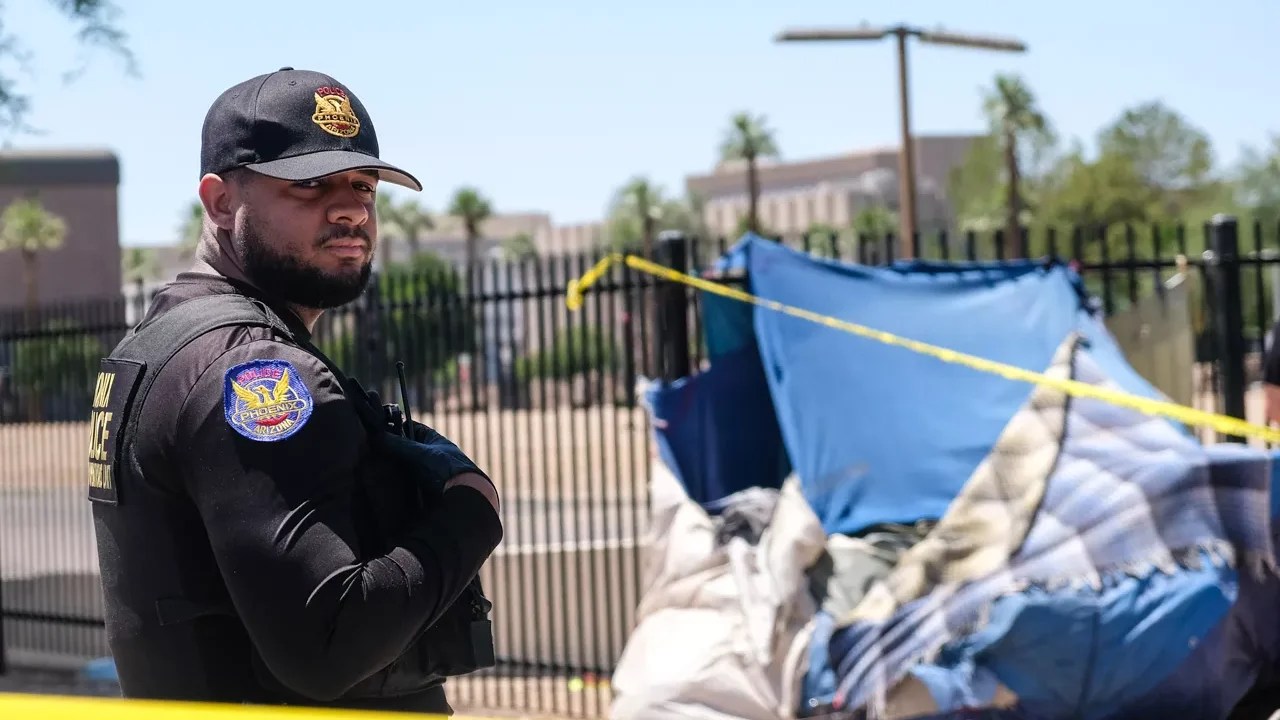
Now, in 2026, we are once again redefining it. Today, the unhoused are a nuisance, criminals and biohazards. Bills criminalize their existence. Ordinances suffocate them of basic needs. And we are letting it just happen. The epicenter for this fight is right here in Phoenix. And what we’re doing is setting a tone of dehumanization that will echo across the country.
The “housing first” era crescendoed in 2018 with the federal case Martin v. City of Boise. The 9th U.S. Circuit Court of Appeals ruled that criminalizing homelessness when no available shelter beds existed was cruel and unusual, violating the 8th Amendment. The nation’s tone was clear: Housing is needed. After all, if it’s illegal to sleep in public and there’s no housing, where do people go?
Only a few years later, the Supreme Court changed everything. In 2024, the Court ruled in Grants Pass v. Johnson that anti-camping ordinances do not violate the 8th Amendment, regardless of housing availability. Overnight, the 2018 ruling was flipped on its head, states were given the go-ahead to criminalize homelessness and a sea of bills crashed onto the unhoused shores. Over the next year, more than 320 criminalization bills appeared, a torrent of suppressed anti-homeless sentiment pouring out from America, including anti-camping ordinances emerging locally from Phoenix, Tempe and Mesa.
But it did not stop here. In July 2025, President Donald Trump signed Executive Order 14321, effectively ending the “housing first” era. A month later, it even became a celebratory thing to criminalize the homeless, and on Aug. 11, Trump held “Liberation Day” to “save” our nation’s capital from “violent gangs” and “drugged out maniacs” — despite crime being at a 30-year low in Washington, D.C. Armed with the Supreme Court’s assurance that stripping away the basic functions of life is void of “terror, pain, or disgrace,” leaders began the work of sanitization through vilification.
The nation had picked a new tone.
But in Phoenix, this fight had begun years prior. In 2023, the “Zone,” an encampment of thousands of unhoused people near downtown Phoenix, was the subject of a legal battle between the city and local businesses. In Brown v. City of Phoenix, a judge ruled that the encampment was illegal and ordered the city to remove it. To be fair, this was not entirely anti-homeless, as the ruling could have inspired Phoenix to aggressively pursue expanding housing and shelter options. The city’s response, however, left much to be desired.
In response to the ruling, Phoenix created the Safe Outdoor Space, a 300-bed replacement for the “Zone,” and has added 1,200 additional shelter beds since 2022. On first glance, this seems like a lot, but context matters: In 2025, Phoenix recorded 3,750 unsheltered individuals living in the city, the largest single-year jump in a decade. The city’s response was not nearly enough. Yet, the most telling aspect of this event was not the beds available or the changes made but rather how the encampment was legally described: “a public nuisance.” Because that’s what the unhoused are to this city. Not a person, or a suffering human, just a nuisance.
The fight didn’t stop after the encampment dissolution. The predictable outcome of displacement was that the unhoused went to other public areas, like parks. Accordingly, local outreach programs that provide food and healthcare, such as Street Medicine Phoenix and Circle the City, went to parks to find them. The result? These programs were accused of bringing the unhoused to the parks, causing an influx of dirty medical supplies and needles. Although the data doesn’t support these claims, this didn’t stop the Phoenix City Council. In December 2025, in the wake of the growing national anti-homeless sentiment, the council passed “Ordinance G-7467: Safe Medical Treatment in Parks,” making it illegal for anyone, with their own time and money, to help the unhoused in parks. The outraged medical community asked the council, “How can you do this to people?” The answer: They’re biohazards before they are people.
Thankfully, after pushback, the council delayed implementation until June 1 to discuss the ordinance with the community. However, despite being provided with data demonstrating how outreach benefits more than just the unhoused, the delay didn’t matter. Paradoxically, the more the council discussed the ordinance, the worse the proposed changes grew. Medical providers would be able to get permits to do their work in the parks, but with unreasonable restrictions. The attack then shifted to food, criminalizing distribution even for what the city itself describes as “humanitarian purposes.” After June 1, feeding wild birds could be more legal than feeding the unhoused. Each new revision added subsections, exemptions and language that will make it increasingly difficult to help the unhoused. According to this ordinance, Jesus, whether feeding the 5,000 or curing a blind man’s eyes with mud, would be a criminal in Phoenix.
We have accelerated at a terrifying pace from the era of housing to the era of criminalization, and Phoenix is a signal flag to the nation. We now must decide if the unhoused are deserving of compassion or if we will continue to dehumanize them. This is about more than just compassion for one group of people; it’s about our entire society. We have allowed our leaders to make hostile claims, criminalize and desecrate an entire group of people, and we do nothing. We are embracing a culture of dehumanization, and if we do not speak out, this will only get worse.
Yet, there is still time. Email your councilmember. Call your councilmember. Come to the council’s next meeting at 2:30 p.m. on May 6, when it will take the final vote. Make your presence known, register to speak and let your voice be heard. There’s someone sleeping on the ground tonight who is depending on you.