
Clarissa Sosin

Audio By Carbonatix
Two nonprofits fighting Phoenix’s ordinance that restricts aid to homeless people in city parks faced a setback Tuesday after a federal judge ruled against them and canceled a scheduled hearing.
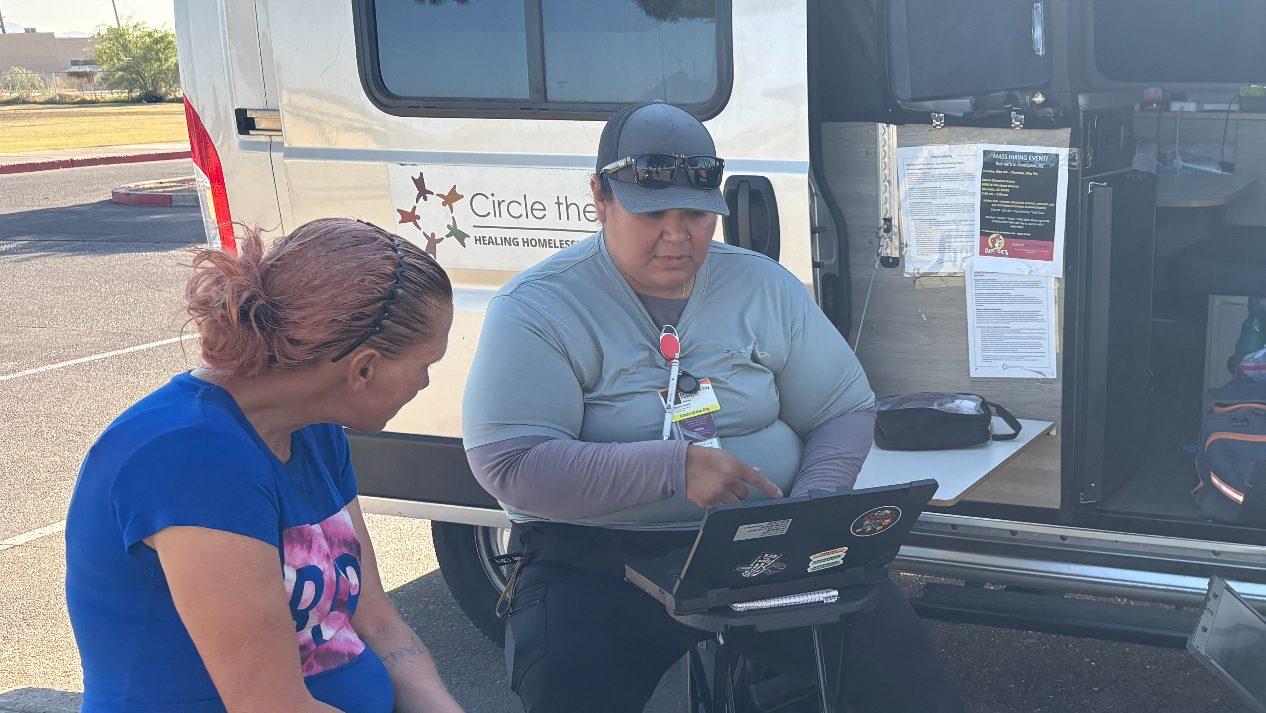
Valle del Sol and Circle the City sued the city of Phoenix in Arizona District Court, arguing that by cracking down on feeding or providing medical aid to homeless people in city parks, the ordinance violates the First Amendment.
District Judge Diane J. Humetewa disagreed. She ruled against their motion for a preliminary injunction. On less than a day’s notice, she also canceled a hearing where the two sides would present their cases.
“The Court disagrees that Plaintiffs’ provision of medical care or food to the unhoused is inherently expressive conduct under the First Amendment,” Humetewa wrote in her ruling.
The decision is not a nail in the coffin for the plaintiffs, but it is a setback that slows their case. They have 30 days to appeal the decision in the 9th Circuit. Or they can let the case progress in Humetewa’s court. Either process will take months longer than the immediate relief they sought.
Plaintiff’s attorney Will Knight, Senior Litigation Counsel for the National Homelessness Law Center, said in a written statement that they were disappointed in the ruling and plan to look into all legal options for relief.
“We are disheartened that the trial court reached the incorrect conclusion,” he wrote. “The City of Phoenix continues to prevent our most vulnerable, unhoused neighbors from accessing basic human dignities of food and life-saving medical care. Our clients, Circle the City and Valle del Sol, are firmly committed to expressing their deeply held belief that all human beings deserve equal dignity, basic healthcare, and not to go hungry, regardless of their income bracket or housing status.”
Citing the ongoing litigation, the city declined to comment for this story.
Clarissa Sosin
The case is one of two challenging the ordinance with a First Amendment argument. The plaintiffs in the second case, Orthodox Christian ministry St. Herman’s Table and its minister and founder Lance Brace, argued that their weekly food service in Cave Creek Park was an expression of their religious beliefs. A federal judge ruled in their favor a few days after the ordinance went into effect, granting a preliminary injunction that prohibits the city from enforcing the ordinance on them while their case works its way through court. St. Herman’s Table is currently the only group that can legally distribute food in a city park without a permit.
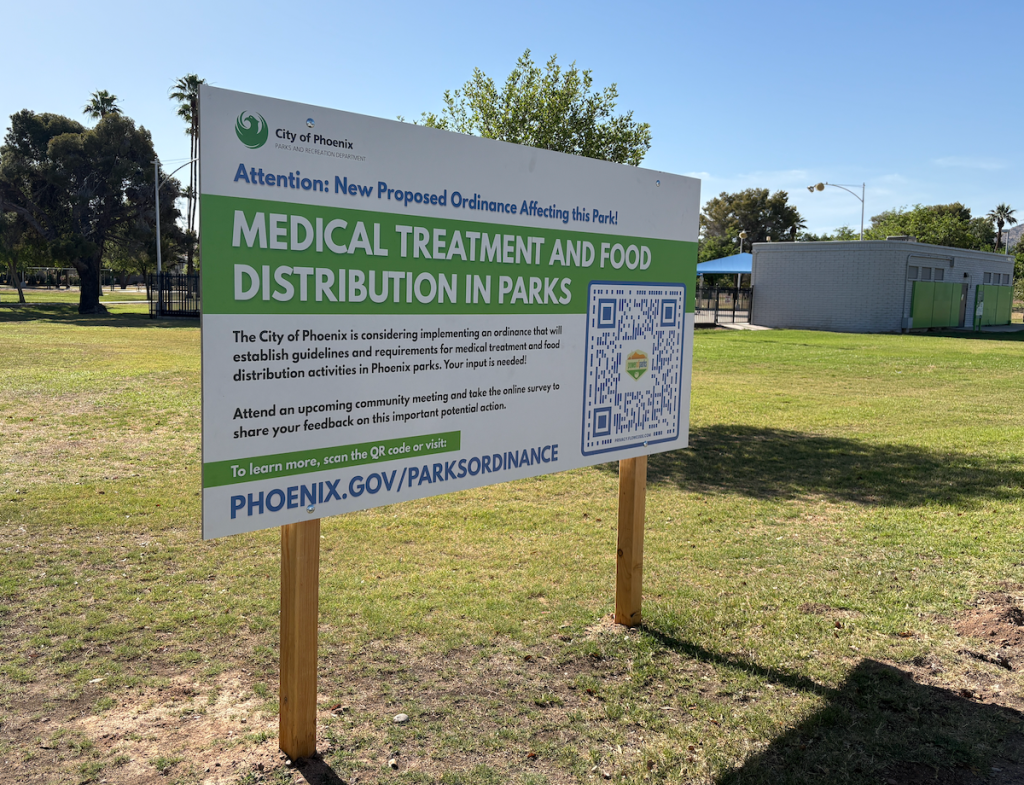
The Phoenix city council passed the ordinance in May, to take effect in early June. The new rule makes it a misdemeanor to provide medical treatment and food in city parks without a permit, and it bans medical care with needles and needle exchanges altogether. Groups and individuals hoping to serve food or provide medical care must apply for a permit. But permits are limited: The city grants only two per approved park per month. Opponents called the ordinance “punitive” and said it would do more harm than good.
Circle the City and Valle de Sol are medical nonprofits that work in city parks. Valle del Sol hosts needle exchanges, while Circle the City’s medical teams provide care to people who want it. The two groups contend that providing food and medical care to homeless people is an expression of free speech. They asked Humetewa to either rule on the case or to allow them to continue their work without repercussions from the law while the case worked its way through her court.
The nonprofits and the city were scheduled to present their sides to Humetewa in the now-canceled hearing in the Sandra Day O’Connor U.S. Courthouse on Wednesday morning.
In her decision denying the injunction and canceling the hearing, Humetewa wrote that unlike pure speech, not all expressive actions are protected by the First Amendment.
“Even if the conduct is protected, the government has greater latitude in restricting expressive conduct than it does in reining in pure speech,” she wrote.
She wrote that food distribution and medical care are not “purely expressive,” the way dancing or music or written messages are. She also agreed with the city’s argument that the nonprofits’ work does not contain an “expressive component” because their message is not obvious to passersby. The nonprofits don’t distribute literature, put up signs, or otherwise display their message or viewpoint while doing their work.
“The Court does not doubt Plaintiffs intend to convey a particularized message that ‘all people’ deserve dignity and aim to protest the government’s lack of assistance in providing the homeless with resources,” the judge wrote. “But the Court must also ask whether there is a great likelihood that the conduct in question would be understood by those who view it as the message that Plaintiffs intend to convey.”