
Sean McEntee

Audio By Carbonatix
Keep Phoenix New Times Free
We’re aiming to raise $10,000 by April 26. Your support ensures New Times can continue watching out for you and our community. No paywall. Always accessible. Daily online and weekly in print.
It’s ridiculously easy to make fun of birders. Until you become one.
Chances are pretty good that you or someone you know is already a birder. A 2022 report by the U.S. Fish and Wildlife Service and the Audubon Society cites that 37 percent of American adults — that’s about 96 million of us — have actively birded.
Even if you think you’ve never birded, you might be wrong.
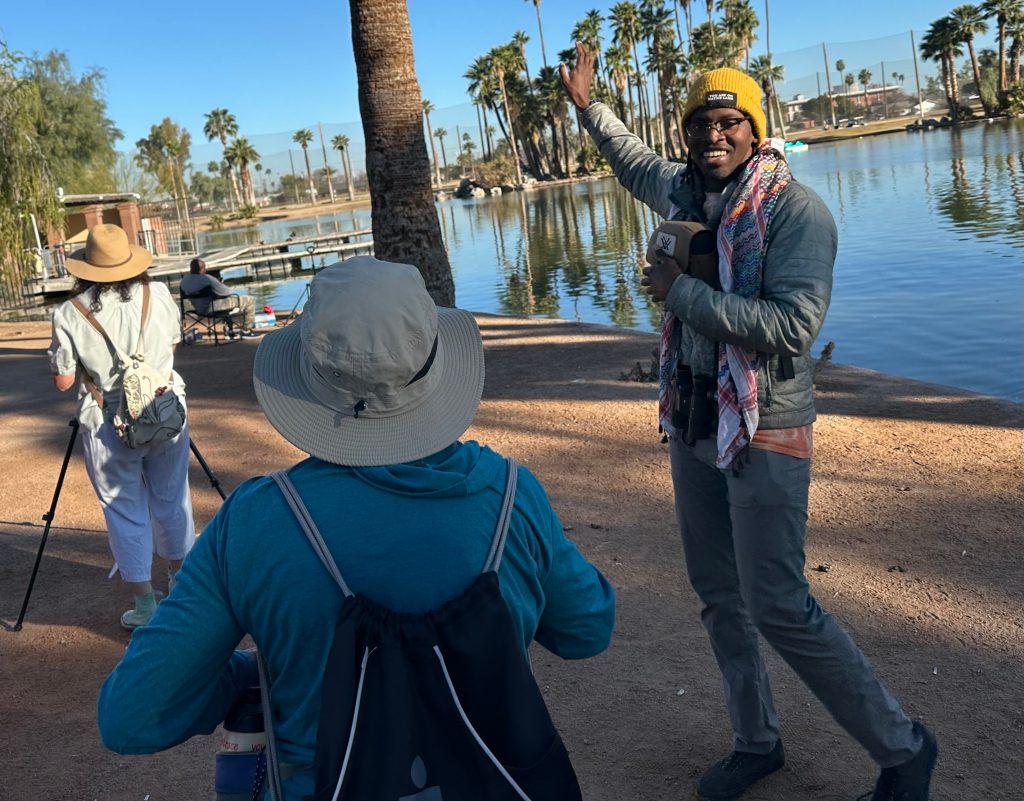
“Most people notice birds,” says Robert Carter of Phoenix, the field trips chair for Maricopa Bird Alliance. “Most people that you talk to probably have a memorable, relatable bird experience they can share. It’s a very cool and universal thing, in my opinion.”
And birding is busting out on social media accounts, TV series, movies and best-selling books. On the internet, Carter says, “Birds are the new cats.”
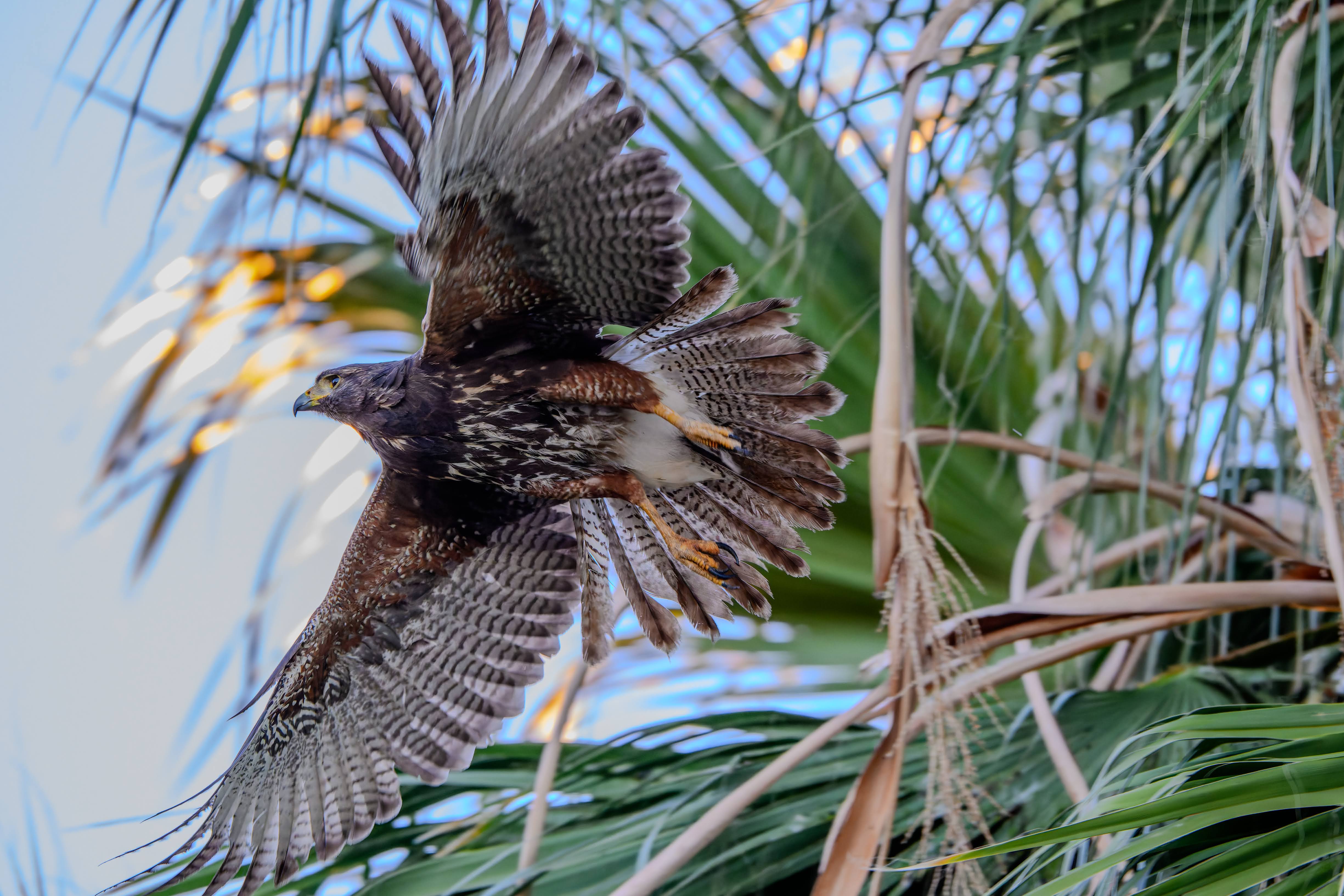
Birding is a focal point of the Netflix series “The Residence” and got a big boost from the bootstrapped YouTube documentary “LISTERS: A Glimpse into Extreme Birdwatching,” which became a viral sensation. (Fun fact: Carter appears in it.)
Watching birds can be meditative or competitive. It can be individual or social. It’s often a blend of all of these.
If you don’t know a house finch from a house sparrow, don’t despair — everyone has to start somewhere. Here are some common questions and answers on how to become a birder.
Geri Koeppel
How much does it cost to be a birder?
It ranges from absolutely nothing to tens of thousands of dollars on cameras, lenses, telescopes and travel.
Do I need special equipment to bird?
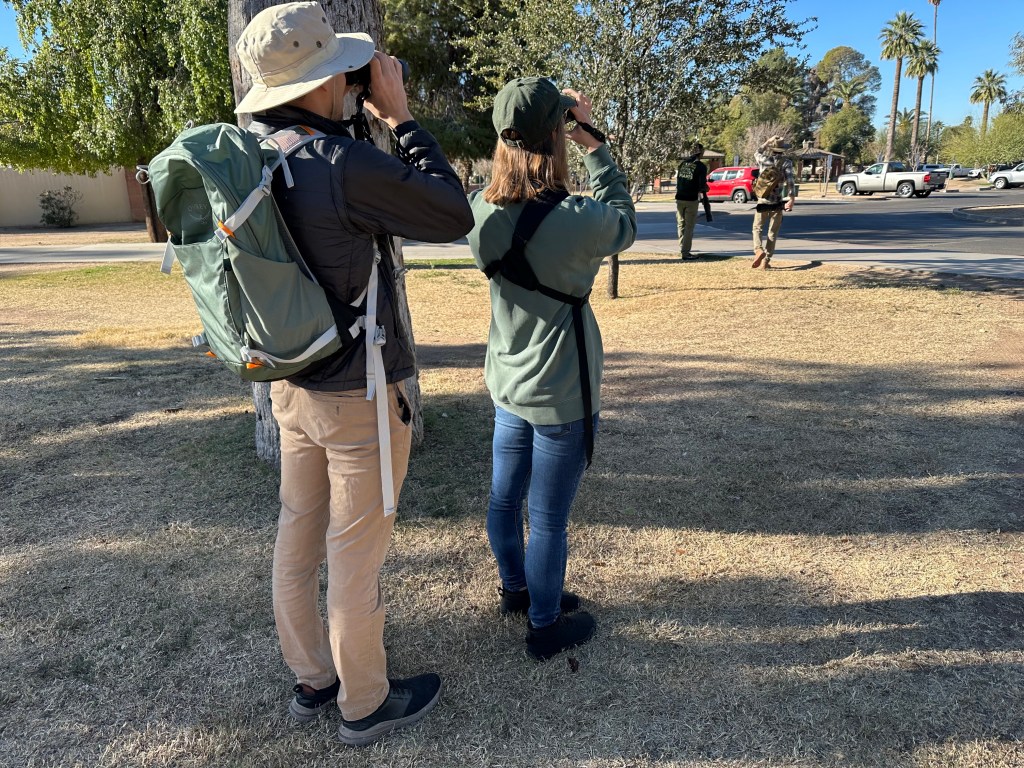
Binoculars are recommended, but many libraries loan them. You can spend under $100 for a decent pair, or look for used pairs online. For best results, get 8×42.
What do I wear to go birding?
You can wear just about anything — or nothing.
“There is the guy who did the naked Big Year,” Carter notes, referring to a phenomenon in which people log as many species as possible in one year.
Closed-toe shoes are suggested, however, because you’ll likely be traipsing through dirt or grass.
An aside: For fashionista birders, follow Denver Audubon on Instagram for cheeky posts on how to “steal their look” to resemble various birds’ plumage.
Where should I bird?
This is different from asking, “Where can I bird?” The answer to that is: just about anywhere, because birds exist on every continent.
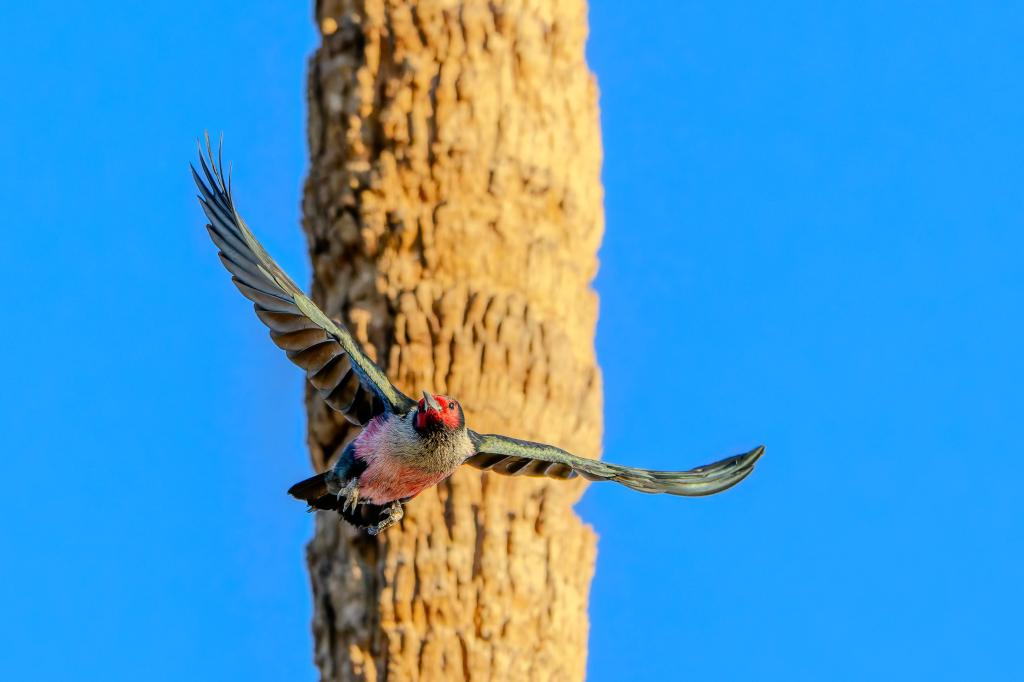
But, lucky for us, Arizona — and specifically Maricopa County — is one of the birdier places in North America, thanks to its biological diversity and location on migration routes. You can see about 300 different species in one year without leaving the Valley, Carter notes.
That said, Gilbert’s Riparian Preserve at Water Ranch (often called Gilbert Water Ranch or GWR) is the gold standard due to its reliably high number of species.
Other good bets are parks (Encanto and Granada in Phoenix, Kiwanis in Tempe, Rio Vista in Peoria and Veterans Oasis in Chandler, to name a few), gardens (in backyards and at Desert Botanical Garden and Boyce Arboretum), and riparian areas (Rio Salado, Tempe Town Lake).
Southeastern Arizona is also a birding “hotspot” that attracts national and international birders chasing specific “lifers,” but that’s for the advanced course.
Sean McEntee
When can I go birding?
You can bird anytime, but Arizona birders get all a-twitter during the state’s spring migration — generally, late February through May.
As for time of day, the morning usually yields the most activity, but you don’t necessarily have to be an early bird.
“Not everyone wants to get up at the ass crack of dawn to look at birds,” Carter quips. He adds that he tries to lead at least one afternoon field trip a month.
What’s that bird?
This is one of the most common questions once you start birding. Start by downloading the Merlin Bird ID and eBird apps by the Cornell Lab of Ornithology and signing up for the latter’s emails.
Merlin Bird ID lets you identify a bird based on appearance (it asks a series of questions, including location, date, color and size) or sound (it’s Shazam for birds!). You can track your birds and contribute to valuable citizen science with eBird, which also lets you see other birders’ checklists.
Also, follow birding groups and accounts on social media. Two of the most popular in the Valley are Birding — Arizona and the Southwest and Arizona Bird Observers, where top-notch photographers share their best pics.
Wild Birds Unlimited in Mesa also offers a rich roster of classes to help with ID, and the staff is helpful if you plan to put up feeders.
How can I become a better birder?
Connect with a local birding group and go on field trips. Maricopa Bird Alliance serves more of the central area of the Valley, Desert Rivers Audubon Society focuses on the East Valley up to Payson and Sonoran Audubon Society is more active in the west Valley. They all host free and low-cost outings around the Valley and state.
These are all chapters of Audubon Southwest, which also hosts bird walks and other events at the Nina Mason Pulliam Rio Salado Audubon Center.
(Side note: The name “Audubon” has become controversial due to the troublesome, to say the least, history of its namesake, John James Audubon. That’s why many chapters nationwide are changing their name to “Bird Alliance” rather than “Audubon Society.”)
Outings with guides and more experienced birders will teach you more advanced identification as well as about behavior, habitats, migration patterns and more.
For instance, on a field trip with 21 birders on Feb. 14 in Encanto Park, Carter talked about the distinctive “hop and scratch” of the Abert’s towhee, discussed how Harris hawks hunt in groups and mentioned that pigeons mate for life, among other morsels of information.
“When you see birds standing on one leg, that’s how they relax,” Carter related. “That’s how you can tell they’re in a chill mood.”
Geri Koeppel
Who goes birding?
Despite ubiquitous memes suggesting that birding is strictly for older adults, it appeals to people of all ages.
Margaret Dyekman of Scottsdale, who’s in her 70s and the vice president of Desert Rivers Audubon Society, says their chapter has seen an uptick in younger birders ever since the pandemic. It’s also partnered with Nature at ASU, a club at Arizona State University that promotes sustainability and biodiversity, and encourages the very young to take up birding with kid-sized binoculars and nature-hunt games.
Carter says he sees people forming intergenerational friendships through birding, and adds that it’s becoming more inclusive in terms of cultural backgrounds.
Birding is accessible to people with a wide range of abilities, too, including wheelchair users, those with sight or hearing challenges, neurodivergent individuals and more. Birdability.org is a great site for learning more about that.
Why should I start birding?
Birding offers rich rewards, from the excitement of seeing a new bird to the relaxation of living in the moment—a rare experience anymore.
“You can’t not be present when you’re birding,” Carter states.
But perhaps most importantly, birding leads to conservation. Hundreds of bird species are at risk of extinction, and learning about them usually leads to a desire to protect them and their habitats.
On his field trips, Carter emphasizes how to be a better steward of birds and the planet — for instance, he urges people to plant native plants, points out the dangers of Mylar balloons when seeing one in a tree and laments seeing a dead pigeon entangled on a fishing line.
“We do not live in a vacuum,” he says. “The things you do affect others.”