
Benjamin Leatherman

Audio By Carbonatix
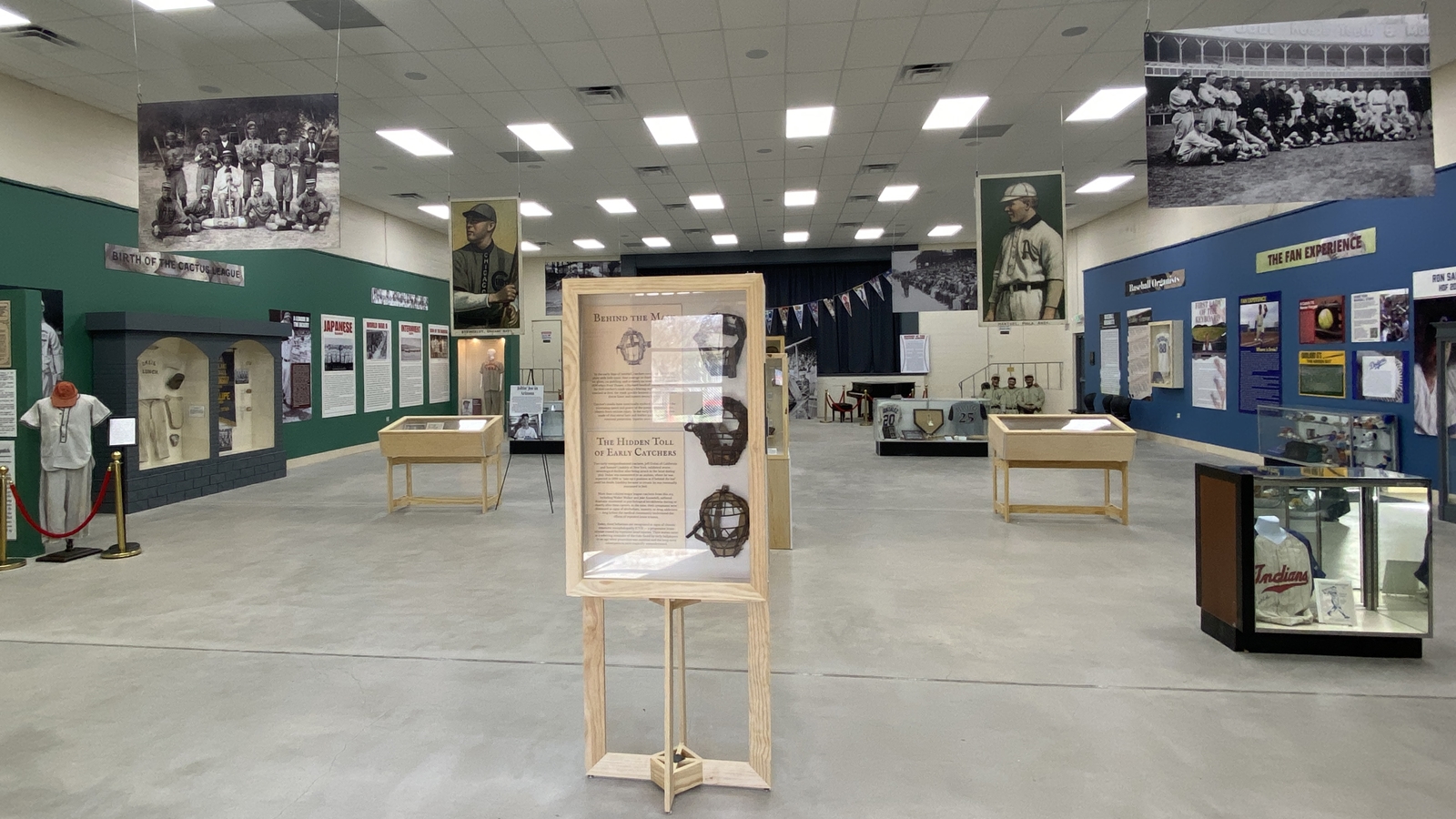
Arizona’s first museum devoted to local baseball history is now open in Mesa, packed with decades of desert hardball lore.
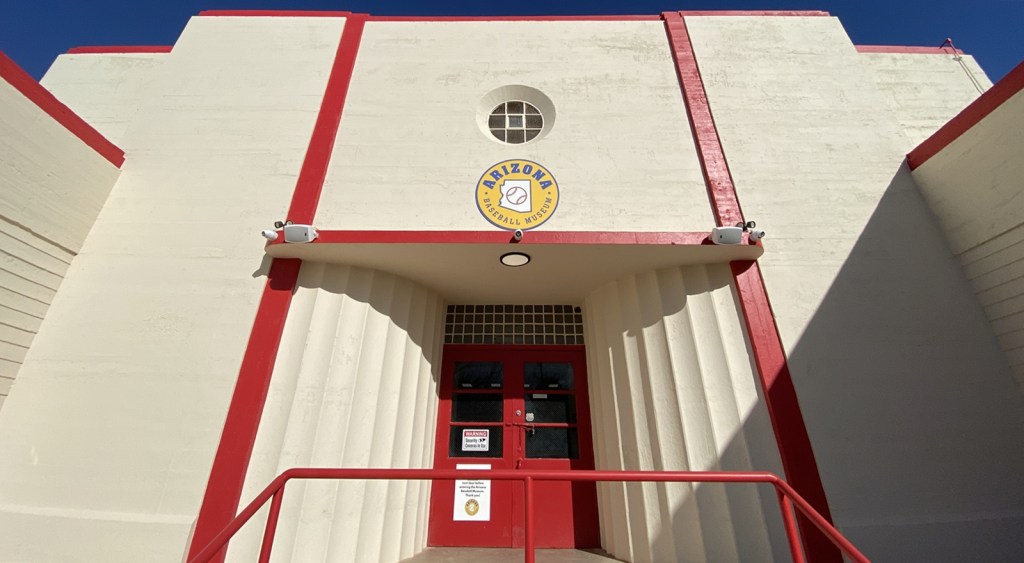
The Arizona Baseball Museum debuted Feb. 21 inside the historic Lehi Auditorium near Horne and McKellips roads. The renovated 1939 building next to the Mesa Historical Museum houses a deep lineup of artifacts from Arizona’s baseball past.
Its collection is a mix of big-league history and hometown lore.
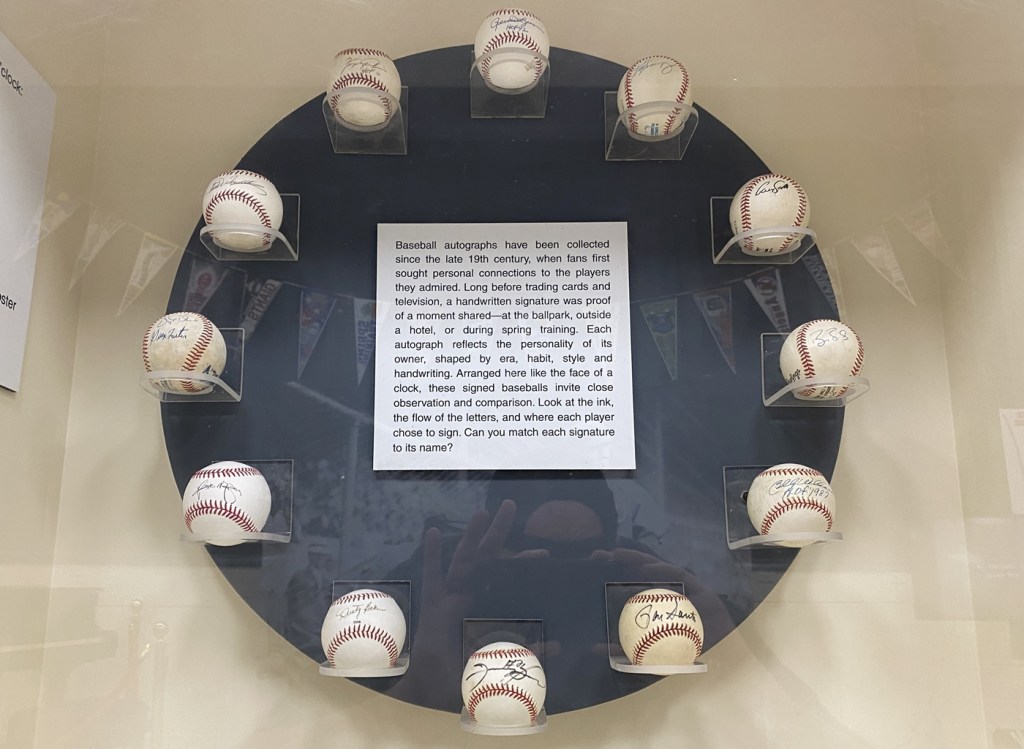
Glass cases brim with vintage jerseys, signed baseballs and faded team photos. Displays trace the game’s long relationship with the state. Another case holds baseballs signed by legends like Yogi Berra, Mickey Mantle, Whitey Ford and Ted Williams. There’s even an actual stadium-style organ in one corner.
Benjamin Leatherman
Susan Ricci, executive director of the Mesa Historical Museum, says the exhibits trace more than a century of baseball history in Arizona.
“It starts with the baseball games being played by soldiers at Fort Huachuca in the late 1800s and frontier-era teams and goes from there,” Ricci says. “It encompasses everything baseball in Arizona, and not just the Cactus League.”
That includes artifacts highlighting the sport’s early roots in the Valley, including its role in Mesa. The city became a home of baseball in the early 20th century and part of the Cactus League in the 1950s.
“I think you could say that baseball has been a big part of Mesa history,” Ricci says.
Benjamin Leatherman
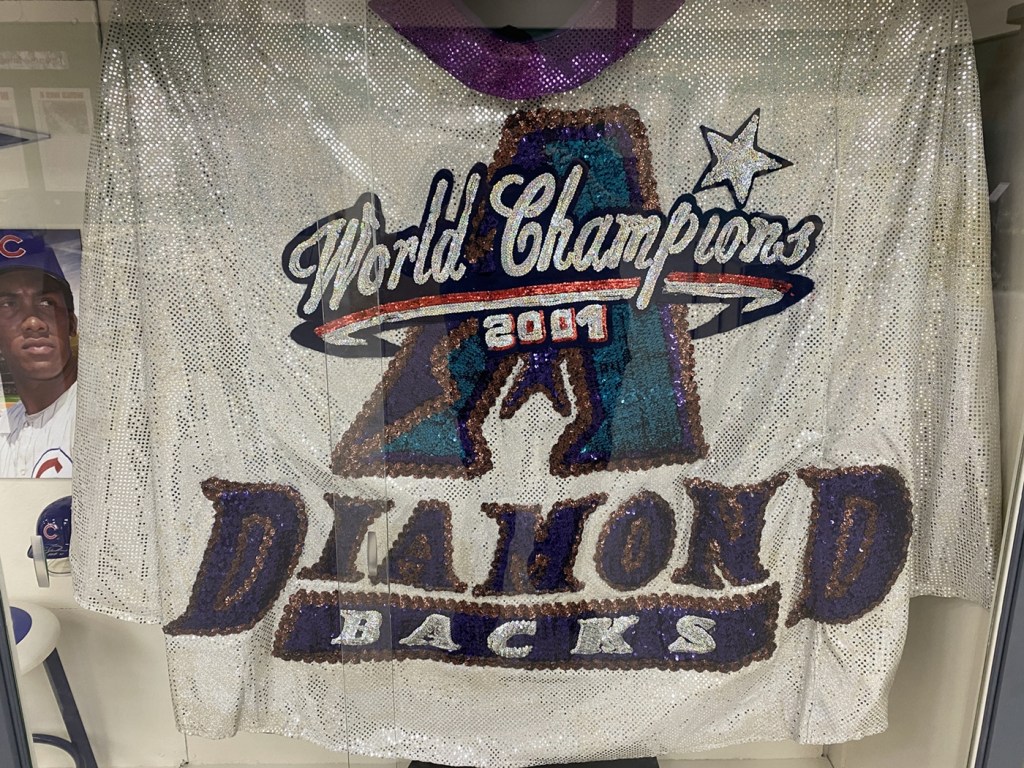
The museum also traces the sport’s throughline locally over the decades to one of its modern peaks: the Arizona Diamondbacks’ epic seven-game World Series victory over the New York Yankees in 2001.
Several artifacts commemorate the historic win, including a sparkling cape worn by Baxter the Bobcat that hangs prominently among the memorabilia.
Ricci says the Diamondbacks’ championship was a major moment in Arizona baseball lore, but it’s only one part of the story the museum aims to tell.
“We’re trying to tell many stories about how baseball was an important part of local history,” Ricci says.
Benjamin Leatherman
Baseball in Arizona before the big leagues
Baseball arrived in Arizona long before major league teams or spring training crowds showed up. Some of the earliest games in the territory were played by soldiers stationed at remote frontier posts like Fort Huachuca in southern Arizona.
“They were at these rural outposts and there wasn’t a lot to do out there, so they were encouraged to stay active and they just started playing baseball,” Ricci says.
From those early games, the sport spread across the territory to mining towns and small desert communities.
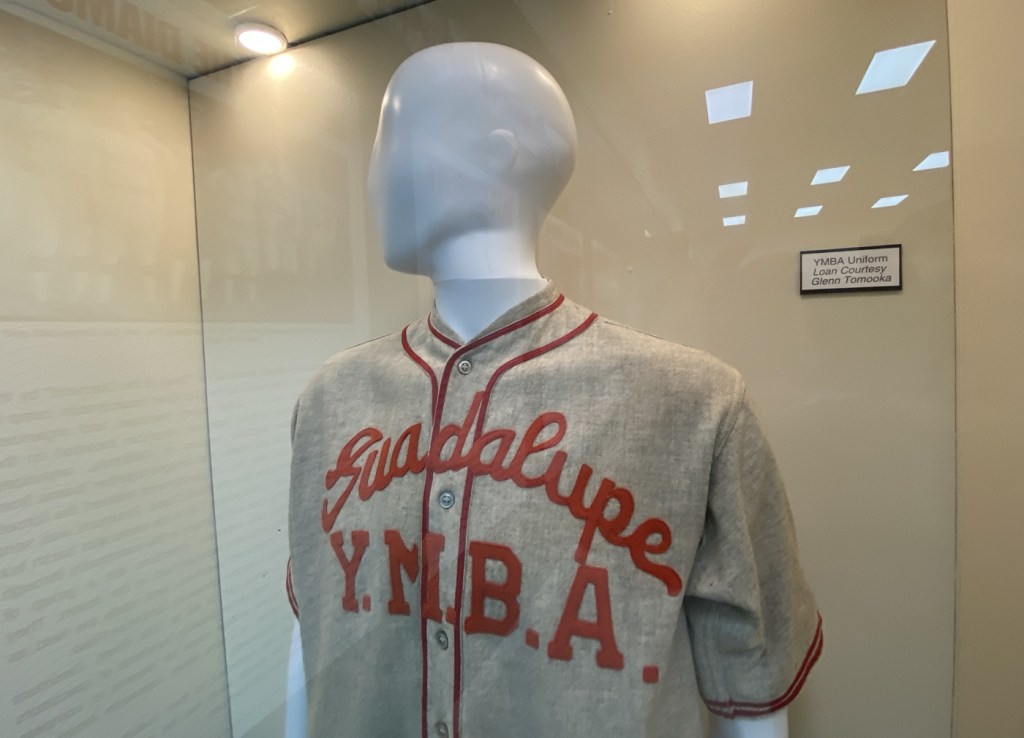
Old photographs inside the museum show teams posing in wool uniforms in places like Mesa, Phoenix and other Arizona towns during the early 1900s. As the population grew, baseball grew alongside it.
Some of those early teams were sponsored by local businesses.
Benjamin Leatherman
“We saw a lot of these teams pop up that were sponsored by local Mesa businesses and then they played in their own leagues,” Ricci says.
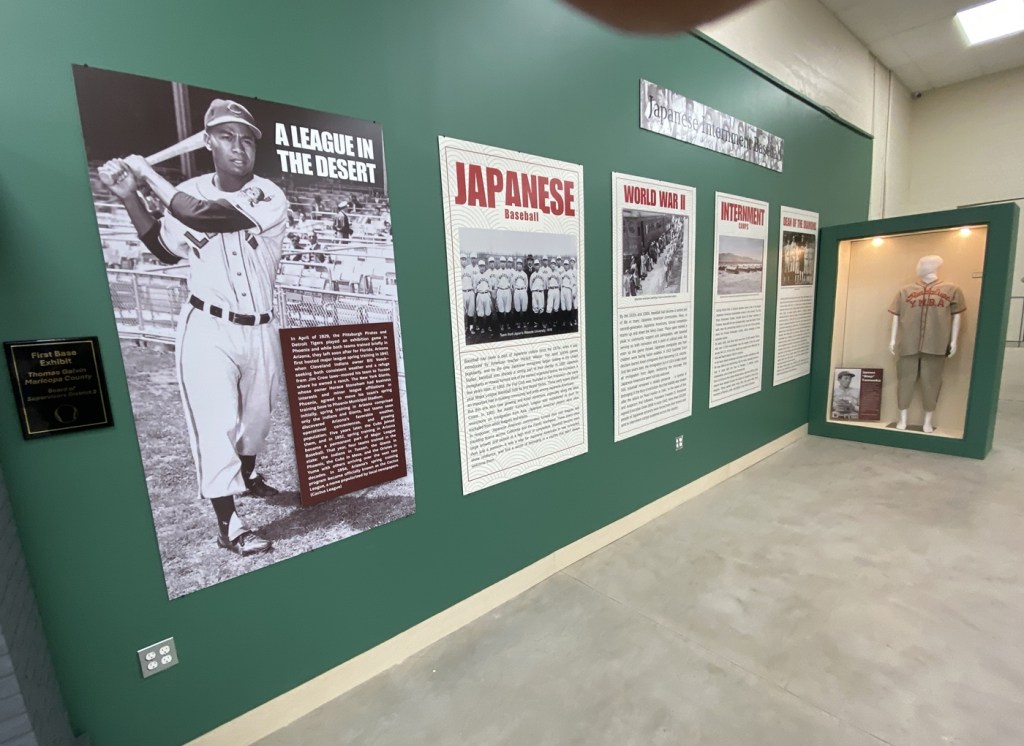
Artifacts from that era appear throughout the museum, including a uniform from an O.S. Stapley-sponsored team and a hand-painted sweatshirt worn by a squad backed by the Oasis Lunch diner.
Displays also explore lesser-known stories tied to the sport.
One exhibit examines baseball played inside Japanese American internment camps during World War II. Future rotating displays will explore diversity in the sport, including Native American players and other overlooked chapters in Arizona’s baseball history.
Benjamin Leatherman
The Cactus League changes everything
Arizona’s baseball identity shifted dramatically in the 1940s when major league teams began holding spring training in the desert.
Mesa quickly became a centerpiece of that movement.
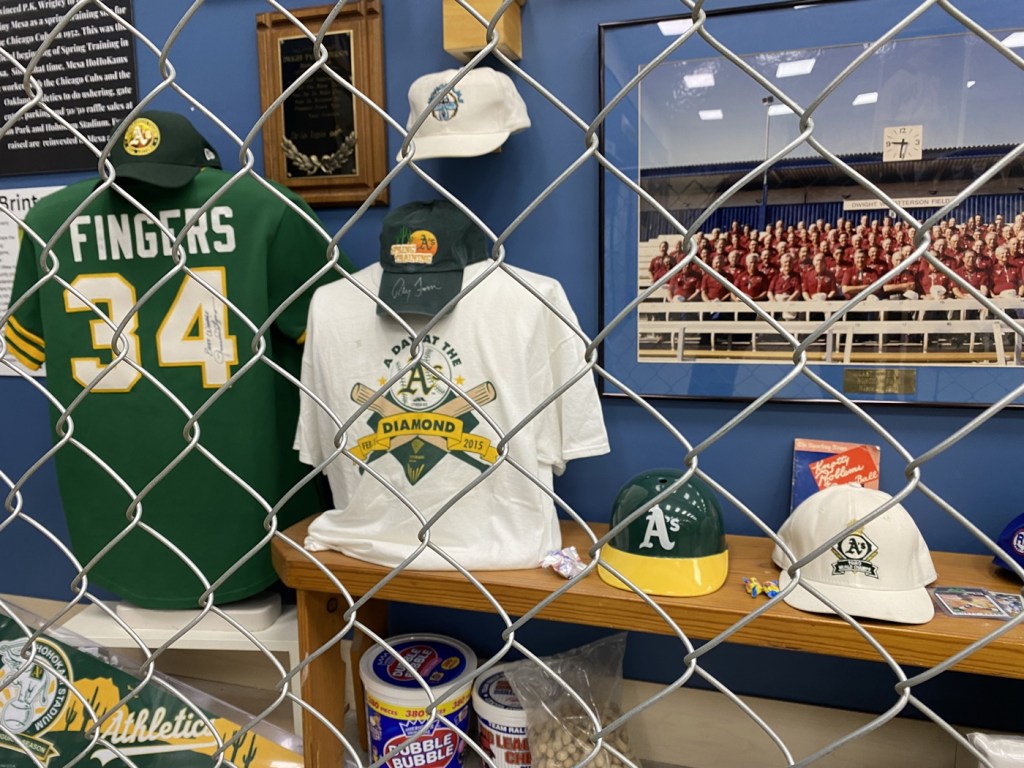
“We felt that this museum belonged in the East Valley because we have the (Chicago) Cubs and the (Oakland) A’s playing here,” Ricci says.
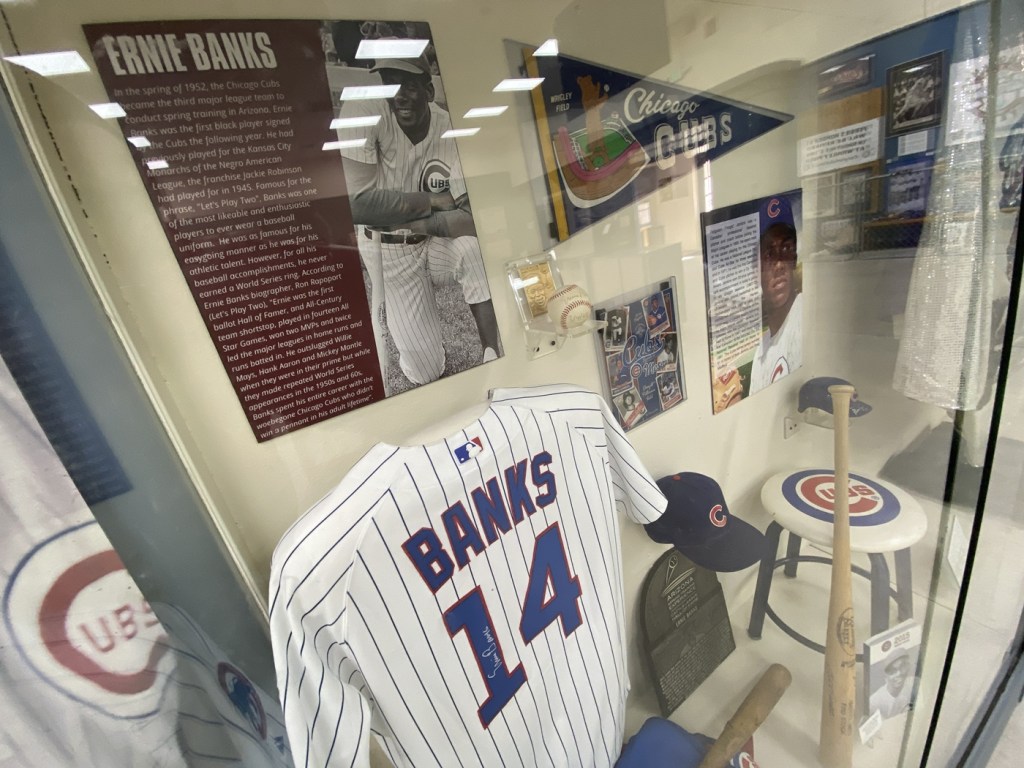
The Chicago Cubs established a long-running spring training home in Mesa, helping anchor what eventually became the Cactus League. Today the preseason circuit spans 10 ballparks across metro Phoenix and draws millions of fans every spring.
Ricci says Mesa’s ties to spring training helped make it the natural home for the museum.
“Dwight Patterson, who was from Mesa, was instrumental in keeping the Cubs here,” she says. “He’s known as the father of the Cactus League.”
The museum highlights that legacy with exhibits about spring training’s growth in Arizona and the teams that helped build the league’s reputation.
Benjamin Leatherman
How the Arizona Baseball Museum came to life
The museum grew out of an effort to revive baseball history at the Mesa Historical Museum. For years the institution hosted a baseball-themed exhibit called “Play Ball: The Arizona Spring Training Experience and Cactus League Hall of Fame,” but a change in leadership led to its closure.
Ricci, however, wanted to bring it back.
“When they hired me six years ago, my board president and I started talking about how much we loved baseball and our favorite players,” Ricci says. “She said, ‘We need somebody to bring baseball back to this museum.’”
At the time, the museum also had the unused Lehi Auditorium next door.
“We had this big huge auditorium just sitting there,” Ricci says. “So we started talking about what we could do with the space.”
Benjamin Leatherman
The idea evolved into a full museum dedicated to baseball across Arizona.
Among Ricci’s favorite artifacts is a photograph of Joe DiMaggio taken during the Yankees legend’s final season in 1951. The image shows DiMaggio attending a barbecue at Mesa’s Buckhorn Baths, a reminder of the resort’s long relationship with visiting ballplayers during spring training.
For Ricci, the museum’s success will come down to what visitors learn.
“Now this allows us to tell so many more stories,” she says.