
Courtesy of Meteor Crater

Audio By Carbonatix
In a state that contains the likes of the Grand Canyon and the Sedona red rocks, Meteor Crater is still one of Arizona’s coolest natural wonders.
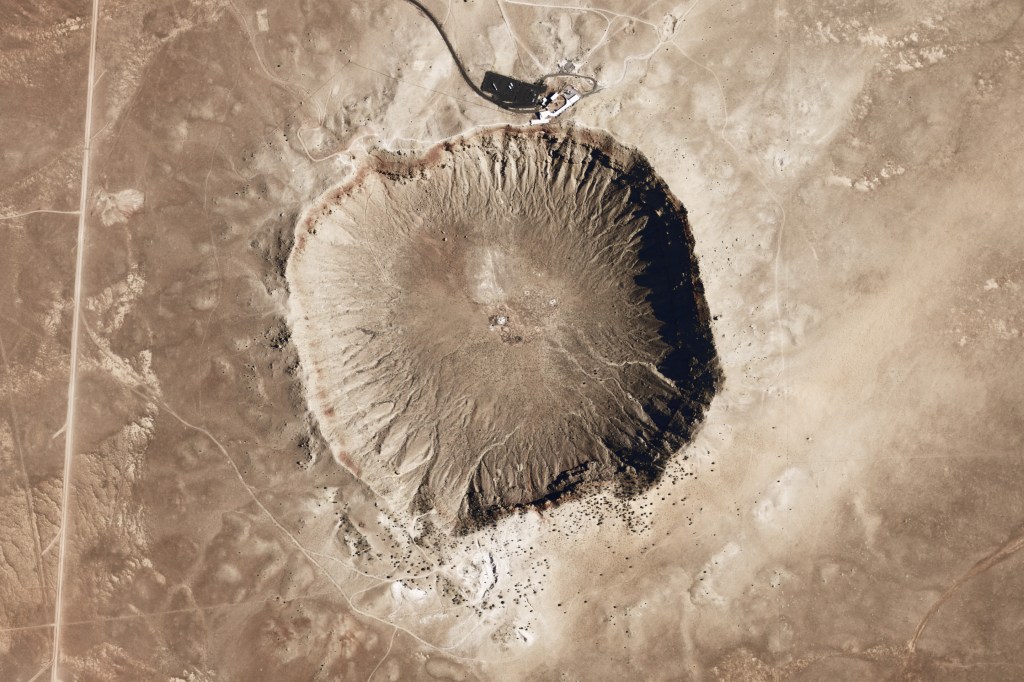
Also called Barringer Crater, it’s an impact crater that was formed about 50,000 years when (you guessed it) an iron-nickel meteorite slammed into a spot outside what is now Flagstaff. It struck the ground with a force 150 times greater than an atomic bomb and created a hole that measures 550 feet deep and almost a mile wide.
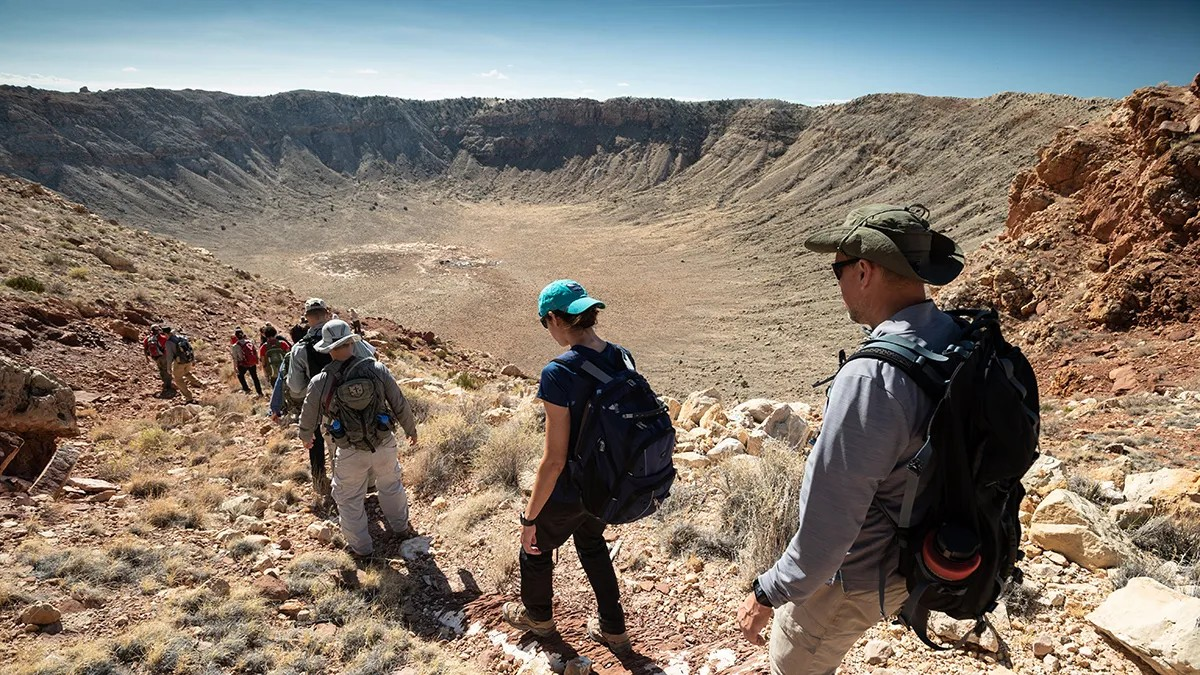
Visitors to the Meteor Crater attraction have long been able to see the hole and look down into it. But beginning May 16, adventurous types can pay to take a guided hike to the bottom of the crater.
NASA Earth Observatory
The new Floor Tour will take place every Saturday at 9 a.m. The experience allows visitors to descend the historic Astronaut Trail into the crater itself — an area previously accessible primarily to NASA astronauts and scientific personnel. Guests will explore the crater floor alongside expert guides while learning about Meteor Crater’s geology, mining history, astronaut training legacy and scientific significance.
The advanced-level guided hike is approximately two hours round-trip and is designed for experienced hikers comfortable with steep and uneven terrain.
Cost of the Floor Tour is $125, and bookings are now open. The tour also includes access to the full Meteor Crater experience, which includes full admission to the Meteor Crater Discovery Center, featuring interactive exhibits, observation decks, theater presentations and the 4D experience.
Arizona’s Meteor Crater is considered by some scientific institutions to be one of best-preserved meteor impact sites in the country. The visitor center is situated on the north side of the crater. Regular admission to the Discovery Center (minus the Floor Tour) is $29 for adults, $27 for people ages 60 and over, $25 for non-active-duty military and veterans, $25 for youth ages 6 to 13 and free for active-duty military and children under 6.
Courtesy of Meteor Crater