Jesse Fisch

Audio By Carbonatix
More than two years have passed since stalwart DIY punk icons NOFX played their last show, ending an impressive four-decade career of fast, crunchy, middle-finger-waving antics.
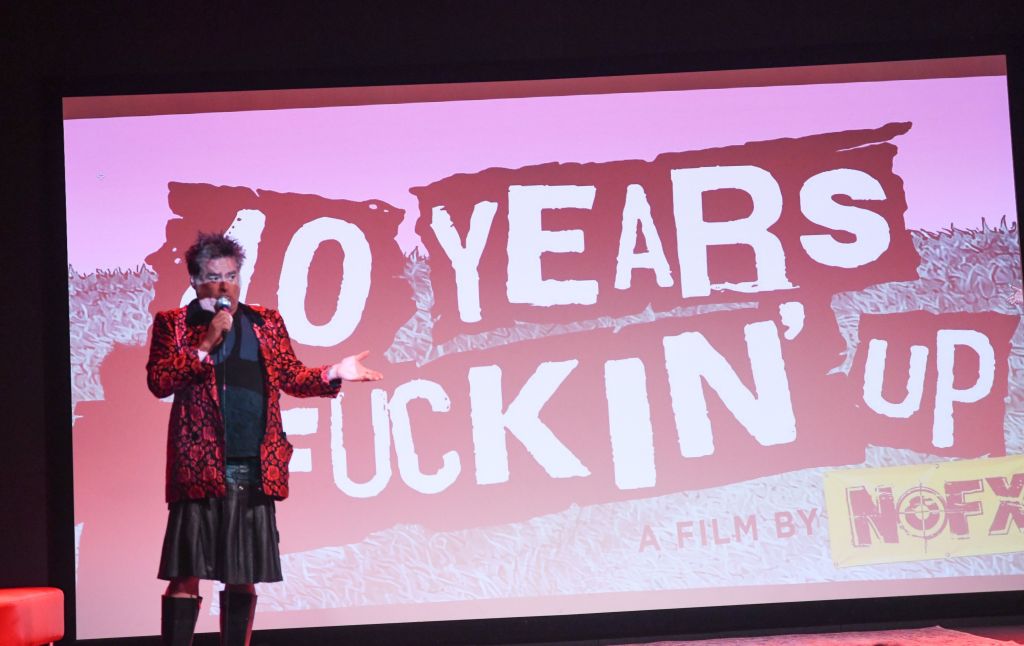
But this Friday, fans of the “infamous, fairly unfamous and beloved” band can catch the next best thing, as the documentary “40 Years of Fuckin’ Up: A Film by NOFX” is being screened at the Landmark Scottsdale Quarter at 10 p.m.
The screening is part of an international tour for the film, and can only be experienced in theaters.
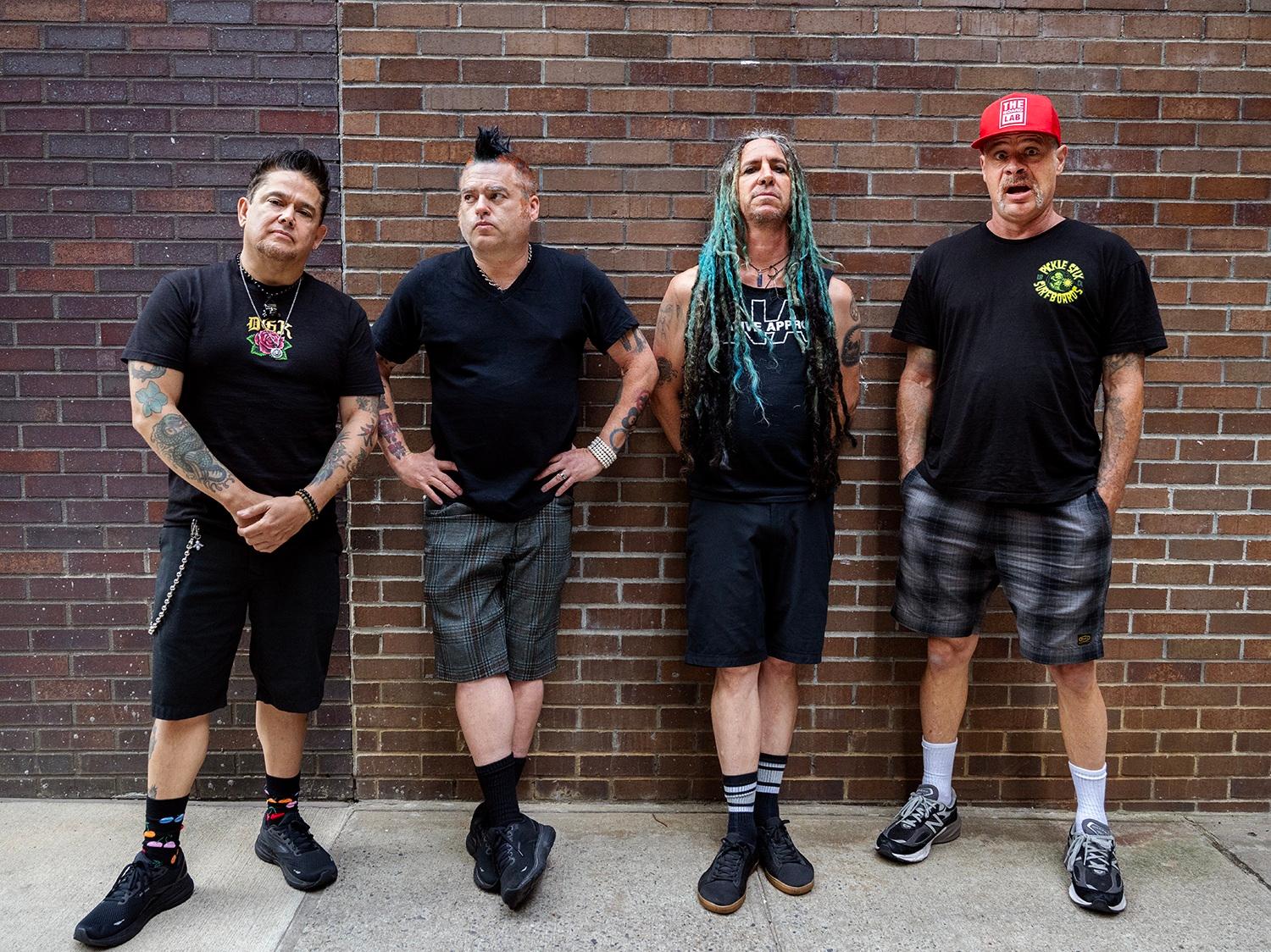
For bandmates Michael “Fat Mike” Burkett (vocals, bass, lyrics), Eric Melvin (guitar), Erik “Smelly” Sandin (drums) and Aaron “El Hefe” Abeyta (guitar, trumpet), the goal was to capture the warts-and-all moments that defined the band’s long career, as well as to encourage some of the raucous, jubilant nostalgia that occurs at a NOFX show.
“It’s never streaming, and you literally cannot see it anywhere else. We want it to be in theaters, to be a communal experience, to capture the partying and screaming and music and encourage that, like a NOFX show,” director James Buddy Day explains.
On the road
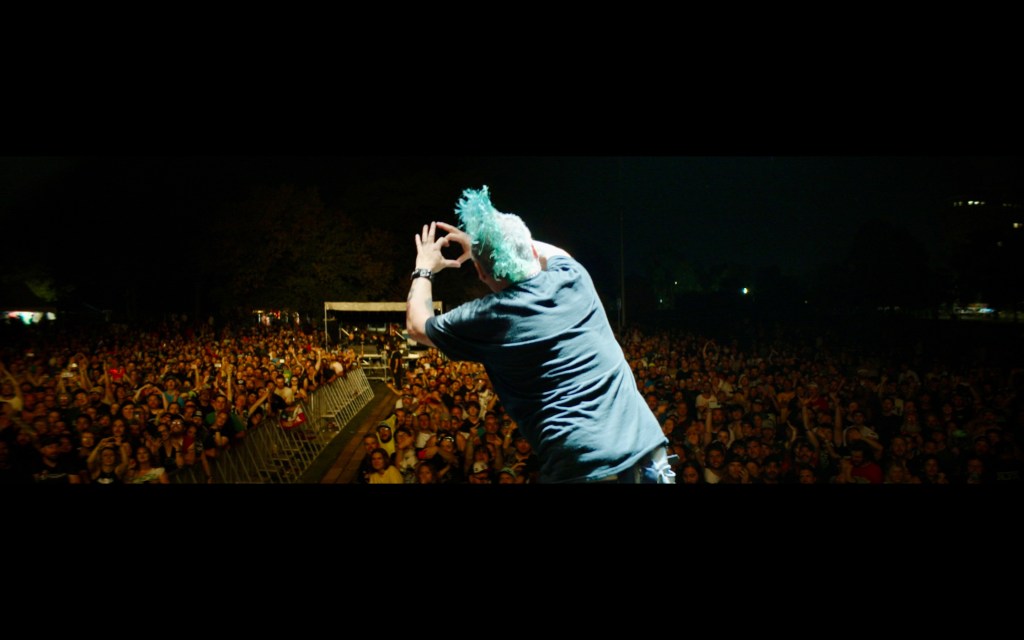
While the film has plenty of live footage of the final run of shows to help set the tone of their frenetic live shows, “Forty Years of Fuckin’ Up” also does an admirable job of placing the band in the larger context of the ’80s and ’90s Los Angeles skater punk scene.
Much of the film covers the band’s scrappy beginnings, living in shitty vans and touring with The Vandals to hone the tenacious, sloppy energy that would become their trademark.
In this early footage it’s clear that while the band was always far from technically perfect, NOFX could shred, and that, coupled with Burkett’s wry, cynical lyrics that took shots at himself as much as the establishment, became the blueprint for countless bands to come.
Without NOFX leading the self-effacing crust punk charge, there would undeniably be no Green Day or Blink-182, and while they never “made it” as far as those bands, they did have some strong commercial success. 1994’s “Punk in Drublic,” which featured classic fan-favorite tracks “Linoleum” and “Don’t Call Me White,” helped the band establish an international fanbase and led to them self-producing records, touring and then repeating the process in typical DIY road-dog fashion: songs, tour, repeat, with more than the requisite amount of drugs and booze to accompany the whole process.
The formula worked well for them in the first two decades, but things got more complicated as the band got older.
Pyramid Productions
A punk looks at 40
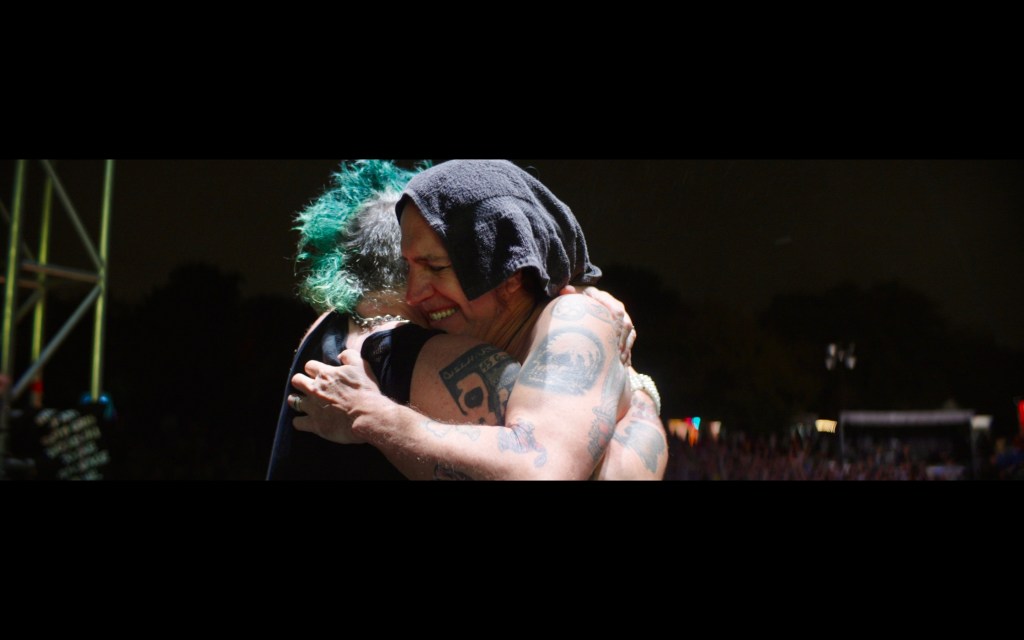
Thus begins the second act of “Fuckin’ Up”, in which the documentary crew captures the breakup of the band, spearheaded by a burned-out, road-weary but still cocaine- and vodka-dependent Burkett, who, after COVID, abruptly decides to end the band, albeit with one last tour to help pad the pockets of the other bandmates. Think “Let it Be,” but with John Lennon being flogged by a dominatrix and hemorrhaging blood from his anus as he records his last testament nude on the floor, and you get a general idea where the rest of the movie is headed.
For director James Buddy Day, the intent was to try to show just what happens when old punks don’t die — and don’t fade away. What were their options, when touring and partying like you did in your teens catches up to you in your 50s?
“I’m always surprised when people are surprised that Mike still does drugs. He has a green mohawk, singing in the punkest band in the world, leading the punkest band in the world, singing songs like ‘Drugs are Good,’” Day says.
For guitarist Abeyta, the demands of the road, both physically and mentally, were becoming a strain. He, along with drummer Sandlin, had gotten sober years ago, and so the hard-living lifestyle of Burkett did not always align with where they saw themselves.
“I think it has to do with your age. Once you hit your 40s, you start feeling things. Then you hit your 50s, and now you have problems. If you keep going on that path, you are going to die, so you either change your lifestyle or fucking go out,” Abeyta asserts.
By the end of the last tour, Abyeta says, he was struggling with thyroid problems and anxiety, and he did not know if he would make it to the finish line. Other bandmates opened up about their own health issues, with Sandin struggling with diabetes, a diagnosis that Burkett also gets early in the film. However, when he finds out it’s Type 2, he immediately deadpans to the camera:
“Oh, it’s not the dangerous one?” Burkett quips, seemingly surprised, before busting out in a fit of laughter.
Pyramid Productions
Drugs are good, until they’re not?
While it is chock-full of typical NOFX gallows humor, no requisite roc-doc would be complete without interband conflict, and “40 Years” spends a good deal of time chronicling the downfall of the former best friends Burkett and Melvin.
While the two start the band as inseparable brothers, by the end of the film they are barely speaking. The triggering incident, it is alluded, involves Melvin’s wife, who has grown increasingly exasperated with Burkett’s unpredictable lifestyle and, allegedly, was angling to replace him in his own band with a more commercially viable option.
“The saddest part to me is that they were best friends for so long, and such a part of each other’s lives, and for whatever reason, that deteriorated. For the punk rock Beatles, to hear that John and George are not speaking to each other, it’s so sad,” Day recalls.
The documentary doesn’t shy away from these hard moments, especially when it involves Burkett’s notorious drug use. One grisly scene involving the singer naked and hemorrhaging blood in a friend’s bathroom, documenting what he believes will be his last moments, is especially jarring and feels more akin to a horror film, especially when juxtaposed with Melvin’s morning yoga routine or Abeyta’s protein-smoothie-making montage.
“For Mike, I don’t want to speak for him, but this is my observation: When NOFX started, it was about partying and raging with your brothers. That’s the undercurrent of punk rock, this total rejection of authority, which includes embracing drug culture and alcohol, but at some point that changed for Smelly and Hefe, and Melvin, but never for Mike, and he can’t understand why that changed for everyone else,” Day observes.
In spite of numerous attempts at intervention, the band has come to terms with Burkett’s continued hard-living proclivities, and the film may take the record for the most lines of cocaine snorted on camera, a choice that Day confirms was a conscious choice in the editing room.
“Mike is honest to a fault, and he was insistent that we show everything. From the drug use to his sexuality, it was important that it not be cleaned up or edited out. We wanted it to feel like a NOFX album, leaning into the irreverence and mistakes, just letting them happen and not getting in the way of that,” Day asserts.
Burkett, in typical Fat Mike fashion, puts it more bluntly early on in the film:
“Most people wouldn’t be OK with releasing a film that shows footage of getting whipped in their dungeon, or their drug use for the past 20 years, or dressing up like a cheap rubber whore, or the ambulance ride when they were naked while puking and shitting blood … I’m not like most people,” he declares.
Ben Trivett
Post-punk
And while many fans are optimistic that the band will, at some point, come back together, the members themselves aren’t so optimistic, with all parties asserting that Burkett seems to be done with this final chapter.
“We’re grateful to Mike for doing one last tour, and setting us up. But Melvin and Smelly and I didn’t want to stop playing and touring, simple as that. It was all up to Mike, and he has been telling us for years that he didn’t want to do this anymore. But in terms of a reunion or a specialty show, if Mike was down, we’d be down. Hell yeah, let’s go!” Abeyta admits.
That said, post-NOFX, each of the band members is documented pursuing other passions and trying to reinvent themselves after a lifetime on the road. Abeyta turned to acting and has been featured on the FX series “The Mayans” and the HBO Emmy darling “Hacks,” while also touring with other bands such as Goldfinger and The Aquabats. Melvin is shown spending time with his family and working on a new musical project, while Sandin is touring with old friends The Vandals and curating a line of handmade surfboards.
As for Burkett, he is keeping busy, if not sober, founding the Punk Rock Museum in Las Vegas, and is content pursuing a bevy of new projects from his home studio in Las Vegas. His musical “Home Street Home,” which he co-wrote with Tony winner Jeff Marx, is being adapted into a film this fall. He is also curating a sex-positive website for couples with the intent of informing and educating on kink and S&M dynamics, an interest he publicly delves into in great detail for the first time in the film. In addition, like many semi-retired celebrities, he is releasing his own booze, Fatty’s Bottom Shelf Vodka, and is trying his hand at standup comedy.
David Berman of the Silver Jews once wrote that, “punk rock died when the first kid said: Punk’s not dead.”
That may very well be the case, at least for NOFX. But, as long as “40 Years of Fuckin’ Up” is screening, these godfathers of skate punk are enjoying a hell of an afterlife.
“40 Years of Fuckin’ Up: A Film by NOFX”: 10 p.m. Friday, July 10. Landmark Scottsdale Quarter Theater, 15257 N. Scottsdale Road, #230, Scottsdale.