Morgan Fischer

Audio By Carbonatix
Arizona Attorney General Kris Mayes has filed a federal lawsuit to block a planned Immigration and Customs Enforcement detention center in Surprise, taking legal action that the Surprise City Council has declined to pursue.
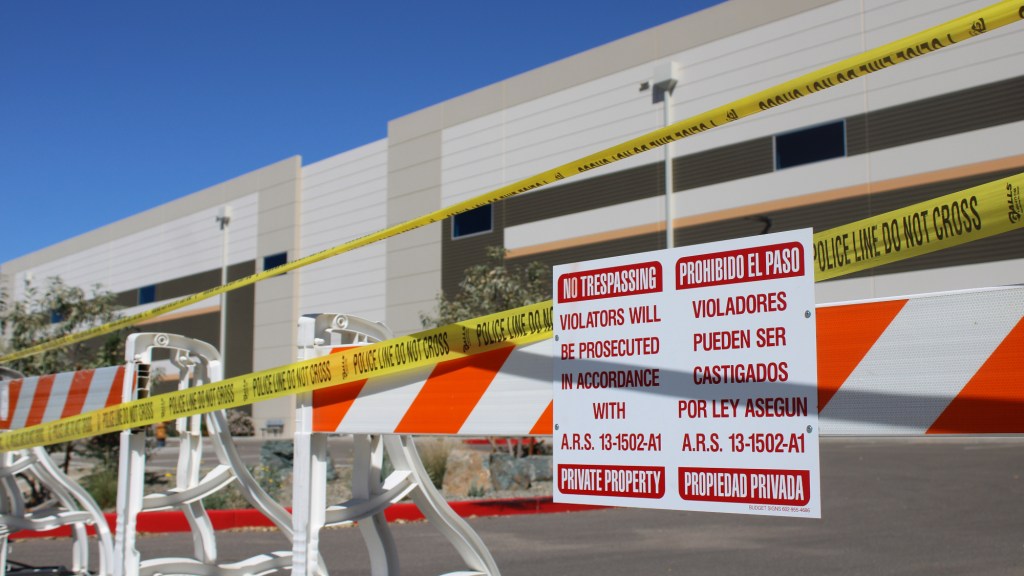
On Friday morning, Mayes announced the lawsuit — her 41st against the Trump administration — to prevent the federal government from converting a 418,000-square-foot warehouse in Surprise into a 542-bed immigration detention center. Currently, the Department of Homeland Security is set to open the facility in the fall, according to Surprise City Manager Andrea Davis.
“The Trump administration has run roughshod over federal law in its rush to expand detention capacity across the country,” Mayes said in a press release. “The federal government did not ask the people of Surprise whether they wanted this facility in their backyards. They simply bought a warehouse, handed a $300 million contract to a private company and told the City to deal with it. We will do everything in our power to demand accountability from the federal government and to protect the health and safety of this community.”
The lawsuit, filed in federal court, alleges that the Department of Homeland Security purchased the warehouse and began transforming it into an ICE detention center without following required environmental reviews. The suit also claims that the proposed facility violates the Immigration and Nationality Act, “which requires the federal government to arrange for ‘appropriate’ places for immigration detention,” Mayes’ release stated.
Additionally, the lawsuit alleges that the warehouse poses a “serious risk” of overwhelming local wastewater and sewage systems because it would require significantly more water than anticipated for the facility. The construction nd operation of the warehouse could also detrimentally impact air quality and local traffic systems.
Representatives for ICE and DHS did not respond to a request for comment.
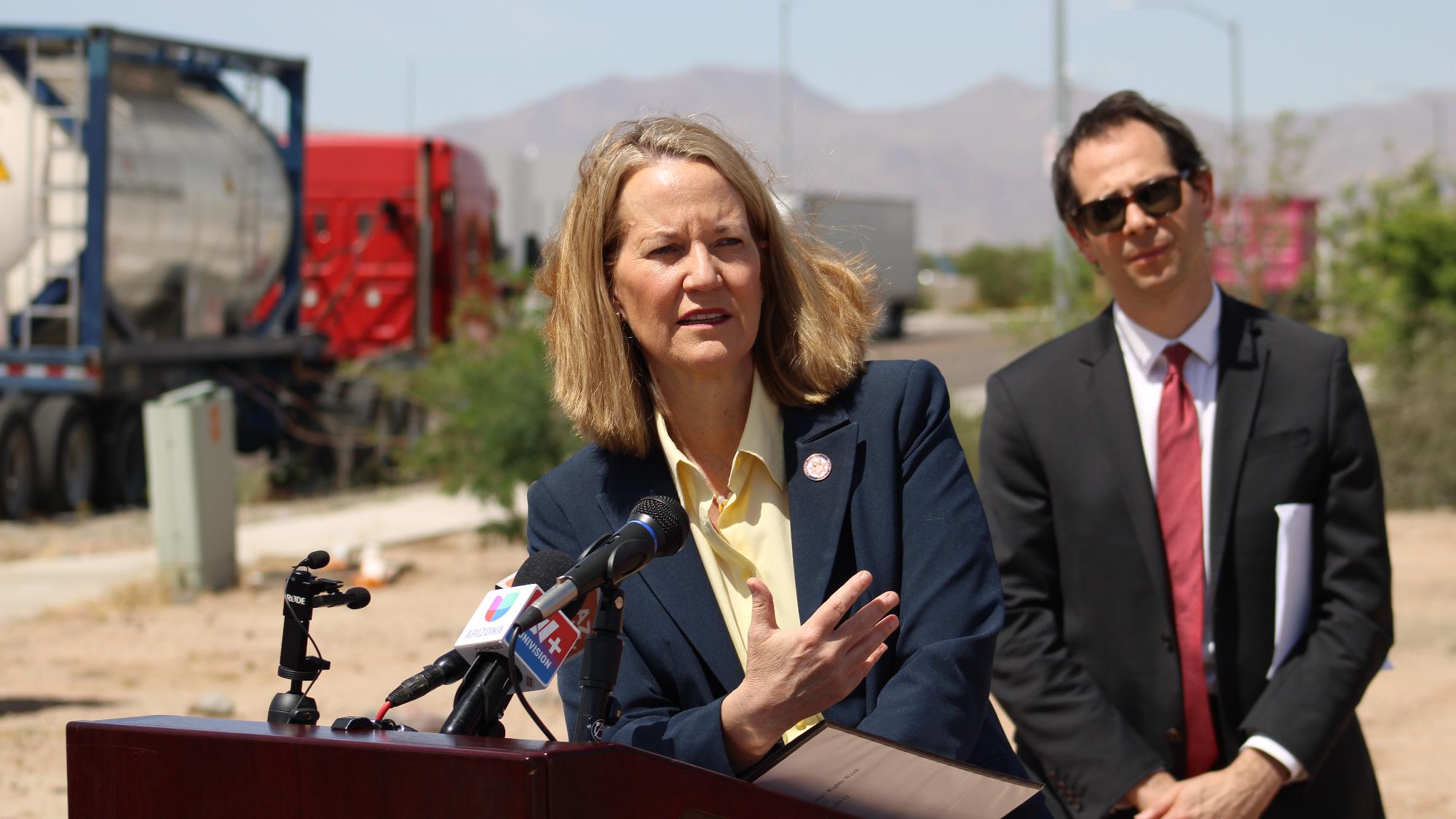
At a Friday press conference in front of the DHS facility in Surprise, Mayes pointed to a nearby warehouse operated by Richem, which transports and stores hazardous chemical materials for semiconductor production. That facility stores chemicals at a level that “triggers federal risk management plan requirements under the Clean Air Act,” Mayes said. Under its current plans, the facility doesn’t have an emergency evacuation plan in place that would accommodate the hundreds of detainees DHS plans to house just across the street.
“The federal government wants to open a jail inside a documented chemical hazard zone,” Mayes said. “If there is a pipe rupture or a chemical spill or a fire, emergency responders will be responding to a potential mass casualty event involving hundreds, if not thousands, of people who are locked in and can’t get out.”
To drive Mayes’ point home, two chemical trucks that read “flammable liquid” on the side of their cylinder compartments were parked along the sidewalk, blocking a fire hydrant behind Mayes for the entirety of the press conference. The facility is expected to draw so much water from the city that fighting a fire here could be extremely difficult, Mayes said.
“The Surprise warehouse is not and never will be appropriate or suitable for use as a mass detention facility,” Mayes said.
Morgan Fischer
How we got here
Mayes first floated the idea of filing a “public nuisance” lawsuit against DHS to block the detention center in a February letter to then-DHS Secretary Kristi Noem. But that potential legal challenge was met with concerns about the Supremacy Clause of the Constitution, which holds that the federal government cannot be subject to a state or local public nuisance statute. Instead, Mayes’ lawsuit alleges violations of federal law.
Mayes’ lawsuit is similar to one filed in February by Maryland Attorney General Anthony Brown to prevent the administration from converting a similar warehouse in the northwest corner of the state into a 1,500-bed ICE detention center. Last week, a federal judge granted a preliminary injunction to temporarily halt the construction and operation of the facility while the case plays out. Mayes is also seeking preliminary and permanent injunctions in her suit.
Little was known about the facility in West Valley City — situated between El Mirage, Sun City West and Luke Air Force Base — when it was initially reported in January that the federal government had purchased it. Neither the city nor any other local officials were informed in advance, and the news quickly sparked vocal pushback from both Democrats and Republicans. In addition to concerns about a lack of transparency, the warehouse along Sweetwater Road is just across the street from suburban neighborhoods in El Mirage and less than a mile from three schools, including Dysart High School.
Hundreds of community members have attended four Surprise City Council meetings to urge the council to take action to prevent the facility from opening. Despite the pushback, the council has attempted to negotiate and collaborate with DHS officials rather than move to prevent the facility’s opening. Many of those community members and advocates attended Mayes’ press conference on Friday morning and were ecstatic about the lawsuit.
Lynne Gehling, a Surprise resident who raised the alarm about the Rinchem facility with the Attorney General’s office, said she cried to the point that her watch set her a notification to calm down. Brent Peak, a leader of the activist group Northwest Valley Indivisible, said Mayes’ lawsuit “validated everything we’ve been working for.”
Cali Overs, a Dysart High School senior who has been meeting with local leaders to push back against the facility — and who wrote a New Times op-ed about the facility — joined Mayes behind the podium to speak to the press. She said Mayes’ lawsuit was the “greatest chance we have to stop this” and that she feels a “lot more optimistic.”
Several Surprise councilmembers have expressed opposition to the facility, but didn’t appear to believe the city could do anything to stop it. Councilmember Chris Judd has suggested that DHS would change its mind if voters put pressure on the federal government in the midterms. Judd was the only city councilmember to attend Mayes’ announcement, though he said another council member tried to come out but heard about the press conference too late.
Morgan Fischer
All options open
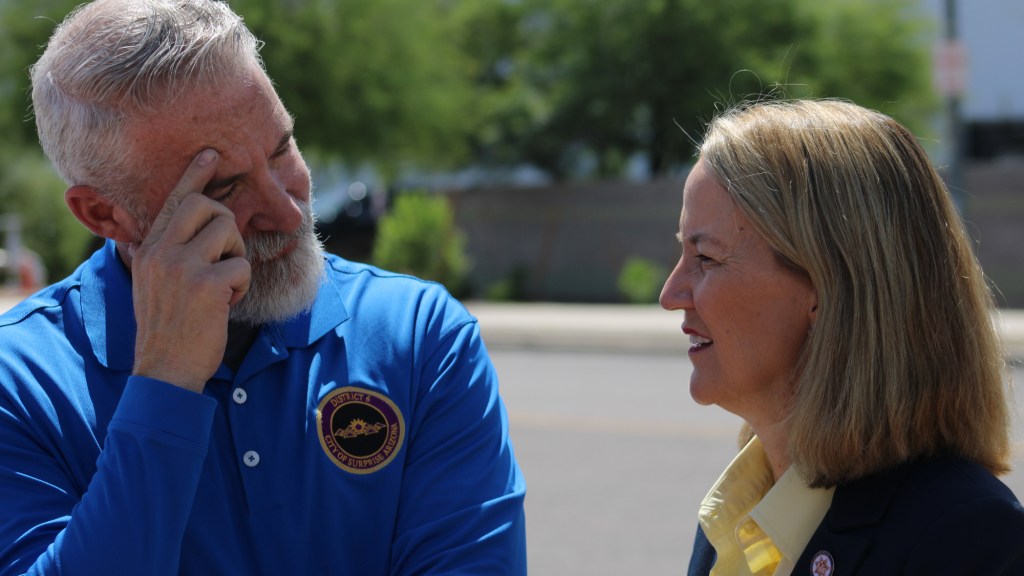
After the press conference, Judd told New Times he was glad Mayes was getting involved. After the news of this facility broke in January, he said, the city’s attorneys dropped all other work to begin understanding what this DHS facility means for the city. “We were going to have to spend a boatload of money on a really expensive lawyer because nobody in Surprise knows this stuff,” he said.
While he’s happy Mayes filed the suit, Judd said he wants to keep lines of communication open with DHS because “if this thing is unstoppable, we still want to have a seat at the table.” He’s hoping that DHS will use the warehouse for something else, unrelated to detention.
“Whatever happens, we have to be able to mitigate the effect it has on residents,” Judd said.
In late March, Surprise Mayor Sartor, Davis, Judd and other members of the city council met with federal immigration higher-ups in Washington, D.C., to get some answers about the facility. They came back with a swath of unenforceable promises from DHS.
According to Sartor, the 542-bed facility will hold detainees for only three to seven days before they’re transferred to other facilities or their counties of origin. Sartor also said that DHS told city officials that ICE won’t conduct immigration enforcement activity in schools, churches and community centers near the incoming detention facility, and that Surprise would be reimbursed for city services that ICE may rely on. However, the city has no power to hold DHS to those commitments.
Mayes said her office has spoken with city officials about the facility and hopes to continue to work together on information-gathering as the lawsuit progresses. But Mayes said she has not spoken with Sartor directly, although she admitted she hasn’t called him. Sartor did not immediately respond to a request for comment from New Times.
“We’re in the best position at the Attorney General’s office to take on this litigation on behalf of the state of Arizona,” Mayes said.
Surprise is still working on other avenues. On Tuesday, the city council added an action item to the May 5 meeting agenda to send a letter to DHS Secretary Markwayne Mullins, formally requesting that DHS honor state and local ordinances. Judd said he plans to still go ahead and send that letter.
“Until they’re in there operating, there’s always a chance that the whole thing falls apart,” Judd said. “We know that they’re coming and we’re really concerned, but until they open the doors, they’re not here yet.”