
Mario Tama/Getty Images

Audio By Carbonatix
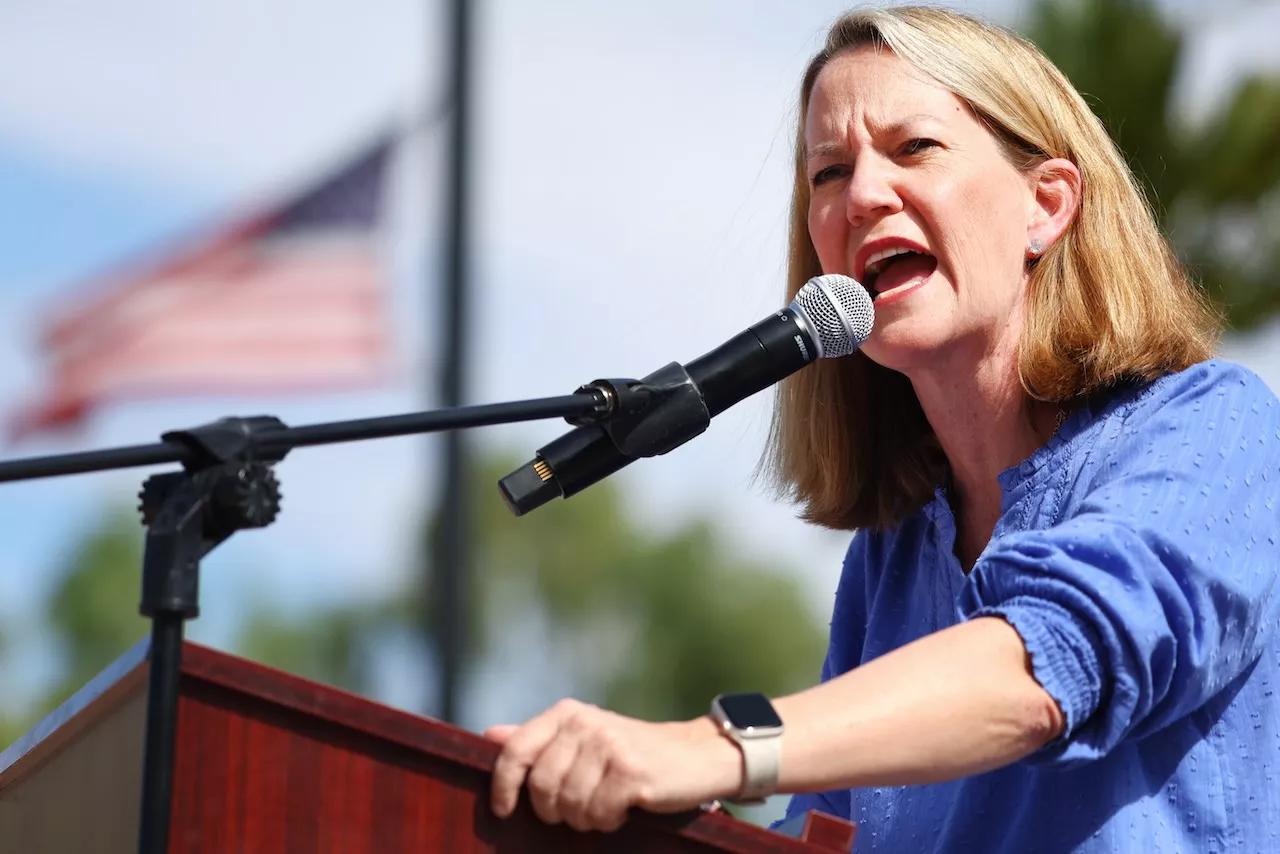
Arizona Attorney General Kris Mayes has been busy.
The Democrat has filed 48 lawsuits against the Trump administration since the president took office in January 2025. She’s been a frequent flier in the coalition of Democratic attorneys general pushing back Donald Trump’s attempts to systematically transform the U.S. government. His administration has laid off thousands of employees, dismantled entire government agencies and defunded essential research and governmental programs, often using executive orders to sidestep any congressional oversight.
While a Republican-controlled Congress has let Trump rule unfettered, many Democratic state attorneys general — including Mayes — have picked up the slack. Arizona has filed several lawsuits over the Trump administration’s attempt to freeze federal funding, much of which was previously allocated in Arizona. She has also filed suit to protect the personal data of Arizona residents and successfully sued to stop the Trump administration’s attempt to roll back the Constitutional guarantee of birthright citizenship.
Mayes is a frequent filer. Some of her suits have fared better than others. Mayes says her office’s success rate is about 80%, with wins, temporary restraining orders, permanent injunctions or the government dropping the change entirely.
It’s a lot to keep track of, so Phoenix New Times is doing the work for you. Here’s a rundown of the suits Mayes has filed against Trump and his officials, and what has become of them.
Birthright citizenship
Filed: Jan. 21, 2025
What it’s about: This lawsuit was filed by four states in a federal court in Seattle. It argues that Trump’s executive order to end birthright citizenship — which grants citizenship to anyone born on U.S. soil, excepting the children of diplomats — violated the 14th Amendment, as well as the federal Immigration and Nationality Act.
The latest: In a 6-3 decision on June 30, the Supreme Court upheld the long-held principle that nearly all children who are born on U.S. soil are American citizens. Five justices found that birthright citizenship was guaranteed in the Constitution.
Is she winning? Yes, she won.
Withholding federal funding
Filed: Jan. 28, 2025
What it’s about: The federal lawsuit was filed by 23 states in Rhode Island. On Jan. 27, 2025, Trump’s Office of Management and Budget directed all federal agencies to pause the majority of federal assistance funding and loans to states and other entities, beginning the next day. Mayes’ lawsuit argues that the policy jeopardized “state programs that provide critical health and childcare services to families in need, deliver support to public schools, combat hate crimes and violence against women, provide life-saving disaster relief to states and more.”
The latest: In March 2026, the U.S. Court of Appeals largely affirmed a lower court’s decision to grant the plaintiff’s preliminary injunction to block the administration’s policy to freeze federal funding while the case plays out. Nearly $1.4 billion in federal funding remains unfrozen for several Arizona state agencies.
Is she winning? Yes.
Keep private information away from DOGE
Filed: Feb. 7, 2025
What it’s about: This lawsuit was filed in federal court in New York by 19 states. On Feb. 2, 2025, the Treasury Department adopted a policy granting Musk and DOGE employees access to its central payment system operated by the Bureau of Fiscal Services. That system contains the private personal data of hundreds of millions of Americans and is used to issue Social Security and Medicare payments, among others.
The latest: In February, the district judge granted a preliminary injunction to block Musk and DOGE employees from accessing sensitive personal information, such as Social Security numbers and veteran benefits. That ruling is being appealed.
Is she winning? Yes.
Defunding medical and public health research
Filed: Feb. 10, 2025
What it’s about: This lawsuit, filed in Massachusetts by 21 states, challenges the Trump administration’s cutting of “indirect cost” reimbursements that cover medical and public health research at universities and research institutions. Mayes said the cuts would cause Arizona students and universities to “miss out on millions of dollars in critical funding and research support” that is “owed to Arizonans by law.”
The latest: In January 2026, the Court of Appeals affirmed a lower court’s ruling to permanently prevent the Trump administration from cutting NIH grants. This action has stopped $35 million in NIH grants from being cut in Arizona.
Is she winning? Yes.
Delegation of executive power to Elon Musk
Filed: Feb. 13, 2025
What it’s about: This lawsuit was filed in the District of Columbia by 14 states. It challenges Musk’s role in the Trump administration by arguing the Constitution’s Appointments Clause was violated by the creation of DOGE without congressional approval and by the granting to Musk of “sweeping powers over the entire federal government” without the advice and consent of the Senate.
The latest: In February 2025, District Judge Tanya Chutkan denied the plaintiffs’ request for a restraining order to limit Musk’s executive power in February. The case continues as Chutkan granted in part and denied in part the government’s motion to dismiss the lawsuit in late March 2025.
Is she winning? Not really.

Elon Musk.
Michael Santiago/Getty Images
Federal firings
Filed: March 6, 2025
What it’s about: The lawsuit was filed in Maryland by 20 state attorneys general. They sued to stop those “illegal mass layoffs” of probationary federal employees, Mayes said in a statement. “These mass firings aren’t about performance — they’re about politics and ideology.”
The latest: In September 2025, the U.S. Court of Appeals ruled that the plaintiff States “lack standing here” because the “proper party” — the fired federal employees — are “nowhere to be found in this case.” The case was dismissed on Oct. 31.
Is she winning? No.
Dismantling the Department of Education
Filed: March 13, 2025
What it’s about: The lawsuit was filed in Massachusetts by 20 states. On March 11, 2025, the Trump administration announced it would be firing about half of the Department of Education’s workforce as a part of the administration’s efforts to dismantle the department. Mayes’ lawsuit seeks a court order to stop the administration from shuttering the department by cutting its workforce and programs, arguing the attempt to end the department is illegal and unconstitutional.
The latest: In May 2025, the district judge hearing the case granted the plaintiffs’ request for a preliminary injunction, which prevents the government from firing department staff while the case plays out. The administration must also reinstate employees and “restore the Department to the status quo,” according to court documents. The case is still moving toward trial.
Is she winning? It appears so.
Public funding cuts
Filed: April 1, 2025
What it’s about: The lawsuit was filed in Rhode Island, and Arizona is one of 23 states listed as a plaintiff. On March 24, 2025, the Department of Health and Human Services terminated $11 billion in public health funding grants. In Arizona, this meant nearly $240 million was eliminated, which “immediately triggered chaos for State and local health jurisdictions,” according to the lawsuit.
The latest: In May 2025, the district judge granted the plaintiffs’ preliminary injunction to reinstate $239 million in public health funding and reverse employment terminations while the case plays out, according to Mayes’ office. The case is currently moving toward trial.
Is she winning? It appears so.
Voting restrictions
Filed: April 3, 2025
What it’s about: Mayes and Arizona Secretary of State Adrian Fontes joined the lawsuit, filed in Massachusetts with 19 other states. It challenges Trump’s Elections Executive Order to implement increased federal oversight of locally controlled election systems. Mayes called the order “an unacceptable and unconstitutional intrusion on the rights of states” and said Trump is “hellbent on destroying 250 years of precedent.”
What’s the latest: In June 2025, the district judge granted the plaintiffs’ request for a preliminary injunction, which prevents Trump’s executive order from taking effect while the case plays out. In December, the plaintiff submitted a motion for summary judgment, as did the defendants; however, no decision has been made on those motions.
Is she winning? So far, yes.
Protecting libraries and museums
Filed: April 4, 2025
What it’s about: The lawsuit was filed in Rhode Island on behalf of 20 states. In March 2025, the Trump administration issued an executive order to dismantle the three federal agencies that provide services and funding that support public libraries and museums. This resulted in the Institute of Museum and Library Services having to place almost its “entire staff on administrative leave” and “cut hundreds of grants for state libraries and museums,” Mayes said in a statement.
The latest: In November 2025, the district judge granted the plaintiff’s request for summary judgment, giving the plaintiff states — and Mayes — the win. The order permanently blocks the Trump administration from eliminating the federal agencies, which protected $4.52 million in federal funding in Arizona. The Trump administration has appealed that decision.
Is she winning? Yes.
National Institutes of Health
Filed: April 4, 2025
What it’s about: Mayes joined 16 state attorneys general in this lawsuit filed in Massachusetts. Since January 2025, the Trump administration has canceled and delayed grant funding meetings for the National Institutes of Health. Additionally, the NIH has “recently terminated large swaths of already-issued grants” for ongoing projects over their “perceived connection to ‘DEI,’ ‘transgender issues,’ ‘vaccine hesitancy,” or another topic disfavored by the current administration,” according to a press release from Mayes. The lawsuit is challenging these delays and terminations.
The latest: In June 2025, the district judge ruled that the defendant’s actions to cancel and delay NIH funding were “arbitrary and capricious in violation” of the law, ruling the administration’s policy “void” and “of no force and effect.” That ruling was, in part, swatted down by the Supreme Court.
In December, the Trump administration reached a deal with the plaintiffs to review grant applications that were stalled or rejected during the legal battle, according to Reuters. However, the case remains ongoing.
Is she winning? Unclear.
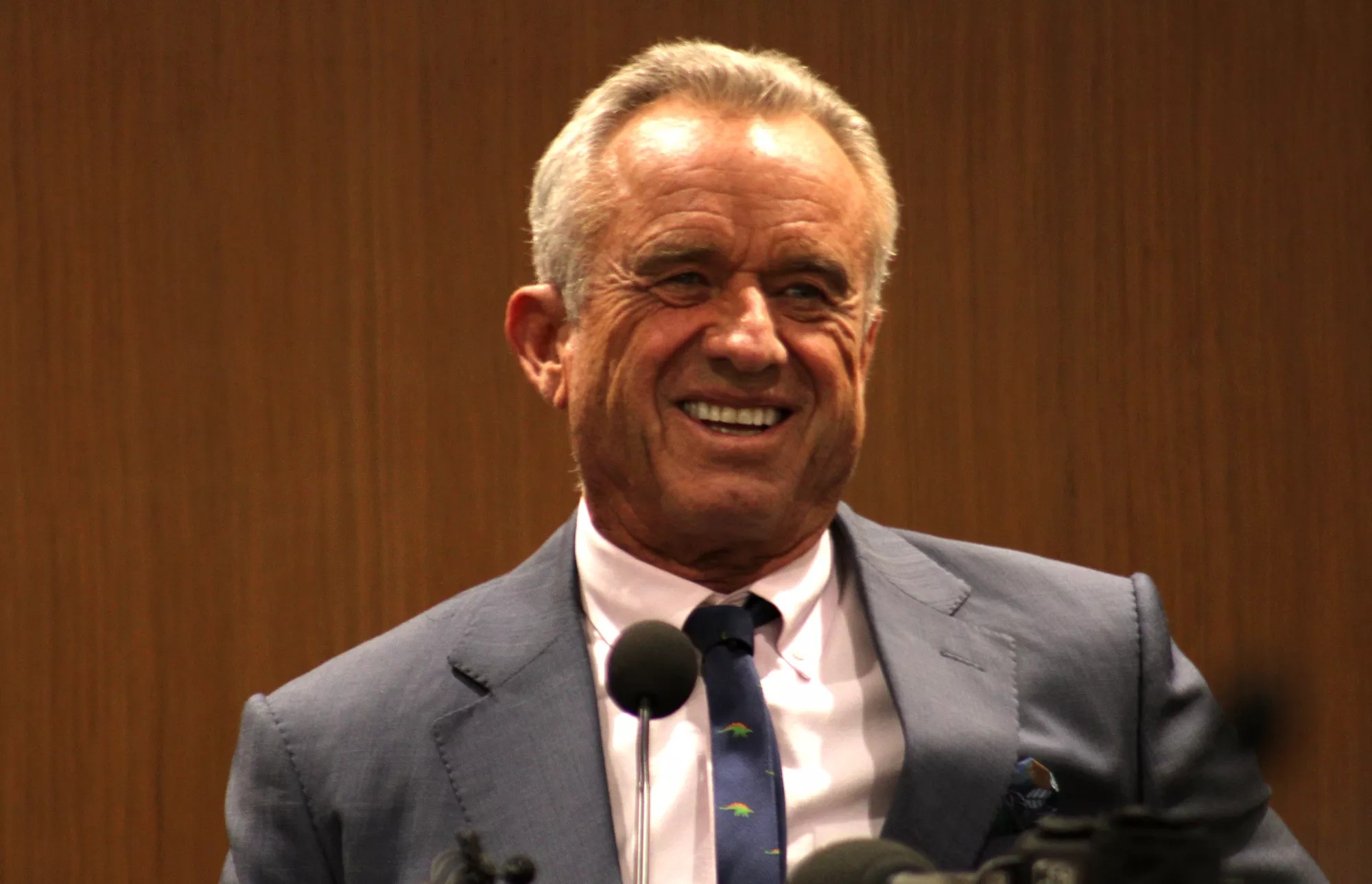
Arizona Attorney General Kris Mayes has also sued over health funding cuts made by Health and Human Services Secretary Robert F. Kennedy Jr.
Morgan Fischer
Restoring Department of Education programs
Filed: April 10, 2025
What it’s about: This lawsuit was filed in New York on behalf of 15 states and the governor of Pennsylvania. In March 2025, the Department of Education notified states that it was ending access to American Rescue Plan Act grants. The department had previously said states had access to these grants through March 2026. Mayes slammed the administration for engaging “in a coordinated attack on students, families and the entire education system,” as these grants help provide support for unhoused students, including food, personal care items, classroom supplies, field trip funding and more.”
The latest: In May 2025, the district judge granted a preliminary injunction to restore the states’ access to Department of Education programs, which ensured that $6.8 million in federal education funding remained available in Arizona. In November 2025, the parties agreed to a stay of the case if the defendant made all timely payments. If that doesn’t occur, the plaintiffs can resume litigating the case.
Is she winning? Yes.
Tariffs
Filed: April 23, 2025
What it’s about: The lawsuit was filed in the U.S. Court of International Trade by 12 states. It looked to block Trump’s “illegal tariffs,” which increased costs on most products nationwide. These tariffs included a 145% tariff on products from China, 25% tariffs on products from Canada and Mexico and a 10% tariff on most products from the rest of the world. Mayes cited Trump’s actions as unconstitutional under Article I of the Constitution, which says only Congress has the “power to lay and collect taxes, duties, imposts and excises.”
The latest: In a February 2026 decision, the Supreme Court upheld the lower court’s decision to strike down Trump’s use of the International Emergency Economic Powers Act to impose tariffs.
Is she winning? Yes, she won.
AmeriCorps demolition
Filed: April 29, 2025
What it’s about: The lawsuit was filed in Maryland by 24 states and Washington, D.C. Amid federal funding cuts, the Trump administration attempted to essentially eliminate the community-based service organization AmeriCorps by terminating 85% of the agency’s workforce, which “effectively ended the agency’s ability to continue,” Mayes said in a statement. Like the Peace Corps but operating in the continental U.S., AmeriCorps sends members to cities across the country to complete community service projects.
The latest: After the district judge granted a preliminary injunction preventing the government from terminating grants, firing employees and ending projects, the defendants decided to release the funds in August 2025.
Is she winning? Yes.
Wind energy
Filed: May 5, 2025
What it’s about: The lawsuit was filed in Massachusetts by 18 state attorneys general. It concerns Trump’s January 2025 executive order to halt all federal approvals related to the development of offshore and onshore wind energy projects. In a statement, Mayes called the move “bad policy” which threatens “both our economy and the environment.”
The latest: In December 2025, the district judge ruled that Trump’s order was unlawful in a summary judgment ruling. The administration is appealing.
Is she winning? Yes.
Dismantling of the Department of Health and Human Services
Filed: May 5, 2025
What it’s about: The lawsuit was filed in Rhode Island by 19 state attorneys general. Since the Trump administration took office, Mayes has criticized its dismantling of the Department of Health and Human Services by firing thousands of federal health workers and shuttering vital programs like the Low-Income Energy Assistance Program and Head Start, which Mayes called “lifelines for Arizonans.” Additionally, HHS Secretary Robert F. Kennedy Jr. consolidated 28 agencies overseen by HHS into just 15, which led to mass layoffs.
The latest: In July 2025, the district judge granted the plaintiff’s preliminary injunction to stop Kennedy’s attempt to dismantle HHS while the case plays out. The government appealed the decision, but the Court of Appeals denied the appeal in November 2025. The case is ongoing.
Is she winning? Yes.
Arizona Attorney General Kris Mayes has sued the administration of President Donald Trump 18 times already.
Rebecca Noble/Getty Images
Federal electric vehicle funding
Filed: May 7, 2025
What it’s about: The lawsuit was filed in western Washington by Mayes and 19 other state attorneys general. Shortly after taking office, Trump signed an executive order requiring all federal agencies to pause funding related to former President Joe Biden’s Bipartisan Infrastructure Law. This pause affected funding to the National Electric Vehicle Infrastructure Formula Program, which aimed to create electric vehicle charging stations across the nation. “Arizona will lose nearly $50 million in critical funding unless the courts block yet another illegal action by the Trump administration,” Mayes said in a statement.
The latest: In January 2026, the district judge issued a final judgment in favor of the plaintiffs. The government hasn’t appealed.
Is she winning? Yes, she won.
Blocking the ‘National Energy Emergency’
Filed: May 9, 2025
What it’s about: The lawsuit was filed in western Washington alongside 14 other attorneys general. Trump declared a “national energy emergency” under the National Emergencies Act, which has allowed federal agencies to bypass environmental and public health reviews required by the Clean Water Act, Endangered Species Act and National Historic Preservation Act. The plaintiffs are asking the court to declare Trump’s executive order illegal.
The latest: The case is ongoing.
Is she winning? Unclear. Not much progress has been made in this case.
Federal grant funding
Filed: June 24, 2025
What it’s about: The lawsuit was filed in Massachusetts alongside 20 other attorneys general. Since Trump took office, thousands of federal grants have been stripped away from states and grantees through a clause within the Office of Management and Budget’s regulations that allows agencies to terminate allocated federal grants if they “no longer effectuate … agency priorities.” The suit seeks to limit the administration’s ability to use this clause to strip federal dollars from states, which they argue is unlawful based on “changes in agency preferences that occur after a grant is awarded.”
The latest: In a declaratory judgment on July 17, Judge Indira Talwani ruled that those five words — “no longer effectuate agency priorities” — don’t give the federal agencies unfettered authority to revoke grants just because the administration is shifting its focus.
Is she winning? Yes.
Public health data
Filed: July 1, 2025
What it’s about: The lawsuit was filed in northern California alongside 20 other state attorneys general. It aims to block the Department of Health and Human Services from providing the Department of Homeland Security with personal health information and data. In June 2025, it was reported that HHD transferred “en masse their state’s Medicaid data files, containing personal health records” to DHS, Mayes wrote in a press release, which the lawsuit suggested would help the department carry out “mass deportations” and other “large-scale immigration enforcement purposes.”
The latest: On Dec. 29, Judge Vince Chhabria allowed certain Medicaid data that “is the primary focus of the new policies” — such as basic biographical, location and contact information — to be shared with ICE and DHS for immigration enforcement purposes, according to Courthouse News Service. However, a Dec. 9 preliminary injunction does bar HHS and the Centers for Medicare & Medicaid Services from sharing information received from the states unrelated to immigration status or basic identification.
Is she winning? Not really, though the case is ongoing.
Education grants
Filed: July 14, 2025
What it’s about: The lawsuit was filed in Rhode Island alongside 22 other state attorneys general and two state governors. It aims to block the Trump administration’s attempt to freeze $6.8 billion in Department of Education funding allocated to states nationwide. A total of $132 million was frozen in Arizona as a result of this decision, which Mayes said increases “costs for Arizona’s schools, cities and families.” The freezing of these funds will impact six longstanding educational programs in the state, including those that provide technology for students, workforce development, extracurricular activities and classes for non-English-speaking students.
The latest: In July 2025, the Department of Education released the frozen education grants, including $132 million in Arizona. Following the release of funds, the case was dismissed.
Is she winning? Yes, she won.
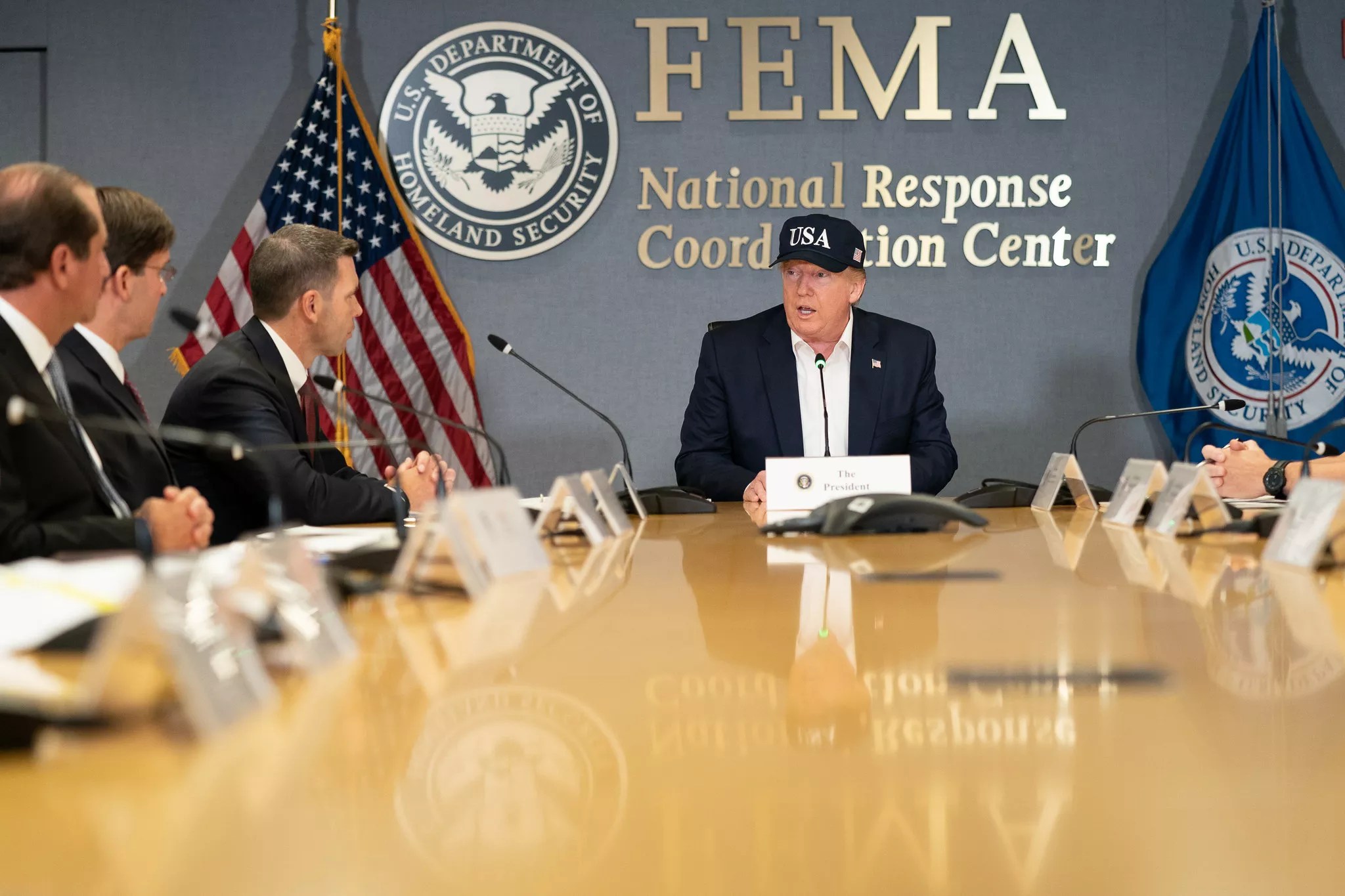
The Trump administration is seeking to end a Federal Emergency Management Agency program that provides roughly .8 million in funds to Arizona communities.
Trump White House/Flickr/Public Domain
FEMA programs
Filed: July 16, 2025
What it’s about: The lawsuit was filed in Massachusetts alongside 20 other state attorneys general. It aims to block the dismantling of the Federal Emergency Management Agency’s Building Resilient Infrastructure Communities program, which provides funding to communities across the country to improve and protect their infrastructure against natural disasters. Mayes’ office is suing to protect the approximately $9.8 million in BRIC funds that have been allocated to communities across the state.
The latest: In December 2025, the district judge entered summary judgment in favor of the plaintiffs, calling the block on BRIC funds an “unlawful executive encroachment.” However, the government has still failed to adequately allocate the BRIC funds to local agencies.
Is she winning? She won in court, but the Trump administration is still holding up funding.
New barriers to healthcare
Filed: July 17, 2025
What it’s about: The lawsuit was filed in Massachusetts alongside 18 other attorneys general and one state governor. It aims to block a new Health and Human Services and Centers for Medicare & Medicaid Services rule relating to coverage under the Affordable Care Act. The rule, which was set to take effect in August 2025, adds new verification requirements to how ACA marketplaces operate. Specifically, the “final rule” adds a new automatic monthly charge on all automatically reenrolled consumers who qualify for $0 premiums and shortens the open enrollment period for people signing up for health coverage. These new barriers could potentially deprive up to 1.8 million people nationwide of insurance coverage, according to Mayes’ office.
The latest: Both parties have filed motions for summary judgment. No rulings have been made on those motions. The district judge previously ruled against the plaintiff’s motion for a preliminary injunction.
Is she winning? No.
Public benefits
Filed: July 21, 2025
What it’s about: The lawsuit was filed in Rhode Island alongside 20 other state attorneys general. The suit aims to block new federal rules from the Health and Human Services, Education, Labor and Justice departments that “reinterpret” the Personal Responsibility and Work Opportunity Act. The new rules require “burdensome paperwork and bureaucratic changes,” such as the verification of immigration status, related to state safety net programs, such as victim services, Head Start, Meals on Wheels, adult education, mental healthcare and Community Health Centers, according to a press release from Mayes’ office.
The latest: In September 2025, the district judge granted the plaintiffs’ preliminary injunction request, which prevents the rules from taking effect. In February 2026, the states submitted a motion for summary judgment, but the judge has yet to rule.
Is she winning? Yes.
SNAP recipients’ personal data
Filed: July 28, 2025
What it’s about: The lawsuit was filed in California alongside 21 other state attorneys general. The suit aims to block the Department of Agriculture’s demand that states give the department the personal information, including social security numbers and home addresses dating back five years, of recipients of the Supplemental Nutrition Assistance Program, or SNAP. The demand would expose the personal information of nearly 900,000 Arizonans in the program, which is administered by the state with federal money.
The latest: In October 2025, the district judge granted the plaintiffs’ motion for a preliminary injunction, which bars the USDA from issuing a warning letter to the plaintiff states asking for SNAP recipients’ personal information as the case plays out. Currently, the case is moving toward summary judgment.
Is she winning? Yes.
Domestic violence funding restrictions
Filed: Oct. 1, 2025
What it’s about: Mayes filed the lawsuit in Rhode Island alongside 21 other state attorneys general. The suit aims to block the Department of Justice from implementing new rules on three federal grants — the Victims of Crime Act grants, Byrne Justice Assistance Grants and Violence Against Women Act grants — that are allocated to the states. The DOJ introduced new rules saying states could no longer use these funds, including already allocated funds, to provide legal services to undocumented immigrants. The states involved are worried that the new restrictions will upend programs, cut off access to critical resources and discourage victims from seeking help.
The latest: In December 2025, the DOJ reversed its decision on the implementation of the new rules following the lawsuit. As a result, the plaintiff states voluntarily dismissed the lawsuit.
Is she winning? Yes, she won.

Cynthia Parris/Getty Images
EPA grants
Filed: Oct. 15, 2025
What it’s about: Mayes filed the lawsuit in the U.S. Court of Federal Claims with 18 other state attorneys general. The suit aimed to recover damages from the Environmental Protection Agency, which it says breached contracts and “violated the duty of good faith and fair dealing” by canceling the Solar for All grants, which had already been allocated to the states, including Arizona.
The latest: In late January, the U.S. Court of Federal Claims paused the lawsuit after the plaintiffs failed to persuade the court to proceed with their claim, while similar lawsuits remain pending in other courts, according to Bloomberg Law.
Is she winning? No, not much progress has been made in this lawsuit.
Solar for All program
Filed: Oct. 16, 2025
What it’s about: Mayes filed the lawsuit in Washington alongside 19 other state attorneys general. The suit aims to block the Environmental Protection Agency’s elimination of the Solar for All program, which Congress created in 2022. This $7 billion program directs the EPA to make grants available to states to implement solar programs in low-income and disadvantaged areas. In 2024, the EPA awarded a $156 million grant to Arizona to add solar programs to the state’s grid. The Hopi Tribe also received $25 million to install solar panels and battery storage in homes across the Hopi Reservation in Northeastern Arizona.
The latest: In January 2026, a federal judge ruled that the Department of Energy acted illegally when it canceled the clean energy grants. The ruling requires that the $7 billion in canceled grants be released to their respective states, according to reporting by PV Magazine.
Is she winning? Yes.
Suspending SNAP benefits
Filed: Oct. 28, 2025
What it’s about: Mayes filed the lawsuit in Massachusetts alongside 21 other state attorneys general and three governors. The suit aims to force the Department of Agriculture to continue to fund SNAP’s food assistance benefits to more than 40 million Americans, including nearly 900,000 Arizonans. Under the government shutdown that spanned more than a month starting in October, the Trump administration announced that SNAP benefits would be cut off on Nov. 1. The lawsuit argued that the agency has “access to billions of dollars in SNAP-specific contingency funds appropriated by Congress for this very purpose,” according to Mayes’ press release.
The latest: The Supreme Court overruled lower courts and allowed the Trump administration to freeze SNAP funds during the shutdown. The USDA demanded that states undo any steps to allocate SNAP benefits. A judge granted a temporary restraining order to prevent that direction from taking effect. After the 43-day shutdown ended on Nov. 12, states began the process of resuming full SNAP benefits to recipients. The case is ongoing.
Is she winning? Unclear.
Restricting the Loan Forgiveness Program
Filed: Nov. 3, 2025
What it’s about: Mayes filed the lawsuit in Massachusetts alongside 21 other state attorneys general to prevent the Department of Education from restricting eligibility for the Public Service Loan Forgiveness program. The program currently forgives government and nonprofit employees’ federal student loans after 10 years of service. The Trump administration finalized a new rule on Oct. 31 that disqualifies certain local governments and nonprofit organizations if they’ve “engaged in actions with a substantial illegal purpose,” according to Mayes’ press release, which the plaintiffs believe will be used to target and “punish states and organizations that the administration does not like.” The rule was scheduled to take effect in July 2026.
The latest: On June 30, Judge Myong Joun permanently blocked the Department of Education’s loan forgiveness restriction rule by granting the coalition’s motion for summary judgment and declaring the rule illegal.
Is she winning? Yes.
FEMA grants
Filed: Nov. 4, 2025
What it’s about: Mayes filed the lawsuit in Oregon alongside 12 states to prevent FEMA from rescinding grants already allocated for emergency management, disaster relief and homeland security operations. In a press release, Mayes said more than $83 million in funding is at risk.
The latest: On Dec. 23, federal Judge Amy Potter granted the plaintiffs’ motion for summary judgment, forcing FEMA to allocate grant funding to the states. The government has appealed, but no ruling has been made.
Is she winning? Yes.
TJ L’Heureux
Homelessness grants
Filed: Nov. 25, 2025
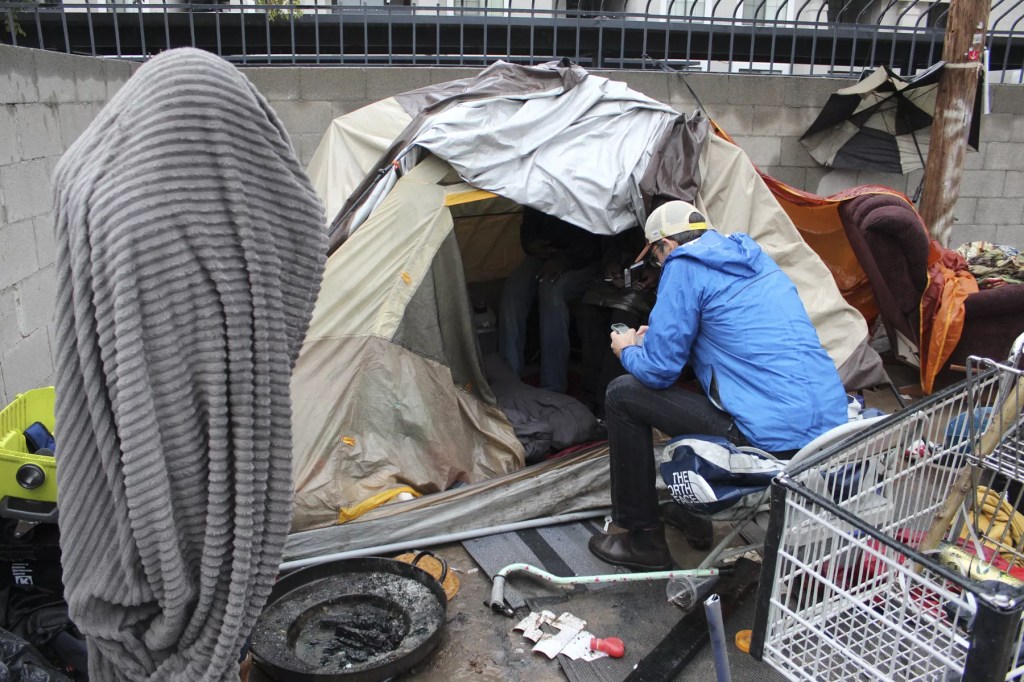
What it’s about: Mayes filed the lawsuit in Rhode Island alongside 20 other state attorneys general and governors to prevent the Department of Housing and Urban Development from altering requirements in its Continuum of Care program. These new requirements represent a significant departure from the long-held “Housing First” model, which has been implemented by HUD and across the country. Instead, to receive this funding, providers must require that residents accept services, be sober or have a minimum personal income before they’re allowed to obtain housing. The new rules also reduce the amount of grant funding available for permanent housing and project renewals. Funds will also be withheld from providers who “acknowledge the existence of trans and gender-diverse people” and have an approach that differs from the administration.
The latest: In December, the district judge granted the plaintiff’s preliminary injunction, which prevented the administration from implementing the new restrictions. The government appealed that ruling and was denied by the Court of Appeals.
Is she winning? Yes.
H-1B visa fee
Filed: Dec. 12, 2025
What it’s about: Mayes filed the lawsuit in Massachusetts alongside 19 other state attorneys general to challenge a newly implemented policy by the Department of Homeland Security that requires new petitioners for the H-1B visa petitions to pay a $100,000 fee. The H-1B visa is a non-immigrant visa that allows U.S. employers to temporarily hire highly skilled foreign workers with at least a bachelor’s degree in specialty occupations. The policy stems from a September proclamation by Trump to add the new fee for the visa, which previously cost petitioners between $960 and $7,595 in regulatory and statutory fees.
According to Mayes’ press release, these visas are used by Arizona employers to fill positions in the state’s rural public school systems. Arizona’s technology and chip manufacturers, such as Intel, ASML and TSMC, also rely on H-1B visas, as do all three of Arizona’s public universities.
The latest: On June 8, Judge Leo Sorokin ruled that the Trump administration’s $100,000 H-1B visa fee was “unlawful” in a summary judgment.
Is she winning? Yes.
Electric vehicle charging grants
Filed: Dec. 16, 2025
What it’s about: Mayes filed the lawsuit in Washington alongside 15 other attorneys general and one governor to challenge the Department of Transportation’s suspension of two grant programs related to electric vehicle charging. The department refused to approve any new funding to the Fueling Infrastructure Program and the Electric Vehicle Charger Reliability and Accessibility Accelerator Program. Combined, these grants allocated $15 million for Phoenix to increase public access to electric vehicle charging in strategic locations throughout the city. Phoenix was selected for the grant in January 2025, but has yet to receive it.
The latest: The states are asking for a permanent injunction to force the administration to release the funds. The case is ongoing.
Is she winning? It’s too soon to tell.
Consumer Financial Protection Bureau
Filed: Dec. 22, 2025
What it’s about: Mayes filed the lawsuit in Oregon alongside 21 other state attorneys general to prevent the defunding of the Consumer Financial Protection Bureau, which is an independent agency that oversees consumer protection in the financial industry through complaints, investigations and regulatory actions. The agency also oversees the country’s banking system. According to the lawsuit, the agency’s current acting director, Russel Vought, is refusing to request any money from the Federal Reserve, which would likely result in the agency running out of money by January 2026.
The latest: The plaintiff states are seeking a court order to prevent the administration from defunding the independent agency. The case is ongoing.
Is she winning? It’s too soon to tell.

Jan Sonnenmair/Getty Images
Childhood immunization policy
Filed: Feb. 24, 2026
What it’s about: Mayes filed the lawsuit in California alongside 20 other state attorneys general and one governor to prevent the Trump administration’s overhaul of the country’s childhood immunization schedule, spearheaded by Secretary of Health and Human Services Robert F. Kennedy Jr. Specifically, the lawsuit targets a Jan. 5 “Decision Memo” from the Centers for Disease Control and Prevention that stripped seven childhood vaccines of their universally recommended status. Now, vaccines protecting against rotavirus, meningococcal disease, hepatitis A and B, influenza, COVID-19 and RSV will no longer be recommended to parents. The complaint also challenges the “unlawful replacement” of experts on the Advisory Committee on Immunization Practices, a panel that guides the nation’s vaccine policy.
The latest: The plaintiffs are asking the court to prevent the vaccine schedule and ACIP appointments from taking effect and to declare them unlawful. The case is ongoing.
Is she winning? It’s too soon to tell.
Tariffs, again
Filed: March 5, 2026
What it’s about: Mayes filed the lawsuit in the Court of International Trade with 21 other state attorneys general and two governors to block Trump’s most recent effort to impose tariffs, after his first attempt was struck down by the Supreme Court earlier this year. On Feb. 20, the Supreme Court ruled Trump’s use of the International Emergency Economic Powers Act to impose tariffs was unconstitutional, citing the ability to levy taxes as a Congressional power. After lashing out at the justices, Trump announced he’d be using Section 122 of the Trade Act of 1974 to impose a 15% tariff on most products worldwide. The plaintiffs said the law has never been used to impose tariffs, or at all, for that matter.
The latest: On May 7, in conjunction with a related lawsuit filed by the state of Washington and several businesses, a federal judge granted the plaintiff’s motion for summary judgment and issued a permanent injunction to block Trump’s tariffs as invalid.
Is she winning? Yes.
Housing discrimination
Filed: March 16, 2026
What it’s about: Mayes filed the lawsuit in California with 15 other state attorneys general to block the Department of Housing and Urban Development’s September 2025 guidance toward state Fair Housing Assistance Programs, including Arizona’s. The guidance threatened to decertify the state housing program from the federal program — and cut off funding — unless the program stops enforcing housing discrimination protections based on sexual orientation, gender identity, language, criminal records and source of income, according to Mayes’ press release. The lawsuit alleges that the Trump administration is aiming to “illegally undermine” the partnership between the federal and state housing programs by “attacking” the state’s ability to combat housing discrimination, under their own state laws, Mayes wrote.
The latest: No major rulings or hearings have occurred.
Is she winning? It’s too soon to tell.
Greenhouse gas funding
Filed: March 19, 2026
What it’s about: Mayes filed the lawsuit in the Court of Appeals for D.C. with 23 other state attorneys general, one governor and 13 other cities and counties to challenge the EPA’s attempt to rescind the agency’s landmark 2009 Endangerment Finding. That year, the agency determined that greenhouse gas emissions from motor vehicles contribute to climate change and endanger public health, allowing the EPA to regulate them. However, under the Trump administration, the EPA rescinded the finding and repealed all motor vehicle greenhouse gas standards, which the plaintiffs argue isn’t within its authority.
The latest: No major rulings or hearings have occurred.
Is she winning? It’s too soon to tell.
Mail-in voting
Filed: April 3, 2026
What it’s about: Mayes, alongside Arizona Secretary of State Adrian Fontes, filed the lawsuit in Massachusetts with 22 other state attorneys general and one governor to challenge Trump’s executive order to create a national list of eligible voters and require states to send mail-in ballots to only those on the list. The plaintiffs argue that the Constitution gives states the authority to administer elections and does not allow the president to “unilaterally impose changes to federal election procedures,” especially without congressional support.
The latest: In a June 25 ruling, Judge Indira Talwani ruled that two sections of Trump’s executive order are “legally void” as they “unconstitutionally violate the separation of powers.” The Trump administration is also barred from implementing those sections during the November 2026 midterm election or any earlier federal election.
Is she winning? Yes.

Morgan Fischer
Surprise ICE detention center
Filed: April 24, 2026
What it’s about: Mayes filed the lawsuit in Arizona against the Department of Homeland Security and Immigration and Customs Enforcement to block a proposed detention facility in Surprise. The lawsuit alleges that DHS and ICE have not conducted or publicized the environmental reviews required under federal law and did not arrange for an “appropriate” location for a detention center, as required by federal law.
The latest: Mayes reached an agreement with the Department of Homeland Security on June 30 to pause the facility’s opening until an environmental review is completed.
Is she winning? It’s not nothing, but it also may not prevent the facility from opening.
Student loans for professional degree programs
Filed: May 19, 2026
What it’s about: Mayes filed the lawsuit in Maryland alongside 24 other state attorneys general and two governors to block a new Department of Education rule that limits professional-degree-seeking students’ access to federal student loans. The recently finalized rule narrows the definition of “professional degree” to exclude programs, namely in the healthcare field, that should be eligible for these loans, the lawsuit argues. The plaintiffs argue that this change was implemented without the required congressional approval and will harm states by reducing support for higher education institutions, thereby worsening “workforce shortages in critical professions.”
The latest: No major rulings or hearings have occurred.
Is she winning? It’s too soon to tell.
Medicaid work requirements
Filed: June 29, 2026
What it’s about: Mayes filed the lawsuit in Massachusetts alongside 23 other state attorneys general and two governors to block a new rule published by the Department of Health and Human Services and Centers for Medicare and Medicaid Services in early June. The new rule spells out how states must implement Medicaid eligibility work requirements passed by Congress last year. Under the new law, adults without disabilities or young children would need to work, volunteer or go to school at least 80 hours a month to be eligible for Medicaid. The law details a number of exemptions, including for “medically frail” people. However, HHS’s newly released rule narrowly defined that term by stating that a serious illness, such as cancer, end-stage renal disease or HIV and AIDS, would not be enough by itself to qualify for an exemption. States would also need to find that recipients’ health problems “significantly impair” their ability to work.
The plaintiff states argue that the rule increases administrative burdens, creates unnecessary red tape and puts eligible people at risk of losing their health coverage.
The latest: No major rulings or hearings have occurred.
Is she winning? It’s too soon to tell.
Housing project funding
Filed: July 7, 2026
What it’s about: Mayes filed the lawsuit in Rhode Island alongside 20 other state attorneys general and two governors to block a Department of Housing and Urban Development policy change that would reduce funding for existing permanent housing and cap the amount of bonus funding that the department’s Continuum of Care Program can receive for new projects. According to the National Alliance to End Homelessness, the policy change could put 97,000 existing CoC residents, including 1,800 in Arizona, at risk of losing their homes. The states argue the policy violates the Administrative Procedure Act.
The latest: No major rulings or hearings have occurred.
Is she winning? It’s too soon to tell.
Onshore wind energy projects
Filed: July 17, 2026
What it’s about: Alongside 18 other state attorneys general, Mayes filed a motion to intervene in a lawsuit filed in Oregon by various clean energy organizations and companies to block the Department of Defense from freezing routine reviews of land-based wind energy projects. Mayes and the other attorneys general are asking to be plaintiff-intervenors in the case. The policy change froze wind projects across the country at various stages in their review process, including the Black Ridge Renewable Project in Apache County.
The latest: No major rulings or hearings have occurred.
Is she winning? It’s too soon to tell.
Election-related conditions for counterterrorism funding
Filed: July 23, 2026
What’s it about: Mayes filed the lawsuit in Rhode Island alongside 20 other state attorneys general and two governors. They’re seeking to block new DHS and FEMA conditions placed on billions in federal funding to state counterterrorism programs. In order to receive these Congressionally appropriated funds, the two federal agencies are requiring states to change the way they conduct elections, including providing state voter rolls to DHS, transitioning to all paper ballots, conducting a manual audit of election systems and using DHS’ SAVE system to verify the citizenship of every registered voter in the state. If the states don’t apply, the federal agencies can withhold 20% of the state’s federally appropriated counterterrorism funding.
The latest: No major rulings or hearings have occurred.
Is she winning? It’s too soon to tell.
New Affordable Care Act rule
Filed: July 31, 2026
What’s it about: Mayes filed the lawsuit in California alongside 19 other state attorneys general and one governor. The coalition is seeking to block a new federal rule that sets standards for health plans offered in 2027 through the Department of Health and Human Services and Medicare & Medicaid Services. The change expands eligibility for catastrophic health insurance plans that are ineligible for premium tax credits and offer only limited coverage. The plaintiff states argue that this rule aims to undermine the Affordable Care Act by significantly raising out-of-pocket costs, which will exceed limits outlined in the ACA and, in turn, reduce enrollment and pass along the financial burden of underinsured patients to the states.
The latest: No major rulings or hearings have occurred.
Is she winning? It’s too soon to tell.
Tariffs, again and again
Filed: Aug. 3, 2026
What’s it about: Mayes filed the lawsuit in the Court of International Trade alongside 23 other state attorneys general and two governors. The plaintiff states are seeking to block a new Trump administration decision to increase tariffs on more than 80 countries by challenging the legality of directing the United States Trade Representative to implement tariffs, which they argue violates the Administrative Procedure Act. This is Mayes’ third lawsuit challenging Trump’s tariffs. She’s been successful in knocking down the tariffs in both of those challenges; however, the administration has continued to find new ways to implement them.
The latest: No major rulings or hearings have occurred.
Is she winning? It’s too soon to tell.