
Mario Tama/Getty Images

Audio By Carbonatix
Arizona is once again at center stage for false election claims after federal agents subpoenaed 2020 election information from the state Senate and unfounded allegations from President Donald Trump have led to a flurry of debunked election conspiracy theories resurfacing online.
On Monday morning, Trump shared an article that claimed that the Federal Bureau of Investigation had issued a grand jury subpoena and was getting “gigabytes of electronic data” from Maricopa County related to the 2020 election that he had lost in the state.
That claim was false.
Arizona State Senate President Warren Petersen later confirmed on X that the state Senate had received a grand jury subpoena related to information from the Arizona Senate Republicans’ partisan “audit” of the 2020 presidential election. What exact information the Senate had in its possession to give over is unclear, and Petersen has not provided a copy of the subpoena to the Arizona Mirror or other outlets.
New reporting by The Atlantic confirmed this week that Homeland Security Investigations, an arm of the U.S. Department of Homeland Security under Immigration and Customs Enforcement, is involved in a separate investigation into the 2020 election in Arizona.
“The election denial movement is embedded in the White House and in federal agencies,” Dax Goldstein, election protection program director for States United Democracy Center, said to reporters on Wednesday.
The moves by the federal government in Arizona and in Georgia, which was the subject of an earlier FBI raid of ballots related to 2020, have deep ties to election conspiracy theories and theorists from 2020. Some of them have Arizona connections.
“This is all part of a broader effort to take power away from the states and undermine our democracy,” Goldstein said of the effort.
But how did we get here?
Gage Skidmore/Flickr/CC BY-SA 2.0
The Big Lie
After Trump’s election loss in 2020, a movement began to take shape that started to share conspiracy theories around the election in several key states, Arizona being one of them.
Immediately after national media outlets projected that Trump would lose Arizona, far-right lawmakers and protesters began to rally at the Maricopa County Tabulation and Elections Center, spreading misinformation about the election. Far-right conspiracy theory influencers like Alex Jones also made appearances, spreading misinformation outside the county tabulation center as election workers inside continued to tally votes.
On Election Day, conspiracy theories — including Sharpie-gate — spread like wildfire on social media and then in the conservative media ecosystem. In the following days, more and more claims began to circulate, some from prominent Republican officials.
However, none were true. Mark Brnovich, the state’s Republican attorney general, refuted the claims and said Trump’s loss wasn’t due to any malfeasance, but because he failed to make his case with voters.
Out of the chaos, groups began to form.
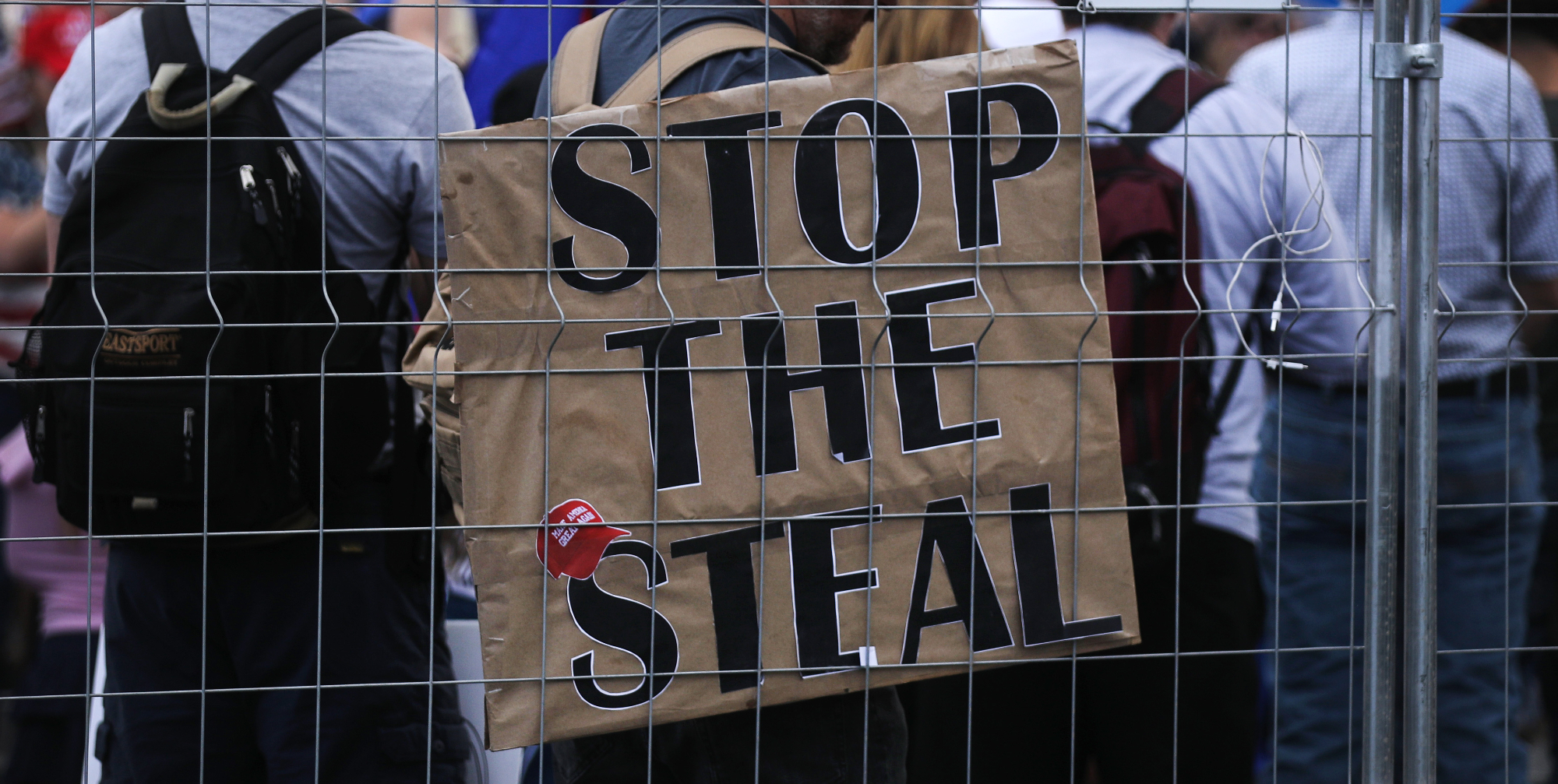
Among the more prominent was a movement called “Stop the Steal,” which held rallies across the country with far-right influencers like white nationalist Nick Fuentes and one of the lead organizers of the Jan. 6 rally at the Capitol, Ali Alexander.
Alexander, a right-wing personality and former felon, started the “Stop the Steal” movement and was a major player in the events that led to the Jan. 6 insurrection at the U.S. Capitol, where Trump supporters assaulted police officers and smashed their way into the building to block Congress from certifying Joe Biden’s win. In a since deleted video, he said the Jan. 6 rally was planned with Arizona Republican Congressmen Andy Biggs and Paul Gosar, as well as Alabama Rep. Mo Brooks. Biggs, who is now running for governor, has denied the allegation.
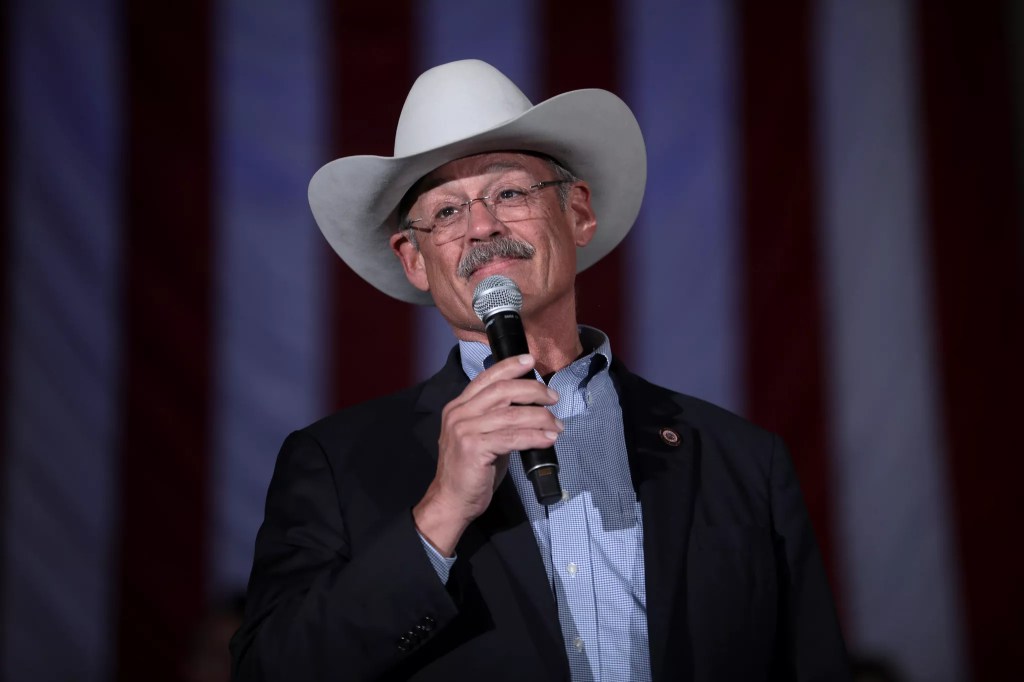
Ali also claimed to have had major help from state Sen. Mark Finchem, R-Prescott, who at the time was serving in the Arizona House of Representatives representing a district near Tucson.
Finchem’s support of “Stop the Steal” was clear in his social media postings, where he used #StopTheSteal 62 times from Nov. 19 to Jan. 6. After Trump supporters rioted at the Capitol, Finchem stopped using the hashtag. He was also present at the Capitol on Jan. 6 and was much closer to the violence than he had claimed.
Finchem was also integral in spreading misinformation about the 2020 elections, much of which was flagged by Twitter as being incorrect, and was the driving force in Arizona for an event at a Phoenix hotel in late November. At that event, Trump’s lead attorney, Rudy Giuliani, and other pro-Trump figures gathered with state GOP lawmakers and the president’s supporters to discuss baseless theories that Joe Biden won Arizona’s election by fraud.
Finchem has said that the hearing was integral in convincing Senate leadership to pursue the “audit” of the election results. The 2021 partisan election review was led by a Florida-based firm whose leader shared the Stop the Steal hashtag.
And Finchem was an unindicted co-conspirator in Attorney General Kris Mayes’ case against the 11 Arizona “fake electors” who, after Trump’s loss, sent a document to Congress falsely claiming Trump had won and they were the duly appointed electors for the state.
The Senate’s “audit” found no evidence of widespread voter fraud and, in fact, concluded that Joe Biden defeated Trump by more votes than the official tally found.
The “audit” itself was full of pro-Trump conspiracy theorists, including QAnon believers and Capitol rioters, and its leader was featured in a conspiracy film directed by a man who believes aliens are behind 9/11.
Out of the “audit” and the national push to back up Trump’s “Big Lie” came networks of people who all focused on elections and election-related conspiracy theories.
One of those was Cleta Mitchell, a close Trump ally, who created the Election Integrity Network. Her organization has offshoots across the nation that look into claims of voter fraud; the Arizona chapter is called EZAZ, run by long-time conservative activist Merissa Caldwell.
Caldwell is married to Jeff Caldwell, Maricopa County Recorder Justin Heap’s Special Projects Director. Heap, who beat former Maricopa County Recorder Stephen Richer for the role, voted for election denial bills during his time in the Arizona legislature.
But Caldwell isn’t the only person with election denial connections connected to the “audit” that is now connected to the government.
Heather Honey founded an organization that spread misinformation based on distortions of voter data, and that group was subcontracted by the Cyber Ninjas, the Florida-based firm hired by the Arizona Senate to lead the 2020 election review. Her false election claims in multiple states have later been shared by Trump.
Now, Honey holds a senior role in DHS overseeing the nation’s election infrastructure. Her mentor is Mitchell, who has been involved in a number of failed court cases attempting to overturn Trump’s election losses. Honey was recently on a call with Arizona Secretary of State Adrian Fontes, along with election officials across the country, discussing the upcoming midterm elections.
Gage Skidmore/Flickr/CC BY-SA 2.0
The 2022 election
After the 2020 election, the conspiracy theorists once again descended upon the state in 2022.
Many of the lies were now fueled by a debunked film by a conservative activist and filmmaker who made allegations about connections between his film and investigations in Arizona that were untrue.
The film, “2000 Mules,” purports to use cell phone geolocation data to track “ballot mules” who allegedly were paid to stuff ballot drop boxes with completed ballots. The practice, pejoratively referred to as ballot harvesting, is illegal in Arizona and many other states.
The film led to a wave of ballot box watchers in the state, some armed, who were later revealed to be connected to the extremist anti-government Oath Keepers and another extremist militia group.
Then, after the election results came in, challenges to the 2022 results began. All those challenges were thrown out of court, but the “experts” in those cases are resurfacing.
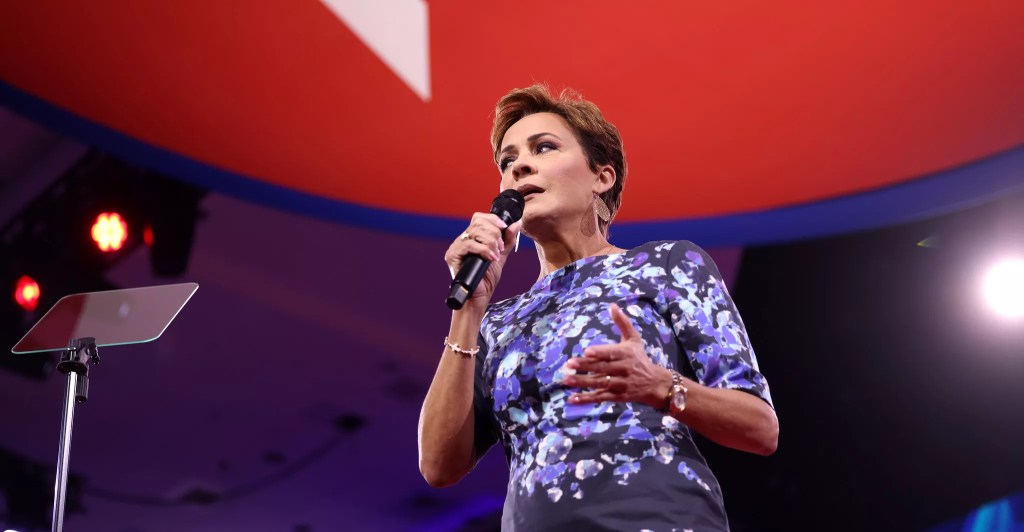
The FBI affidavit in Georgia was based in part on allegations by Clay Parikh, who testified as an “expert witness” in failed gubernatorial and congressional candidate Kari Lake’s lawsuit challenging voting machines and her loss in the state. Honey was also a witness in Lake’s case.
Parikh has worked with Mike Lindell, who has faced millions in damages for false statements he has made regarding elections, and Lake’s suit was ultimately dismissed for a lack of evidence. Parikh is now a “special government employee” of the Trump administration.
Lake’s lead attorney, Kurt Olsen, is also heavily featured in the affidavit. Olsen was sanctioned by the Arizona Supreme Court for statements he made in that case that were false.
Olsen is also a “special government employee” in the Trump administration with the title of “Director of Election Security and Integrity.”
Now, all those previously debunked lies from 2020 and 2022 are spreading again as large accounts on X are reposting old clips as fact.
“We all know that the 2020 election was free and fair,” Goldstein said, adding that even the Cyber Ninjas “audit” confirmed that.
To Goldstein, the states that are being targeted now are in the crosshairs for a few reasons: to challenge any results Republicans may dislike during the midterms, to fuel “personal vendettas” and because they are the states Trump lost in 2020.
They also happen to be places where statewide officials are pushing back against the federal government’s attempts at gaining access to voter rolls and other information.
“We can’t afford to forget that elections are run by the states,” Goldstein said.
While Trump and his allies may still be focused on 2020 and are bringing up old lies to fuel their attempts in Arizona and Georgia to investigate non-existent widespread voter fraud, Goldstein said that the American public is largely tired of it.
“Our research shows that Americans want to move on from 2020 and election denial and they don’t want the Trump administration involved in elections,” he said.
This story was first published by Arizona Mirror, which is part of States Newsroom, a network of news bureaus supported by grants and a coalition of donors as a 501c(3) public charity.