
Arizona Department of Corrections, Rehabilitation and Recovery

Audio By Carbonatix
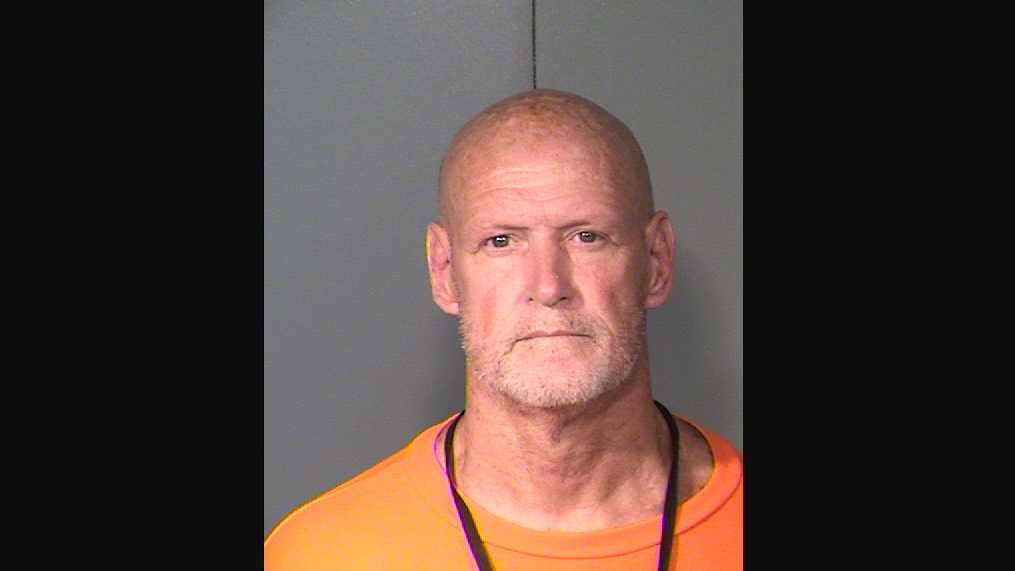
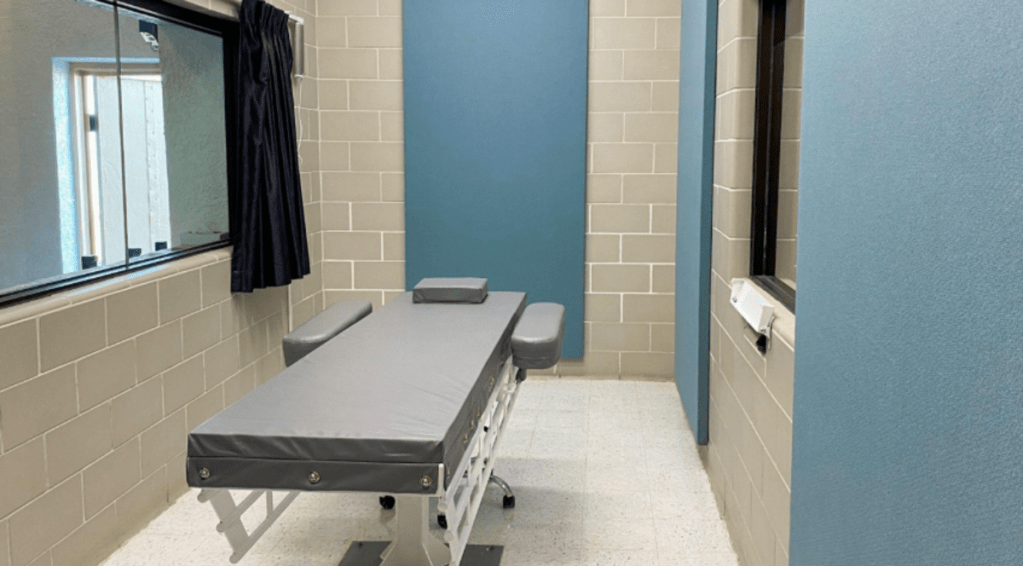
On May 20, Arizona is scheduled to execute its first death row prisoner of the year, and the third since Gov. Katie Hobbs resumed executions in 2025. At 10 a.m. on Wednesday, 63-year-old convicted murderer Leroy McGill will be killed by lethal injection at Arizona State Prison Complex-Florence.
McGill was convicted of first-degree murder in 2004 for killing Charles Perez two years earlier. McGill poured gasoline on Perez and set him on fire. He was also convicted of arson and other charges, including the attempted murder of Perez’s girlfriend, Nova Banta, whom he also burned.
The Arizona Supreme Court issued a warrant for his execution on March 26 after finding that McGill had exhausted the appeals process.
Here’s what to know about the next person Arizona will put to death.
Arizona Department of Corrections, Rehabilitation and Reentry
What did Leroy McGill do?
Court documents from the past two decades detail McGill’s crime. Around 3:30 a.m. on July 12, 2002, McGill poured gasoline on Perez and Banta while they sat on a couch next to each other. He then lit a match and threw it at them, lighting them on fire.
McGill burned Perez and Banta because they had accused him of stealing a shotgun.
Banta testified that McGill “looked at me and (Perez) and said (Perez) shouldn’t talk behind other people’s backs, and he poured the gasoline on us and quickly lit a match and threw it at us.” Perez and Banta fled the apartment engulfed in flames. When firefighters arrived, the apartment was also completely on fire.
McGill allegedly told witnesses that he’d mixed pieces of a Styrofoam cup into the gasoline that he poured on them, an act his lawyers dispute. He did this to make a “napalm-like substance that would stick to his victims and cause them more pain,” documents say.
Perez died of his burns a couple of days later on July 14. Banta survived despite suffering from burns on 75% of her body.
The jury deliberated for less than an hour before finding McGill guilty on all counts, according to court records. His lawyers presented mitigating evidence during sentencing, asking for leniency. They said he had an abusive childhood and was mentally impaired. The state then presented evidence that McGill tried to have a potential witness killed and read a letter from Perez’s sister to the jury. The jury sentenced him to death.
McGill appealed his case in state and federal court, arguing that he had ineffective counsel. He also claimed that his sentencing was unconstitutional because of a lapse in Arizona’s death penalty law due to a U.S. Supreme Court decision that found the state law invalid for a period of time that included his sentencing.
Most recently, federal public defenders argued that bad jury instruction during sentencing pushed the jury towards choosing the death penalty as his sentence. The jury was told that if given a life sentence, McGill would be eligible for parole. However, at that time, the state had eliminated parole as an option at sentencing. The public defenders argued that had the jury thought McGill would be locked up for life without parole, they would not have chosen the death penalty.
The Arizona Supreme Court sent the case back to the Maricopa Superior Court to decide McGill’s fate before May 20. The Superior Court denied his petition and McGill decided not to appeal, said Jennifer Garcia, his public defender. McGill also waived his rights to a commutation or clemency hearing, she said, so his execution will proceed as scheduled.
Gage Skidmore/Flickr/CC BY-SA 2.0
What is Arizona’s history with executions?
McGill will be the third person executed under Hobbs’ administration since it restarted executions last year.
In 2025, the state of Arizona executed two men, Aaron Gunches and Richard Djerf. Their executions came after a two-year pause in the wake of flawed and controversial executions under previous administrations, including the botched two-hour-long 2014 execution of Joseph Wood.
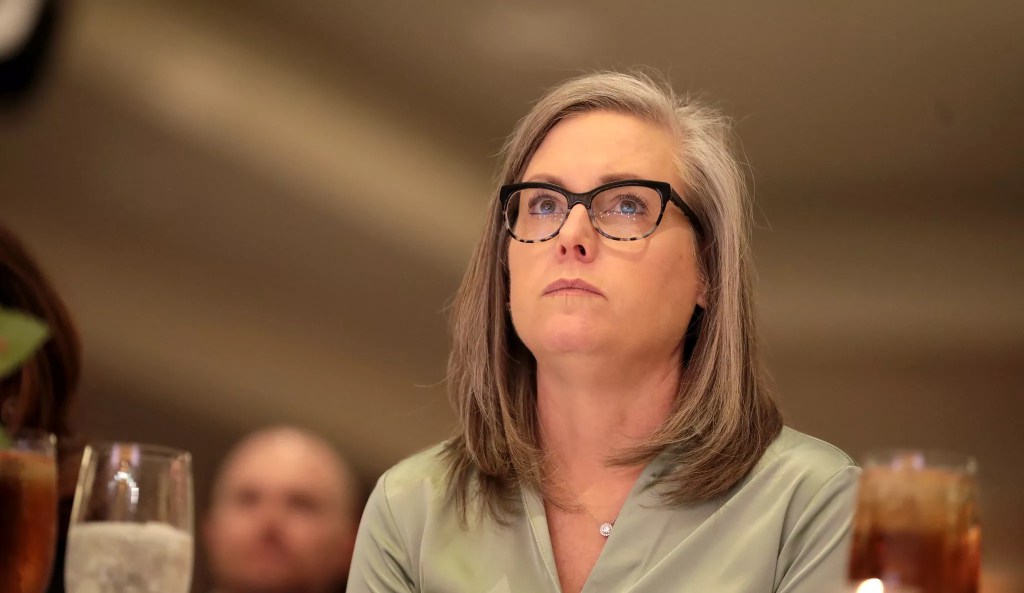
While running for office, Hobbs said that Arizona would not do executions if it could not do them humanely. She enlisted retired federal judge David Duncan to investigate the state’s execution procedures. However, she fired Duncan before the report was published, saying she didn’t like the direction he’d taken. She specifically cited his recommendation that the state consider using a firing squad instead of lethal injection because the latter could not consistently be performed humanely in practice.
A draft of Duncan’s report was ultimately released, laying out his concerns about transparency and lethal injections. But the Arizona Department of Corrections, Rehabilitation and Recovery released its own report, giving its current protocols a green light. At the same time, Hobbs and Arizona Attorney General Kris Mayes were facing pressure from Maricopa County Attorney Rachel Mitchell, who threatened to circumvent the two Democrats and seek death warrants from the Arizona Supreme Court herself. Instead, Hobbs and Mayes restarted executions, and the state executed Gunches in March and Djerf in October.
Djerf’s autopsy report, which was released in January, renewed scrutiny of the state’s lethal injection protocols. The report showed that ADCRR medical staff struggled to set an IV line in Djerf’s arms. The autopsy report documented seven needle punctures, three on the right and four on the left. But witnesses described his execution as having gone generally smoothly, and an autopsy revealed no evidence of pulmonary edema.
After McGill’s May 20 execution, 108 people — three women and 105 men — will remain on Arizona’s death row.